
Edição Temática - Gp 2026
November 27, 2026
Perceptions of the Challenges and Benefits of Remote Work and Remote Management in the Pharmaceutical Sector
Anderson Julio Cherobino; Luiz Henrique da Silva
DOI: 10.22167/2675-6528-202603711
Article derived from a Final Course Work (TCC), with content based on the student’s original work and adapted to the editorial format of the E&S Magazine with the support of the ResumeAI tool, an artificial intelligence solution developed by Instituto Pecege for textual synthesis and organization.
Summary
Remote work has consolidated itself as an organizational practice, especially in the post-pandemic scenario, presenting several benefits and challenges in the pharmaceutical sector, a highly regulated segment dependent on cross-functional collaboration. The objective was to analyze the perception of employees and leaders/managers about the benefits and challenges of remote work and management in this segment. A quantitative, descriptive, and cross-sectional study was conducted through an online survey of 40 questions, applied to 72 professionals (59 employees and 13 leaders/managers) from the Clinical Project Management area of a multinational pharmaceutical company, distributed globally. The results indicated that the majority of employees (85%) and leaders (86%) perceived more advantages than disadvantages in remote work, highlighting flexibility, increased productivity, and better quality of life. The main challenges identified were isolation, communication barriers, and the mutual perception of reduced engagement. Despite this, 93% of participants rated their productivity as good or excellent, 92.5% reported a positive impact on mental health, and 85% highlighted a positive impact on talent retention. Employees expressed strong confidence in the remote management exercised by their leaders. It was concluded that, although significant challenges exist, the benefits of remote work outweigh them, suggesting that this model can be a competitive differentiator for the pharmaceutical sector, provided it is accompanied by practices that adequately reconcile occupational well-being and organizational results.
Keywords: Contributors; Remote People Management; Leaders; Remote Work.
1. Introduction
The remote work model, based on the concept of home office and remote people management, has been consolidated in the corporate scenario, especially after the COVID-19 pandemic. Initially adopted as an emergency response to the public health crisis, remote work quickly became a permanent reality in various economic segments. Organizations adapted their structures to ensure business continuity, resulting in the transition of a large part of the workforce from traditional offices to hybrid or fully remote environments (Gallup Institute, 2024).
Despite its numerous benefits, and its importance in controlling the pandemic, remote work and distance management also brought new challenges. These impact both collaborators and leaders/managers, making it difficult to monitor and support teams, evaluate performance, and ensure work quality. Furthermore, they affect subjective aspects such as human relations, the sense of belonging, motivation, and team engagement (Wang et al., 2021).
Although remote work has been widely implemented in many economic sectors in the post-pandemic period, the pharmaceutical sector presents a peculiar context. Historically characterized by a strong emphasis on regulatory compliance, global-scale operations, and the need for cross-functional collaboration, this transition has generated both new strategic opportunities and operational challenges for pharmaceutical companies (Chaturvedi and Dhamija, 2024).
Remote work generally offers benefits such as increased flexibility, autonomy, reduced or eliminated commute time, better work-life balance, and higher overall employee satisfaction (Gajendran and Harrison, 2007; Bloom et al., 2015). However, the perception of these benefits can vary considerably between leaders/managers and non-managerial employees. For the employee, the autonomy to manage schedules, eliminate commutes, and balance responsibilities tends to increase morale, satisfaction, and productivity, leading remote work to be seen as beneficial and empowering (Efimov et al., 2022).
On the other hand, for corporate leaders and managers, especially in sectors with high demand for strategic management such as pharmaceuticals, remote work presents several challenges. Given the responsibility of maintaining high standards of performance, productivity, cross-functional collaboration, and innovation, leaders/managers may face difficulties in supervising teams, monitoring employees, and promoting cohesion, collaboration, communication, participation, and innovation in a virtual environment (Larson et al., 2020). These different perspectives can lead to divergent perceptions about the benefits and challenges of remote work, impacting communication, leadership effectiveness, team performance and collaboration, and organizational outcomes (Efimov et al., 2022).
As corporate organizations increasingly adopt remote work models, it becomes essential to understand the different perceptions of remote work and management by employees and managers in the pharmaceutical sector. This is crucial for fostering more sustainable organizational practices in a world of constant cultural and technological transformation (Chaturvedi and Dhamija, 2024). Therefore, it is relevant to analyze this topic and evaluate the impact of remote work on the satisfaction, engagement, and productivity of leaders and followers in the corporate environment of the pharmaceutical sector.
Thus, the objective of this research was to analyze the perception of collaborators and leaders/managers regarding the benefits and challenges arising from remote work and people management in the pharmaceutical sector. Ultimately, the results observed in this study could potentially contribute to leaders and managers in the pharmaceutical segment being able to more adequately manage their remote work teams, thus contributing to an organizational culture capable of sustaining both the occupational well-being of employees and the organization’s performance as a whole.
2. Material and Methods
This study adopted a quantitative, descriptive, and cross-sectional approach, carried out through a field survey. The objective was to analyze the perceptions of leaders/managers and collaborators on remote work and management, with an initial analysis of the results and subsequent stratification of the data into subgroups (gender, position/role, length of employment, and geographical location) to identify trends.
The sample space comprised the Clinical Project Management area of the Pharmacovigilance department of a multinational pharmaceutical company (ORPC/CRO), with headquarters in the United States and affiliates in over 50 countries. The sampling technique used was “Intentional and Stratified Sampling”. The target population included leadership/management and non-managerial roles (employees). The final sample consisted of 72 professionals, 13 of whom were leaders/managers and 59 were employees, located in the United States, Canada, Latin America, Europe, Asia, and Oceania.
Participant roles included: for Leaders/Managers, Managers, Senior Managers, and Hybrid Managers; for Contributors, Clinical Portfolio Managers, Clinical Project Managers, and Senior Clinical Project Leaders.
Data collection was carried out between June 15 and 30, 2025, using an online questionnaire created in English on the SurveyMonkey platform. The questionnaire contained 40 questions, including “5-point Likert scale” type scales, multiple-choice questions (with single and multiple answers), and open-ended questions. This instrument was adapted from questionnaires previously used in similar research by Simenenko et al. (2021); Kowalski et al. (2022); Ingusci et al. (2022); Abhinaya (2024); Grazi et al. (2024) and Terkamo-Moisio et al. (2024).
Participation was anonymous and voluntary, in accordance with the Informed Consent Form, ensuring the secrecy and confidentiality of the data. The research link was sent to participants via internal email, containing information about the study’s purpose and filling instructions. Responses were compiled, tabulated, and analyzed through descriptive analyses to assess general perceptions and identify trends in sub-groups.
3. Results and Discussion
The research sample consisted of 72 professionals, with 13 in leadership/management roles and 59 collaborators. The general profile of the participants is detailed in the following tables.
Table 1. General Profile of Survey Respondents – Sex
| Sex | General (both groups) | Contributors | Leaders/managers |
| Female | 73.6% (53 of 72) | 71.2% (42 of 59) | 84.6% (11 of 13) |
| Male | 22.2% (16 of 72) | 23.7% (14 of 59) | 15.4% (2 of 13) |
| Not informed | 4.2% (3 of 72) | 5.1% (3 of 59) |
Source: Original research results
Table 2. General Profile of Survey Respondents – Academic Background
| De-suckering | General (both groups) | Contributors | Leaders/managers |
| Bachelor’s degree | 47.2% (34 of 72) | 52.5% (31 of 59) | 46.2% (6 of 13) |
| Master’s degree | 36.1% (26 of 72) | 37.3% (22 of 59) | 38.4% (5 of 13) |
| Doctoral degree | 16.7% (12 of 72) | 10.2% (6 of 59) | 15.4% (2 of 13) |
Source: Original research results
Table 3. General Profile of Survey Respondents – Geographic Location
| Geographic Location | General (both groups) | Contributors | Leaders/managers |
| USA and Canada | 19.5% (14 of 72) | 16.9% (10 of 59) | 30.8% (4 of 13) |
| Latin America | 45.8% (33 of 72) | 42.4% (25 of 59) | 53.8% (7 of 13) |
| Europe | 22.2% (16 of 72) | 23.8% (14 of 59) | 15.4% (2 of 13) |
| Asia and Oceania | 12.5% (9 of 72) | 16.9% (10 of 59) |
Source: Original research results
Table 4. General Profile of Survey Respondents – Employment Relationship Duration
| Employment Relationship Duration | General (both groups) | Contributors | Leaders/managers |
| From 0 to 5 years | 45.8% (33 of 72) | 59.3% (35 of 59) | 7.7% (1 of 13) |
| 6 to 10 years old | 30.6% (22 of 72) | 23.8% (14 of 59) | 53.8% (7 of 13) |
| More than 10 years | 23.6% (17 of 72) | 16.9% (10 of 59) | 38.5% (5 of 13) |
Source: Original research results
Main Perceived Benefits – Employees
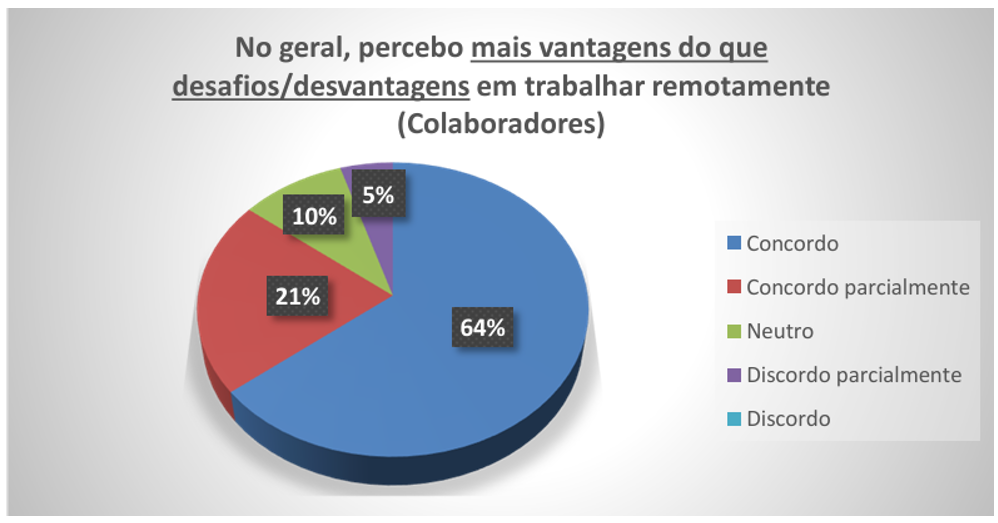
Collaborators (led) mostly perceived more benefits than challenges in remote work. Around 85% of collaborators agreed that there are more advantages, while 10% were neutral and 5% partially disagreed, with no total disagreement, as illustrated in Figure 1.
Figure 1. Advantages vs. Disadvantages of remote work – Collaborators
Source: Original research results
In a counter-proof, 93% of collaborators disagreed with the statement that there are more disadvantages than advantages in remote work, with only 7% partially agreeing, and none fully agreeing, as shown in Figure 2.
Figure 2. Disadvantages vs. Advantages – Collaborators
Source: Original research results
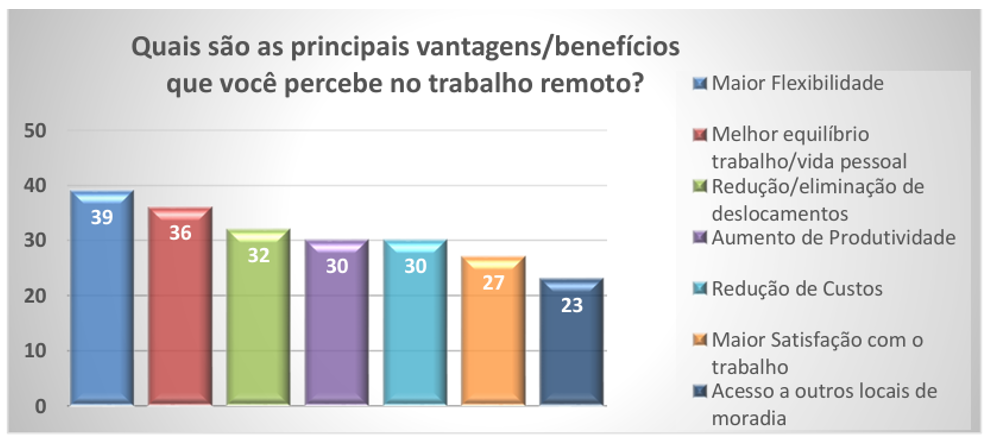
The main benefits of remote work, according to employees, were increased flexibility, resulting in a better work-life balance, and the reduction/elimination of commuting time, which contributes to greater productivity and overall job satisfaction. These findings are detailed in Figure 3.
Figure 3. Perceived major benefits – Employees (Multiple-choice question)
Source: Original research results
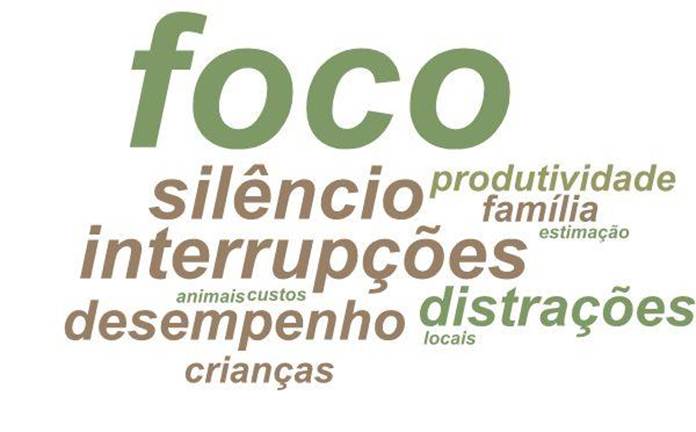
Additionally, the analysis of open-ended responses (Figure 4) revealed that collaborators value the greater focus on activities, a quieter work environment free from distractions, and better time management, which drives productivity. Other cited benefits include cost reduction (commuting and food), the possibility of contact with the family circle during work hours, and the freedom to live in other locations, improving quality of life.
Figure 4. Perceived benefits – Employees (Open-ended question)
Source: Original research results
Main Perceived Challenges – Collaborators
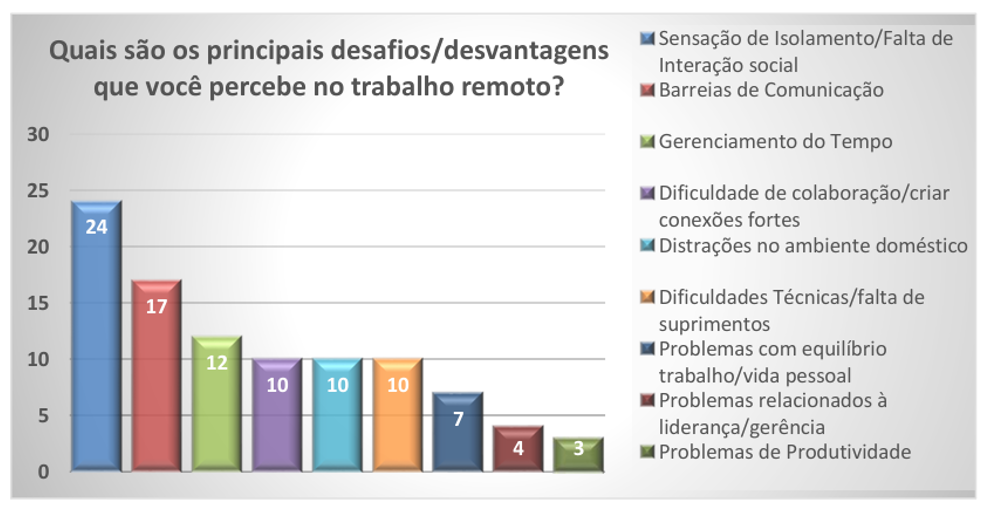
Despite the benefits, employees also identified important challenges in remote work. The main challenges pointed out were the lack of social interaction, generating a sense of isolation and difficulty in collaboration, communication barriers, technical difficulties (lack of office structure/supplies/support), and distractions in the home environment, which can impair time management. Problems related to leadership/management and work/life balance were also mentioned by some employees, as shown in Figure 5.
Figure 5. Main perceived challenges – Collaborators (Multiple choice question)
Source: Original research results
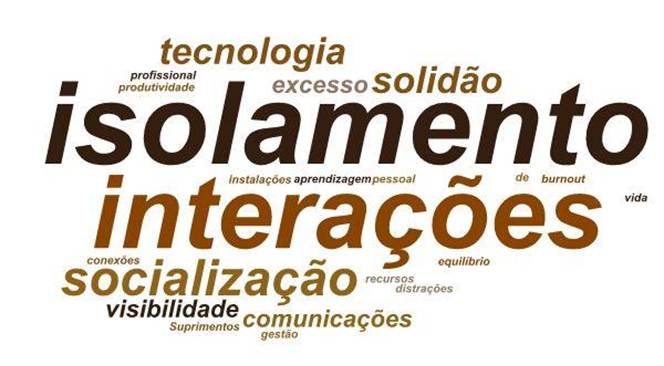
The open-ended responses (Figure 6) reinforced the feeling of isolation, communication barriers, and lack of social interaction. Additionally, collaborators mentioned loneliness, excessive working hours, tendency to burnout, lower perceived engagement from leaders/managers, and less visibility of work impacting career growth.
Figure 6. Main perceived challenges – Collaborators (Open-ended question)
Source: Original research results
A specific account from a collaborator highlighted: “In addition to feeling that I work much more at home than in the office, it being common for me to attend remote meetings at 6 AM and 8 PM on the same day, I notice that, since we are working from home, there is apparently an expectation from leadership that we can normally perform tasks and/or attend meetings at times well before the start or long after the end of our normal working hours, or even participate in meetings during meals (especially during lunch) and simply ‘find a way to eat’ during work meetings”.
Main Perceived Benefits – Leaders
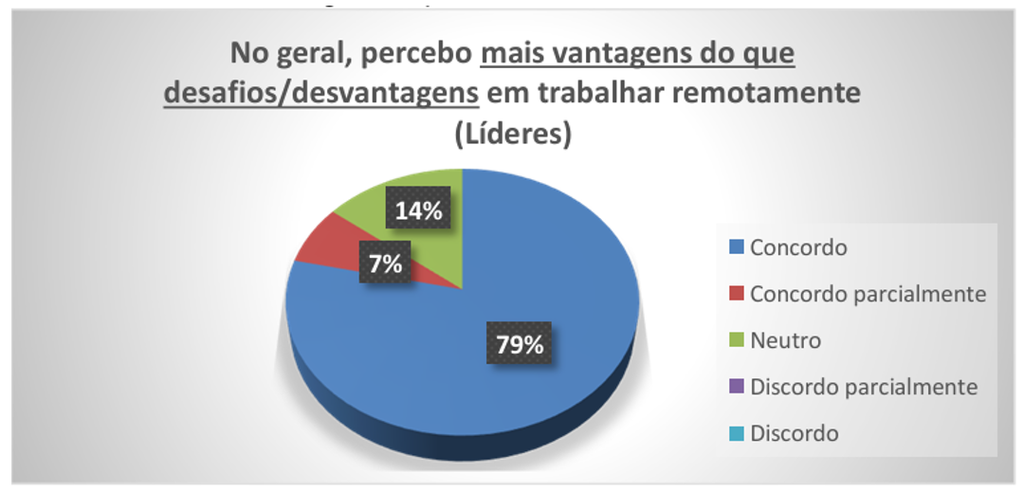
Leaders/managers also perceived more benefits than challenges in remote work. About 86% agreed with this statement, and the remaining 14% were neutral, with no disagreement, as shown in Figure 7.
Figure 7. Advantages vs. Disadvantages of remote work – Leaders
Source: Original research results
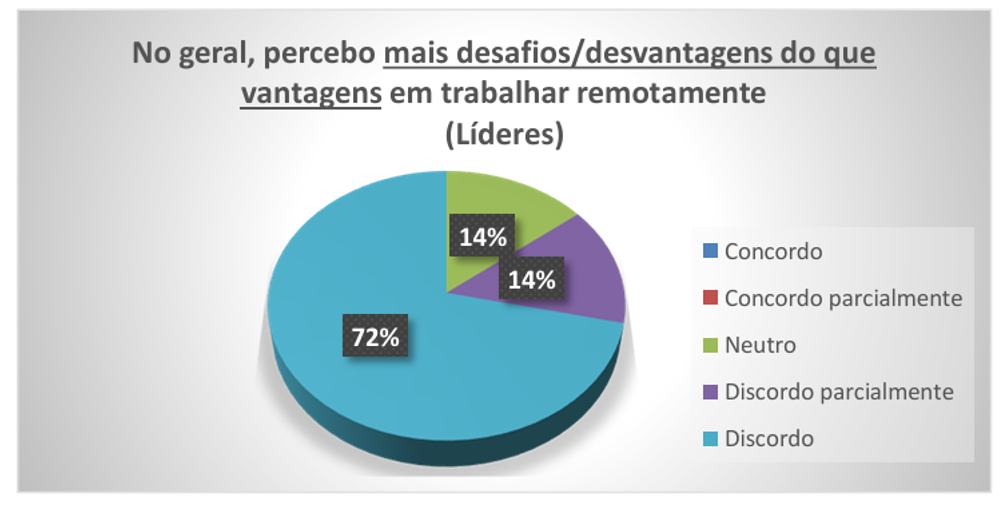
On the contrary, 86% of leaders/managers disagreed that there are more disadvantages than advantages in remote work, with 14% neutral, without agreement, according to Figure 8.
Figure 8. Disadvantages vs. Advantages – Leaders
Source: Original research results
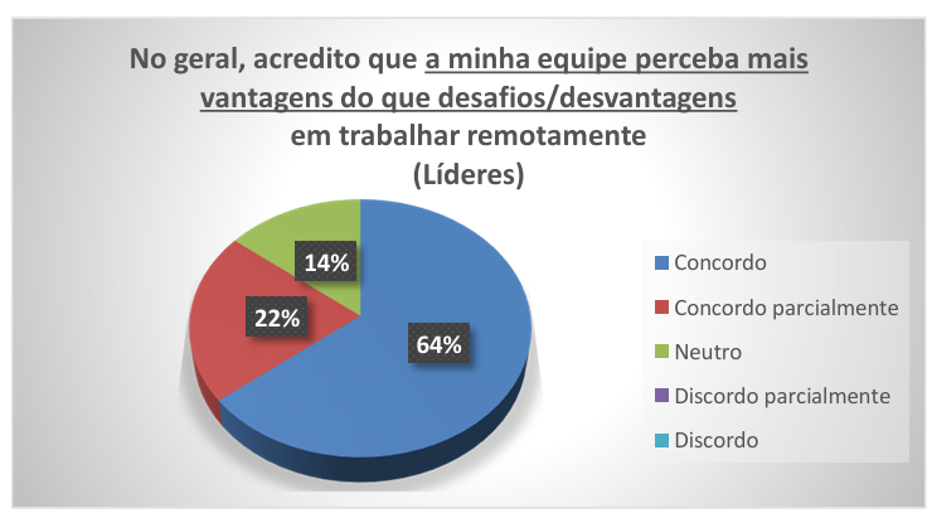
Similarly, 86% of leaders/managers believe that their teams perceive more advantages than disadvantages in remote work, with 14% neutral and no disagreements (Figure 9).
Figure 9. Perceived Advantages vs. Disadvantages by the Team – Leaders
Source: Original research results
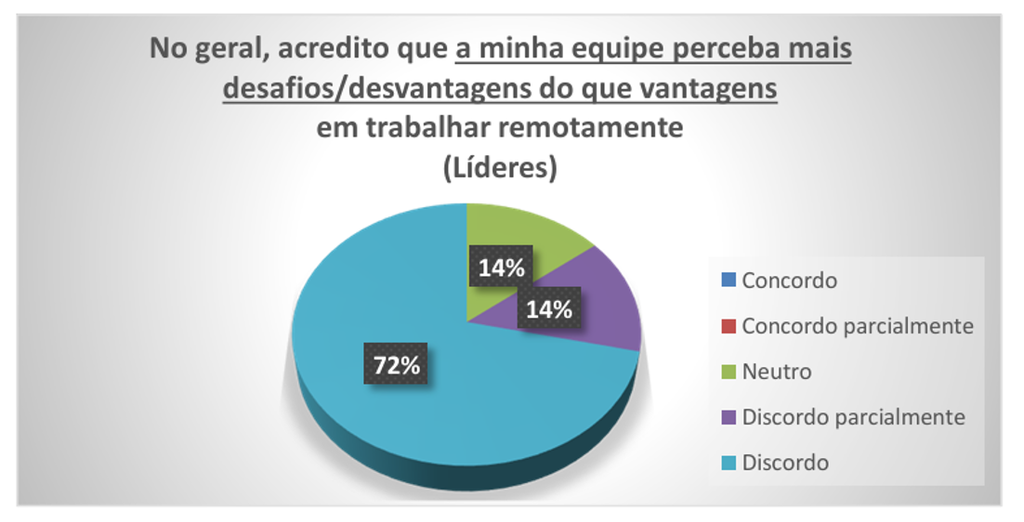
The counterproof for the team’s perception also showed identical results: 86% of leaders/managers disagreed that their teams perceive more disadvantages, and the remaining 14% remained neutral, with no agreements (Figure 10).
Figure 10. Perceived disadvantages vs. advantages by the team – Leaders
Source: Original research results
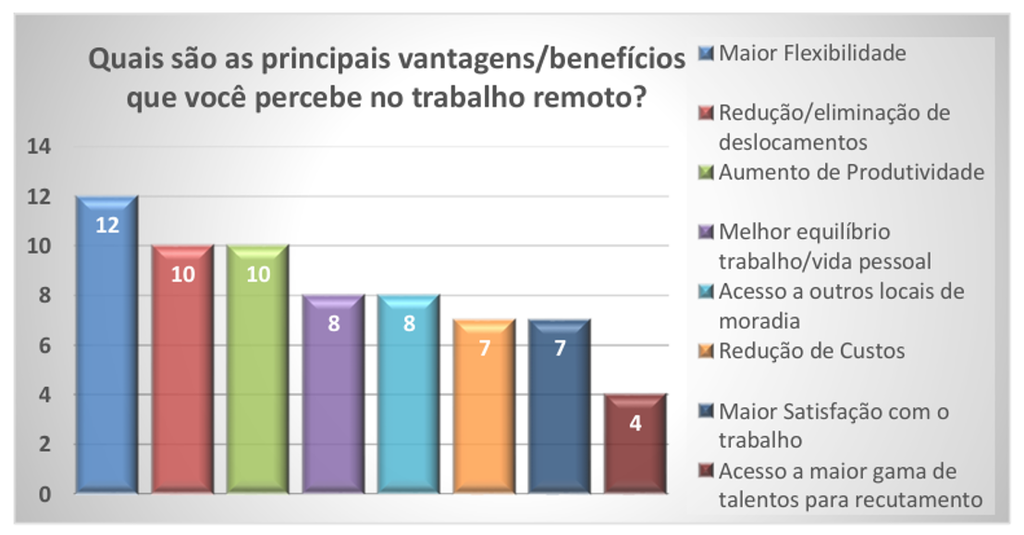
The main benefits of remote work for leaders/managers were increased flexibility, reduced/eliminated commute time, and increased productivity. To a lesser extent, they mentioned the possibility of living in other locations, improving quality of life and satisfaction. Some leaders/managers also highlighted access to a wider range of talents for selection and hiring, eliminating geographical barriers, as shown in Figure 11.
Figure 11. Perceived benefits – Leaders (Multiple choice question)
Source: Original research results
The word cloud (Figure 12) for the open-ended question about what remote work leaders/managers like most about it reiterated the benefits of flexibility, reduced commute time, and better work-life balance. Additional factors included cost savings, contact with family during work hours, and the possibility of avoiding “office politics”.
Figure 12. Perceived main benefits – Leaders (Open-ended question)
Source: Original research results
Main Perceived Challenges – Leaders
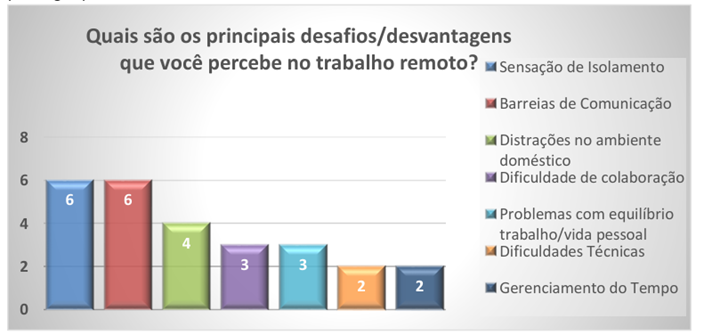
Leaders/managers also identified challenges in remote work. The feeling of isolation was the main challenge, similar to the perception of collaborators, as Figure 13 shows.
Figure 13. Biggest perceived challenges – Leaders (Multiple choice question)
Source: Original research results
Other challenges related to remote team management include communication barriers and difficulty in collaboration. There were isolated mentions of distractions in the home environment, but without direct impact on productivity.
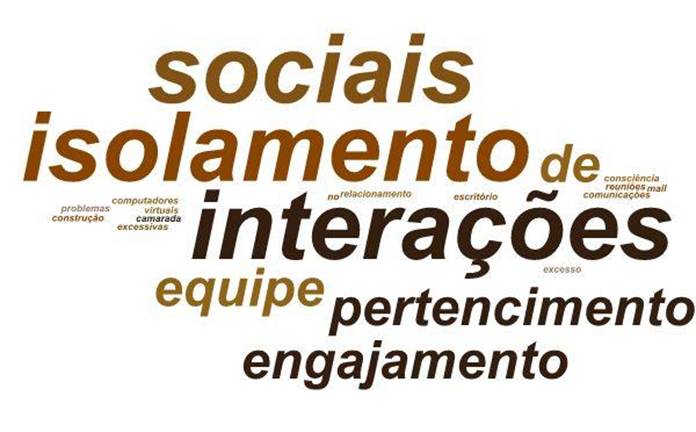
The word cloud (Figure 14) about what leaders/managers dislike most about remote work highlighted, in addition to isolation and lack of social interaction, the absence of office camaraderie, excessive virtual communications (emails and meetings), loss of time perception, and consequently, more working hours. Challenges related to remote team management, such as difficulty in building relationships and team spirit, maintaining engagement and belonging, were also pointed out.
Figure 14. Main perceived challenges – Leaders (Open-ended question)
Source: Original research results
Other Aspects and Trends Observed in the Research
Beyond the general perceptions of leaders/managers and employees about the benefits and challenges of remote work, the present research also allowed for the observation of some other interesting aspects and trends that, although not explored in greater depth in the present work, may serve as hypotheses for future studies on the topic. The main trends observed within some subgroups of employees and leaders/managers are compiled below:
Performance and Productivity
Considering both groups, 93% of participants self-assessed their performance and productivity in remote work as good or excellent, with 7% rating it as average and 0% as below average or poor. Stratification by job title/position, tenure, and geographic location showed no significant differences in self-assessment, as shown in Table 5.
Table 5. Performance and Productivity Self-Assessment (all participants)
| Group | Excellent | Good | Median | Below average or poor |
| All participants | 55,5% | 37% | 7,5% | – |
Source: Original research results
Motivation and Engagement
Overall, 68.5% of participants felt fully motivated and engaged in remote work, while 26% felt partially motivated and engaged. The remaining 5.5% were divided between neutral and unmotivated/disengaged, as indicated in Table 6.
Table 6. Motivation and Engagement Self-Assessment (all participants)
| Group | Fully Motivated/engaged | Partially Motivated/engaged | Neutral | Unmotivated/engaged |
| All | 68,5% | 26% | 2% | 3,5% |
Source: Original research results
Stratification by job/position (Table 7) showed a higher prevalence of fully motivated/engaged employees (69%) compared to leaders/managers (57%).
Table 7. Motivation and Engagement – Stratification by Hierarchical Position
| Hierarchical Position | Fully motivated/engaged | Partially motivated/engaged | Neutral and/or unmotivated/disengaged |
| Contributors | 69% | 24% | 7% |
| Leaders/managers | 57% | 28,5% | 14,5% |
Source: Original research results
Regarding employment tenure (Table 8), the highest prevalence of fully motivated/engaged was in the 0 to 5 years subgroup (73%), decreasing to 6 to 10 years (53%) and resuming to over 10 years (69%).
Table 8. Motivation and Engagement – Stratification by Employment Tenure
| Employment Relationship Duration | Fully motivated/engaged | Partially motivated/engaged | Neutral and/or unmotivated/disengaged |
| From 0 to 5 years | 73% | 23% | 4% |
| 6 to 10 years old | 53% | 35% | 12% |
| More than 10 years | 69% | 15,5% | 15,5% |
Source: Original research results
Stratification by geographic location (Table 9) indicated a higher prevalence (above 70%) of fully motivated/engaged participants in the United States and Canada, and in Asia and Oceania, compared to Latin America (65%) and, especially, Europe (58%).
Table 9. Motivation and Engagement – Stratification by Geographic Location
| Geographic Location | Fully motivated/engaged | Partially motivated/engaged | Neutral and/or unmotivated/disengaged |
| USA and Canada | 73% | 18% | 9% |
| Latin America | 65% | 31% | 4% |
| Europe | 58% | 25% | 17% |
| Asia and Oceania | 71% | 14,5% | 14,5% |
Source: Original research results
Stratification by sex (Table 10) revealed that male participants felt fully motivated/engaged in a higher proportion (85%) than female participants (59%).
Table 10. Motivation and Engagement – Stratification by Sex
| Sex | Fully motivated/engaged | Partially motivated/engaged | Neutral and/or unmotivated/disengaged |
| Male | 85% | 15% | 0% |
| Female | 59% | 29% | 12% |
Source: Original research results
Mental Health
Approximately 92.5% of participants (both groups) agreed that remote work positively affects their mental health, while 7.5% were neutral or disagreed, according to Table 11.
Table 11. Mental Health Self-Assessment (all participants)
| Group | Positively Affects | Neutral | Does not positively affect |
| All | 92,5% | 2% | 5,5% |
Source: Original research results
Stratification did not show significant differences by hierarchical position or sex. However, trends of variation were observed by length of employment and geographical location. The subgroup with more than 10 years of tenure (Table 12) and the subgroup from Europe (Table 13) presented notably lower concordance rates regarding the positive impact on mental health.
Table 12. Mental Health – Stratification by Employment Relationship Duration
| Employment Relationship Duration | Agree | Neutral and/or disagree |
| From 0 to 5 years | 96% | 4% |
| 6 to 10 years old | 88% | 12% |
| More than 10 years | 77% | 23% |
Source: Original research results
Table 13. Mental Health – Stratification by Geographic Location
| Geographic Location | Agree | Neutral and/or disagree |
| USA and Canada | 91% | 9% |
| Latin America | 92,3% | 7,7% |
| Europe | 83,3% | 16,7% |
| Asia and Oceania | 86% | 14% |
Source: Original research results
Talent Retention and Turnover
Approximately 85% of participants (both groups) agreed that remote work positively impacts talent retention, turnover reduction, and the desire to stay with the company long-term. No significant differences were observed by hierarchical position, length of employment, or gender, as shown in Table 14.
Table 14. Talent Retention and Turnover (all participants)
| Group | Positively Impacts | Neutral | Does not positively impact |
| All | 85,2% | 11,2% | 3,6% |
Source: Original research results
However, stratification by geographic location (Table 15) revealed significant trends. The subgroups of United States and Canada, and Europe, showed lower agreement rates (74% on average) compared to the overall average (85%) and to Latin America and Asia and Oceania (87% on average). This suggests that remote work may be more decisive for talent retention in more peripheral geographic regions, where structural conditions (urban infrastructure and public transportation) make remote work more attractive (Choudhury et al., 2021).
Table 15. Talent Retention and Turnover – Stratification by Geographic Location
| Geographic Location | Agree | Neutral and/or disagree |
| USA and Canada | 73% | 27% |
| Latin America | 88,5% | 11,5% |
| Europe | 75% | 25% |
| Asia and Oceania | 86% | 14% |
Source: Original research results
General Perception of Remote Management by Employees
The collaborators’ perception of remote people management was extremely positive. Approximately 92.5% rated the remote management of their leaders/managers as efficient or partially efficient (Table 16).
Table 16. Remote Management Evaluation by employees: Efficiency
| Group | Fully Efficient | Partially Efficient | Neutral | Ineffective |
| Contributors | 74,1% | 18,5% | 7,5% |
Source: Original research results
Approximately 91% of collaborators stated they had confidence and support from their leaders/managers during remote work (Table 17), and 98% said they had the confidence to make independent decisions (Table 18).
Table 17. Remote Management Evaluation by employees: Trust and Support
| Group | Confidence and support (total) | Confidence and support (partial) | Neutral | Not perceive Confidence/support |
| Contributors | 77,8% | 12,9% | 5,6% | 3,7% |
Source: Original research results
Table 18. Remote Management Evaluation by employees: Decision-Making
| Group | Confidence (total) | Confidence (partial) | Neutral | Do not perceive Confidence |
| Contributors | 85,2% | 12,9% | 1,9% |
Source: Original research results
Approximately 94% of collaborators stated they receive autonomy to manage their workloads (Table 19), and 92% indicated that their leaders/managers are available for support when needed (Table 20).
Table 19. Remote Management Assessment by employees: Autonomy
| Group | Autonomy (total) | Autonomy (partial) | Neutral | No Autonomy |
| Contributors | 85,2% | 9,2% | 3,7% | 1,9% |
Source: Original research results
Table 20. Remote Management Assessment by employees: Manager Availability
| Group | Availability (total) | Availability (partial) | Neutral | No Availability |
| Contributors | 75,9% | 16,7% | 5,5% | 1,9% |
Source: Original research results
Approximately 91% of employees believe that their managers efficiently monitor workload and delegate tasks appropriately (Table 21). Furthermore, 92% of employees consider that their performance is appropriately evaluated by managers in remote work (Table 22).
Table 21. Remote Management Assessment by employees: Workload and Delegation
| Group | Fully Efficient | Partially Efficient | Neutral | Ineffective |
| Contributors | 59,2% | 31,5% | 7,4% | 1,9% |
Source: Original research results
Table 22. Remote Management Evaluation by collaborators: Performance Evaluation
| Group | Fully appropriate | Partially appropriate | Neutral | Not appropriate |
| Contributors | 68,5% | 24% | 5,6% | 1,9% |
Source: Original research results
Approximately 83% of collaborators believe that the manager promotes a sense of teamwork and belonging (Table 23). However, only 68% assessed that the manager implements activities to increase connection with colleagues (Table 24).
Table 23. Evaluation of Remote Management by collaborators: Team spirit and Belonging
| Group | Fully appropriate | Partially adequate | Neutral | Not appropriate |
| Contributors | 57,4% | 25,9% | 11,1% | 5,6% |
Source: Original research results
Table 24. Remote Management Assessment by employees: Connection with team members
| Group | Fully implements | Partially implements | Neutral | Does not implement |
| Contributors | 46,3% | 22,2% | 18,5% | 13% |
Source: Original research results
Finally, about 94% of collaborators trust their managers’ ability to manage remote teams (Table 25), and 89% consider their managers’ leadership style suitable for the remote work model, promoting a positive environment (Table 26).
Table 25. Evaluation of Remote Management by collaborators: Leader/Manager Skill
| Group | Fully Confident | Partially Confident | Neutral | Not Confident |
| Contributors | 83% | 11,3% | 3,8% | 1,9% |
Source: Original research results
Table 26. Remote Management Evaluation by employees: Leadership Style
| Group | Fully Confident | Partially Confident | Neutral | Not Confident |
| Contributors | 79,6% | 9,3% | 7,4% | 3,7% |
Source: Original research results
The present research revealed a notable convergence in the general perceptions of leaders/managers and collaborators regarding the benefits of remote work, which contrasts with the literature that typically points to greater skepticism from leaders (Bloom et al., 2015; Contreras et al., 2020; Larson et al., 2020). Both groups perceived more benefits than challenges, with leaders/managers showing a slightly higher proportion (86% vs. 85% of collaborators). This convergence may indicate an organizational culture already adapted to remote work or a maturity of teams and management for this model.
Although both groups pointed out similar benefits, there were differences in emphasis. Leaders/managers highlighted benefits related to quality of life, such as flexibility, reduced commuting time, and work-life balance. Employees, in turn, emphasized benefits related to work productivity, such as increased focus, a quiet environment, and better time management, which is consistent with previous studies associating reduced distractions with increased productivity (Gajendran and Harrison, 2007). Leaders’/managers’ emphasis on quality of life also aligns with research indicating flexibility as key to job satisfaction (Bloom et al., 2015).
Both leaders/managers and collaborators positively self-assessed their productivity/performance (93%), mental health (92.5%), and the contribution of remote work to talent retention and lower turnover (85%). However, motivation and engagement levels showed relevant variations. Non-managerial employees showed a higher proportion of fully motivated/engaged individuals (69%) compared to leaders/managers (57%). Variations were also observed according to gender, length of employment, and geographical location, suggesting that factors such as expectations of managerial support, career opportunities, and work-life balance may influence these levels.
The feeling of isolation, loneliness, and lack of social interaction were the main challenges pointed out by both groups, which is consistent with the literature on prolonged remote work (Eurofound, 2020; Efimov et al., 2022). Employees also mentioned the risk of burnout and the perception of leadership expectations for demands outside of working hours. Leaders/managers, in turn, highlighted the overload of virtual communications and the excess of remote meetings.
Additional challenges for leaders/managers included communication barriers, difficulty in building intimate relationships and team spirit, and maintaining remote team engagement. These findings corroborate the literature indicating greater leader concern with team cohesion, performance monitoring, and remote results management (Spataro, 2020; Larson et al., 2020; Lunde et al., 2023). The mutual perception of lower engagement, both from leaders towards their teams and from employees towards their leaders, suggests that physical distancing contributes to this perception (Carnevale and Hatak, 2020).
The research also showed a positive perception from non-managerial employees regarding the quality of remote management by their leaders/managers, with approval ratings above 90% for most parameters, except for the active promotion of greater connection/collaboration among team members, which obtained a more modest approval rating (68%).
In summary, the results indicated that remote work is perceived as beneficial by both groups in the pharmaceutical sector, overcoming challenges. The findings suggest that this model can be a competitive differentiator, provided it is accompanied by practices that balance occupational well-being and organizational results, reinforcing the need for attention to the challenges of isolation and engagement, especially in team management.
4. Conclusion
The study sought to analyze the perception of collaborators and leaders/managers on the benefits and challenges of remote work and people management in the pharmaceutical sector. It was found that the majority of participants, both collaborators (85%) and leaders/managers (86%), perceived more advantages than disadvantages in the remote work model. Among the benefits, flexibility, increased productivity, and improved quality of life, as well as reduced commuting time, were highlighted. However, isolation, communication barriers, and the mutual perception of reduced engagement were identified as the main challenges. Despite these challenges, self-assessment of productivity was predominantly positive (93%), and a favorable impact on mental health (92.5%) and talent retention (85%) was observed. Collaborators, in particular, showed strong confidence in the remote management exercised by their leaders, with high approval ratings for efficiency, support, autonomy, and performance evaluation, although the active promotion of connection among colleagues received a more modest evaluation.
The research contributes to enabling leaders and managers in the pharmaceutical segment to better manage their remote teams, fostering an organizational culture that balances occupational well-being and results. The findings reinforce the idea that remote work can be a competitive advantage for promoting best practices, provided it is accompanied by measures that reconcile flexibility, well-being, productivity, engagement, and talent retention. However, the study has limitations, such as the reduced sample size and the specificity of the pharmaceutical sector, which may restrict the generalization of the findings. Furthermore, potential personal biases inherent in the respondents’ self-assessments may have influenced some perceptions. It is suggested that the results serve as initial hypotheses for future research and in-depth studies, aiming for the continuous growth of knowledge about remote work in the post-pandemic context.
Bibliographic References
Abhinaya (2024). Likert scale questions to ask your employees as a leader in 2024. Likert Scale questions on remote management. Disponível em <https://www.culturemonkey.io/ employee-engagement/likert-scale-questions/>. Acesso em 08 Jun 2025.
Bloom, N., Liang, J., Roberts, J., & Ying, Z. J. (2015). Does working from home work? Evidence from a Chinese experiment. The Quarterly Journal of Economics, 130(1), 165-218.
Carnevale, J. B., & Hatak, I. (2020). Employee adjustment and well-being in the era of COVID-19: Implications for human resource management. Journal of Business Research, 116, 183-187.
Chaturvedi, N., & Dhamija, S. (2024). Telecommuting intentions post-pandemic: A study of Indian pharmaceutical industry employees’ job satisfaction and work-life balance. Library Progress International, 44(3), 1506.
Choudhury, P., Foroughi, C., & Larson, B. Z. (2021). Work-from-anywhere: The productivity effects of geographic flexibility. Strategic Management Journal, 42(4), 655-683.
Contreras, F., Baykal, E., & Abid, G. (2020). E-leadership and teleworking in times of COVID-19 and beyond: What we know and where do we go. Frontiers in Psychology, 11, 590271.
Efimov, A., Rohwer, E., Harth, V., & Mache, S. (2022). Virtual leadership in relation to employees’ mental health, job satisfaction, and perceptions of isolation: A scoping review. International Journal of Environmental Research and Public Health, 19(23), 15547.
Gajendran, R. S., & Harrison, D. A. (2007). The good, the bad, and the unknown about telecommuting: Meta-analysis of psychological mediators and individual consequences. Journal of Applied Psychology, 92(6), 1524–1541.
Grazi, A. and Finian, B. (2024). Leaders and Followers’ different experiences of remote versus office working and its influence on well-being. Psychological Applications and Trends 2024.
Ingusci, E. et al. (2022). Development and validation of the Remote Working Benefits & Disadvantages scale. Quality & Quantity (2022) 57:1159–1183, Accepted: 27 February 2022 / Published online: 29 April 2022.
Instituto Gallup. 2024. Relatório de Indicadores de Engajamento de Funcionários. Disponível em <https://www.gallup.com/394373/indicator-employee-engagement.aspx>. Acesso em 29 Mar 2025.
Kowalski, G., & Ślebarska, K. (2022). Remote Working and Work Effectiveness: A Leader Perspective. International Journal of Environmental Research and Public Health, 19(22), 15326, 2022.
Larson, B. Z., Vroman, S. R., & Makarius, E. E. (2020). A guide to managing your (newly) remote workers. Harvard Business Review, 2020.
Llave, O. V., et al. Eurofound (2022), The rise in telework: Impact on working conditions and regulations, Publications Office of the European Union, Luxembourg, 2022.
Lunde, L. H., et al. (2023). Telework uncovered: Employees’ perceptions across various occupations in an industrial company. Sustainability, 15(2), 56.
Simenenko, O. and Lentjushenkova, O. (2022). Advantages and Disadvantages of Distance Working. Conference: Perspectives of Business and Entrepreneurship Development: Digital Transformation for Business Model Innovation At: Brno University of Technology, Faculty of Business and Management, September 16-17, 2021 Brno, Czech Republic, 2022.
Spataro, J. (2020). Remote everything: A new mindset for work.Harvard Business Review, 2020.
Terkamo-Moisio, A. et al. (2024). Health and social care leaders’ and employees’ perceptions of remote leadership and the associated factors. Leadership in Health Services Vol. 37 No. 5, 2024 pp. 169-184 Emerald Publishing Limited 1751-1879, 2024.
Wang, B., Liu, Y., & Parker, S. K. (2021). Achieving effective remote working during the COVID-19 pandemic: A work design perspective. Applied Psychology, 70(1), 16-59.
Article originating from the Final Course Work of the Specialization in People Management of the MBA USP/Esalq
To learn more about the course, click here and access the MBX Academy platform