
Professionals
January 08, 2026
Perceptions of architecture professionals regarding a digital cluster
Authors: Dorely Marilú Calderón Sánchez and Adriana Villanova de Almeida
DOI: 10.22167/2675-6528-2025046
E&S 2026, 7: e2025046
In Brazil, the number of activities registered by architects and urban planners in the last quarter of 2020 grew by 12% compared to the same period of the previous year[1]. However, the transition to the digital environment resulting from the covid-19 pandemic imposed a significant challenge on organizations[2] and increased the difficulties faced by Brazilian companies and professionals in competing and entering the job market. In this context, actions that seek to create alternatives suitable for the current circumstances and broaden the horizons of the profession become relevant.
Thus, the idea of a digital cluster emerges, defined as alternative, non-physical spaces enabled by online networks and platforms for conducting commercial transactions, exchanging information, and generating knowledge[3]. These arrangements promote new elements of cooperation that drive regional and national economic processes[4], as well as contribute to the formation of new professional competencies. Thus, a digital cluster of architecture can represent a new form of spatial organization by offering an alternative for structuring the value chain of services[5] and maintaining formal ties, such as networks, alliances, and partnerships[5].
In 1997, architect Paul Petrunia founded Archinect with the goal of connecting architecture professionals, students, and enthusiasts. It is currently one of the main online destinations in the United States. In 2020, Rebel Architette, the Italian platform, open and collaborative, was launched, whose objective is to emphasize the talents and skills of female architects worldwide. Although they have different purposes, both examples share a common element: the creation and maintenance of formal links and partnerships, which can be configured as close references of digital architecture clusters.
The professional scenario is characterized by intense competition[6], while the future of work points to a new reality for cities, as well as for architects and urban planners[7]. With ongoing technological advancements — such as digitalization, artificial intelligence, and automation — the workforce is expected to evolve even more drastically in the coming years[8].
Given the above, the research aims to identify the opinion of independent architecture students, professionals, and companies and to propose a digital meeting space for this audience. The central goal is the creation and conservation of formal ties between architecture companies and professionals involved in carrying out 100% online work with maximum efficiency, agility, and competitive cost.
The study is characterized as an exploratory quantitative research of the survey type, described as the collection of data or information about characteristics, actions, or opinions of a specific group of people, indicated as representative of a target population, through a research instrument, normally a questionnaire[9].
The target audience of the research is composed of architecture students, freelance architects, and architects representing architecture firms from Brazil. Some scenarios will be analyzed to establish relationships and identify common points capable of defining important aspects for the formation of a digital cluster of architecture.
Descriptive analysis was employed in the discussion of the findings as it proved pertinent to the characterization of the participants’ profile, the analysis of professional behavior, and the viewpoints observed in the dataset. This type of analysis facilitates the understanding of the results and offers a clear view of the sample composition. Thus, the descriptive approach provides the necessary foundation for understanding the context to be considered in the practical application scenario and for guiding subsequent interpretations and analyses.
The sample population was composed of 7 architecture students, 44 architects, and 19 representatives of architecture firms, totaling 70 participants, who will be identified from this point forward by the acronyms E (student), A (architect), and R (representative), respectively. Group E is formed by students of architecture, urbanism, and design; group A is composed of architects with independent practice; and group R brings together experienced representatives from various architecture firms.
For the three groups defined previously (E, A, and R), an online questionnaire was applied from July 9, 2021, to July 23, 2021, consisting of 25 questions, organized as follows: sample characterization (gender, age, and status), questions 1 to 3; group classification (E, A, and R), question 4; professional performance (type of work, work activity, and time in the field), questions 5 to 7.
After this stage, 18 questions were elaborated directly related to the theme, of which 11 (from 8 to 18) deal with the use of digital platforms and 7 (from 19 to 25) address the knowledge of the researched individuals regarding the digital cluster.
The issues related to “Digital platforms and their use today” (questions 14 to 18) and those related to “Digital cluster of architecture and its importance” (questions 22 and 23) used a Likert scale[10], graduated in 5 points, from (1) “Strongly disagree”, equivalent to 0%, to (5) “Strongly agree”, equivalent to 100%.
Based on the set of items that make up a Likert scale, it is important that some of them are inverted, in such a way that, in certain questions, “totally agree” (good, 100%, yes) or “totally disagree” (bad, 0%, no), represents a favorable or unfavorable attitude, as indicated by “Yes” or “No”. Thus, the questions regarding “Digital platforms and their use today” (questions 8, 9, 11, 12) and those related to “Digital cluster of architecture and its importance” (questions 19, 20, and 24) used the agreement “Yes” and disagreement “No”.
The questionnaire was developed using the Google Forms tool, which converts responses into spreadsheets in Google Docs, compatible with the Microsoft Excel spreadsheet tool. These spreadsheets were used in the analysis of responses, in the generation of graphs, and in the identification of patterns capable of meeting the objective of the present study.
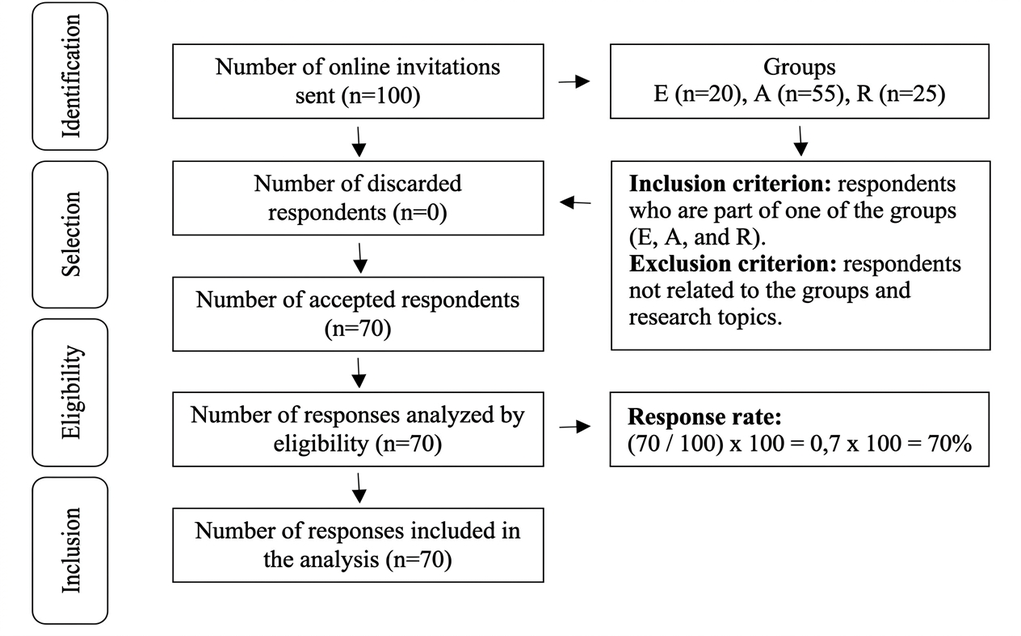
For the study, an online invitation was sent containing the 25 research questions and the description of the Free and Informed Consent Form (FICF), ensuring voluntary and anonymous participation, to professionals from the 27 Brazilian states (a fundamental step to ensure the quality and reliability of the results). The dissemination occurred through social media such as Instagram, Facebook, and WhatsApp, and participants were selected through intentional sampling, considering their relationship with the research topics.
Thus, the sample selection process, including inclusion and exclusion criteria, as well as the response rate, is illustrated in the following flowchart (Figure 1).
Source: Original research results.
To enhance the analysis of the results, a quantitative interpretation approach was adopted for questions that used a five-point Likert scale, in order to measure the degree of agreement or disagreement of the participants regarding the evaluated questions, which relates to the frequency of the choices made.
In view of this, values below three were considered discordant and values above three were classified as concordant, on a five-point scale. The value exactly equal to three was interpreted as “indifferent” or “no opinion”, corresponding to the neutral point and applicable to cases where respondents left the answer blank.
In the tabulation and analysis process after data collection, they were organized and transcribed into Microsoft Excel electronic spreadsheets. From this point on, the software’s analysis tools were used, which enabled the creation of relative data tables, graphs, and histograms of the research indicators.
After this analysis, the degree of agreement and disagreement was identified, as well as the level of knowledge and ignorance that the interviewees presented about digital platforms and the digital cluster of architecture, which allowed us to determine relevant points for the fulfillment of the study’s objective.
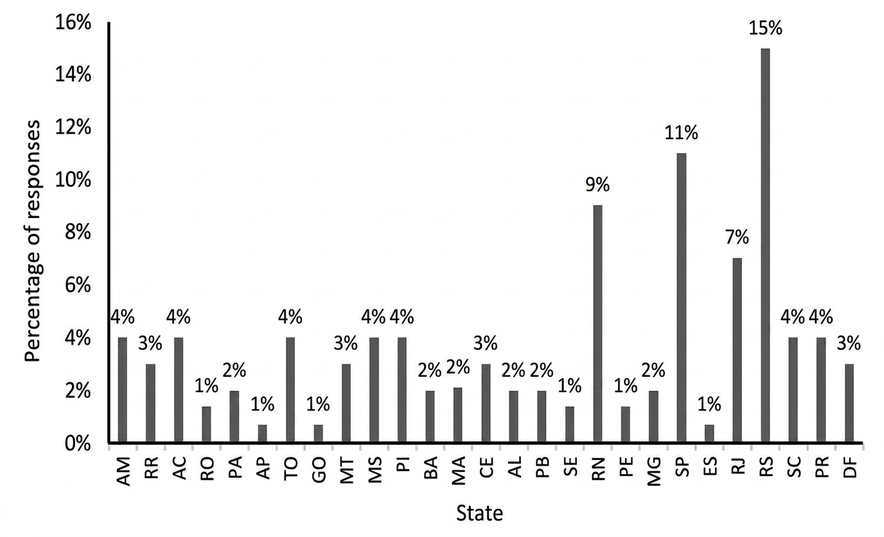
Initially, in order to characterize the sample, questions were formulated to identify participants’ locality, age, gender, and professional profile. Regarding locality, the sample covered the 27 Brazilian states (Figure 1), with emphasis on Rio Grande do Sul, which represented 15% of the respondents, São Paulo with 11%, Rio Grande do Norte with 9%, Rio de Janeiro with 7%, among others. This result provided a diversity of responses associated with distinct realities of the architect’s professional practice, which broadened access to different contexts relevant to achieving the objective, but may highlight challenges related to social and cultural barriers.
Such factors directly influence the adoption of new technologies and their applicability in the practice of the profession. Thus, the design of governance and management of a digital cluster must be compatible with certain social and cultural criteria arising from the geographical extent.
Source: Original survey results.
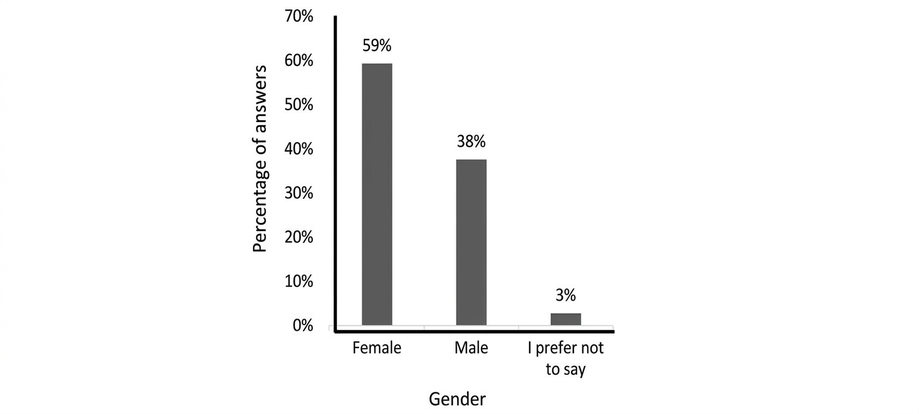
The issue regarding gender, represented in Figure 2, revealed that 59% of respondents are women, 38% men, and 3% chose not to specify their gender. These results show a proportion similar to the survey conducted by the Brazilian Council of Architecture and Urbanism (CAU) in 2021, in which 58% of registered professionals are women, 30% are men, and 11% preferred not to disclose[11]. Thus, the considerable female participation can contribute to correcting gender inequalities and to the strengthening and expansion of diversity in the professional field through the digital cluster.
Source: Original survey results.
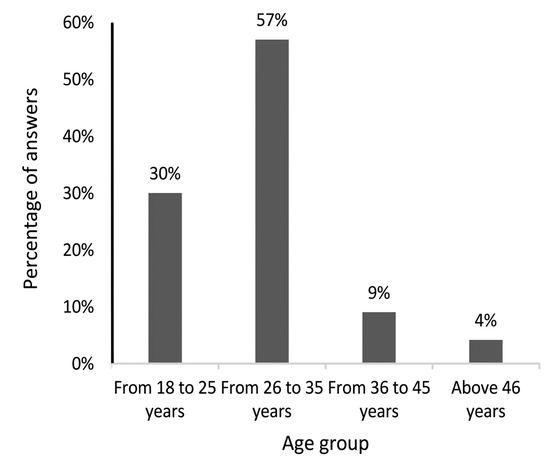
The sample population shows a predominance of participants aged 26 to 35 years, accounting for 57% of respondents (Figure 3). In the survey conducted by CAU in 2021, the 31 to 40 years age group represents 35% of registered professionals, while the 18 to 30 years age group represents 33%[11]. These values indicate a compatible proportion and highlight a fertile ground for conducting online work, considering that the level of familiarity, adoption, and fluency in using digital tools still tends to vary among different age groups, with younger architects being more prone to integrating digital tools into their routines.
Source: Original research results.
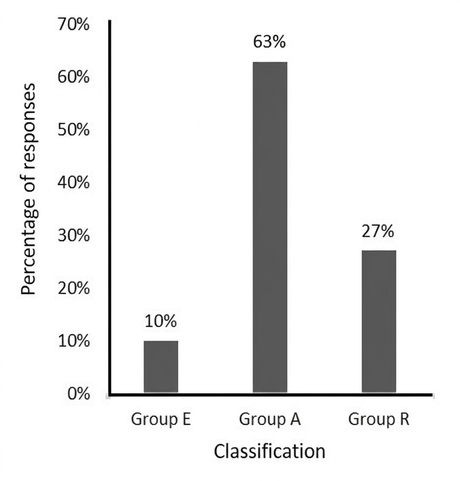
Figure 4 presents the classification of participants into groups, distributed as follows: 63% declared belonging to group A (architects), 27% to group R (representatives of architecture firms), and 10% to group E (students). Thus, it is observed that architects and representatives of architecture firms constitute the predominant audience.
The predominance of such professionals reveals a strategy for consolidating dynamics of cooperation, learning, and professional strengthening in the online environment. Furthermore, a dense digital cluster of architects and office representatives can generate network effects, amplifying the interaction value of each participant and the quality of services.
Source: Original research results.
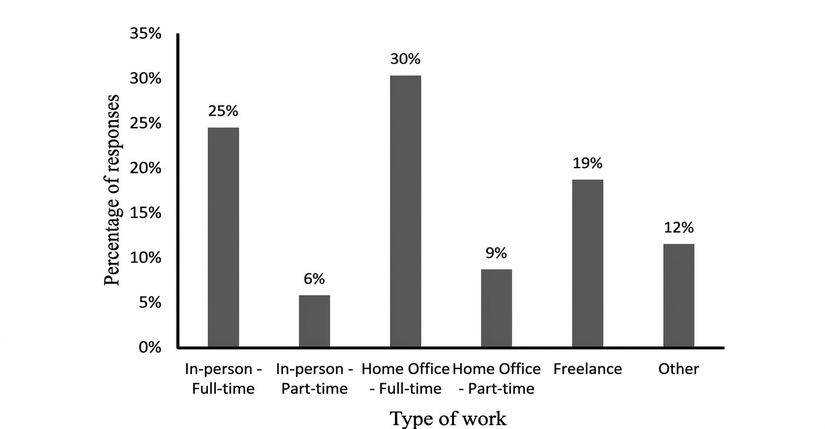
Regarding the type of work of the participants (Figure 5), the results reflect the current context of the practice of the profession. Work in home office and freelance modalities represent 58% of cases, a significantly higher percentage than traditional work (full-time in-person), which corresponds to 25%. This is a reality unlikely a few years ago, but considerably promising for the near future.
In 2020, a study by the Institute for Applied Economic Research (Ipea) revealed that the forecast for the migration from in-person work to home office in Brazil corresponds to 22.7% of occupations, representing over 20 million people[12]. In this context, the need to rethink the organization of professional practice to adapt it to current demands is reinforced. This dynamic considerably favors the applicability of the objective and reinforces the need for digital platforms to cover new forms of work.
Source: Original research results.
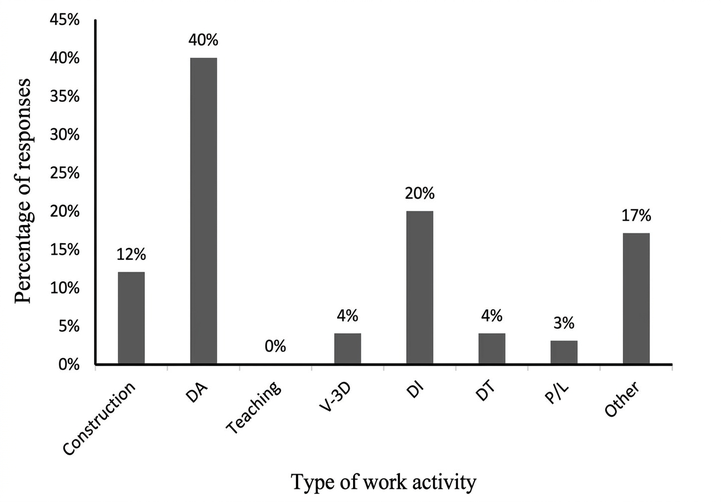
Regarding the type of work activity, 40% of respondents indicated working with architectural design (AD), an expressive percentage when compared to other activities: 20% work with interior design (ID), 17% develop other activities, 12% work in the construction area, 4% perform 3D visualization (3D-V), 4% work with technical drawing (TD), 3% with landscaping/landscape (L/P) and none work as teachers (Figure 6). Thus, AD is configured as one of the central services for the structuring of the digital cluster.
Furthermore, the presence of the DA as a predominant figure can impact the organization and governance of a digital cluster. The experience of structuring spaces and flows can generate curation practices, content categorization, hierarchies, demand mapping, and the creation of collective standards. This favors market dynamics, configuring an environment for the production, circulation, and monetization of architectural work.
On the other hand, activities such as DI, V-3D, DT, P/L, and even “people who develop other activities”, representing 48% of the responses, can be easily considered in a digital space, because most use and need digital tools for their execution. This finding, complemented by 40% of DA, which can also be transferred to a 100% online environment, reflects that 88% of activities in the field of architecture can be considered digital.
Although the work groups present distinct compositions and dynamics, the online connection enables everyone to participate and integrate into the same digital space, fostering interaction, collaboration, and circulation of services.
Source: Original research results.
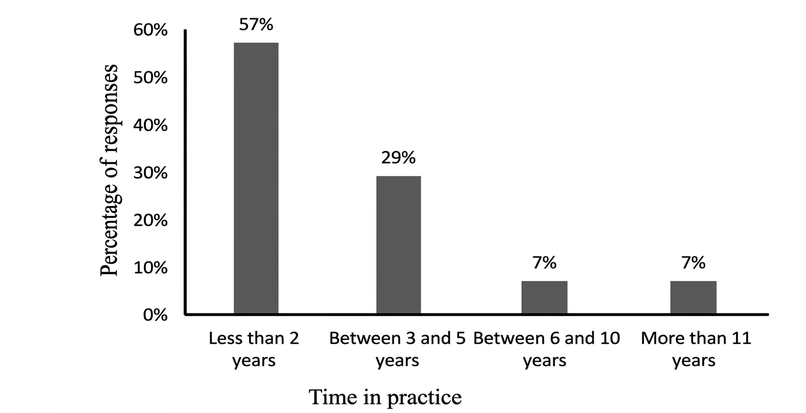
Regarding the time of practice in the area (architecture and urbanism), 57% indicated having less than 2 years of experience, 29% have between 3 and 5 years, 7% between 6 and 10 years, and 7% more than 11 years, respectively (Figure 7). This result shows a high presence of young professionals, which confirms the growing insertion of new architects into the job market and represents a directly proportional relationship with the predominant age group among respondents, from 26 to 35 years old (Figure 3).
Such a finding is not unexpected, as the research dissemination occurred through social media such as Instagram, Facebook, and WhatsApp. This aspect reinforces the trend that points to information and communication technologies, especially social networks, being widely adopted by individuals of different generations[13]. Young people, in particular, integrate these platforms into their daily lives[14], which demonstrates the need for continuous development, constant updating of professional skills, and the ability to adapt quickly to ever-changing conditions[15].
Despite this relevance, the insertion of young professionals in digital clusters involves significant challenges. The main tension lies in the asymmetry of experience. Although the presence of young professionals is essential for vitality and innovation, it is fundamental to understand the emerging socioprofessional dynamics in the context of the digitalization of work.
Source: Original research results.
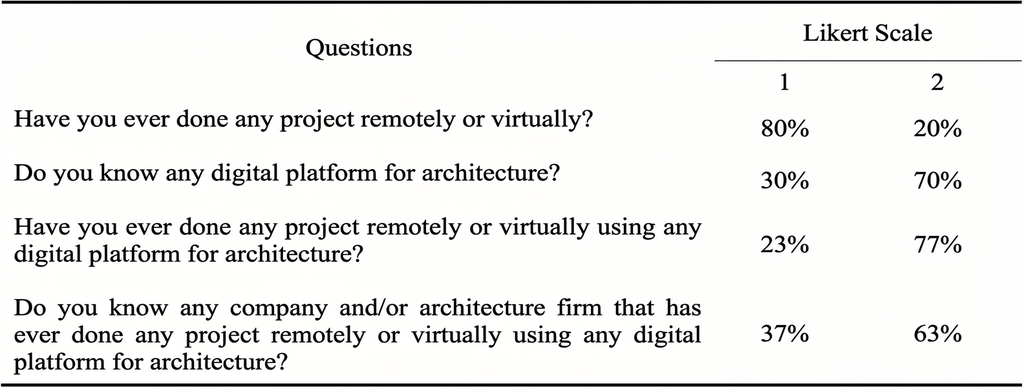
The dimension named “Digital platforms and their current use” (questions 8 to 18) was divided into two tables (Tables 1 and 2) to simplify data analysis. In questions 8, 9, 11, and 12 (Table 1), the sample indicated that 80% of respondents carried out some distance or virtual project, 30% know some digital architecture platform, 23% conducted a distance project using a digital architecture platform, and 37% know some company or architecture firm that executed a distance project with this type of resource. These results demonstrate that carrying out architecture work at a distance or virtually is very significant, a fact that reinforces one of the central points for the creation of the digital cluster.
On the other hand, it is observed that knowledge about digital architecture platforms and their professional application is still limited. In this context, an architecture digital cluster configures a new form of work organization in distant or virtual markets, which provides an alternative for the structuring of architecture services; but it is a tool that needs improvement, systematization, and wide dissemination.
In a future practical application scenario, regulatory clarity becomes fundamental. Constant improvement, systematization, and precise dissemination establish transparent parameters for use, responsibility, and rights protection. In constantly changing spaces, clear guidelines reduce uncertainties and ensure predictability for professionals and users, strengthening trust in the cluster.
Table 1. Questionnaire result regarding “Digital platforms and their current use”
Note: (1) Yes; (2) No.
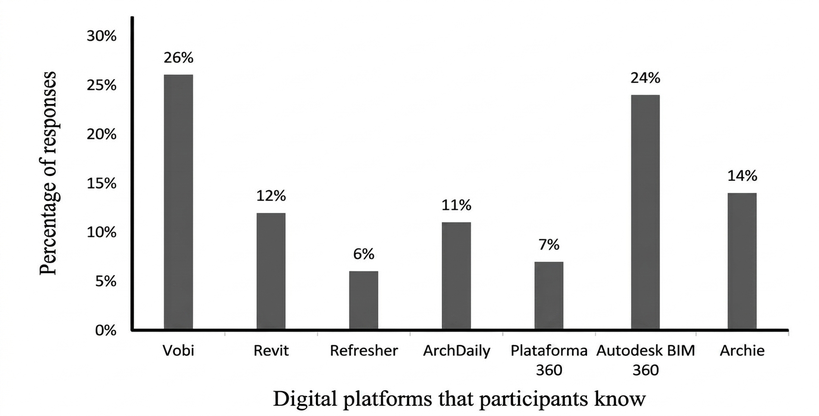
Regarding the knowledge and use of digital architecture platforms (Figure 8), it is observed that most participants mentioned platforms that operate as digital environments for time management, modeling, and cloud-based construction management, such as Vobi and Autodesk BIM 360, in addition to a platform focused on offering online decoration services, such as Archie.
Furthermore, it is noted that software such as Revit is used for project modeling and management, an electronic platform like ArchDaily allows access to architecture news and project visualization, while the 360 Platform contributes to business management and the presentation of architectural projects through briefings.
Finally, Refresher emerges as the mentioned platform closest to a cluster, as its objectives include capturing and understanding new clients and efficient project management; however, the formation of formal ties, such as partnerships, is not evident.
The results indicate a consistent foundation regarding the knowledge and use of digital platforms; however, their use for the creation and maintenance of formal links between companies and architecture professionals remains limited, given that the largest percentage of responses focused on management, consulting, and modeling platforms. This result is not unexpected, as digital clusters of architecture and urbanism are still infrequent.
However, when compared to the pre-pandemic scenario, this finding indicates that digital spaces and platforms are being continuously used, evidencing a consistent trend of expansion and consolidation of online work in architecture.
Source: Original research results.
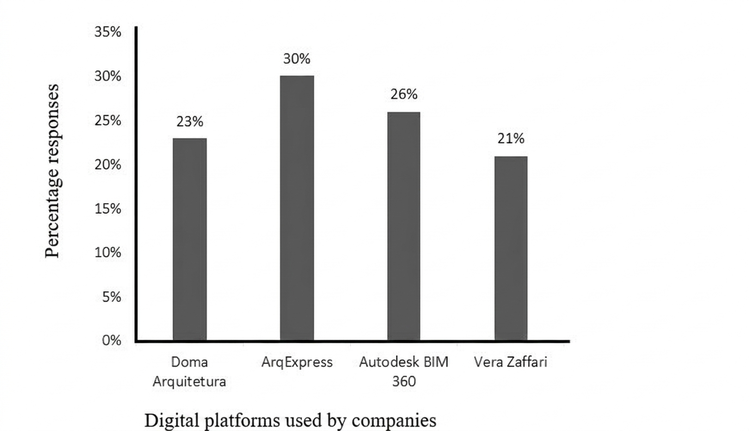
When asked about their knowledge of architecture firms that carry out remote projects and the platforms used, participants cited ArqExpress with 30% of responses, Autodesk BIM 360 with 26%, Doma Arquitetura with 23%, and Vera Zaffari with 21% (Figure 9). It should be noted that, for the most part, the platforms mentioned fall under architecture project consulting and management, rather than environments intended for the establishment of structured networks between architecture firms and professionals.
This aspect reinforces the premise presented in Figure 8, in which restricted knowledge and limited use of digital spaces aimed at the creation and maintenance of formal links between professionals and architecture firms were observed.
Considering a scenario of young professionals, mostly working full-time from home and with considerable female representation (Figure 3, 5 and 2, respectively), the strengthening of the cluster can bring structural competencies in which female protagonism is substantial.
Certain platforms mentioned by the participants, such as ArqExpress, Doma Arquitetura, and Vera Zaffari, when analyzed, derive into a constant: the female presence. Renata Pocztaruk, Patricia Pomerantzeff, and Vera Zaffari, respectively, are in charge of 74% of the platforms mentioned by the participants.
The female presence can contribute to reducing historical gender asymmetries in the profession, promoting a more inclusive and sensitive digital space. Furthermore, their performance qualifies the innovation process by incorporating a medium that enriches the cluster’s dynamics.
Source: Original research results.
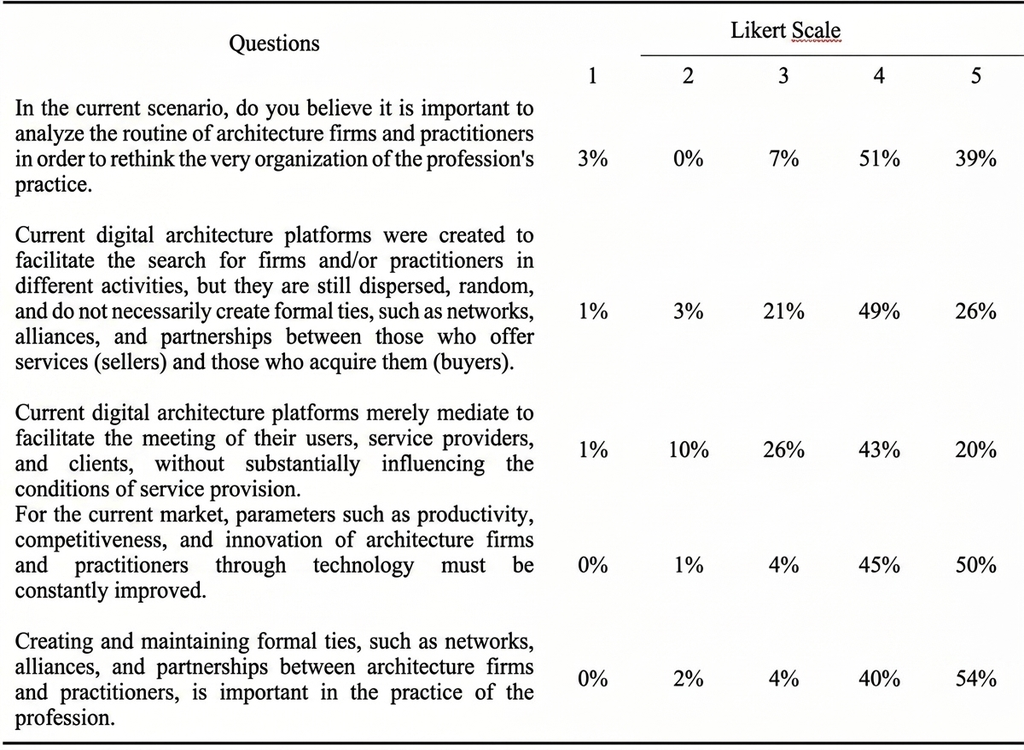
For questions 14, 15, 16, 17, and 18 (Table 2), respondents were asked to indicate their degree of agreement or disagreement with existing digital architecture platforms today. Thus, 90% agreed that it is important to analyze the routine of architecture companies and professionals in order to rethink the organization itself in the practice of the profession. Subsequently, 75% stated that the available digital architecture platforms were created to facilitate the search for companies or professionals in different activities, although they still remain dispersed, random, and without the necessary formation of formal ties.
In the following question, 63% agreed that digital architecture platforms only perform intermediation. Consequently, 95% agreed that, in the contemporary market, parameters such as productivity, competitiveness, and innovation of architecture companies and professionals need continuous improvement. Finally, 94% agreed that creating and maintaining formal ties, such as networks, alliances, and partnerships between architecture companies and professionals, constitutes an important aspect for the practice of the profession.
In light of the set of answers regarding Table 2, there is evident agreement on the need to rethink the organization of professional practice and on the limitations present in currently available digital architecture platforms, such as the restricted role of mere intermediation – an aspect that must be analyzed and improved in the digital cluster.
Furthermore, the importance of creating and maintaining formal links between professionals in the field is reaffirmed. The respective implications and implementation challenges must be considered. The professional landscape safeguards intense competition[6] and diversification; thus, the adoption of rigorous care in professional practice becomes fundamental to ensure quality practices and favor consistent results over time.
Table 2. Results of the questionnaire on digital platforms and their current use
Note. (1) Strongly disagree; (2) Partially disagree; (3) Neither agree nor disagree; (4) Agree; and (5) Strongly agree.
The dimension named “Digital architecture cluster and its importance” covered questions 19 to 25. In questions 19 and 20 (Table 3), the results showed that 71% of participants did not know what a digital architecture cluster is and 94% did not know of any such initiative. Although 6% indicated they knew, no name was cited (question 21).
This scenario confirms the limited knowledge about the existence and use of this type of platform and reinforces the objective of proposing a digital meeting space, given the demonstrated interest and importance (Table 2). Furthermore, the direct impact on efficiency, organizational capabilities, and revenue growth on company performance is ratified[16].
Table 3. Questionnaire result regarding “Digital cluster of architecture and its importance”

Note. (1) Yes; (2) No.
In this same dimension, in questions 22 and 23 (Table 4), respondents were asked to indicate their degree of agreement or disagreement on the importance of digital clusters of architecture. The results showed that 75% agree that a digital cluster of architecture represents a new form of productive, competitive, and innovative work in the field. Subsequently, 91% agreed that increasing company productivity, driving the direction and pace of innovation, as well as stimulating the formation of new businesses, should be basic parameters of a digital meeting space for architecture.
Thus, it is observed that a digital cluster of architecture represents a relevant form of work in the current exercise of the profession, which is configured as a tool focused on productivity and innovation, as issues related to digital transformation assume growing relevance for integrated structures represented by clusters[17].
Table 4. Questionnaire result regarding “Digital architecture cluster and its importance”
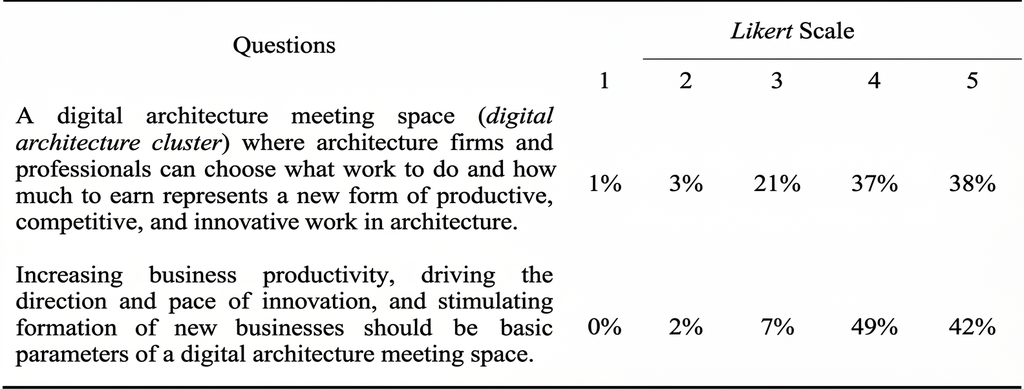
Note: (1) Strongly disagree; (2) Partially disagree; (3) Neither agree nor disagree; (4) Agree; and (5) Strongly agree.
In the result of question 24 (Table 5), it is verified that 83% of the respondents stated that they would be part of a digital architecture cluster if it were launched on the market. Regarding the reason (question 25), the respondents described that this initiative would represent a new way of repositioning in the market, with the benefit of sharing among peers in the profession.
They also pointed out that the cluster would constitute an additional alternative for gaining visibility, work, projects, and for facilitating the exchange of experiences and information, which eliminates the feeling of isolation and broadens the connection with the network of interest. In this way, when a professional innovates and improves their practices, others can also advance, which favors the growth of the profession and contributes to its continuous valorization.
Table 5. Questionnaire result regarding “Digital cluster of architecture and its importance”
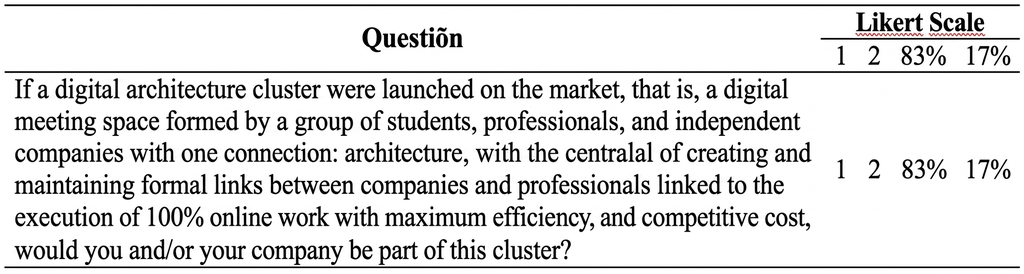
Note. (1) Yes; (2) No.
Based on the results obtained from the participation of 70 respondents from the 27 Brazilian states, it was found that the digital era and the covid-19 pandemic have transformed the job market for architects and urban planners by enabling new forms of interaction and consumption. These elements indicate that digital clusters of architecture constitute an alternative for organizing the value chain of architecture and urban planning services in Brazil, in addition to being a relevant tool for the current and future practice of the profession.
However, it is important to emphasize that the results obtained exclusively reflect the perceptions of the investigated sample, and cannot be generalized to the entire body of professionals in the country. Thus, the considerable female presence and the apparent greater adherence of younger participants to digital tools should be understood as a trend observed among the respondents of this study, and not as a structural characteristic or necessarily representative of the professional field as a whole.
Thus, in its possible practical application, a digital cluster architecture structures the relationship between professionals and clients through platform rules, reputation systems, and visibility algorithms. This type of digital space adopts revenue models based on commissions or subscriptions, influencing the pricing of services and the remuneration of architects. An Airbnb for architects’ work.
In the contractual and labor context, the 100% online dynamic brings challenges related to the definition of responsibilities, copyrights on digital projects, and possible asymmetries between the digital space and professionals, demanding greater regulatory clarity, negotiation of working conditions, and transparency in terms of use and in algorithmic mediation systems.
Online work in architecture brings and demands new skills, but the absence of clear rules can bring risks to professional practice and the lack of constant improvement can bring economic and usage consequences.
Therefore, it was concluded that a digital cluster of architecture can represent both an opportunity to expand professional reach and diversify income sources, and an environment marked by greater competition, algorithmic dependence, and contractual uncertainties, demanding adaptation strategies to the new dynamics of visibility, remuneration, and technical responsibility in online work.
In this scenario, for future research, it is recommended to analyze the results and broaden the investigation beyond the Brazilian context, as, being a digital platform, there are no limitations regarding the connection between professionals. It is also recommended to carry out a pilot project in order to apply and confirm the premises verified in this study.
References
[1] Conselho de Arquitetura e Urbanismo do Brasil (CAU/BR). 2021. Relatório de Gestão 2020. Disponível em: https://transparencia.caubr.gov.br/arquivos/relatoriodegestaofinal2020.pdf. Acesso em: 25 jun. 2021.
[2] Cavalcante Junior, F. C., Ceolin, A. C.; Neto, H. Q. 2022. Estudo dos principais desafios enfrentados pela gestão empresarial durante a pandemia da COVID-19. Revista Interfaces: Saúde, Humanas E Tecnologia, 10(2): 1353–1360. https://doi.org/10.16891/2317-434X.v10.e2.a2022.pp1353-1360.
[3] Navarrete, J.D.; Montoya, L.A.; Montoya, I.A. 2009. Clusters como un modelo en el desarrollo de los negocios electrónicos. Revista Innovar, 19(34), 35-52. Disponível em: http://www.scielo.org.co/pdf/inno/v19n34/v19n34a04.pdf. Acesso em: 19 jun. 2021.
[4] Kudryavtseva, T.; Kulagina, N.; Lysenko, A.; Berawi, M.A.; Skhvediani, A. 2020. Developing Methods to Assess and Monitor Cluster Structures: The Case of Digital Clusters. International Journal of Technology. 11(4): 667-676. https://doi.org/10.14716/ijtech.v11i4.4191
[5] Harvard Business Review (HBR). 1998. Clusters and the New Economics of Competition. Disponível em: <https://hbr.org/1998/11/clusters-and-the-new-economics-of-competition>. Acesso em: 05 mai. 2021.
[6] Garcia-Unanue, M.; Cavalari-Cardoso, M.; Costa-Barros, L. 2024. Análise das condições profissionais na arquitetura e urbanismo: ampliando fronteiras de atuação. Revista de Arquitectura, 29(47): 153-174. https://doi.org/10.5354/0719-5427.2024.75991.
[7] Conselho de Arquitetura e Urbanismo do Brasil (CAU/BR). 2018. Revolução no trabalho mudará composição das cidades e ação dos arquitetos. Disponível em: https://caubr.gov.br/revolucao-no-trabalho-mudara-composicao-das-cidades-e-acao-dos arquitetos/. Acesso em: 22 jun. 2021.
[8] National League of Cities. 2022. The Future of Cities. Washington, D.C. Disponível em: https://www.nlc.org/wp-content/uploads/2022/09/CS-Future-of-Work-Report_v7_final-1.pdf. Acesso em: 28 set. 2022.
[9] Pinsonneault, A.; Kraemer, K. 1993. Survey Research Methodology in Management Information Systems: An Assessment. Journal of Management Information Systems, 10(2): 75–105. Disponível em: https://www.jstor.org/stable/40398056. Acesso em: 22 jun. 2021.
[10] Likert, R. 1932. A technique for the measurement of attitudes. Archives of Psychology, 140, 1–55. Disponível em: <https://es.scribd.com/document/274260819/1932-Likert-A-Technique for-the-Measurement-of-Attitudes-pdf>. Acesso em: 18 mai. 2021.
[11] Conselho de Arquitetura e Urbanismo do Brasil (CAU/BR). 2021. II Censo dos Arquitetos e Urbanistas do Brasil. Disponível em: https://caubr.gov.br/censo2020/?page_id=20. Acesso em: 21 jul. 2021.
[12] Instituto de Pesquisa Econômica Aplicada (Ipea). 2020. Home office pode chegar a 22,7% das ocupações nacionais. Disponível em: https://portalantigo.ipea.gov.br/agencia/index.php?option=com_content&view=article&id=356 72. Acesso em: 12 mai. 2021.
[13] Severo, E. A.; Guimarães, J. C. F.; Dellarmelin, M. L.; Ribeiro, R. P. 2019. The Influence of Social Networks on Environmental Awareness and the Social Responsibility of Generations. Brazilian Business Review, 16(5): 500-518. https://doi.org/10.15728/bbr.2019.16.5.5.
[14] Silveira, P.; Morais, R.; Petrella, S. 2022. A Communication Study of Young Adults and Online Dependency during the COVID-19 Pandemic. Societies, 12(4): 109. https://doi.org/10.3390/soc12040109.
[15] Petruk, G. V.; Klescheva, N. A. 2021. Competencies of a contemporary employee in the age of digitalization. European Proceedings of Social and Behavioural Sciences. European Publisher, 111: 724-730. https://doi.org/10.15405/epsbs.2021.06.03.97.
[16] Latifi, M.-A. ; Nikou, S.; Bouwman, H. 2021. Business model innovation and firm performance: Exploring causal mechanisms in SMEs. Technovation, 107: Article 102274. https://doi.org/10.1016/j.technovation.2021.102274.
[17] Babkin, A.; Mamrayeva, D.; Tashenova, L.; Makhmudova, G. 2020. Digital platforms for industrial clusters and enterprises: essence and structure. Proceedings of the SPBPU Conference: SPBPU IDE-2020: 1–7, Article 39. https://doi.org/10.1145/3444465.3444486.
COMO CITAR
Sánchez, D.M.C.; Almeida, A.V. Percepções de profissionais de arquitetura a respeito de um cluster digital. Revista E&S. 2026; 7: e2025046.
ABOUT THE AUTHORS
 Dorely Marilú Calderón Sánchez – Business Management Specialist. Founder of Vita Activa. Rua Seival, 216, Vila Jardim, 91320-310, Porto Alegre, Rio Grande do Sul, Brazil.
Adriana Villanova de Almeida – Master in Administration. Supervising professor. Rua Cezira Giovanoni Moretti, 580, Santa Rosa, 13414-157, Piracicaba, São Paulo, Brazil.