
Neuroscience And Learning In Education
September 10, 2026
Parental Perception of the Influence of Moral Literary Narratives on Child Behavior
Expedito Arantes; Marilda Aparecida Soares
DOI: 10.22167/2675-6528-202602212
Article derived from a Final Course Work (TCC), with content based on the student’s original work and adapted to the editorial format of the Revista E&S with the support of the ResumeAI tool, an artificial intelligence solution developed by the Pecege Institute for textual synthesis and organization.
Abstract
Moral education in childhood represents a contemporary challenge, given the saturation of digital stimuli and the need for socio-emotional resilience. In this context, children’s literature plays a crucial role in modulating basic moral intuitions during intense brain plasticity. The study investigated the perception of parents and guardians regarding the impact of reading narratives with a moral background on the ethical and behavioral development of children between 4 and 12 years old. Based on perspectives from cognitive neuroscience, the research analyzed how literature acts as a sophisticated social simulator in the construction of children’s moral sense. The methodology consisted of applying an electronic structured questionnaire, answered by 197 participants from different sociocultural profiles, in a quanti-qualitative approach. The results indicated that the predominant reading frequency in families occurred once or twice a week, revealing high pedagogical intentionality, with the moral lesson as a decisive criterion in the choice of works. It was also observed that active mediation significantly stimulated empathy, the spontaneous formulation of critical questions about ethical dilemmas, and the transposition of virtues to daily life. It was concluded that moral literary narratives constitute effective tools for emotional regulation and for strengthening neural networks linked to social valuation, with mediated literary practice serving as an essential scaffold for the internalization of social norms in a playful and reflective manner.
Keywords: Behavior; Moral development; Empathy; Children’s literature; Neuroscience.
1. Introduction
Moral formation in childhood represents a contemporary challenge, especially given the growing saturation of digital stimuli and the urgency to promote socio-emotional resilience. In this context, children’s literature, recognized as an age-old social resource, plays a crucial role in modulating basic moral intuitions during a period of intense brain plasticity. Morality and moral behavior are understood as the qualitative dimension of human action, intrinsically linked to ethical principles and the set of values and practices that guide individuals in distinguishing between right and wrong, just and unjust, serving as a parameter for the realization of virtues and the guidance of ethical conduct.
The structuring of morality is a central axis of human maturation in childhood, involving the internalization of social conventions, the cultivation of empathy, and the ability to discern the ethical nature of actions. Historically, the child’s mind was associated with the concept of tabula rasa, according to Locke (1689), suggesting that knowledge and ethical sense would be built entirely by external experience. However, recent research, such as that by Bloom (2013) and Haidt (2013), indicates the existence of an innate moral compass, with biological predispositions for cooperation and care. In this sense, theorists like Piaget (1994) described the evolution of moral sense in distinct stages, from heteronomous obedience to autonomous morality, based on reciprocity and mutual understanding of intentions.
Studies by Bloom (2013) and Haidt (2013) reinforce that infants demonstrate a rudimentary sense of fairness and empathy even before language development, showing preferences for characters who act helpfully. From the perspective of social neuroscience, the interaction between the reader and the listener, especially in mediated reading, creates a phenomenon of neural coupling. Hasson et al. (2010) and Piazza et al. (2020) demonstrated that the listener’s brain responses mirror those of the speaker during a successful narrative, which strengthens the affective bond and the transmission of values. Immordino-Yang et al. (2009) observed that complex social emotions, such as admiration and compassion, activate deep cortical and subcortical areas, evidencing the biological modulation of moral valuation by literature.
Haidt’s (2013) contribution suggests that culture and education, represented by moral literature, shape and consolidate moral expressions from innate cognitive modules. The brain architecture, according to the analogy by Marcus (2004) and Haidt (2013), resembles an initial literary draft, with genetically outlined master lines, which are filled in and matured throughout childhood. Children’s literature, in this process, acts as an invaluable cognitive tool. The brain, although not born to read, has the plasticity to create new reading circuits (Wolf, 2024), connecting visual, linguistic, and affective areas, and recycling neural architecture to accommodate literacy (Dehaene, 2012), enhancing the processing of complex and abstract information. Narratives with a moral background, according to Bloom (2013) and Tomasello (2009), are cultural instruments that allow children to explore concepts of justice, empathy, and cooperation, inserting themselves into a socialization process that promotes pro-social behaviors. Literary fiction, in particular, functions as a sophisticated simulator of social worlds, activating neural networks similar to those of real experiences and allowing children to explore ethical dilemmas, understand motivations, and exercise Theory of Mind, promoting empathy and conflict resolution (Mar and Oatley, 2008; Oatley, 2016).
However, the impact of these narratives is intrinsically dependent on parental mediation and the context in which reading occurs. Parents are the main observers of the transposition of these literary lessons into daily life. Despite the relevance of the topic, there is a gap in understanding how caregivers perceive this practical influence on their children’s behavior and emotional regulation, especially in a world saturated with digital stimuli. Given this scenario, the present study is justified by the need to investigate the effectiveness of moral narratives as tools to support socio-emotional development and had as its main objective to analyze parental perception of the influence of these stories on children’s moral compass, verifying how shared reading contributes to the internalization of virtues and the formation of ethical and empathetic conduct.
2. Material and Methods
This research is characterized as exploratory and descriptive, with a quanti-qualitative approach (Creswell and Clark, 2013). The study focused on investigating the perception of parents and guardians about the influence of literary narratives with a moral background on child behavior and cognition.
The sampling was non-probabilistic by convenience (Gil, 2022). Participants were accessed through digital invitations on social networks and groups of interest in education and parenting. At the end of the collection period, a sample of 197 respondents was obtained, composed of parents or guardians residing in various cities and states in Brazil. Participation was voluntary and anonymity was rigorously preserved, with no data collected that would allow for the nominal identification of subjects or specific institutions, in accordance with research ethics guidelines.
For data collection, a semi-structured questionnaire was used, developed on the Google Forms platform. The instrument consisted of 14 questions planned in a logical sequence, divided into thematic blocks: (i) demographic profile and child’s age; (ii) reading habits and mediation frequency; (iii) perception of behavioral impact after reading; and (iv) reports of value transposition to everyday situations. The quantitative questions were based on the Likert scale (1932), while the qualitative, open-ended questions were included to enable the collection of narratives and concrete examples of applying literary lessons. The questionnaire inquired about: the age of the children for whom the adult reads; reading frequency; reading habits with a moral focus; influence of the moral background on the choice of acquiring books for reading; perception of the impact of reading on child behavior; child’s reactions during and after reading; and parental perception of the benefits of reading texts with a moral background for child development.
Data collection occurred entirely remotely during the months of October 2025 to January 2026, covering urban centers in different regions. The procedure was conducted impersonally, ensuring that the response environment was the participant’s home, without direct researcher interference, aiming to minimize social desirability bias (Sampieri; Collado; Lucio, 2013).
The data treatment was carried out in two complementary stages. Quantitative data were submitted to descriptive statistics, using absolute and relative frequencies, organized in spreadsheets to identify predominant patterns and trends in the sample of 197 participants. Qualitative data, from open-ended responses, were submitted to the Content Analysis technique proposed by Bardin (2016). This method allowed for the systematization of information through three phases: pre-analysis, material exploration, and treatment of results with inference and interpretation. The units of record were categorized into themes such as empathy development, honesty, emotional regulation, and collaboration, allowing the parents’ reports to be correlated with the foundations of social neuroscience and learning discussed in the theoretical framework.
3. Results and Discussion
Haidt (2013) proposes that morality is based on innate intuitive modules, such as Care/Harm and Fairness/Cheating, which are subsequently shaped by culture and education. This perspective shifts morality from logical reasoning to the realm of quick and automatic intuitions, conceptualizing an innate “moral compass.” According to Marcus (2004) and Haidt (2013), the brain’s architecture resembles an initial literary draft, with structural outlines awaiting completion and maturation, refuting the idea of the brain as a “blank slate” (Locke, 1689). In this process of cultural shaping, children’s literature acts as a valuable technological and cognitive tool, given that the brain has plasticity to create new reading circuits, connecting visual, linguistic, and affective areas (Wolf, 2024; Dehaene, 2012).
Reading narratives with a moral background, according to Bloom (2013), constitutes a cultural instrument that allows children to explore concepts of justice, empathy, and cooperation through symbolic experience. These stories, according to Tomasello (2009), are part of a socialization process that promotes prosocial behaviors and the understanding of others’ goals. Moral narratives operate in the cognitive and emotional domains, facilitating empathy, moral judgment, and social learning (Haidt, 2001). Literary fiction, in particular, functions as a simulator of social worlds, activating neural networks similar to those used in real experiences, allowing children to explore ethical dilemmas and exercise Theory of Mind (Mar and Oatley, 2008; Oatley, 2016).
Collection and analysis of data on parental perceptions
The analysis of the data collected from the 197 participants revealed significant patterns in the interaction between mediated reading and the development of children’s moral sense. The results confirmed that literature with a moral aspect acts as a potent simulator of social realities, modulating specific neural circuits linked to empathy and ethical decision-making.
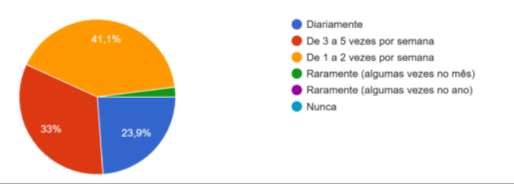
A fundamental piece of data was reading frequency: the majority of families (n=81) reported a frequency of one to two times per week, followed by three to five times (n=65) and daily (n=47). This distribution suggests that the consolidation of moral values does not depend solely on daily exposure, but on the quality of mediation and the intensity of the aesthetic experience, allowing for deep processing of moral dilemmas and integration into the child’s “moral draft” (Wolf, 2024; Haidt, 2013).
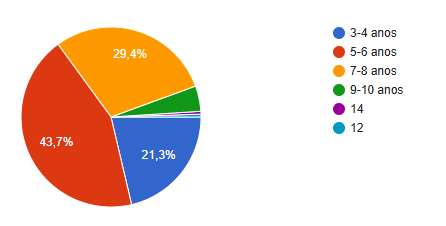
Figure 1 shows the age distribution of children whose parents or guardians read to them. The highest concentration of responses was grouped in the 5 to 6 year old range (43.7%), followed by children aged 7 to 8 years (29.4%) and 3 to 4 years (21.3%). The groups aged 9 to 10 years and 11 to 12 years, and others, represented 5.6%. The predominance of children between 3 and 8 years old (94.4% of the sample) covers critical phases of moral transition, from the stage of heteronomous obedience to the beginning of cooperation (Piaget, 1994). This data reinforces the relevance of literature as a timely stimulus during windows of intense brain plasticity (Wolf, 2024), acting as a reviser of the “first moral draft” (Haidt, 2013) and calibrating innate intuitions of care and justice through social simulation (Oatley, 2016).
Figure 1. Age reported by the responding parents or guardians
Source: Original research results
Figure 2 details reading frequency. The largest portion of the sample (41.1%) maintains the habit of reading once or twice a week, followed by 33% who do so three to five times, and 23.9% who read daily. Only 2% reported rare or no reading frequency. These rates indicate that literary practice is recurrent in most families, and the predominance of weekly frequencies suggests room for deep processing of moral dilemmas, allowing the child to ruminate on situations and integrate them into their moral sense organically and reflectively.
Figure 2. Reading frequency
Source: Original research results
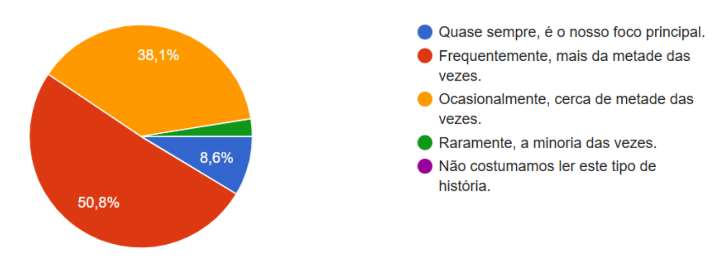
When investigating reading habits with a moral focus, Figure 3 showed a strong presence of narratives with a moral background. The majority of respondents (50.8%) reported that the stories read frequently had a clear moral background. Next, 38.1% stated that this occurred occasionally, and 8.6% almost always adopted these narratives as the main focus. Only 2.5% indicated that this happened rarely.
Figure 3. Reading frequency with moral background
Source: Original research results
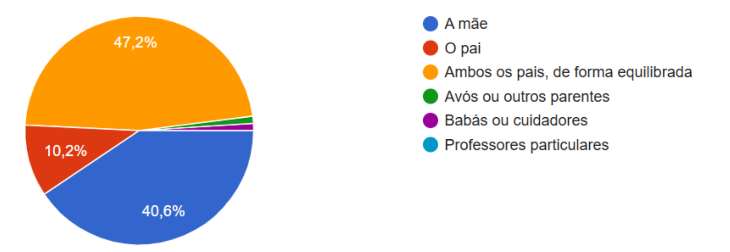
Regarding the reading mediator, the data from Figure 4 revealed that sharing is the most common scenario, with 47.2% of respondents indicating that both parents assume the role of main reader. Maternal mediation stood out significantly (40.6%), in contrast to paternal mediation (10.2%). The participation of third parties (grandparents, other relatives, babysitters, or teachers) comprised a marginal portion of approximately 2%.
Figure 4. Responsible(s) for reading
Source: Original research results
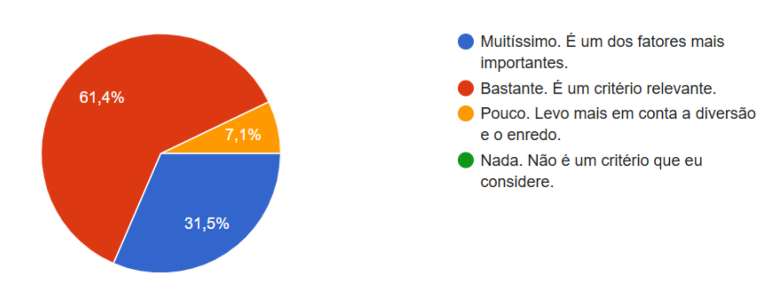
The selection criteria for literary works, according to Figure 5, attested to high intentionality. The majority (61.4%) indicated that the moral lesson greatly influenced the decision to buy or read, and 31.5% classified the presence of a moral background as very influential. Only 7.1% stated that this characteristic had little influence, prioritizing the plot and entertainment.
Figure 5. Purchase decision
Source: Original research results
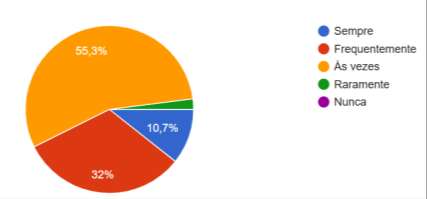
The perception of the behavioral impact after reading, according to Figure 6, revealed that children’s reflective engagement occurred expressively. More than half (55.3%) indicated that the child sometimes asked questions about the story’s lesson. A significant portion of 32% reported that this inquisitive behavior was frequent, and 10.7% attested that moral questioning always happened after readings. Only a minority (approximately 2%) pointed out that the child rarely elaborated questions.
Figure 6. Perception of impact on behavior and questions about history
Source: Original research results
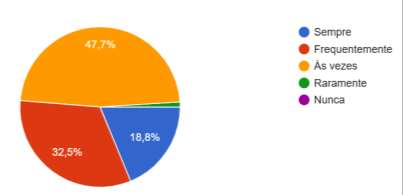
Figure 7 investigated children’s verbal expression of empathy towards characters. The data revealed that this empathic demonstration occurred consistently: 47.7% indicated that they sometimes manifested this behavior, 32.5% frequently, and 18.8% always. Only 1% pointed out that empathic verbalization occurred rarely. These results corroborate Oatley’s (2016) thesis that children’s literature acts as a simulator for social and moral life. From a neurobiological perspective, the verbalization of empathy activated neural networks linked to emotional processing and empathy, such as the anterior insula and anterior cingulate cortex, in addition to the mirror neuron system (Wolf, 2024). The fact that 99% of the sample reported the presence of this behavior attested that the narratives promoted deep affective immersion, exercising the ability to put oneself in another’s shoes.
Figure 7. Demonstration of empathy for characters
Source: Original research results
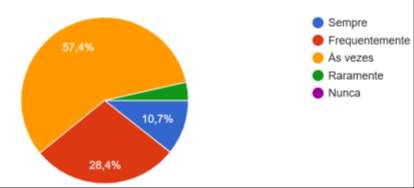
Figure 8 assessed whether the child tried to imitate the positive attitudes of the story’s hero. The majority (57.4%) indicated that the children sometimes sought to imitate the protagonist, 28.4% frequently, and 10.7% always. Only 3.5% pointed out that the imitation of virtues occurred rarely. These data corroborate the importance of behavioral modeling and the figure of the hero in early childhood. The attempt to imitate the protagonist’s attitudes was not a simple playful game, but a neurocognitive rehearsal of virtue, activating motor areas and newly formed ethical schemas, in line with Bandura’s Social Learning Theory (1977) and the studies on mirror neurons by Rizzolatti and Craighero (2004). More than 96% of families observed this imitation behavior.
Figure 8. Imitation of attitudes from history
Source: Original research results
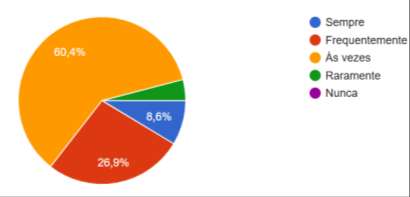
Figure 9 investigated the child’s emotional and cognitive state after reading, questioning whether parents noticed them to be more reflective or calm. The majority (60.4%) indicated that they sometimes perceived the child as more reflective or calm, 26.9% frequently, and 8.6% always. Only 4.1% pointed out that the child rarely showed this state. These findings corroborate the hypothesis that mediated reading of moral narratives acts as an emotional regulation tool, modulating limbic reactivity and engaging the prefrontal cortex. Reflective silence post-reading activates the Default Mode Network, essential for internal processing and the consolidation of autobiographical and social memory (Wolf, 2019). Almost 96% of the children showed this reduction in agitation in favor of reflection.
Figure 9. Child’s reflection perception
Source: Original research results
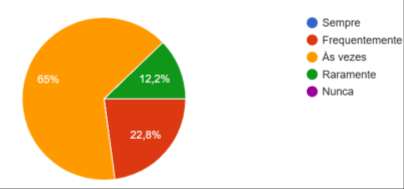
Figure 10 explored the transfer of literary learning to concrete situations. The spontaneous evocation of lessons or characters occurred predominantly: 65% of respondents indicated that the child sometimes mentioned these elements to explain everyday situations, and 22.8% reported that this transposition happened frequently. On the other hand, 12.2% of families stated that this behavior manifested rarely. From a neurocognitive perspective, spontaneous evocation evidenced the consolidation of long-term memory and learning transfer. Morally engaging narratives were anchored in affective neural networks, facilitating their spontaneous retrieval in real dilemmas (Immordino-Yang, 2015). The fact that 87.8% of the sample reported this active evocation attested that virtue literature functioned as a heuristic framework.
Figure 10. Spontaneous mention of lessons from the literature outside the reading context
Source: Original research results
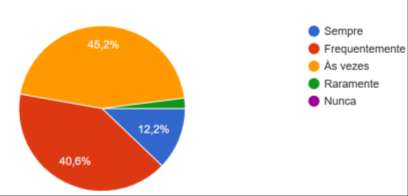
Figure 11 assessed the frequency with which parents used narratives as a tool for disciplinary mediation or moral reinforcement. The largest portion (45.2%) indicated they sometimes used stories as an example, 40.6% frequently, and 12.2% always. Only 2% pointed out that they used this resource rarely. These results highlighted the effectiveness of narrative as a mechanism for brain integration during behavioral correction. By invoking the example of a literary character, parents bypassed limbic reactivity and redirected the child’s processing to the prefrontal cortex, facilitating the executive and conscious assimilation of ethical norms (Siegel and Bryson, 2015). The fact that 98% of the sample used this mediation demonstrated that families anchored moral instruction in a common and safe imaginative ground.
Figure 11. Use of historical elements to reinforce correctness
Source: Original research results
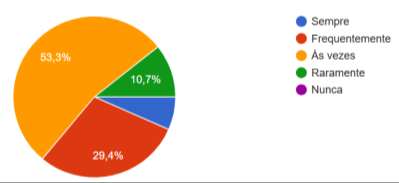
Figure 12 explored the frequency with which families included readings related to ethnic-racial issues. The majority (53.3%) indicated that they sometimes addressed these themes, 29.4% frequently, 10.7% rarely, and 6.6% always. The inclusion of this transversal variable proved to be an important vector for analyzing the scope of child empathy. Although the primary focus was the formation of classical virtues, adherence to narratives about diversity (more than 80% of families who read them sometimes or frequently) demonstrated an implicit search for the expansion of the child’s “moral circle”. By exposing the child to characters from different backgrounds, the narratives mitigated cognitive segregation, exercising empathy for a protagonist from a distinct context and applying Theory of Mind networks more expansively (Eagleman, 2015).
Figure 12. Readings with ethnic-racial themes.
Source: Original research results
The open-ended questions 13 and 14 allowed for a qualitative analysis of parental perceptions regarding the practical application and benefits of reading. Family discourse highlighted alignment with moral education, with terms such as character, empathy, virtue, patience, truth, and kindness emerging. When describing everyday situations, respondents reported the direct transposition of literary imagination into concrete action, such as children sharing toys or using the “little liar shepherd” figure to guide truth. The account of a child who, inspired by Bilbo Baggins in The Hobbit, helped with household chores was highlighted. Even among families without specific events, there was a recurring report of perceived subtle changes and calmer behavior.
Regarding perceived benefits, the responses pointed to literature as an extension of parenting, reinforcing what is taught at home and acting in character formation. The storytelling moment was linked to strengthening family bonds and building “moral imagination.” From the perspective of developmental psychology and neurobiology, these accounts illustrated the practical consolidation of learning, providing the child not only with knowing what is right, but with feeling and acting (Lickona, 1991). The moral vocabulary used by parents demonstrated that stories modulated reward circuits and executive functions, allowing the child to access their narrative database to guide ethical conduct.
In summary, the research revealed that the literature of children’s literary texts with a moral background has potential for the development of the reading brain. The quality of interaction and the careful choice of content overcome the need for massive daily exposure, suggesting that the intensity of the aesthetic experience and the dialogue following reading are the main triggers of neural plasticity related to morality. The act of reading to a child establishes what Piazza et al. (2020) call neural coupling, transforming a leisure moment into a powerful transfer of mental models and ethical values. Literary narratives function as a sophisticated social simulator, allowing the child to rehearse virtues such as collaboration, courage, and honesty without the risks inherent in social error, facilitating the transition from heteronomous morality to autonomy (Piaget, 1994). The recurrence of classic fables as anchors for truth and justice demonstrates that literary metaphors reduce the child’s defensive resistance, activating the prefrontal cortex for moral judgment over impulsive emotional responses mediated by the amygdala. Thus, shared reading not only informs but regulates the child’s nervous system, promoting states of calm and reflexivity essential for learning and social coexistence. Parents, by acting as curators of these stories, provide the necessary stimuli for innate moral intuitions to be shaped and transformed into solid social behaviors.
4. Conclusion
This study investigated parental perception of the influence of literary narratives with a moral background on children’s ethical and behavioral development. It was found that mediated reading, even when carried out once or twice a week, with high pedagogical intentionality in the choice of works, significantly stimulated empathy and the spontaneous formulation of critical questions about ethical dilemmas. The transposition of virtues to daily life was also observed, with reports of children imitating positive character attitudes and evoking literary lessons to explain everyday situations. These findings indicated that moral literary narratives function as a sophisticated social simulator, modulating specific neural circuits linked to empathy and ethical decision-making, and act as effective tools for emotional regulation and strengthening neural networks related to social valuation.
The main contribution of this work lies in demonstrating that mediated literary practice serves as an essential scaffold for the playful and reflective internalization of social norms, facilitating the transition from heteronomous to autonomous morality. The quality of interaction and the careful selection of content proved more relevant than massive daily frequency, promoting neural coupling between parents and children and the construction of moral imagination. However, the research used a non-probabilistic convenience sample, which limits the generalization of the results. For future studies, it is suggested to expand investigations on the longitudinal impact of these practices on the academic performance and mental health of adolescents who experienced this type of mediation in early childhood, in order to understand the sustainability of these benefits over time.
Bibliographic References
Bandura, A. 1977. Social learning theory. Englewood Cliffs, NJ: Prentice Hall.
Bardin, Laurence. 2016. Análise de conteúdo. Edições 70, São Paulo, SP, Brasil.
Bloom, Paul. 2013. Just babies: the origins of good and evil. Crown, New York, NY, EUA.
Creswell, John W.; Clark, Vicki L. 2013. Pesquisa de métodos mistos. 2. ed. Penso, Porto Alegre, RS, Brasil.
Dehaene, Stanislas. 2012. Os neurônios da leitura: como a ciência explica a nossa capacidade de ler. Penso, Porto Alegre, RS, Brasil.
Eagleman, D. 2015. Cérebro: uma biografia. Tradução de Ryta Vinagre. Rio de Janeiro: Intrínseca.
Gil, Antônio Carlos. 2022. Como elaborar projetos de pesquisa. 7. ed. Atlas, São Paulo, SP, Brasil.
Haidt, Jonathan. 2013. A mente moralista: porque pessoas boas são divididas por política e religião. Objetiva, Rio de Janeiro, RJ, Brasil.
Hasson, Uri; Ghanim, O.; Landesman, A.; Cohen, C.; Liron, Y. 2010. Speaker-listener neural coupling underlies successful communication. Proceedings of the National Academy of Sciences 107(32): 14425-14430.
Immordino-Yang, Mary Helen; McColl, A.; Damasio, H.; Damasio, A. 2009. Neural correlates of admiration and compassion: a study of social emotion. Proceedings of the National Academy of Sciences 106(19): 8021-8026.
Lickona, T. 1991. Educating for character: How our schools can teach respect and responsibility. New York: Bantam Books.
Likert, Rensis. 1932. A technique for the measurement of attitudes. Archives of Psychology 22(140): 1-55.
Locke, John. 1999. Ensaio acerca do entendimento humano. Nova Cultural, São Paulo, SP, Brasil. (Original publicado em 1689).
Mar, Raymond A.; Oatley, Keith. 2008. The function of fiction: the empirical foundations of literary study. Review of General Psychology 12(3): 173-191.
Marcus, Gary. 2004. The birth of the mind: how a tiny number of genes creates the complexities of human thought. Basic Books, New York, NY, EUA.
Oatley, Keith. 2016. Fiction: simulation of social worlds. Trends in Cognitive Sciences 20(8): 618-628.
Piaget, Jean. 1994. O juízo moral na criança. 4. ed. Summus, São Paulo, SP, Brasil.
Piazza, Elise A.; Hasenfratz, L.; Hasson, U.; Lew-Williams, C. 2020. Infant and adult brains are coupled to the dynamics of natural communication. Psychological Science 31(1): 6-17.
Rizzolatti, G.; Craighero, L. 2004. The mirror-neuron system. Annual Review of Neuroscience, v. 27, p. 169-192.
Sampieri, Roberto Hernández; Collado, Carlos Fernández; Lucio, Maria del Pilar Baptista. 2013. Metodologia de pesquisa. 5. ed. Penso, Porto Alegre, RS, Brasil.
Siegel, D. J.; Bryson, T. P. 2015. O cérebro da criança: 12 estratégias revolucionárias para nutrir a mente em desenvolvimento do seu filho e ajudar sua família a prosperar. São Paulo: nVersos.
Wolf, Maryanne. 2024. O cérebro no mundo digital: os desafios da leitura na nossa era. Contexto, São Paulo, SP, Brasil.
Article originating from a Final Course Work on Neuroscience and Learning in Education
To learn more about the course, click here and access the MBX Academy platform