
Agenda 2030
Financial Institutions
Sustainable Development Goals
Production
May 17, 2024
Role of financial institutions in Agenda 2030 and contributions to the new model of production and development
DOI: 10.22167/2675-6528-20230126
E&S 2024, 5: e20230126
Gabriel de Moura Tavano Moretto; Andreia Marques Maciel de Carvalho
The word of 2022 was permacrisis[1]. Understood as the joining of the words permanent and crisis, it “sums up a year in which we discovered the dizzying sensation of moving from one unprecedented event to another, while desolately wondering what new horrors might lie ahead”[2]. The year 2022 was marked by economic[3],[4], refugee[5], and energy crises, by increased food insecurity and hunger[6], by wars[7], and by the persistence of the covid-19 pandemic[8]. There was a confrontation with the existential risk to humanity if human action in the environment was not modified, with the threshold being the year 2050[9]. Thus, we reflect on the years that have passed and how they influence the future and what changes will be left for future generations, their survival, and even whether existence will be possible[10].
Since 2015, the United Nations (UN), through the 2030 Agenda[11] and its Sustainable Development Goals (SDGs)[12], has had a roadmap, for a possible solution to existing crises and to prevent new ones. Even in the face of this apocalyptic scenario, part of the population feels that the mere reward of non-extinction is not enough stimulus for change, and it is also necessary to demonstrate that there are monetary incentives for conversion to the model of sustainable production and development. In 2014, a study was published by the Global Commission on the Economy and Climate showing the possibility of a direct economic gain of US$ 26 trillion by 2030 by opting for sustainable alternatives, compared to the traditional economic model[13]. However, the actions of financial institutions (FIs) have stimulated the adoption of a new paradigm based on the SDGs, which is essential because they manage a large part of the capital through the management/direction of investments and the financing of companies and new technologies.
Thus, the study’s problematization was defined: in what way can IFs contribute to changing a paradigm, lead a sustainable revolution, and collaborate in achieving Agenda 2030 and its SDGs?
Regarding the methodological aspects, the research had a qualitative approach, in order to identify patterns and draw comparisons, over the studied period, of the actions and their continuity over time. As for the purpose and objective, the research is descriptive, deepening the knowledge already existing in the literature with a hypothetical-deductive method. From the problematization and observation of the studied data, results consistent with the consequences [14] were deduced.
For this purpose, in a single case study, the analysis of an IF and its evolution over a specific period was carried out, in order to investigate a reality, with total understanding and transformation of the content obtained in scientific writing [15].
The object of the study was a global financial institution (FI) headquartered in the United States of America (USA), considered one of the ten largest in the world by Forbes in 2022, founded over 118 years ago, with US$ 3.1 trillion in assets and US$ 303.1 billion in market value [16], with over 165,000 contributors and global operations [17]. The research aimed to conduct a documentary analysis to examine the behavior of environmental, social, and governance (ESG) indicators presented in the annual reports for the years 2019, 2020, 2021, and 2022 of this FI [18]. It also aimed to understand how FIs, in general, contribute to the achievement of the SDGs and, consequently, help the planet establish new standards of production and development. The data analysis was performed with the creation of comparative tables between the examined years, segregating only the ESG indicators[19],[20], as described in the report.
The study grouped actions taken by the IF into three groups:
- environmental sustainability: understood as a mode of production in which it is possible to meet the needs of the present without compromising the ability of future generations to meet their own[21];
- social equity: understood as an ideal of justice and impartiality regarding the distribution of resources, opportunities, and privileges among people in a society [22];
- responsible governance: understood as a concept according to which companies must voluntarily integrate concern for social and environmental impacts into their activities[23].
Among these groups, it was also determined which of the 17 SDGs of the 2030 Agenda were impacted by the studied actions.
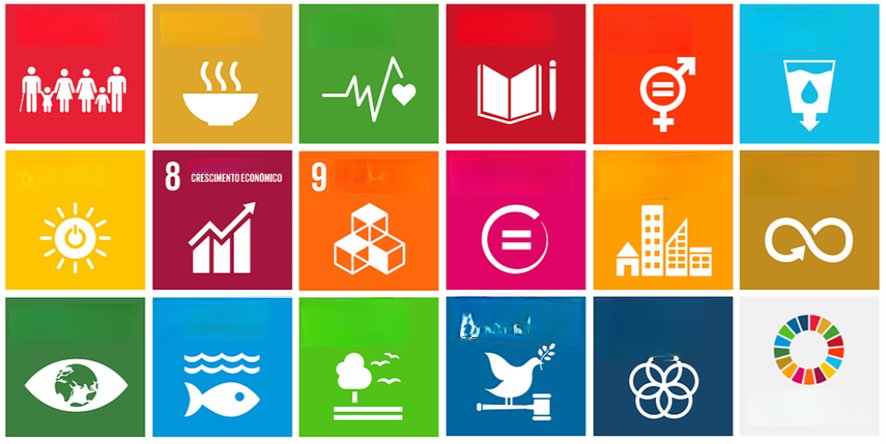
Source: United Nations Brazil (2023).
Thus, after performing the documentary analysis, the behavior of the Environmental, Social and Governance (ESG) indicators, presented in the Annual Report (Annual Report), with a temporal scope from 2019 to 2022 of IF was examined to analyze the evolution of the specific period, segregating only the ESG indicators, to achieve Agenda 2030.
Table 1 presents the four actions that impacted environmental sustainability, through measures related to the conservation of natural resources, environmental protection and climate change mitigation, as well as promoting social and economic equity.
Table 1. Grouping of the Sustainable Development Goals (SDGs) representing environmental sustainability
| Entry | Shares | 2019 | 2020 | 2021 | 2022 | Impact on SDGs |
| I | Greenhouse gas emissions net–zero by 2050 – percentages referring to the reduction, compared to the year 2010 | N/A | 56% | 61% | 63% | 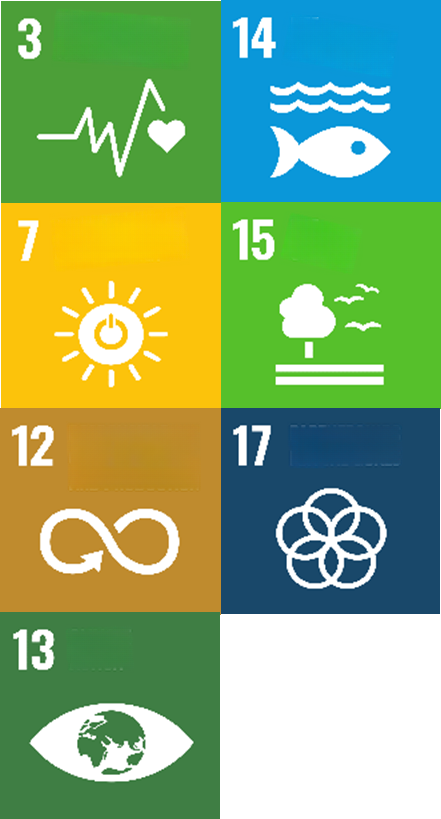 |
| II | Use 100% energy from renewable sources – percentage value | 107% | 109% | 101% | 100% | |
| III | Installation/maintenance of stations for electric vehicle charging | 213 | 240 | 254 | N/A | |
| IV | Commitment to obtain Leadership in Energy and Environmental Design (LEED) certification in at least 40% of the buildings occupied by the financial institution – percentage value | 25% | 24% | 25% | N/A |
Note: SDGs: Sustainable Development Goals.
In item I, it was verified that the IF reduced its emissions year by year when compared to 2010, the base year chosen by the IF for comparison, aiming to reach 100% emission reduction. In the last three years, there has been a significant reduction in greenhouse gas (GHG) emissions. It is important to note that this item has two scopes, with scope 1 being direct emissions, and scope 2 being indirect emissions[19],[24]. Item II, in turn, reveals that since 2019 the IF has been using 100% of energy from certified renewable sources by acquiring Renewable Energy Certificates (RECs), a market instrument that represents that the megawatt-hour (MWh) purchased is demonstrably from a renewable source, as defined by the U.S. Environmental Protection Agency (EPA)[25].
In item III, a commitment to the IF’s energy transition was observed by offering its employees, on its premises, charging stations for electric vehicles[19]. Finally, in item IV, an environmental action focused on the “green” buildings occupied by the IF was noted. The institution made changes to its physical buildings to obtain Leadership in Energy and Environmental Design (LEED) [26] – a building sustainability rating system with 110 possible points, maintained by the U.S. Green Building Council – or other comparable certifications, to try to reduce the environmental impact of buildings on the environment. Even one of this IF’s buildings, located in New York and holding LEED Platinum certification (over 80 points), has more than 300,000 bees living on the seventh floor that help preserve the surrounding flora[27].
In Table 2, five actions that impacted social equity were grouped, bringing resources and opportunities for individuals to improve their lives.
Table 2. Grouping of the Sustainable Development Goals (SDGs) representing social equity
| Entry | Shares | 2019 | 2020 | 2021 | 2022 | Impact on SDGs |
| I | Scholarships and loan grants – values per thousand beneficiaries | 19 | 50 | 75 | 50 | 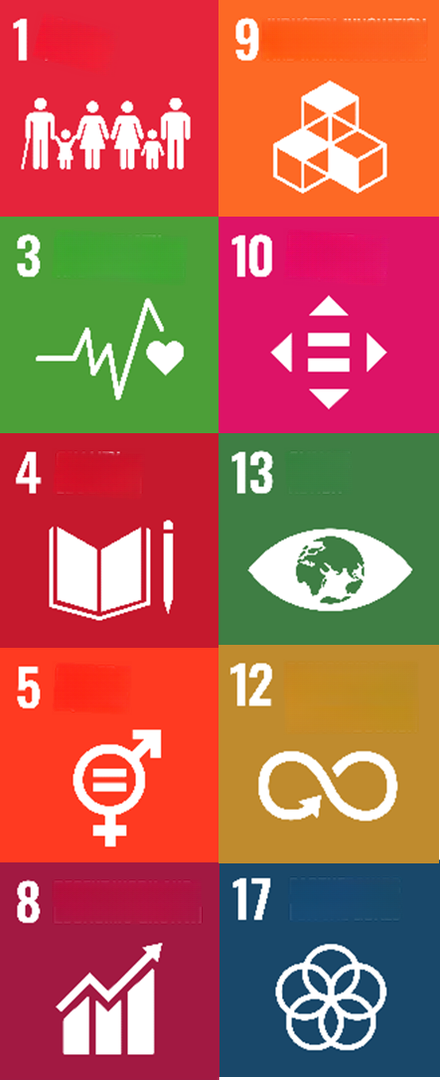 |
| II | Financial health education (via BetterMoneyHabits.com) – values in millions of accesses | 5,3 | 6 | 6,1 | 7,4 | |
| III | Affordable housing finance – values per thousand dwellings | 8,2 | 13 | 11,6 | 39 | |
| IV | Investment to advance racial equity and economic opportunity – values in US$ (millions) | N/A | 300 | 450 | N/A | |
| V | Philanthropic activities – values in US$ (millions) | 250 | 350 | 370 | 360 | |
| VI | Commitment to increase salary for a dignified income for all collaborators, commitment to reach the value of US$ 25 by 2025 – values in US$ (per hour) | 17 | 20 | 21 | 22 |
Note: SDGs: Sustainable Development Goals.
In item I, actions related to the partnerships that IF established were verified, namely, a college, a foundation, and a non-governmental organization (NGO), seeking to provide study, connection, and funding to small entrepreneurs, with a special focus on women [28],[29],[30]. Item II refers to a website maintained by IF to provide tools and resources to people, clarifying how money works and promoting actions to improve financial condition[31],[32].
In item III, information was gathered on the financing of affordable housing in various US communities. The FI studied was the largest private investor in this type of financing in the country, with over US$1.6 billion in loans and investments in more than 250 community development financial institution (CDFIs) – which can be banks, credit unions, investment funds, foundations, among other financial organizations that offer loans, investments, and other financial services to individuals and businesses in low-income areas, which would normally be considered “unbankable” by other FIs. Community development financial institutions are regulated by the US Department of the Treasury[33].
Items IV and V refer to the commitment that IF made to invest in funds and companies led by minorities and women and to advance in terms of racial equity, economic opportunity, and philanthropic investments, as well as to advance economic mobility for development and access to better jobs, housing, and enable access to healthcare. In item VI, the commitment assumed by IF to improve the salary equity of its collaborators was observed, establishing a minimum wage much higher than the US federal minimum wage of $7.25 per hour[34],[35].
In Table 3, five actions that impacted responsible governance were grouped, bringing resources and encouraging companies and individuals to modify their means of production and consumption, as well as actions that truly transformed the environmental impact of the activities of the IF, its collaborators, and service providers.
Table 3. Grouping of the Sustainable Development Goals (SDGs) representing responsible governance
| Entry | Shares | 2019 | 2020 | 2021 | 2022 | Impact on SDGs |
| I | Green and social bonds – cumulative values in US$ (millions) | 6,85 | 9,85 | 11,9 | N/A |  |
| II | ESG Titles – value in US$ (billions) | 2 | 2 | 2 | 2 | |
| III | Mobilization and financing of US$1.5 trillion in capital for sustainable businesses, inclusive development, and production model transition – values in US$ (billions) | N/A | 100 | 250 | 410 | |
| IV | ESG-focused managed investments – US$ values (billions) | N/A | 36,8 | 55,6 | N/A | |
| V | Adherence to movements and coalitions for climate | N/A | N/A | Signature | Maintenance |
Item I refers to green bonds and social bonds that were created by IF to generate investment in:
- change of the energy production method to a renewable one, with the migration to solar and wind energy production matrices, referring to green bonds[36];
- construction and maintenance of affordable housing for individuals, families, veterans, seniors, and people previously experiencing homelessness, as well as a specific edition in May 2020 to subsidize investments in non-profit hospitals and purchase equipment to confront covid-19, referring to social bonds[37].
In item II, the creation of opportunities for healthcare professionals in generating or expanding their practices and medical offices in low-income communities was addressed, as well as participation in small businesses and funds led by Black and Latin individuals to provide greater opportunities for success to these individuals and companies, referring to ESG titles[38].
In item III, the commitment that the IF assumed with capital raising to contribute to a faster transition of the production model was already addressed. By directing this amount to businesses with this purpose, this attitude received the alcove of sustainable financing [36],[39],[43], which comprises three basic actions:
- environmental transition: the IF understands that, to generate these changes, it needs to attract capital from investors, and it has been shown that it is possible to obtain good returns by applying these values to companies seeking solutions in energy efficiency, renewable energies, sustainable transport, resource utilization efficiency, and sustainable use of water and agriculture. Thus, the institution not only obtains returns from its clients’ investments but also directs a mindset shift away from the idea that there is no value in green attitudes;
- inclusive development: IF advocates that, for a business to be successful, the communities affected by it must also succeed. Investments were made to create workforce training programs, improve access to health and financial services in minority areas, where many people are normally marginalized from society;
- services and expertise: IF seeks to help in the creation of new technologies, strategies, and processes, such as LEED and Energy Star, two certifications that companies can obtain for their buildings and products, respectively, when these are considered efficient in resource utilization.
Item IV refers to the balance of values from the IF’s clients allocated in investment funds with ESG purposes. These are not necessarily funds of the IF itself, but rather those offered by it. Finally, item V alludes to the various global movements in which the IF participates and leads, to influence and guide the transition to a more sustainable reality, as follows:
- Net-Zero Banking Alliance (NZBA)[40]:an initiative led by the financial industry and convened by the UN, which currently represents 40% of the world’s total banking assets committed to aligning their investments and financing to net-zero GHG emissions by 2050. The studied FI is one of the founding signatories of the alliance;
- Partnership for Carbon Accounting Financials (PCAF)[41]: partnership to facilitate transparency and accountability of the financial industry to the Paris Agreement, with the creation of standards for measurability and disclosure of GHG emissions, defining metrics for alignment with the assumed commitment;
- Sustainable Markets Initiative[42]: also known as the Terra Carta and launched in 2021 by King Charles III of the United Kingdom, it is a mandate that proposes ten guiding principles for sustainable market initiatives. The chief executive officer (CEO) of IF acts as co-chair of the initiative.
Upon analyzing the data, it was possible to infer that financial institutions contribute to the 2030 Agenda. In the case of the studied FI, it was revealed that the 15 selected actions impacted almost all 17 SDGs. Therefore, it is the responsibility of all FIs to raise awareness, encourage, and lead the new model of sustainable production and development.
The transition from the old to the new model of production and development is a process that requires profound changes in the paradigm that sustainability does not bring financial returns and cuts profits. Only through pioneering and demonstrating that the capital employed for this purpose is capable of producing superior returns to the old model will it be possible to change course and ensure that future generations will be able to survive and avoid the collapse of humanity.
Thus, upon returning to the question “in what way can IFs contribute to changing a paradigm, lead a sustainable revolution, and contribute to achieving Agenda 2030 and its SDGs?”, it was concluded that financial institutions play a fundamental role in Agenda 2030, as the financial sector is still where a large part of the available financial resources circulate and its positioning and direction dictate the paths these resources take and what they develop.
References
[1] Collins English Dictionary. Permacrisis. Glasgow: HarperCollins; 2023. Disponível em: https://www.collinsdictionary.com/us/dictionary/english/permacrisis. Acesso em: 08 jan. 2023.
[2] Shariatmadari D. A year of “permacrisis”. Collins Language Lovers Blog; 2022. Disponível em: https://blog.collinsdictionary.com/language-lovers/a-year-of-permacrisis/. Acesso em: 08 jan. 2023.
[3] International Monetary Fund (IMF). Countering the cost-of-Living Crisis: Inflation and uncertainty. 2022. Disponível em: https://www.imf.org/en/Publications/WEO/Issues/2022/10/11/world-economic-outlook-october-2022. Acesso em: 08 jan. 2023.
[4] Organization for Economic Co-operation and Development (OECD). Confronting the Crisis. 2022. Disponível em: https://www.oecd.org/economic-outlook/november-2022. Acesso em: 08 jan. 2023.
[5] International Rescue Committee (IRC). The top 10 crises the world can’t ignore in 2022. 2022. Disponível em: https://www.rescue.org/article/top-10-crises-world-cant-ignore-2022. Acesso em: 08 jan. 2023.
[6] Guedes A. Retorno do Brasil ao Mapa da Fome da ONU preocupa senadores e estudiosos. Agência Senado. 2022. Disponível em: https://www12.senado.leg.br/noticias/infomaterias/2022/10/retorno-do-brasil-ao-mapa-da-fome-da-onu-preocupa-senadores-e-estudiosos. Acesso em: 08 ago 2023.
[7] Wrigth R. What the wars and crises of 2022 foreshadow for 2023. The New Yorker. 30 dez. 2022. Disponível em: https://www.newyorker.com/culture/2022-in-review/what-the-wars-and-crises-of-2022-foreshadow-for-2023. Acesso em: 08 jan. 2023.
[8] World Health Organization. Coronavirus disease (COVID-19) pandemic. 2023. Disponível em: https://www.who.int/emergencies/diseases/novel-coronavirus-2019. Acesso em: 08 jan. 2023.
[9] Spratt D; Dunlip I. Existencial Climate-Related Security Risk: A scenario approach. Melbourne: Breakthrough National Centre for Climate Restoration; 2019. Disponível em: https://docs.wixstatic.com/ugd/148cb0_b2c0c79dc4344b279bcf2365336ff23b.pdf. Acesso em: 08 jan. 2023.
[10] New Climate Economy. Unlocking the Inclusive Growth Story of the 21st Century: Accelerating Climate Action in Urgent Times. Washington (DC): New Climate Economy; 2018. Disponível em: https://newclimateeconomy.report/2018/wp-content/uploads/sites/6/2019/04/NCE_2018Report_Full_FINAL.pdf. Acesso em: 08 jan. 2023.
[11] United Nations (UN). Transforming our world: the 2030 Agenda for Sustainable Development. 2015. Disponível em: https://sdgs.un.org/2030agenda. Acesso em: 08 jan. 2023.
[12] Organização das Nações Unidas. Sobre o nosso trabalho para alcançar os Objetivos de Desenvolvimento Sustentável no Brasil. 2023. Disponível em: https://brasil.un.org/pt-br/sdgs. Acesso em: 08 mar. 2023.
[13] New Climate Economy. Better Growth, Better Climate. Washington (DC): New Climate Economy; 2014. Disponível em: https://newclimateeconomy.report/2016/wp-content/uploads/sites/2/2014/08/NCE-Global-Report_web.pdf. Acesso em: 03 jan. 2023.
[14] Popper K. The Logic of Scientific Discovery. 2ed. Londres: Routledge; 2002.
[15] Yin R.K. Estudo de Caso: Planejamento e métodos. 5ed. Porto Alegre (RS): Bookman; 2015.
[16] Murphy A.; Tucker A. The Global 2000. Fobes. 2023. Disponível em: https://www.forbes.com/lists/global2000/?sh=2bd368f35ac0#tab:overall. Acesso em: 03 mar. 2023.
[17] Bank of America. Our global workforce. 2023. Disponível em: https://about.bankofamerica.com/en/making-an-impact/our-global-workforce. Acesso em: 18 mar. 2023.
[18] Bank of America Annual Reports & Proxy Statements. Charlotte (NC): Bank of America; 2023. Disponível em: https://investor.bankofamerica.com/annual-reports-and-proxy-statements. Acesso em: 20 mar. 2023.
[19] Bank of America. Environmental, Social and Governance Reports. 2023. Acesso em: 07 mar. 2023. Disponível em: https://about.bankofamerica.com/en/making-an-impact/esg-reports.
[20] Bank of America. Task Force on Climate-related Financial Disclosures (TCFD) Report. Charlotte (NC): Bank of America; 2023. Disponível em: https://about.bankofamerica.com/en/making-an-impact/task-force-on-climate-related-financial-disclosures-report. Acesso em: 23 mar. 2023.
[21] Elkington J. Cannibals with Forks: The triple bottom line of 21st century business. Gabriola Island, BC ; Stony Creek, CT Canada & EUA: New Society Publishers; 1998.
[22] Fraser N. Justice Interruptus: Critical reflections on the “postsocialist” condition. New York: Routledge; 1997
[23] European Union. A renewed EU strategy 2011-14 for Corporate Social Responsibility. 2015. Disponível em: https://europa.eu/capacity4dev/platform-rmsc-garment-sector/documents/renewed-eu-strategy-2011-14-corporate-social-responsibility. Acesso em: 15 mar. 2023.
[24] Bank of America. Approach to Zero. Charlotte (DC): Bank of America; 2022. Disponível em: https://about.bankofamerica.com/content/dam/about/pdfs/approach-to-zero-2022.pdf. Acesso em: 15 mar. 2023.
[25] United States Environmental Protection Agency (EPA). Renewable Energy Certificates (RECs). 2023. Disponível em: https://www.epa.gov/green-power-markets/renewable-energy-certificates-recs. Acesso em: 15 mar. 2023.
[26] United States Green Building Council (USGBC). LEED rating system. 2023. Disponível em: https://www.usgbc.org/leed. Acesso em: 03 mar. 2023.
[27] The New York Times. Worker Bees on a Rooftop, Ignoring Urban Pleasures. 2013. Disponível em: https://www.nytimes.com/2013/08/07/realestate/commercial/worker-bees-on-a-rooftop-ignoring-bryant-parks-pleasures.html
[28] Bank of America. The Bank of America Institute for Women’s Entrepreneurship at Cornell: The Program. 2023. Disponível em: https://bofainstitute.cornell.edu/program.php. Acesso em: 15 mar. 2023.
[29] Kiva +. The Bank of America Loan Fund for Women Entrepreneurs. 2023. Disponível em: https://www.kiva.org/cc/bankofamerica. Acesso em: 15 mar. 2023.
[30] Tory Burch Foundation. Discover and Learn Business Webinars. 2023. Disponível em: https://www.toryburchfoundation.org/small-business-webinars/ Acesso em: 15 mar. 2023.
[31] Bank of America. Better Money Habits. 2023. Disponível em: https://bettermoneyhabits.bankofamerica.com/en. Acesso em: 15 mar. 2023.
[32] Bank of America. Building financial know-how. 2023. Disponível em: https://about.bankofamerica.com/en/making-an-impact/financial-education-resources-advice. Acesso em: 15 mar. 2023.
[33] Bank of America. CDFIs fuel social and economic progress. 2023. Disponível em: https://about.bankofamerica.com/content/dam/about/pdfs/CDFI-Social-Fuel-Infographic-v13.pdf. Acesso em: 15 mar. 2023.
[34] United States Department of Labor (USDOL). Minimum Wage. 2023. Disponível em: https://www.dol.gov/general/topic/wages/minimumwage. Acesso em: 15 mar. 2023.
[35] Bank of America. Bank of America Accelerates US Minimum Hourly Wage to $22 as Net Step to $25 by 2025. 2022. Disponível em: https://newsroom.bankofamerica.com/content/newsroom/press-releases/2022/05/bank-of-america-accelerates-us-minimum-hourly-wage-to–22-as-nex.html. Acesso em: 15 mar. 2023.
[36] Bank of America. ESG-Themed Issuances. 2023. Disponível em: https://investor.bankofamerica.com/fixed-income/esg-themed-issuances. Acesso em: 15 mar. 2023.
[37] Bank of America. COVID-19 Social Bond Report. 2021. Disponível em: https://about.bankofamerica.com/content/dam/about/pdfs/covid-19-social-bond-report-2020.pdf. Acesso em: 15 mar. 2023.
[38] Bank of America. Equality Progress Sustainability Bond (EPSB) Report. Charlotte (NC): Bank of America; 2021. Disponível em: https://about.bankofamerica.com/content/dam/about/pdfs/EPSB_Report.pdf. Acesso em: 15 mar. 2023.
[39] Bank of America. Sustainable Finance. 2023. Disponível em: https://about.bankofamerica.com/en/making-an-impact/sustainable-finance. Acesso em: 15 mar. 2023.
[40] United Nations (UN). Net-Zero Banking Alliance. List of NZBA member banks and their targets. 2023. Disponível em: https://www.unepfi.org/net-zero-banking/members/. Acesso em: 03 jan. 2023.
[41] Partnership for Carbon Accounting Financials (PCAF). About PCAF. 2023. Disponível em: https://carbonaccountingfinancials.com/en/about. Acesso em: 15 mar. 2023.
[42] Sustainable Markets Initiative. Terra Carta: For Nature, People & Planet. 2023. Disponível em: https://www.sustainable-markets.org/terra-carta/. Acesso em: 15 mar. 2023.
[43] Bank of America. Advancing racial equality & economic opportunity. 2023. Disponível em: https://about.bankofamerica.com/en/making-an-impact/racial-equality-economic-opportunity. Acesso em: 15 mar. 2023.
How to cite
Moretto G.M.; Carvalho A.M.M. Role of Financial Institutions in Agenda 2030 and contributions to the new production and development model. Revista E&S. 2024; 5: e20230126.
About the authors
Gabriel de Moura Tavano Moretto, Operations Manager at Bank of America. Rua William Booth, 229 – Jardim Paulicéia – CEP: 13060-074 – Campinas/SP, Brazil.
Andreia Marques Maciel de Carvalho , Master in Business Administration – FEARP/USP, Supervising Professor at Pecege, Rua Dr. Wilson Roselino, 1230 – Condomínio Jardim Vista Bella – Centro – ZIP Code: 14.110-000 – Bonfim Paulista/SP, Brazil.