
Neuroscience And Learning In Education
September 16, 2026
Dual Exceptionality and Inclusion: Challenges and Pedagogical Strategies for the Integral Development of the Student
Mercia Liane de Oliveira; Jacqueline Meireles Ronconi
DOI: 10.22167/2675-6528-202602284
Article derived from a Final Course Work (TCC), with content based on the student’s original work and adapted to the editorial format of the Revista E&S with the support of the ResumeAI tool, an artificial intelligence solution developed by the Pecege Institute for textual synthesis and organization.
Abstract
Dual exceptionality, characterized by the coexistence of high abilities/giftedness (HA/G) with disabilities, disorders, or syndromes, represents a complex challenge for school inclusion. The identification and support of these students remain limited, resulting in insufficient pedagogical practices for the development of their potential. The study aimed to examine the perception of parents and guardians regarding the educational support offered, identifying challenges and opportunities for improvement in school management. The methodology adopted an exploratory and descriptive nature, using field survey and documentary research. Data were collected via an online questionnaire and subjected to quantitative and content analysis. The results revealed that most schools did not actively participate in the identification of dual exceptionality, accepting diagnoses presented by families. It was found that communication between family and school was often insufficient, hindering the development of adequate pedagogical strategies and the implementation of effective individualized education plans. The findings contribute to the understanding of the effectiveness of inclusion policies from the family’s perspective, pointing towards practices that ensure both the valorization of potential and support for the specific needs of dually exceptional students.
Keywords: High abilities; Family support; Masking; Pedagogical practices; Learning disorders.
1. Introduction
Twice-exceptional (2E) individuals are characterized by the coexistence of high abilities or giftedness (AH/SD) and, simultaneously, by the presence of some disorder or disability (Dunne et al., 2025). This complex condition can generate a masking effect, where high ability hides the difficulty or, conversely, the difficulty stands out, obscuring the individual’s potential, making immediate perception of both characteristics difficult (Pereira, Rangni e Nakano, 2023). These individuals present a high potential for performance in areas such as academic skills, general intellectual ability, creativity, leadership, or the arts, but also show one or more disabilities (Reis et al., 2014).
The understanding of dual exceptionality has evolved since the 1940s to 1960s, with initial observations by Hans Asperger (1944) and later studies on the coexistence of high intelligence and learning difficulties (Reis et al., 2014). The concept of giftedness has also expanded from an IQ-centered approach to a more comprehensive perspective (Renzulli, cited in Reis et al., 2014), allowing for the recognition of 2E students’ potential in various areas, even when their disabilities affect conventional academic performance (Reis et al., 2014).
The profile of 2E students is complex, combining high ability with special educational needs, generating great intra-individual variability (Rizzo; Pinnelli; Minnaert, 2025). Cognitively, elevated abstract reasoning can coexist with difficulties in working memory or processing speed. Academically, there is discontinuous performance, with a gap between conceptual understanding and written production. Socio-emotionally, elevated sensitivity and vulnerability to symptoms such as anxiety and low self-esteem are common, resulting from the perception of the discrepancy between potential and performance, leading to fatigue and social withdrawal (Rizzo; Pinnelli; Minnaert, 2025).
In Brazil, the definition of dual exceptionality was adapted to the national reality, with Roama-Alves and Nakano (2015) and Vilarinho-Rezende et al. (2016) demonstrating the compatibility between high abilities/giftedness and psychological, behavioral, and neurological deficits. Fusaro (2023) consolidated this perspective, highlighting the association of giftedness with specific disorders such as learning disability (LD), attention deficit hyperactivity disorder (ADHD), and autism spectrum disorder (ASD).
Despite the conceptual evolution, the underreporting of 2E students persists, exacerbated by the masking effect, where abilities and difficulties mutually conceal each other (Jolly; Barnard-Brak, 2024; Reis et al., 2014; Ogeda, Pedro e Martins, 2025). This phenomenon results in underdiagnosis and lack of understanding, harming the school environment. Schools often fail to recognize the particularities of these students, leading to late or mistaken diagnoses and the absence of adequate support for the full development of their potential (da Silva et al., 2025; Ogeda, Pedro e Martins, 2025). Although Brazilian legislation, such as the Federal Constitution and the Law of Directives and Bases of Education (LDB), ensures the right to integral development, the fragmentation of services and the lack of an integrated approach to the complexity of 2E students still represent significant obstacles, rendering many young people invisible or inadequately supported.
Faced with this scenario of challenges in identifying and providing educational support for students with dual exceptionality, and considering the gap between the legal framework and effective pedagogical practice, this research is justified by the need to deepen the understanding of parents’ and guardians’ perceptions regarding the school support offered. The present study aims to examine, through field survey (survey) and documentary analysis, the perception of parents and guardians of children and adolescents with dual exceptionality regarding school support, identifying challenges and opportunities to improve educational management practices aimed at this audience.
2. Material and Methods
This is a research of an exploratory and descriptive design, with a mixed approach (qualitative and quantitative), carried out remotely, through digital tools. The study does not involve intervention and is observational in nature.
Participants and recruitment
The participants were fathers, mothers, or caregivers of children and adolescents with dual exceptionality, selected for directly experiencing the challenges and strategies of school inclusion. The non-probabilistic, convenience sample included 37 participants aged 18 years or older, residing in Brazil, with internet access, and who expressed agreement with the online Free and Informed Consent Term (TCLE). Eighteen responses from individuals who did not fit the defined profile (parents or caregivers of 2E children and adolescents) were excluded.
Recruitment was conducted openly and non-directionally, through public disclosure on social networks, support groups, and virtual communities about dual exceptionality, high abilities/giftedness, and educational inclusion. There was no personal contact or access to identification data.
Data collection instruments and procedures
The data were collected through an online questionnaire, specifically designed for this research and administered via Google Forms: https://forms.gle/NYtyZRNXoub3qESn6 (Appendix 1). The instrument contained three sections: (a) sociodemographic data of the guardian and the child/adolescent; (b) perception of school support and practices; and (c) challenges faced and suggestions for improving educational inclusion.
Participation was voluntary, anonymous, and unpaid, with electronic acceptance of the online informed consent form (TCLE). No personally identifiable information (name, email, phone number, IP address, or affiliation institution) was collected. Completing the questionnaire, estimated to take 10 to 15 minutes, could be done anywhere, anytime, using a computer, tablet, or smartphone.
The data were primary, obtained exclusively from participant responses, without the use of medical records, school records, or other secondary sources.
Data analysis procedures
The analysis of quantitative data was performed using descriptive statistics (totalization of responses, frequencies, and percentages) with the Microsoft Excel® software. The open-ended responses were subjected to a qualitative interpretive approach, with careful reading of the reports and identification of recurring themes, grouped into thematic categories according to their frequency and importance.
Ethical aspects
The research followed the ethical principles of the Resolutions of the National Health Council nº 466/2012 and nº 510/2016. The project was submitted and approved by the PECEGE Research Ethics Committee (CAAE: 95004125.0.0000.9927) (Annex 1).
3. Results and Discussion
The research instrument was made available for responses from March 18 to April 6, 2026, resulting in 37 responses. After excluding 18 responses that did not align with the profile of parents or caregivers of children and adolescents with dual exceptionality (2E), 19 responses were included and analyzed.
1. Caregiver and Child/Adolescent Data
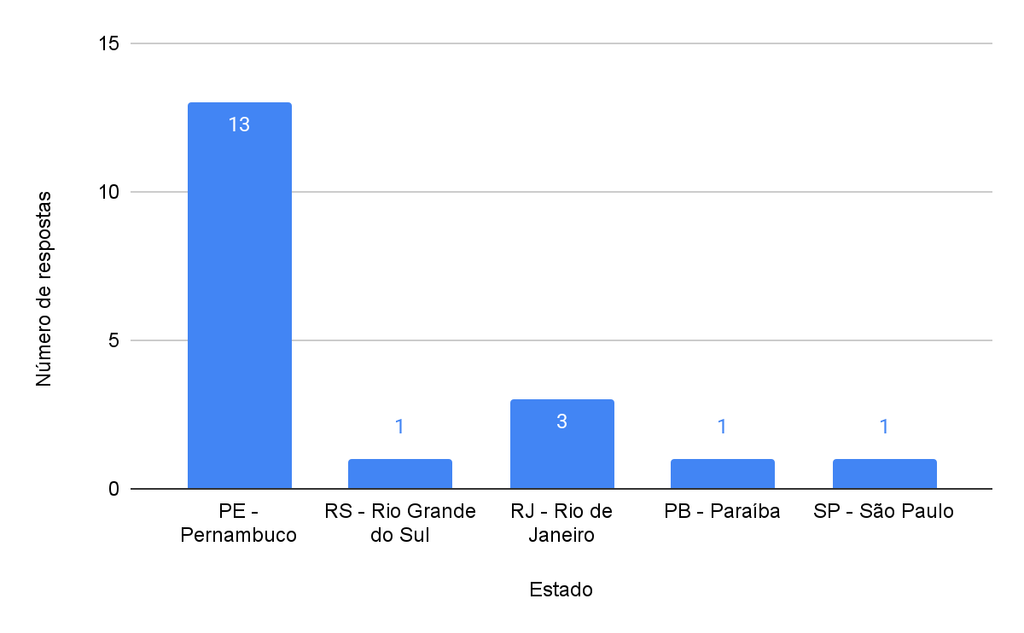
The geographic distribution of respondents indicated a higher concentration in the state of Pernambuco, although there was participation from residents of other federative units, demonstrating the capillarity of the research instrument.
Figure 1. Geographic distribution of respondents by federation unit.
Source: Original research data.
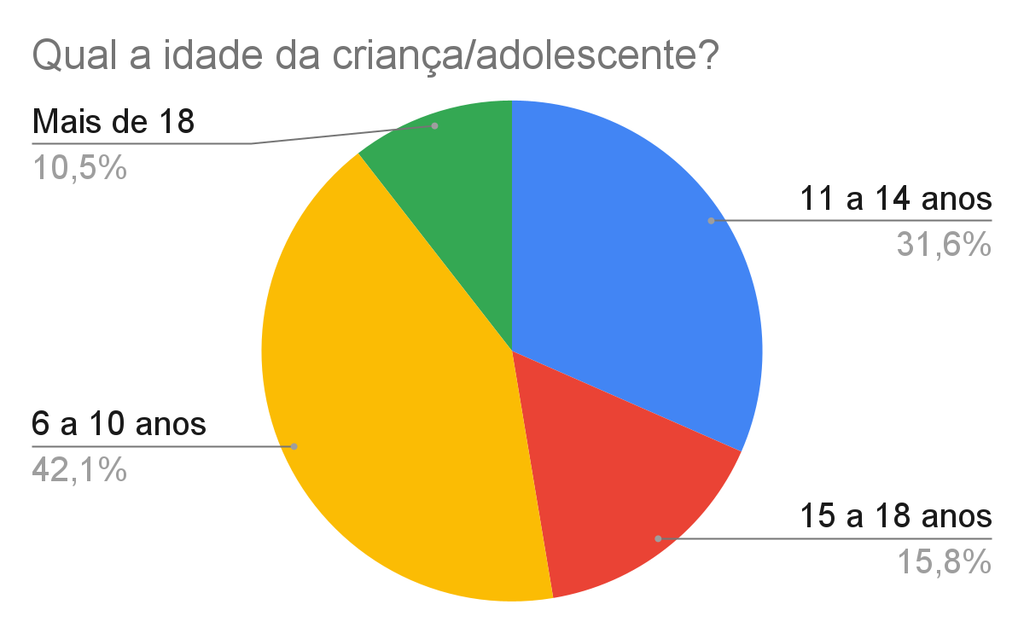
Regarding the degree of kinship, 17 responses were from mothers, one from a father, and one from a grandmother. This finding corroborates studies such as Hricová et al. (2020), which point to the greater propensity of mothers to participate in research on child development and education. As for the age range of 2E children and adolescents, 42.1% were between 6 and 10 years old, corresponding approximately to elementary school grade 1.
Figure 2. Age distribution of children and adolescents with dual exceptionality.
Source: Original research data.
2. Perception of the School Environment
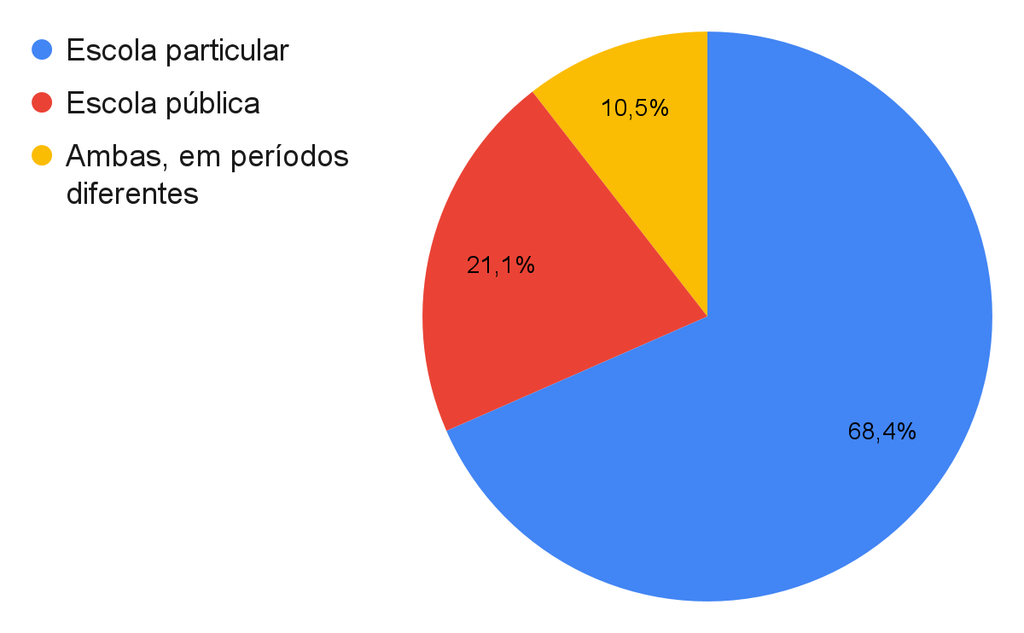
Most of the 2E students in the sample (68.4%) attended private school.
Figure 3. Type of educational institution attended by students with dual exceptionality.
Source: Original research data.
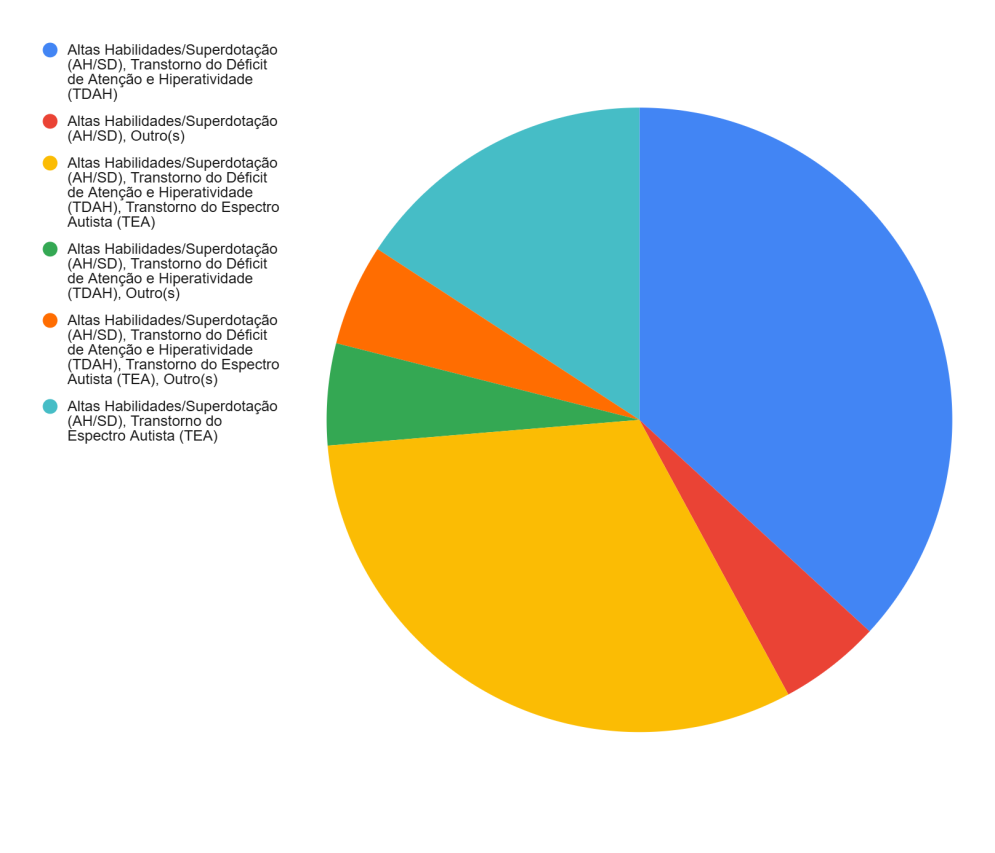
The diagnoses associated with high abilities/giftedness (HA/SD) presented several combinations: seven children/adolescents had HA/SD with Attention Deficit Hyperactivity Disorder (ADHD), six with ADHD and Autism Spectrum Disorder (ASD), three with ASD, one with HA/SD, ADHD and another, and one with HA/SD, ADHD, ASD and another.
Figure 4. Distribution of diagnoses associated with high abilities/giftedness.
Source: Original research data.
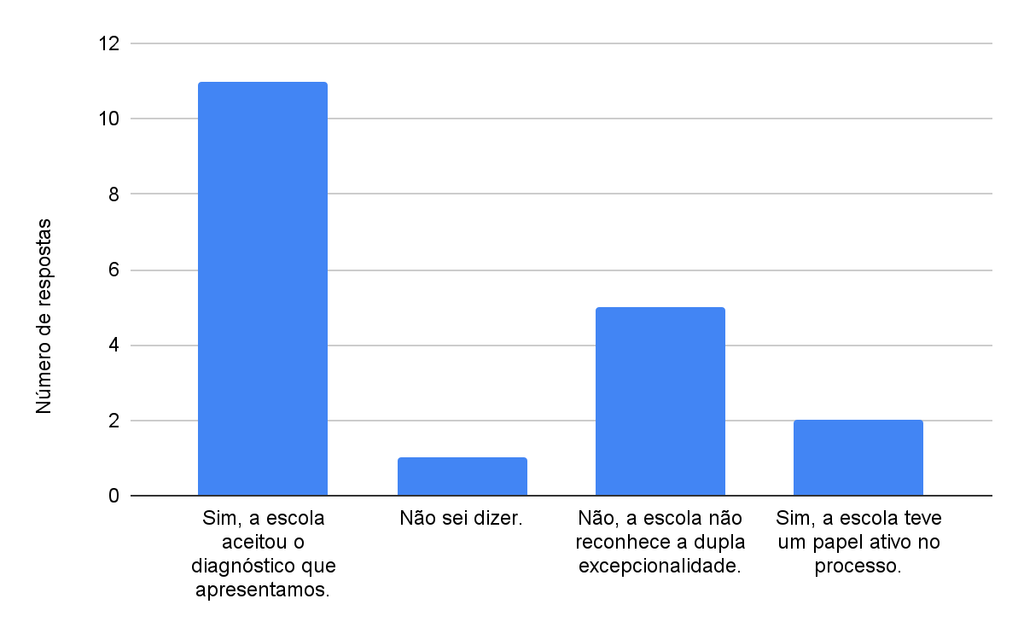
The school’s participation in the identification process of dual exceptionality was limited, with only 10.5% of cases in which the school played an active role. Although most schools accepted the diagnosis presented by families, the low active participation suggests that school effectiveness in identification is compromised by the lack of teacher training and the persistence of stereotypes (Alsamani et al., 2026). This scenario of institutional passivity often requires the family to take the lead in identification, frequently through channels external to the school (Khan et al., 2025).
Figure 5. School participation in the identification process of dual exceptionality.
Source: Original research data.
The pedagogical strategies most frequently offered by schools to 2E students were time and task flexibility (57.9%), followed by access to Specialized Educational Services (AEE) (52.6%). Table 1 details the pedagogical strategies offered.
Table 1. Pedagogical strategies offered to students with dual exceptionality.
| Pedagogical Strategy | Absolute Frequency (f) | Percentage Frequency (%) |
|---|---|---|
| Flexibility of time/tasks | 11 | 57,9% |
| Specialized Educational Support (AEE) | 10 | 52,6% |
| Adaptation of the physical environment | 7 | 36,8% |
| Individualized Education Plan (IEP/IDP) | 6 | 31,6% |
| Curricular adaptation (content) | 4 | 21,1% |
| Support Professor / Companion | 4 | 21,1% |
| Acceleration of studies / School advancement | 3 | 15,8% |
| None of the above options were offered | 3 | 15,8% |
Source: Original research data.
Despite 52.6% of students having access to AEE, the low occurrence of curricular adaptations and study accelerations suggests that AEE tends to focus more on difficulties than on the development of potential. Only six students received an Individualized Educational Plan (IEP or PDI), which is relevant, as Brazilian legislation considers it fundamental for supporting students with disabilities, disorders, and high abilities/giftedness. Approximately 16% of students did not receive any pedagogical support from the school, indicating significant gaps.
These results reinforce the invisibility of students with dual exceptionality (Alsamani et al., 2026) and the prevalence of pedagogical practices focused on disability rather than talent. Interventions such as extending time for exams can alleviate difficulties, but are not suitable for fostering high potential (Rizzo, Pinnelli, and Minnaert, 2025). Some strategies classified as “other”, such as allowing students to draw after completing activities, are seen as flexibility, but often function as classroom management, without promoting improvements in the learning and intellectual development of 2E students.
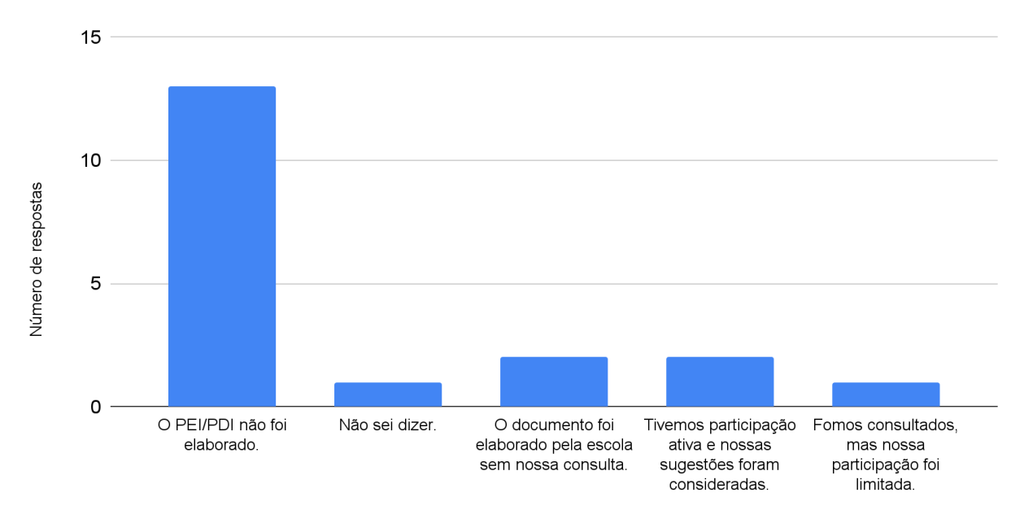
Regarding the PEI/PDI, only four respondents declared participation in the elaboration of the instrument, even if partial (two responses). Brazilian legislation (LDB, Brazilian Law of Inclusion, and Decree No. 12.686/2025) formalizes the need for family participation in the co-elaboration of pedagogical adaptations.
Figure 6. Perception of the responsible parties regarding the level of participation in the elaboration of the PEI/PDI.
Source: Original research data.
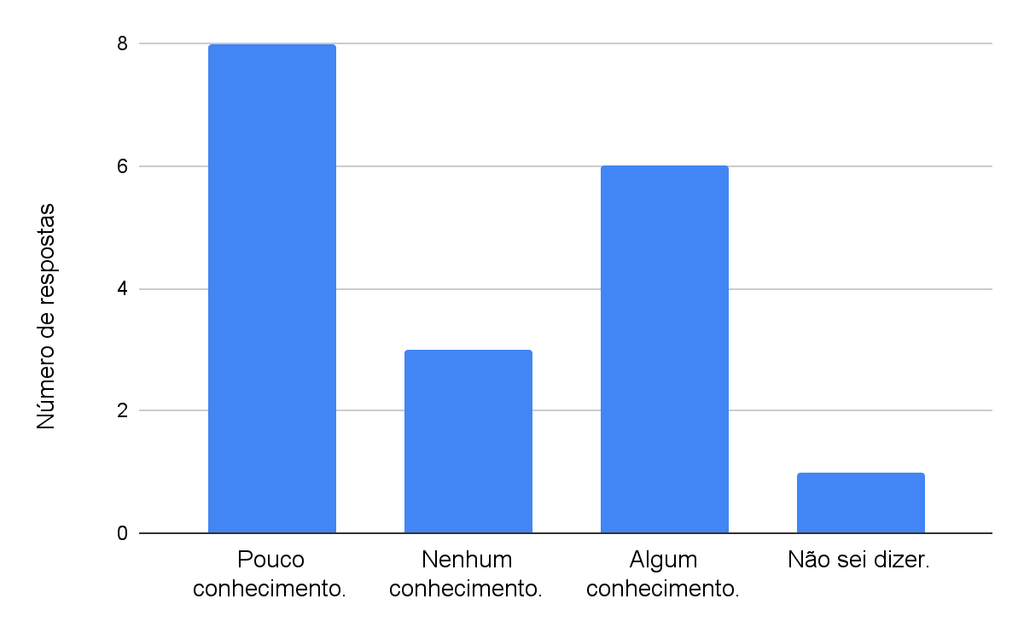
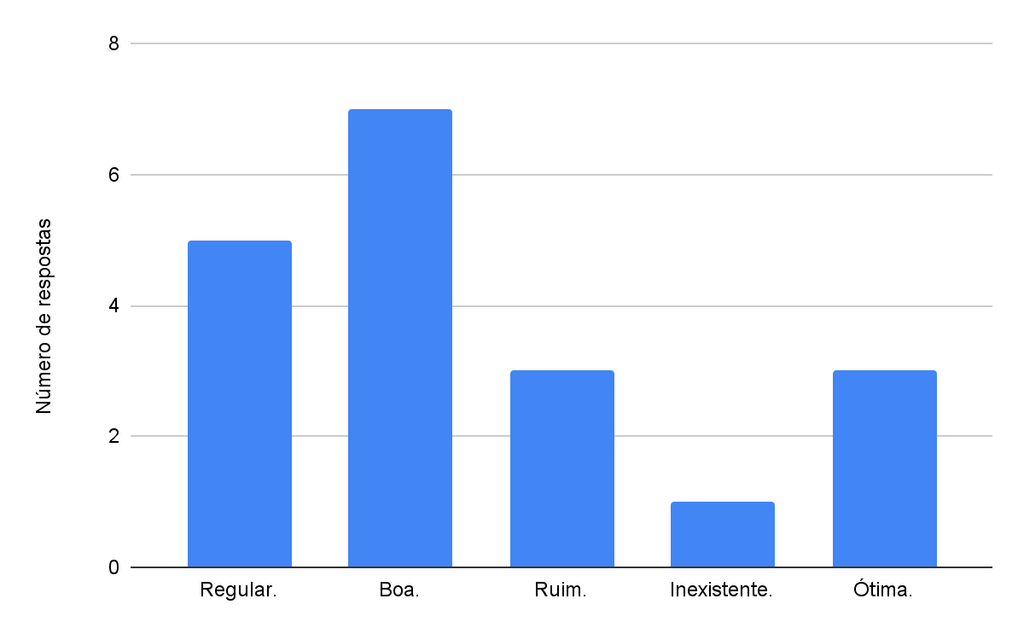
The perception of parents and caregivers about the faculty’s knowledge regarding dual exceptionality is concerning: 11 respondents believe the school has little or no understanding. Six believe the school has some knowledge. This data, combined with school-family communication, where only four families report difficulties, suggests that the lack of knowledge may not be explicitly communicated, but it affects support.
Figure 7. Perception of the responsible parties about the school’s level of knowledge regarding dual exceptionality.
Source: Original research data.
Figure 8. Families’ perception of communication with the school.
Source: Original research data.
3. Challenges and Suggestions
The respondents registered the main challenges in mediating the relationship between their children and the schools, as well as suggestions for improvement. Table 2 summarizes these challenges and suggestions.
Table 2. Thematic categories of challenges and suggestions reported by parents and caregivers.
| Thematic Category | Challenges (Respondents’ Reports) | Suggestions (Respondents’ Expectations) |
|---|---|---|
| Support and Mediation | “The previous school did not offer nor allow the family to offer individualized support. Although there was a pedagogical assistant in the classroom, attention was divided with other adolescents. Due to the challenges of the school environment, my son occasionally became emotionally deregulated, sometimes even assaulting colleagues…” | “The bodies responsible for monitoring private schools MUST invite parents of atypical children to listen. The actions and legislation ARE NOT complied with! It is masked!” |
| PEI and Methodology | “Absence of an individualized education plan (IEP) to motivate him, exploring his skills and potential. None of the schools offered an adequate IEP. He finishes the task before everyone else and is idle. Development of the IEP, adjustment in the learning methodology. He cannot succeed in the traditional way.” | “I went through two schools and neither of them offered the PEI, even with a medical recommendation. There is listening, but there is no school preparation for the gifted with dual exceptionality.” |
| Myths and Stereotypes | “To think that because they are AH/SD they wouldn’t have difficulties, disregarding ADHD, because according to them, there’s medication for that. The myth that a child with AH/SD has to get ’10’ in everything involves even those who should be specialized. A question when they got the easy questions wrong and all the difficult ones right.” | “It is important that every education professional graduates aware of what giftedness is and with experience in classroom identification.” |
| Socialization and Climate | “Great difficulty socializing, there is no support model at school. My daughter suffers bullying where they call her crazy for being autistic and the school does not send warnings to the child’s parents to resolve or provide a solution.” | “I would like to request that all schools make autistic testimonials mandatory for every class to foster awareness and respect for autism, and thus apply group awareness.” |
| Management and Legislation | “I had to create a booklet explaining laws and I delivered it at school. I have already requested adequate training, but the board ignores it. The director has already posted a video on her social media stating that ADHD is a fad. They issue vague and generic reports, and do not allow family access to the IEP.” | “Develop professionals in the school environment so that they have a more sensitive view of differences and know how to create strategies to include children… And not want them to mold themselves to the standard.” |
| Acceleration and Deepening | “The curricular adaptation was not carried out. The deepening mechanism could have been used. They have already made it clear at the school that if I want to accelerate my daughter, I will have to go to court. The psychological evaluation was denied.” | “I feel resistance from the school to seek knowledge… They think they already know. A school geared towards gifted children would be perfect.” |
Source: Original research data.
The analysis of open-ended responses revealed recurring patterns, organized into thematic axes that describe the experience of families of 2E students and the disconnect between legal support and effective pedagogical practice.
1. The Phenomenon of Masking and Attitudinal Barriers
Testimonials indicate an “institutional blindness” regarding the 2E profile, with school teams questioning the intra-individual variability of these students. This reductionist view, such as school management considering ADHD diagnosis a “fad,” generates stereotypes that prevent the recognition of high potential when it coexists with a disorder (Alsamani et al., 2026). The “masking effect,” where learning or behavioral difficulties hide high abilities, leads to the consideration that students with functional difficulties are not “eligible” for enrichment programs until their gaps are addressed (Cody et al., 2022).
2. The Fragility of Inclusion Instruments: PEI and AEE
Although Specialized Educational Support (AEE) and the Individualized Education Plan (IEP) are pillars of inclusive education, their implementation is often routine and superficial. There are reports of “vague and generic” IEPs or school administrations that ignore their development for years. This failure results in academic idleness, with students finishing tasks before their peers and remaining idle, an example of understimulation of the cognitive domain (Rizzo, Pinnelli, and Minnaert, 2025). Schools tend to focus on remediating difficulties, such as behavior control, instead of offering curricular enrichment for talent development.
3. Asynchronous Development and Emotional Dysregulation
The socio-emotional aspect is an area of intense suffering, with reports of bullying and emotional dysregulation that can escalate to aggressiveness, indicating an environment that does not understand asynchronous development. The responsibility for support is often passed on to the family, which often externally finances and manages individualized therapeutic follow-up, making effective inclusion a structure external to the school.
4. The Role of the Family as a “Lawyer” for the 2E Student
In the face of school inaction, caregivers assume the role of educators and supervisors. The initiative to develop a “booklet explaining laws” for teachers reflects parents’ efforts in defending their children’s rights. Parents’ suggestions, such as the need for training education professionals on giftedness and promoting awareness in classrooms, demonstrate a desire for greater humanization of the educational process, seeking a transformation in pedagogical sensitivity to include children with their particularities, without demanding that they conform to a standard.
In summary, the results of this research indicate that, despite legal advancements, the inclusion of students with dual exceptionalities in school environments still faces significant challenges. The perception of parents and caregivers reveals gaps in educational support, in active identification by schools, and in effective communication between family and institution. The lack of knowledge and the persistence of stereotypes on the part of the teaching staff contribute to pedagogical practices that often limit the full development of these students, focusing more on difficulties than on potential. This reality highlights the need for a paradigm shift that promotes the integration of policies and practices, ensuring that the complexity of 2E students is recognized and adequately addressed.
4. Conclusion
This research aimed to examine the perception of parents and guardians regarding the educational support offered to students with dual exceptionality, identifying challenges and opportunities to improve school management. It was found that most schools did not actively participate in identifying dual exceptionality, accepting diagnoses presented by families. It was observed that communication between family and school was often insufficient, hindering the development of adequate pedagogical strategies. It was noted that pedagogical interventions, such as the Individualized Education Plan (IEP) and Specialized Educational Services (SES), often proved superficial or focused predominantly on difficulties, to the detriment of developing high abilities. The perception of guardians indicated limited knowledge of the teaching staff about dual exceptionality, contributing to the persistence of the masking phenomenon and attitudinal barriers that prevent the full recognition of these students.
These findings reveal a significant gap between the legal framework and effective pedagogical practice, where the family often assumes the role of the student’s main advocate. The study’s contribution lies in the in-depth understanding of the effectiveness of inclusion policies from the family’s perspective, pointing to the urgent need for a paradigm shift in education. As a limitation, the study was based on the perception of a restricted number of parents and guardians, suggesting the need for future research with larger and more diverse samples. It is suggested that future studies explore the implementation of continuing education programs for educators, aiming to improve the active identification and development of integrated pedagogical strategies that value both the potential and the specific needs of doubly exceptional students, promoting a truly inclusive school environment.
Bibliographic References
Alsamani, A. et al. 2026. Twice-exceptionality in primary schools: teachers’ perceived barriers to identifying and supporting 2e students. Acta Psychologica 262: 106031.
Cody, R. A. et al. 2022. Teachers’ reported beliefs about giftedness among twice exceptional and culturally, linguistically, and economically diverse populations. Frontiers in Psychology 13: 953059.
Da Silva, M. de F.; Senger, N. E.; Duarte, S. B. da S. 2025. Double exceptionality in the school context: challenges, recognition and possibilities of pedagogical intervention. Seven Editora: 759-770.
Decreto nº 12.686, 2025 [Referência completa não encontrada no documento original]
Dunne, O.; Guilbault, K. M.; Hinch, L.; Radhakrishnan, A.; O’Reilly, C. 2025. Parent perceptions of special education and gifted education services for twice-exceptional students in Ireland. Education Sciences 15(12): 1600.
Fusaro, L. H. 2023. Escala de triagem de dupla excepcionalidade: construção e estudos psicométricos. Dissertação (Mestrado em Psicologia). Pontifícia Universidade Católica de Campinas, Campinas, SP, Brasil.
Hricová, L.; Bačíková, M.; Štefánková, M.; Orosová, O. 2020. Factors associated with parental non-/participation in child-development research. Človek a spoločnosť 23(1): 17–30.
Jolly, J. L.; Barnard-Brak, L. 2024. Special education status and underidentification of twice-exceptional students: insights from ECLS-K data. Education Sciences 14: 1048.
Khan, A. et al. 2025. Parental advocacy and support for twice-exceptional students: a systematic review of experiences and perspectives. Journal of Advanced Academics 36(2): 145-168.
Ogeda, C. M. M.; Pedro, K. M.; Martins, B. A. 2021. A dupla excepcionalidade superdotação e TDAH: uma revisão da literatura. Revista Teias 22(64): 55–72.
Pereira, J. D. S.; Rangni, R. A.; Nakano, T. C. 2023. Dupla excepcionalidade: definição e evidências da produção científica brasileira. Revista Diálogos e Perspectivas em Educação Especial 10(1): 41–58.
Reis, S. M.; Baum, S. M.; Burke, E. 2014. An operational definition of twice-exceptional learners: implications and applications. Gifted Child Quarterly 58(3): 217–230.
Renzulli, citado em Reis et al., 2014 [Referência completa não encontrada no documento original]
Rizzo, L.; Pinnelli, S.; Minnaert, A. 2025. Twice-exceptional students: a systematic review to outline the distinctive characteristics through a multidimensional lens. Frontiers in Education.
Roama-Alves, R. J.; Nakano, T. C. 2015. A dupla-excepcionalidade: relações entre altas habilidades/superdotação com a síndrome de Asperger, transtorno de déficit de atenção e hiperatividade e transtornos de aprendizagem. Revista Psicopedagogia 32(99): 346-360.
Vilarinho-Rezende, D.; Fleith, D. S.; Alencar, E. M. L. S. 2016. Desafios no diagnóstico de dupla excepcionalidade: um estudo de caso. Revista de Psicologia (PUCP) 34(1): 61–84.
Article originating from a Final Course Work on Neuroscience and Learning in Education
To learn more about the course, click here and access the MBX Academy platform