
Neuroscience And Learning In Education
September 15, 2026
Contributions of Universal Design for Learning in the Literacy Process
Juliana Falsetti Schiavão; Marilda Aparecida Soares
DOI: 10.22167/2675-6528-202602245
Article derived from a Final Course Work (TCC), with content based on the student’s original work and adapted to the editorial format of the Revista E&S with the support of the ResumeAI tool, an artificial intelligence solution developed by the Pecege Institute for textual synthesis and organization.
Abstract
The research investigated the principles of Universal Design for Learning (UDL) in the teaching process and the perception of literacy teachers regarding the effectiveness of pedagogical practices that consider the diversity of learning paces. The study also addressed the literacy process, the difficulties of students with diverse educational needs, and the contributions of Neuroscience to the understanding of learning. To this end, an exploratory and descriptive research was conducted, based on bibliographic and theoretical studies. Data were collected through structured interviews, applied via electronic form to 30 literacy teachers in the municipality of Bauru, São Paulo, and analyzed in a quali-quantitative manner. The results indicated that the use of multiple means of presentation, engagement, and expression of content, aligned with engagement, increased students’ motivation, interest, and performance, especially those with learning difficulties. It was found that the majority of educators considered UDL very important for pedagogical practice, recognizing its ability to broaden access to the curriculum and promote learning for all. It was concluded that UDL is an essential pedagogical approach for schools to adapt to students’ needs, promoting a more inclusive, equitable, and conducive educational environment for meaningful learning, with the support of advances in Neuroscience.
Keywords: Literacy; Universal Design for Learning; Inclusive education; Neuroscience; Teacher perception.
1. Introduction
The contemporary educational landscape is characterized by a growing diversity among students, who present varied learning paces, styles, and needs. Traditional pedagogical models often show limitations in effectively addressing this heterogeneity, resulting in challenges to ensure equitable access and meaningful learning for all. This reality highlights the urgency of adopting inclusive educational approaches that recognize and value the uniqueness of each individual.
In this context, Universal Design for Learning (UDL) emerges as a pedagogical proposal that aims to address this diversity. UDL seeks to remove learning barriers from the outset of educational planning, rather than requiring students to adapt to a pre-established model. Its theoretical foundation, inspired by the concept of Universal Design in architecture, proposes the creation of environments and practices that can be used by as many people as possible, without the need for subsequent adaptations (Alves; Ribeiro; Simões, 2013).
The UDL proposal is organized around three fundamental principles: multiple means of representation, multiple means of action and expression, and multiple means of engagement. These principles guide the offering of different ways of accessing content, participating in activities, and motivation, promoting more inclusive and meaningful learning. Bettio, Miranda, and Schmidt (2021) describe UDL as a set of flexible pedagogical principles and guidelines, centered on inclusive teaching and consideration of student diversity, with specific application in early childhood education (Santos, 2025).
The relevance of UDL is particularly accentuated in the literacy process, a crucial phase for cognitive and social development. Literacy involves the integration of visual, auditory, and linguistic processes, which demand the reorganization of specific neural circuits for reading and writing (Dehaene, 2012). In this sense, UDL, proposed by Rose and Meyer (2002), contributes by structuring pedagogical practices that consider the different forms of learning, organized into three brain networks: recognition, strategic, and affective.
By offering multiple means of representation, action/expression, and engagement, UDL promotes meaningful and inclusive learning in the literacy process. The articulation between UDL, Neuroscience knowledge, and the guidelines for inclusion and active learning is fundamental for the construction of more equitable, effective, and student-centered pedagogical practices. Gardner’s theory of multiple intelligences (1995) also reinforces the idea that individuals learn in distinct ways, which aligns with the assumptions of UDL.
Despite the potential of UDL, conventional curricula, often structured for a homogeneous student model, still generate barriers that hinder the access and participation of a significant portion of students, especially those with different educational needs in literacy. Furthermore, Gonçalves and Tonin (2025) point to the scarcity of studies that directly articulate UDL and literacy, highlighting a gap in the literature that reinforces the need for theoretical and practical deepening in this didactic-pedagogical area.
Given this scenario, it becomes essential to investigate how UDL can transform the teaching and learning process, making it more inclusive, flexible, and effective for all children, instead of a one-size-fits-all approach. Understanding teachers’ perceptions of the effectiveness of planning and using pedagogical practices that consider the diversity of learning paces in the classroom is crucial for promoting a more equitable educational environment conducive to meaningful learning. This research aimed to understand the principles of Universal Design for Learning [UDL], as a pedagogical approach that positively impacts the literacy process, especially considering the specificities presented by students with different needs.
2. Material and Methods
This research has an exploratory and descriptive character, based on bibliographic and theoretical studies to analyze the principles of Universal Design for Learning (UDL) and educators’ perceptions of its use in the literacy process, including the contributions of Neuroscience to student learning.
The data were collected through structured interviews, conducted using the Google Forms electronic form, disseminated by email or social media to potential respondents, who were professors from the municipality of Bauru, state of São Paulo. Data collection was by convenience and non-probabilistic, and the analysis of the results was quali-quantitative.
To ensure the confidentiality of educators’ individual identities and meet the ethical criteria of academic research, an indirect approach was adopted. Participants were informed about the research through an Informed Consent Form, which allowed for clarification of doubts and ensured voluntary participation, with the possibility of declining at any time, without prejudice or risk. The information provided was used exclusively for scientific purposes and was treated confidentially. Interviews were recorded only with authorization and for research analysis. The themes addressed in the questionnaire included the relevance of UDL in the pedagogical practice of literacy, strategies and means of content representation, and the perception of improvements in the participation and performance of students with learning difficulties.
3. Results and Discussion
Universal Design for Learning (UDL) proposes to meet the diversity of students through the use of multiple pedagogical and technological resources, materials, techniques, and strategies, favoring learning and expanding access to the curriculum. It is based on offering multiple ways of presenting content, possibilities for carrying out activities, and strategies to stimulate students’ engagement, motivation, and interest.
This research analyzed the contribution of Neuroscience to learning, in light of the principles of UDL, seeking to identify procedures that favored improvements in the literacy process.
UDL was consolidated in the late 1990s, in response to the realization that conventional curricula generated barriers to access and participation. Its theoretical foundation dialogues with the concept of Universal Design in architecture, aiming at the conception of environments usable by the greatest number of people without subsequent adaptations. Thus, UDL advocates for pedagogical practices oriented towards diversity in the classroom.
UDL is a flexible theoretical-methodological framework that guides educational planning based on three central axes: the definition of learning objectives, the forms of content presentation, and the possibilities for students to express knowledge (Heredero and Moreira, 2022). The emphasis shifts from the student to the curriculum, concentrating adaptations on the organization of pedagogical practices (Barcelos, Machado and Martins, 2021).
The universal design for learning (UDL) principle of accessibility recognizes that barriers exist that prevent access to the curriculum for all students. When planning literacy based on UDL, the teacher contributes to removing these barriers from the outset, creating a learning environment where everyone has access to knowledge, respecting their abilities and specificities.
Curricular flexibility is central, meaning that the curriculum must be adjustable to individual needs. In literacy, this implies using different strategies to present the same content, such as the sound of letters or syllable formation, and using concrete materials, playful activities, visual and auditory resources. This adaptability is a central element of UDL’s instructional planning.
Teaching models based on a single form of instruction and assessment are insufficient for students’ needs. It is essential to adopt flexible approaches, in which content can be presented and assessed through diversified strategies, fostering engagement and learning.
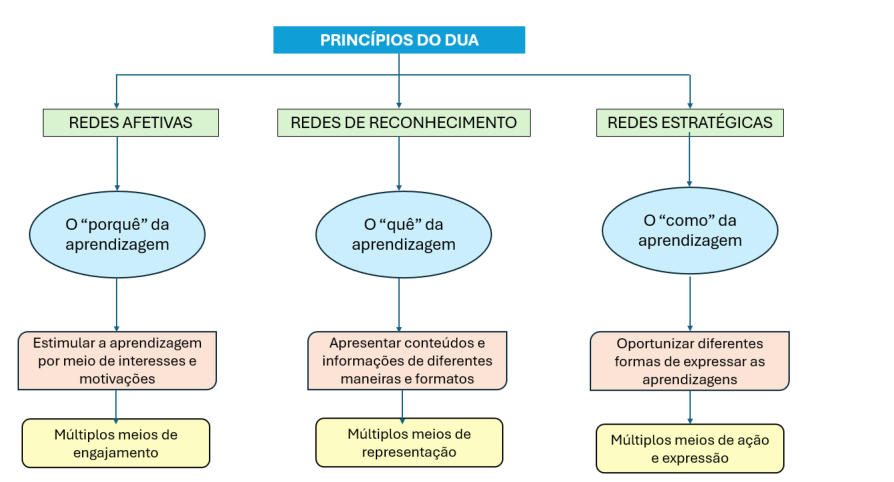
The implementation of UDL is based on three fundamental principles: engagement, representation, and action and expression, which guide the organization of inclusive pedagogical practices. The engagement principle refers to the “why” of learning, using strategies to motivate students and arouse their interest, such as contextualizing the topic, using videos, music, or discussion circles.
The principle of representation is related to the “what” of learning, that is, to the way in which content is presented. The teacher can offer multiple forms of access to information, using different languages and resources, such as oral explanations, images, videos, and concrete objects.
Finally, the principle of action and expression concerns “how” the student demonstrates what they have learned. It proposes the diversification of assessment methods, allowing students to express their knowledge through different forms of expression, such as oral communication, graphic production, or gestures.
Figure 1. Infographic. Principles of Universal Design for Learning [UDL]
Source: Survey results
UDL promotes a reorganization of pedagogical practices, guiding planning towards diversity. By incorporating multiple teaching, learning, and assessment strategies, this approach contributes to a more inclusive, equitable, and responsive educational environment to students’ needs.
Regarding the multiple means of representation, UDL proposes presenting information in diverse forms, such as images, videos, music, and games, so that children can construct knowledge according to their perception and understanding, unlike traditional literacy which is often based solely on written text.
The advances in the studies of Neuroscience applied to education contribute significantly to the understanding of learning processes. Dehaene (2012) highlights that learning to read and write involves the reorganization of specific neural circuits, and diversified practices, such as the use of visual, auditory, and kinesthetic stimuli, favor the consolidation of learning. Howard Gardner (1995) reinforces this idea with the theory of multiple intelligences, which dialogues directly with the assumptions of UDL.
The articulation between the principles of UDL and Neuroscience studies points to the existence of three major neural networks involved in learning: the recognition network (what), the strategic network (how), and the affective network (why), which are mobilized in an integrated manner by pedagogical practices aligned with UDL (Hall, Meyer and Rose, 2012).
In the field of educational guidelines, UDL aligns with the valorization of inclusive practices and active methodologies, which place the student as the protagonist. In the Brazilian context, the National Common Curricular Base (BNCC) (Brazil, 2017) and the Curricular Framework of the SESI-SP network (SESI, 2023) support the adoption of practices aligned with UDL, emphasizing the need for inclusive, equitable, and student-centered education.
School inclusion, based on the principles of Human Rights (1948) and the Salamanca Statement (1994), ensures equal opportunities. Currently, the discussion on inclusive education focuses on guaranteeing quality permanence, with pedagogical practices that respond to the diversity present in classrooms (Gonçalves and Gomes, 2025).
The BNCC favors inclusion by defining competencies and skills that guide the curriculum, promoting the student’s integral formation. The literacy process requires the development of phonological and phonemic awareness, alphabetic knowledge, vocabulary, oral comprehension, and print concept mastery (Brazil, 2017; Brazil, 2019). The convergence between the UDL assumptions and the BNCC guidelines is evident in the valorization of multiple languages, flexibility of pedagogical practices, and promotion of student autonomy.
Collection and analysis of data referring to teacher perception
Interviews with educators allowed for the identification of perceptions regarding the use of UDL strategies in the literacy process. Thirty teachers from the early years of Elementary School in private schools, with knowledge of UDL, participated.
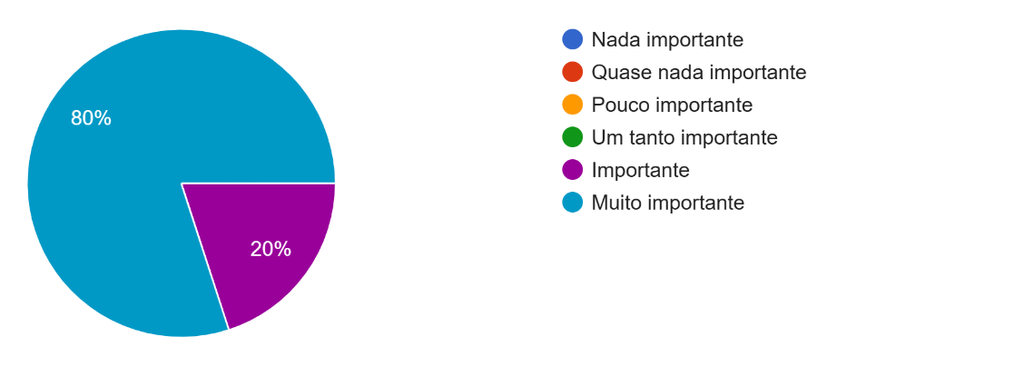
The data confirmed the importance of UDL and its articulation with neuroscientific knowledge. Regarding the perception of UDL, 24 out of 30 respondents (80%) considered it “very important” for pedagogical practice, and the remaining 20% classified it as “important”, indicating a broad appreciation for this approach.
Figure 2. Importance of [DUA] for pedagogical practice
Source: Original research results
Regarding the offer of multiple means of content representation, 18 out of 30 teachers (60%) use games and play as a didactic strategy, while 12 (40%) resort to videos with explanatory images and songs, demonstrating the diversification of resources to favor learning.
Figure 3. Multiple means of content representation
Source: Original research results
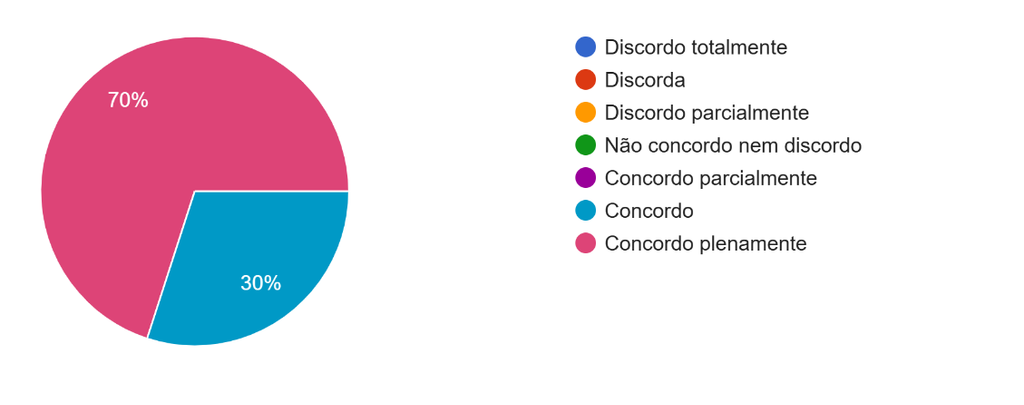
Additionally, 21 educators (70%) stated they perceived significant improvements in the participation and performance of students with learning difficulties when applying the principles of UDL, reinforcing the effectiveness of the approach in promoting inclusive pedagogical practices and addressing diversity.
The principles of UDL, which emphasize engagement, representation, and action/expression, are crucial for maintaining students’ interest and motivation. The diverse presentation of content and multiple options for expressing learning make the curriculum more flexible and accessible, promoting inclusive teaching (Bettio, Miranda and Schmidt, 2021).
The potentialities of UDL in literacy encompass the systematization of pedagogical practices for effective inclusion, ensuring real conditions for participation and learning, respecting the singularities of individuals (Gonçalves and Tonin, 2025). However, the literature still points to a scarcity of studies that directly articulate UDL and literacy, indicating a gap in theoretical and practical deepening.
The acquisition of reading and writing, understood in a broad sense, is articulated with literacy and social language practices, demanding diversified strategies and different forms of access to knowledge, especially in heterogeneous and inclusive classrooms (Gonçalves and Tonin, 2025). Literacy, as a system of representing human language through alphabetic-orthographic writing (Soares, 2012), and numeracy, which implies participation in social practices mediated by written language, are interdependent processes.
The UDL-oriented curriculum organization proposes a planning that contemplates diversity from the beginning, reducing the need for new adaptations and enhancing the effectiveness of pedagogical practices. This approach, in line with the Brazilian Law on Inclusion of Persons with Disabilities (Brazil, 2015), ensures equal conditions in access, permanence, and learning.
Traditional teaching and UDL proposal: a comparative look
The comparative analysis between traditional teaching and UDL reveals that the traditional model is characterized by standardized, teacher-centered practices, while UDL proposes a flexible, student-centered approach, considering their different ways of learning.
There is a significant contrast in pedagogical conceptions, teaching practices, and understanding of learning. UDL, with its flexible objectives, expands the possibilities for participation, allowing more students to complete the proposed activities, which reinforces the inclusive nature of the educational process.
From a methodological point of view, UDL presupposes flexible curricular planning, structured on the principles of multiple means of representation, action and expression, and means of engagement, aiming to consider student diversity from the planning stage to avoid later adaptations and promote equity. Initiatives such as the use of digital technologies, accessible materials, and the “learning box” contribute to resizing literacy in inclusive contexts (Gonçalves and Tonin, 2025).
The “learning box”, according to Araújo (2024), materializes UDL through collaborative missions, content connected to students’ lives, and activities linked to real-world context. Representation is manifested in varied materials and QR Codes to transform texts into speech, while action and expression are materialized in diverse forms of expression and self-assessment.
The coherence between contents, objectives, materials, methods, and evaluation instruments is fundamental to verify if students have achieved the expected results (Bettio, Miranda and Schimidt, 2021). Clear goals and objectives are crucial for learning success.
In the traditional model, the professor is the main transmitter of knowledge and the student is passive (Rosalin, 2022). In contrast, UDL proposes a professor as a mediator and facilitator, promoting active participation and student leadership.
Regarding teaching strategies, the traditional model favors a single form of content presentation, while UDL advocates for the use of multiple forms, incorporating visual, auditory, and practical resources, adapted to different learning needs and styles.
Assessment practices also differ: traditional teaching is based on standardized assessments, while UDL proposes diversified and flexible assessment, which considers different forms of knowledge expression, including oral, practical, and visual productions.
Student motivation and engagement, little considered in the traditional model, are central elements in UDL, which values autonomy, interest, and participation for learning.
In the field of inclusion, traditional teaching requires the student to adapt to the model, which can lead to exclusion. UDL, in turn, plans teaching to adapt to students’ characteristics, promoting equity and accessibility, including through accessible materials (Silva, 2024).
Traditional teaching adopts a homogeneous view of learning, treating difficulties as failures to be corrected by repetition. UDL recognizes diversity, understanding difficulties as opportunities for more inclusive and effective pedagogical strategies. This transition represents an education centered on diversity, flexibility, and inclusion, as opposed to standardization.
DUA: some limits and challenges in the Brazilian context
The implementation of UDL in the Brazilian school context faces limits and challenges, mainly related to teacher training. The absence of specific continuing education makes it difficult to transpose UDL principles into effective pedagogical practices, resulting in superficial applications.
The structural conditions of school units also represent a challenge. The scarcity of diversified didactic resources, assistive technologies, internet access, and technological equipment, in both public and private schools, constitute concrete barriers. This reality points to the need for more effective public policies for financing and educational infrastructure.
The school culture, often centered on traditional pedagogical practices and homogeneous assessment models, hinders the adoption of flexible approaches such as UDL. Resistance to change and pressure for results in external assessments restrict teacher autonomy and pedagogical innovation.
The overload of teaching work is another aspect to be considered, as the implementation of UDL requires more elaborate planning, diversification of strategies, and continuous monitoring of students. Without adequate conditions, UDL can be perceived as an additional requirement, rather than as support for practice.
Finally, the implementation of a more integrative education, according to the BNCC and the National Policy on Special Education (Brazil, 2008), depends on the articulation between public policies, school management, and pedagogical practices. This involves teacher training, investment in infrastructure, review of assessment practices, and strengthening of an inclusive culture in schools.
In this way, the UDL consolidates itself as a powerful benchmark for the promotion of educational equity, but its implementation in Brazil requires the continuous facing of structural, cultural, and formative challenges to sustain a truly inclusive education.
In summary, the results of this research indicate that Universal Design for Learning is perceived as an approach of great importance for pedagogical practice in literacy, promoting curricular flexibility and access to knowledge. The adoption of multiple means of representation, such as games, play, and videos, and the perception of improvements in the participation and performance of students with learning difficulties, reinforce the effectiveness of UDL. Despite the implementation challenges in the Brazilian context, the articulation of UDL with Neuroscience and contemporary educational guidelines strengthens the construction of student-centered pedagogical practices, contributing to a more inclusive and meaningful education.
4. Conclusion
This study sought to understand the principles of Universal Design for Learning (UDL) and its influence on the literacy process, considering the diversity of student needs. It was found that UDL, by proposing multiple means of representation, action and expression, and engagement, constitutes a robust pedagogical framework for inclusive education. The results indicated a widely positive perception among literacy teachers regarding the importance of UDL, with the majority of educators classifying it as “very important” for pedagogical practice. It was observed that the application of diversified strategies, such as games, play, and videos, for content presentation, resulted in significant improvements in the participation and performance of students with learning difficulties. The articulation of UDL principles with advances in Neuroscience, which highlight the reorganization of specific neural circuits for reading and writing, and with contemporary educational guidelines, such as the BNCC, strengthens the construction of more equitable and student-centered pedagogical practices. The study’s main contribution lies in demonstrating how UDL offers a practical and theoretical framework for curriculum flexibility and the promotion of an accessible learning environment, adapting the school to the students’ needs and not the other way around, which favors the holistic development and educational success of all.
Despite the potential of UDL, its implementation in the Brazilian context faces notable challenges. The absence of specific continuing education for teachers, the precariousness of didactic and technological resources in many school units, and a school culture that sometimes resists flexible and innovative approaches have been identified. The overload of teaching work also presents itself as a limitation, as the planning and diversification required by UDL demand adequate time and support. Given these limitations, it is suggested that future studies investigate the effectiveness of continuing teacher education programs focused on UDL and Neuroscience, as well as the development of public policies that guarantee investment in infrastructure and pedagogical resources. Additionally, it is recommended to deepen research on the articulation between UDL and literacy in different socioeconomic contexts, in order to consolidate evidence on its applicability and large-scale impact, filling the theoretical and practical gap pointed out in the literature.
Bibliographic References
Alves, M.M.; Ribeiro, R.; Simões, F. 2013. Universal Design for Learning [UDL]: contributos para uma escola para todos. Tecnologia da Informação em Educação, Indagatio Didáctica – Universidade de Aveiro, v. 5, n. 4, p. 121-146.
Araújo, I. P. 2024. Caixa de aprendizagem: uma proposta de metodologia ativa orientada pelo Desenho Universal para a Aprendizagem para consolidação do ensino da leitura na alfabetização. Faculdade de Educação, Universidade Federal do Rio Grande do Sul,
Barcelos, R. M. F.; Machado, D. J.; Martins, G. B. 2021. Desenho Universal para Aprendizagem: levantamento das publicações científicas e análise do seu conceito. Research, Society and Development, v. 10, n. 12.
Bettio, C.D.B.; Miranda, A.C.A.; Schimidt, A. 2021. Desenho universal para a aprendizagem e ensino inclusivo na educação infantil. Faculdade de Filosofia, Ciências e Letras de Ribeirão Preto, Universidade de São Paulo, Ribeirão Preto, SP, Brasil. Disponível em: https://www.livrosabertos.abcd.usp.br/portaldelivrosUSP/catalog/download/646/575/2169?inline=1. Acesso em: 15 out. 2025.
Brasil. Lei nº 13.146, de 6 de julho de 2015. Institui a Lei Brasileira de Inclusão da Pessoa com Deficiência (Estatuto da Pessoa com Deficiência). Presidência da República. Disponível em: http://www.planalto.gov.br/ccivil_03/_Ato2015-2018/2015/Lei/L13146.htm. Acesso em: 20 abr. 2026.
Brasil. Ministério da Educação. 2017. Base Nacional Comum Curricular [BNCC]. Brasília, DF, Brasil. Disponível em: http://basenacionalcomum.mec.gov.br/. Acesso em 16 out. 2025.
Brasil. Ministério da Educação. Secretaria de Alfabetização. 2019. PNA: Política Nacional de Alfabetização/Secretaria de Alfabetização. MEC, SEALF, Brasília, DF, Brasil. Disponível em: http://alfabetizacao.mec.gov.br. Acesso em: 20 abr.2026.
Brasil. Ministério da Educação. Secretaria de Educação Especial. 2008. Política Nacional de Educação Especial na Perspectiva da Educação Inclusiva. Disponível em: http://portal.mec.gov.br/seesp/arquivos/pdf/politica.pdf. Acesso em: 20 abr. 2026.
Declaração de Salamanca, 1994 [Referência completa não encontrada no documento original]
Dehaene, S. 2012. Os neurônios da leitura: como a ciência explica a nossa capacidade de ler. Penso, Porto Alegre, RS, Brasil.
Direitos Humanos, 1948 [Referência completa não encontrada no documento original]
Gardner, H. 1995.Estruturas da mente: a teoria das inteligências múltiplas. Artes Médicas, Porto Alegre, RS, Brasil.
Gonçalves, I. C.; Gomes, V. I. 2025. Desenho universal para aprendizagem e a consolidação de uma prática inclusiva no Brasil. Revista Diálogos Interdisciplinares, Aquidauana, v. 1, n. 17 (Dossiê II: Alfabetização, letramento e educação especial: perspectivas da inclusão na diversidade cultural). Disponível em: https://periodicos.ufms.br/index.php/deaint/issue/view/980. Acesso em: 15 out. 2025.
Gonçalves, K. V. T. e Tonin, L. B. 2025. Desenho Universal para Aprendizagem: possibilidades para uma alfabetização inclusiva. X Encontro Nacional das Licenciaturas – IX Seminário Nacional do PIBID, 2025. Disponível em: https://www.editorarealize.com.br/editora/anais/enalic/2025/TRABALHO_COMPLETO_EV224_ID12051_TB4082_19112025210643.pdf. Acesso em 20 abr. 2026.
Hall, T. E.; Meyer, A.; Rose, D. H. (Eds.) 2012. Universal Design for Learning in the Classroom: Practical Applications. Guilford Press, New York, USA.
Heredero e Moreira, 2022 [Referência completa não encontrada no documento original]
Rosalin, Mariliz Cristiane; Cirino, Roseneide Maria Batista. Desenho Universal para a Aprendizagem: Contribuições à prática pedagógica, 2022. E-book (Produto Educacional) associado à UNESPAR. Disponível em: http://educapes.capes.gov.br/handle/capes/740353. Acesso em: 17 out. 2025.
Rose, D. H. e Meyer, A. 2002. Teaching every student in the digital age: Universal Design for Learning. Disponível em: https://www.scirp.org/reference/referencespapers?referenceid=2035885. Acesso em: 10 out. 2025.
Santos, M. E. 2025. Fundamentos e conceitos do Desenho Universal para Aprendizagem (DUA), Plano de Ensino Individualizado (PEI) e Ensino Colaborativo (EC): possibilidades para o ensino na perspectiva inclusiva. Maringá, PR, Brasil.
Serviço Social da Indústria (SESI]. 2023. Referencial curricular da rede SESI SP. SESI-SP Editora, São Paulo, SP, Brasil.
Silva, M. C. R. F. 2024. Novas Conversas no Grupo de Pesquisa Educação, Arte e Inclusão. Editora Appris, Curitiba, PR, Brasil.
Soares, M. 2012. Alfabetização e letramento. Editora Positivo, Curitiba, PR, Brasil. Disponível em: https://orientaeducacao.wordpress.com/wpcontent/uploads/2017/02/col-alf-let-01-alfabetizacao_letramento.pdf. Acesso em: 18 nov. 2025.
Article originating from a Final Course Work on Neuroscience and Learning in Education
To learn more about the course, click here and access the MBX Academy platform