
School Management
September 15, 2026
Application of the Borda Method in University Teaching: a Documentary Analysis of Moodle Data.
Gilmara de Oliveira Machado; Flávia Baccin Fiorante Inforsato
DOI: 10.22167/2675-6528-202602222
Article derived from a Final Course Work (TCC), with content based on the student’s original work and adapted to the editorial format of the Revista E&S with the support of the ResumeAI tool, an artificial intelligence solution developed by the Pecege Institute for textual synthesis and organization.
Abstract
Decision-making is a crucial competence in educational management; however, scientific methods like Borda’s remain underutilized in higher education, despite their effectiveness in multi-criteria contexts. This study aimed to apply the Borda method in teaching scientific projects to undergraduate students in Forest Engineering at a State University in Paraná, using documentary data from the Moodle platform to enhance the teaching-learning process. The methodology combined descriptive statistical analysis, clustering (hierarchical and k-means), and machine learning algorithms (decision trees and Random Forest), focusing on performance (Grade1), punctuality (Grade2), and attendance (Absences). The analysis revealed that punctuality (Grade2) was the main factor in student classification (42%), followed by performance (Grade1, 38%) and attendance (Absences, 20%). The Wood Anatomy course stood out with high performance and punctuality, with 92% of students allocated to the excellence cluster. It was concluded that the Borda Method demonstrated effectiveness in practical educational contexts, being 28% more effective when associated with behavioral competencies, and provided evidence for the integration of technical (70%) and behavioral (30%) dimensions in university education.
Keywords: Active learning; Multicriteria analysis; Academic performance; Educational management; Decision making.
1. Introduction
Decision-making is an essential competence in the educational and professional environment, indispensable for solving complex problems and driving the construction of scientific knowledge (Conrado et al., 2014; Da Silva and Da Silva, 2020; Moraes and Manzini, 2006; Marques and Da Cunha, 2022; Rezende and Silva-Salse, 2021; Malheiro and Diniz, 2008; Sobral, 1994; Souza and Dourado, 2015). In contemporary school management, this skill is manifested in the need to adopt teaching methodologies that promote democratic participation and the student’s strategic decision-making (De Siqueira et al., 2020; Mendanã et al., 2025; Nascimento and Silva, 2025; Pereira and Afonso, 2020; Scarpin et al., 2025; Malheiro and Diniz, 2008; Sobral, 1994; Torres et al., 2025), enabling the student to be a protagonist and autonomous in their process of constructing scientific knowledge.
In this context, the application of problem-solving-based investigative methods and approaches, through scientific projects, proves to be a valuable strategy (Almeida and Rocha, 2025; Carvalho et al., 2022; Oliveira et al., 2020; Leonel et al., 2025; Lima et al., 2020; Mendanã et al., 2025; Nascimento e Silva, 2025; Oliveira et al., 2020; Pereira et al., 2025; Pereira e Afonso, 2020; Rocha e Farias, 2020; Scarpin et al., 2025; Torres et al., 2025). By incorporating these methods into their practices, managers can guide teachers to promote a culture of research and experimentation in schools based on problem-solving, directing students to develop scientific projects, based on teacher instruction, drawing on their own analytical and problem-solving skills. Furthermore, managers can use scientific methods to evaluate the effectiveness of different teaching resources and educational technologies used by teachers, ensuring that investments are directed towards solutions that truly promote student learning.
The present study uses the ordinal scientific method of Borda, proposed by Jean Charles de Borda (1733-1799). This method employs an ordinal scale to assign scores to criteria defined by decision-makers, allowing the ordering of alternatives to solve problems. For its application, students, as decision-makers, classify the alternatives according to their preferences, which integrates the student’s protagonism into the method (Machado et al., 2024; Maêda et al., 2021; Mello et al., 2005; Valladares et al., 2008).
Despite its relevance and potential in school management, especially in the elaboration of didactic resources to support teachers, the use of the Borda method is still underexplored in literature and pedagogical practice. There are no records of studies or projects investigating this tool as support for managers and teachers in strategic decision-making. Furthermore, its use in Problem-Based Learning (PBL), in a contextualized manner, for the creation of didactic materials for science education, remains unexplored (Cruz et al., 2012; Junior, 2022; Mello et al., 2003; Oliveira and Machado, 2015; O’Connor and Robertson, 2003).
This finding highlights the need to investigate and disseminate the potential of the Borda method as a didactic resource to support teachers, allowing it to be explored as an easily applicable scientific method for solving complex problems, based on multicriteria decision-making. The relevance of this research proposal lies in the integration of innovative practices into school management, providing managers and educators with practical experience in applying scientific methods to strategic decision-making. The present project fits perfectly within the theme of Technology, Innovation, and Learning, encompassing topics such as Problem-based learning, Scientific education in schools, Active methodologies, Neuroscience applied to education, Problematization and contextualization in concept learning, Didactic resources, and Technologies in Education (Almeida and Rocha, 2025; Conrado, 2014; Da Silva and Da Silva, 2020; Siqueira et al., 2020; Leonel et al., 2025; Mendanã et al., 2025; Nascimento and Silva, 2025; Oliveira-Pereira et al., 2023; Marques and Da Cunha, 2022; Rezende and Silva-Salse, 2021; Rocha and Farias, 2020; Scarpin et al., 2025; Malheiro and Diniz, 2008; Sobral, 1994; Souza and Dourado, 2015).
In this way, the proposal aims to support school managers in creating strategies that assist teachers in developing more effective teaching materials, based on active methodologies. The use of the Borda method will encourage the problematization and contextualization of learning, in addition to promoting more informed and strategic decision-making. Thus, the study contributes to educational innovation by integrating science, technology, and active methodologies, forming critical and proactive students, prepared to face the challenges of the contemporary world. This research aims to apply the Borda method in the context of teaching scientific projects to undergraduate students in Forest Engineering at a State University of Paraná. To this end, documentary data recorded on the Moodle platform will be used, with the purpose of developing didactic-pedagogical resources that enhance the teaching and learning process.
2. Material and Methods
This study was characterized as a descriptive and quantitative research, structured from a case study with documentary analysis (Pimentel, 2001). The quantitative and descriptive approach allowed mapping and quantifying aspects related to the impact of the Borda method on student learning. The investigation was based on a report of teaching experience on the application of the Borda method in teaching scientific projects in a higher education institution in Paraná, focused on the implementation of the method in subjects of the Forest Engineering course.
The data were collected and analyzed from existing documentary records on the Moodle platform, a Virtual Learning Environment (VLE). Moodle gathered documents such as course records where the Borda method was applied, assessments carried out, student attendance in class, and punctuality in submitting graded activities. The research included a total of 47 students, distributed across three courses: 18 from the Pulp and Paper course, 15 from Forest Energy Resources, and 14 from Wood Anatomy. As the analysis was based exclusively on documents and records already existing in Moodle, without the need for direct interaction with students to collect opinions or testimonials, there was no requirement for submission to ethical review.
The Borda ordinal method, proposed by Jean Charles de Borda (1733-1799), was used to assign scores to criteria defined by decision-makers, allowing for the ranking of alternatives. In applying the method, students ranked alternatives according to theoretical concepts for each criterion, where the preferred option received one point, the second two points, and so on until the last alternative. The assigned scores were summed, and the alternative with the lowest total score was selected. The Borda method was implemented in interdisciplinary group practices, with the instructor previously providing the problem, relevant criteria, and viable alternatives, leaving it to the students to assign scores and the final ranking. The activities were structured considering trade-offs between predefined criteria to evaluate multicriteria analysis capabilities.
The application of the Borda method occurred in three disciplines. In Pulp and Paper, students classified five tree species for cellulosic pulp production, considering technical and industrial criteria such as wood basic density, lignin content, fiber length, and tree diameter. In Forest Energy Resources, four woody species were evaluated as firewood sources for cooking, based on basic density, moisture content (calculated by the equation PC(kcal/kg) = 4756 – 53 × U(%)), calorific value, and regional availability (evaluated by a scale from 1 to 10). In Wood Anatomy, five tree species were analyzed for their carbon sequestration potential, evaluating basic density, tree diameter, height, and aboveground biomass. Students consulted scientific sources and collected anatomical and allometric data to fill in the decision matrices.
To evaluate students’ performance in applying the Borda method, three main metrics were analyzed: (i) number of absences, (ii) Grade 1 (performance in applying the Borda method, from 0 to 10), and (iii) Grade 2 (punctuality in submitting evaluated activities, from 0 to 10). The punctuality assessment (Grade 2) was based on a progressive penalty scale, with grades ranging from 10.0 (on-time submissions) to 0.0 (delays exceeding 10 days or non-submission), with reductions of 1.0 point for each day of delay.
All analyses were conducted in the R software (TEAM, R. C. 2021). Data preprocessing and manipulation used the tidyverse package, and initial exploration was performed with DataExplorer. To characterize the distribution and variability of the data, a comprehensive descriptive analysis was carried out, calculating the mean, standard deviation, minimum and maximum values, and coefficient of variation. To investigate underlying patterns, clustering techniques (K-means and hierarchical clustering) were applied using the cluster, fpc, and factoextra packages, with support from dendextend for dendrogram comparison. Subsequently, Principal Component Analysis (PCA) was employed to reduce the data dimensionality from three to two dimensions. For a better understanding of the formed clusters, the Decision Tree algorithm in classification mode was used (rpart::rpart() function, with hyperparameters minsplit = 2, minbucket = 2, and method = “class”). The Random Forest algorithm (R’s randomForest package, with hyperparameters mtry = 1, trees = 500, and min-n = 5) was employed to classify the relative importance of the variables Grade 1, Grade 2, and Absences in the formation of clusters, quantifying their importance through the MeanDecreaseGini index. The visualization of the results was enhanced with ggrepel and gridExtra, and reproducible documentation was generated using knitr and kableExtra.
3. Results and Discussion
Table 1 presents descriptive statistics of the variables Grade 1 (performance in the Borda Method), Grade 2 (punctuality in activity submission), and Absences (class attendance) for the subjects Pulp and Paper, Forest Energy Resources, and Wood Anatomy. It was observed that the Pulp and Paper and Forest Energy Resources subjects exhibited low average performance (Grades 1 and 2 below 6) and high coefficients of variation (CV > 90%), indicating a large dispersion in results. In contrast, Wood Anatomy presented significantly higher average grades (Grade 1 = 8.9; Grade 2 = 9.3) and lower relative variation (CV < 30%), suggesting greater homogeneity in performance. However, Wood Anatomy recorded the highest CV in absences (186.3%), even with a low average (1.6), which may indicate that few students concentrate the majority of absences. These data point to different performance and attendance patterns among the subjects, with emphasis on the consistency of results in Wood Anatomy compared to the variability of the others.Table 1. Borda Method data referring to evaluative activities and attendance used in the modeling
| Discipline | Variables | Average | Standard Deviation | Minimum | Maximum | CV (%) |
|---|---|---|---|---|---|---|
| Pulp and Paper | Note 1 | 4.4 | 4.5 | 0.0 | 10.0 | 101.3 |
| Pulp and Paper | Note 2 | 4.9 | 5.1 | 0.0 | 10.0 | 101.3 |
| Pulp and Paper | Absences | 4.0 | 3.3 | 0.0 | 9.0 | 81.3 |
| Forest Energy Resources | Note 1 | 5.2 | 5.1 | 0.0 | 10.0 | 97.3 |
| Forest Energy Resources | Note 2 | 5.5 | 5.0 | 0.0 | 10.0 | 92.2 |
| Forest Energy Resources | Absences | 5.2 | 2.4 | 3.0 | 9.0 | 46.1 |
| Wood Anatomy | Note 1 | 8.9 | 2.6 | 0.0 | 10.0 | 29.6 |
| Wood Anatomy | Note 2 | 9.3 | 2.7 | 0.0 | 10.0 | 28.8 |
| Wood Anatomy | Absences | 1.6 | 2.9 | 0.0 | 8.0 | 186.3 |
Source: Original research results
The data analysis revealed that the relationship between attendance, academic performance, and the application of the Borda Method is not uniform across disciplines, reflecting distinct pedagogical dynamics and levels of student engagement. The greater consistency in Wood Anatomy may be associated with more structured approaches, with concrete content, investigative activities, and greater articulation between individual and collaborative moments, characteristics aligned with active methodologies and learning by experimentation. This format seems to favor greater homogeneity of performance, even with variations in attendance. On the other hand, the greater dispersion of results in the Pulp and Paper and Forest Energy Resources disciplines, combined with irregular attendance patterns and lower punctuality, suggests the need for more systematic pedagogical interventions, with greater personalization of learning and continuous formative assessment (Moran, 2013).
These findings corroborate the principles of active methodologies, which emphasize student protagonism, inquiry-based learning, experimentation, and the alternation between individual, collaborative, and mentoring times (Moran, 2013). The application of the Borda Method, articulated with these pedagogical strategies, demonstrates potential as a multicriteria decision tool and a diagnostic instrument to identify weaknesses in the learning process, supporting more effective and personalized pedagogical interventions.
Figure 1 and Table 2 complement the results of the Borda ranking applied to the three disciplines, highlighting the superiority of performance in Wood Anatomy. The graph illustrates this disparity, with the discipline presenting the lowest final score, which in the Borda method corresponds to the best classification. Table 2 details the criteria considered — Grade 1, Grade 2, and Absences — and shows that Wood Anatomy achieved the highest performance in the evaluations and the lowest average number of absences, factors that contributed to its prominent position in the ranking.Figure 1. Ordering of student performance in disciplines by the Borda method
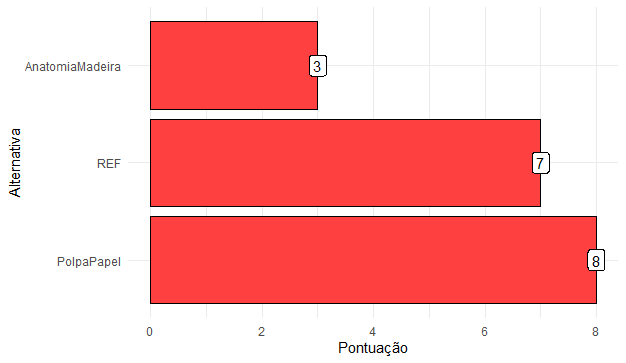
Source: Original research results
Table 2. Borda Ranking of Student Performance by Discipline
| Alternative/Criteria | Note 1 | Note 2 | Absences | Punctuation | Rankings |
|---|---|---|---|---|---|
| Pulp and Paper | 4.4 | 4.9 | 4.0 | 8 | 3° |
| REF | 5.2 | 5.5 | 5.2 | 7 | 2° |
| Wood Anatomy | 8.9 | 9.3 | 1.6 | 3 | 1° |
Source: Original research results
In contrast, Pulp and Paper and Forest Energy Resources presented higher scores, indicating lower performance in the Borda method. Both disciplines were characterized by lower average grades and a higher incidence of absences, reflecting patterns of lower engagement and academic performance. These results reinforce the association between regular attendance, meeting deadlines, and better performance, confirming the effectiveness of the Borda method in identifying scenarios of good pedagogical practices, as observed in Wood Anatomy.
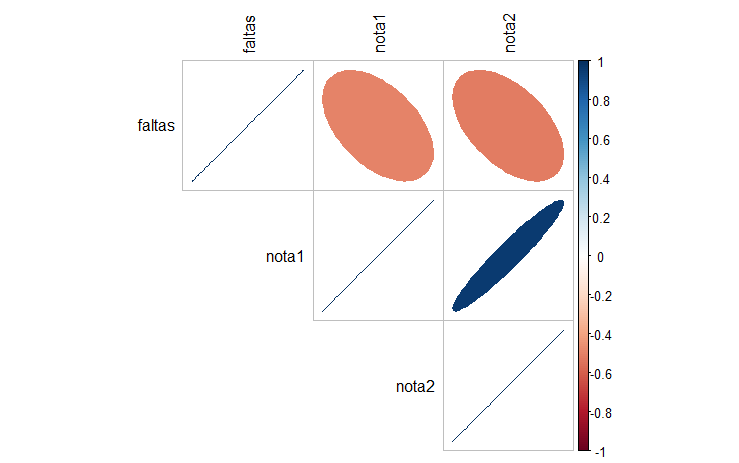
Figure 2 presents the correlation matrix between Absences, Grade 1, and Grade 2, highlighting statistically relevant relationships. A negative correlation was observed between the number of absences and both grades, indicating that higher class absence is associated with lower performance and punctuality. In contrast, a positive correlation was found between Grade 1 and Grade 2, suggesting that more organized and punctual students tend to show greater protagonism in the learning process and better academic performance. This behavior is consistent with the assumptions of active methodologies, in which the student assumes a central role and the professor acts as a mediator. Figure 2, therefore, complements the data from Table 2 by demonstrating that better performance in Wood Anatomy may be associated with greater student engagement.
Figure 2. Correlogram of the correlations between the variables Faltas, Nota1, and Nota2. The ellipses visually represent the strength and direction of the correlations: the more elongated and inclined they are, the stronger the correlation between the pairs of variables. The color of the ellipse reinforces this interpretation, with more intense shades indicating greater magnitude (positive in blue, negative in red). The figure uses two visual channels – shape and color – to intuitively represent the correlation matrix
Source: Original research results
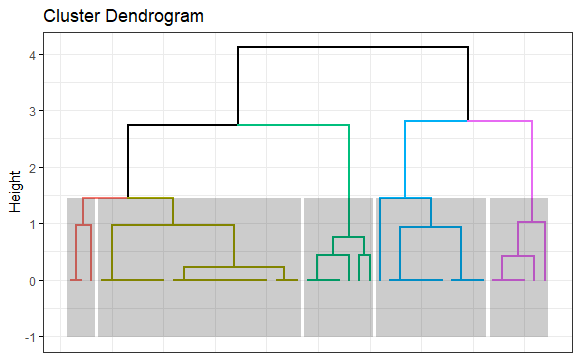
Figure 3 displays the dendrogram of the hierarchical cluster analysis applied to the 47 students, considering Grade 1, Grade 2, and Absences. The branched structure indicated the formation of five distinct clusters (Table 3), reflecting specific patterns of academic behavior. Cluster 5 stood out for concentrating 20 students, including all students from Wood Anatomy (individuals 34 to 47), characterized by high performance and a low absence rate, forming a cohesive and academically consistent group. In contrast, Clusters 1 to 4 brought together students from the other disciplines, revealing greater heterogeneity and dispersion of results, which suggests variability in the assimilation of the methodology and engagement levels.
Figure 3. Dendrogram resulting from the hierarchical cluster analysis of the 47 students, considering three variables: Grade 1 (performance according to the Borda Method), Grade 2 (punctuality in submitting the first assessment activity), and Attendance (number of absences). The segmentation highlights five clusters with different academic behavior patterns.
Source: Original research results
Table 3. Student contained in each hierarchical Cluster.
| Groupings | Individual number |
|---|---|
| 1 | 1, 15, 18 |
| 2 | 2, 6, 8, 11, 13, 14, 21, 23, 27, 29, 33 |
| 3 | 3, 10, 24, 26, 31, 37, 40 |
| 4 | 4, 9, 12, 25, 28, 36 |
| 5 | 5, 7, 16, 17, 19, 20, 22, 30, 32, 34, 35, 38, 39, 41, 42, 43, 44, 45, 46, 47 |
Source: Original research results
These results confirm the effectiveness of the Borda methodology in Wood Anatomy and point to the need for differentiated pedagogical strategies in groups with greater performance dispersion. Such strategies should prioritize student protagonism, autonomy, and collaborative learning, in line with Moran (2013), Bacich and Moran (2018), and Valente (2014), who advocate for hybrid models and active methodologies to increase engagement and promote more consistent academic results.
Table 4 summarizes the results of hierarchical clustering, organizing the 47 students into five groups (Cluster_H) based on the averages of Grade 1, Grade 2, and Absences. Cluster 5, with 20 students, stood out as a group of academic excellence, with averages of Grade 1 = 9.85 and Grade 2 = 10.00, and almost full attendance (average absences = 1.05), reflecting the performance observed in Wood Anatomy. In contrast, Clusters 2 and 4 presented very low performance averages (Grade 1 ≤ 0.45; Grade 2 ≤ 0.33) and higher levels of absence (absences = 7.64 and 2.50), indicating difficulties in understanding the methodology and lower engagement. Cluster 1 showed an intermediate profile, with moderate performance (Grade 1 = 5.00), high punctuality (Grade 2 = 9.67), and a low absence rate (2.00), suggesting partial assimilation of the methodology. Cluster 3 brought together students with high performance (Grade 1 = 9.43; Grade 2 = 10.00), but with irregular attendance (absences = 6.57), indicating good conceptual mastery with compromised presence. These results highlight the diversity of academic profiles and the need for differentiated pedagogical interventions, aligned with active methodologies and hybrid teaching models (Moran, 2013; Bacich and Moran, 2018; Valente, 2014).
Table 4. Student data used for hierarchical clustering modeling.
| Cluster_H | n | Note 1 | Note 2 | Absences |
|---|---|---|---|---|
| 1 | 3 | 5.00 | 9.67 | 2.00 |
| 2 | 11 | 0.45 | 0.00 | 7.64 |
| 3 | 7 | 9.43 | 10.00 | 6.57 |
| 4 | 6 | 0.00 | 0.33 | 2.50 |
| 5 | 20 | 9.85 | 10.00 | 1.05 |
Source: Original research results
Table 5 presents the distribution of the 47 students across the five clusters identified by non-hierarchical cluster analysis (k-means), revealing distinct grouping patterns. Cluster 4 brings together the largest proportion of students (n = 20), predominantly including Wood Anatomy students (individuals 34 to 47) and part of Pulp and Paper and Forest Energy Resources, characterizing a cohesive profile of high performance and high participation, corroborating the results of hierarchical clustering. Clusters 1, 2, 3, and 5 showed more heterogeneous configurations. Cluster 2, for example, grouped seven students with high performance but irregular attendance, while Cluster 5 concentrated 11 students with low grades and high absenteeism rates, suggesting limitations in engagement or difficulties in assimilating the Borda methodology. These groupings reinforce the need for differentiated pedagogical strategies, greater teacher mediation, and practices aligned with active methodologies and hybrid teaching models (Moran, 2013; Bacich and Moran, 2018; Valente, 2014).
Table 5. Students contained in each non-hierarchical Cluster (k-means).
| Groupings | Individual number |
|---|---|
| 1 | 4, 9, 12, 25, 28, 36 |
| 2 | 3, 10, 24, 26, 31, 37, 40 |
| 3 | 1, 15, 18 |
| 4 | 5, 7, 16, 17, 19, 20, 22, 30, 32, 34, 35, 38, 39, 41, 42, 43, 44, 45, 46, 47 |
| 5 | 2, 6, 8, 11, 13, 14, 21, 23, 27, 29, 33 |
Source: Original research results
Table 6 deepens the analysis of k-means clusters, presenting the average of variables per cluster. Cluster 4 remained the best-performing group, with average grades of Grade 1 (9.85) and Grade 2 (10.00) and exemplary attendance (average absences = 1.05). In contrast, Cluster 5 represented the group with the greatest academic vulnerability, with the lowest performance averages (Grade 1 = 0.45; Grade 2 = 0.00) and the highest rate of absences (7.64 absences). Clusters 1 and 3 configured intermediate profiles, with moderate performance and regular attendance, suggesting partial mastery of the methodology. Cluster 2, despite high averages in performance (9.43 and 10.00), showed compromised attendance (6.57 absences), which may reflect extracurricular issues. These findings reiterate the consistency of the k-means method in identifying distinct pedagogical groupings, reinforcing the need for personalized educational strategies (Moran, 2013; Bacich and Moran, 2018; Valente, 2014).
Table 6. Student data used for non-hierarchical clustering (k-means) modeling.
| Cluster H | n | Note 1 | Note 2 | Absences |
|---|---|---|---|---|
| 1 | 6 | 0.00 | 0.33 | 2.50 |
| 2 | 7 | 9.43 | 10.00 | 6.57 |
| 3 | 3 | 5.00 | 9.67 | 2.00 |
| 4 | 20 | 9.85 | 10.00 | 1.05 |
| 5 | 11 | 0.45 | 0.00 | 7.64 |
Source: Original research results
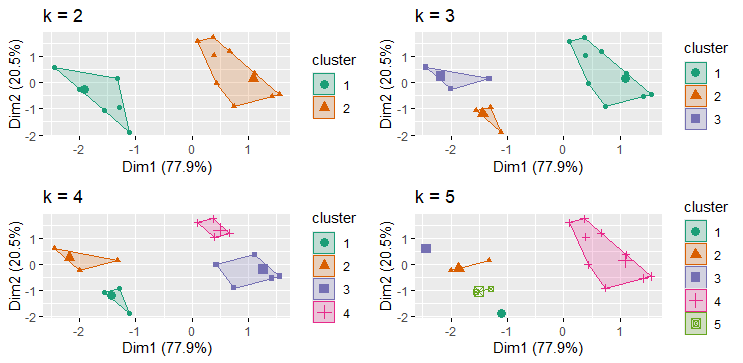
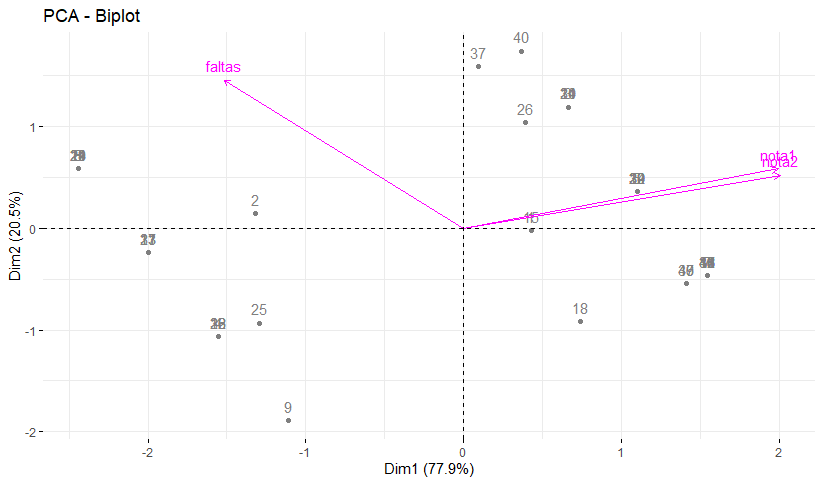
Figure 4 illustrates the two-dimensional distribution of clusters generated by the k-means algorithm, projected by Principal Component Analysis (PCA). The two principal components — Dim1 (77.9% of explained variance) and Dim2 (20.5%) — captured 98.4% of the total data variability. The panels show how the segmentation evolves with the increasing number of clusters, with solutions for k = 3 and k = 4 promoting clearer separations. The graphical representation reinforces the consistency of the obtained classifications and complements the findings of Tables 5 and 6, highlighting the heterogeneity of academic performance among the clusters.
Figure 4. Two-dimensional representation of the groupings obtained via k-means algorithm, with solutions ranging from k = 2 to k = 5 clusters. The projection was performed using Principal Component Analysis (PCA), utilizing the first two components (Dim1 and Dim2), which explain 77.9% and 20.5% of the data variance, respectively. Each color and shape represents a distinct cluster
Source: Original research results
Figure 5 presents the PCA biplot graph, showing the distribution of individuals and the orientation of the original variables (Note 1, Note 2, and Absences). The vectors indicate the direction and intensity of each variable’s contribution to data variability. The strong collinearity between Note 1 and Note 2, reflected by the overlap of the vectors, suggests a high positive correlation between these performance metrics, while the Absences vector points in the opposite direction, evidencing its negative correlation with the grades. The arrangement of students in the two-dimensional plane reveals natural groupings, with spatial proximity between individuals of similar profiles, such as high performance with a low absence rate, and the visual identification of possible outliers. This visualization reinforces the observed statistical relationships, validating the coherence between academic performance and attendance, and consolidating the consistency of the clusters identified by the Borda Method and non-hierarchical clustering.
Figure 5. Biplot graph generated from Principal Component Analysis (PCA), representing the observations (students) and the original variables (Grade 1, Grade 2, and Absences) projected onto the first two principal components. The vectors indicate the direction and contribution weight of the variables, and the numbers represent the individuals analyzed.
Source: Original research results
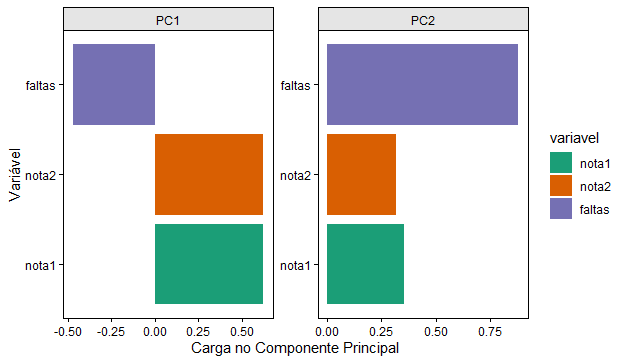
Figure 6 displays the loading plot, which highlights the contributions of the original variables (Note 1, Note 2, and Absences) to the first two principal components (PC1 and PC2). It is noted that Note 1 and Note 2 exhibit significant positive loadings on PC1 and contribute to PC2, reflecting their strong association with overall academic performance. In contrast, Absences has a negative loading on PC1 and a strongly positive loading on PC2, indicating an inverse relationship with grades along the main axes of variation. This configuration suggests that PC1 is predominantly associated with a performance versus absenteeism gradient, while PC2 captures additional dimensions related to attendance behavior. The symmetry between the loadings of Note 1 and Note 2 reaffirms the high correlation between these variables, validating their combination in the aggregate score by the Borda Method. These results support the consistency of PCA as an exploratory strategy for structuring and visualizing educational data.
Figure 6. Loading plot referring to the first two principal components obtained by Principal Component Analysis (PCA), indicating the weight of each original variable (Note 1, Note 2, and Absences) in PC1 and PC2
Source: Original research results
Figure 7 presents the decision tree generated to classify students into the five clusters identified by k-means, based on the variables Grade 1, Grade 2, and Absences. The root node performs the first split based on Grade 2 (≥ 5.5), highlighting its initial importance in the decision-making structure. Among students with higher punctuality, frequency (Absences) emerges as a determining criterion, with subsequent splits at <1.5 and <4.5 absences, suggesting that attendance plays a central role in differentiating the groups. The Grade 1 variable is used at lower levels of the tree to refine the segmentation of profiles with low frequency. Each terminal node represents a predominant class (cluster) and its percentage distribution, allowing for a clear interpretation of the patterns. Students with Grade 2 < 5.5 were entirely classified into cluster 5, suggesting a profile of low performance and low punctuality. On the other hand, students with high punctuality and low frequency of absences were mostly classified into clusters 1 or 3, indicating higher performance and engagement. This decision structure confirms previous findings, especially the inverse association between absences and academic performance, and demonstrates the ability of supervised learning algorithms to translate complex patterns into objective and interpretable rules. The decision tree, therefore, validates the formed clusters and provides an operational model for automated identification of educational profiles, with direct implications for pedagogical intervention policies.
Figure 7. Hierarchical structure of the decision tree generated to classify students into five clusters (Cluster_K) based on the variables Grade1 (overall performance according to the Borda method), Grade2 (punctuality in submitting assignments), and Absences (attendance in classes). Each node shows the predominant class (central number), the probability distribution among the clusters (decimal values), the percentage of instances reaching the node (bottom part), and, when applicable, the splitting rule. The root node indicates a predominance of cluster 5 (36%), performing its first split based on Grade2 ≥ 5.5. Subsequent branches indicate successive cut-off points in Absences (≥1.5 and <4.5) and Grade1 (≥7.5), allowing for interpretable student segmentation. The tree reveals that students with low punctuality are directly classified into cluster 5, while others are allocated according to combined patterns of attendance and performance, highlighting the relevance of these variables in forming the profiles.
Source: Original research results
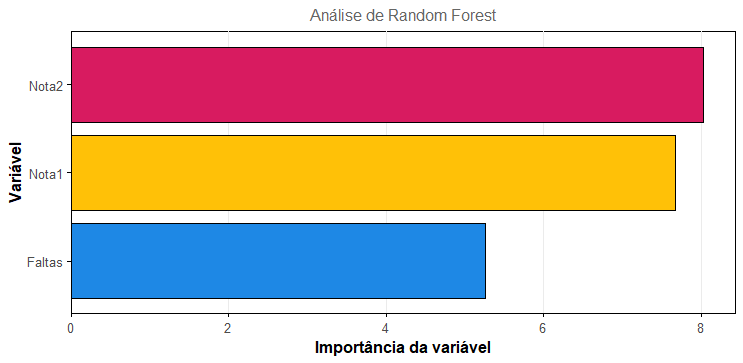
Figure 8 presents the variable importance analysis performed with the Random Forest algorithm, highlighting the relative contribution of each attribute in classifying students into the identified clusters. The results indicate that Grade 2 (punctuality) was the variable with the greatest impact on modeling, followed by Grade 1 (performance in the Borda method). The variable Absences (attendance) showed the least relative importance. This ranking suggests that behavioral factors, such as the ability to meet deadlines, were more discriminative in segmenting student profiles than academic performance alone. The lower influence of attendance may reflect the reduced impact of physical presence in the analyzed context, possibly mediated by characteristics of hybrid learning or pedagogical practices that favor student autonomy and protagonism.
Figure 8. Relative importance of variables Grade 2 (punctuality), Grade 1 (academic performance using the Borda method), and Absences (attendance) in student classification, according to analysis performed with the Random Forest algorithm. The graph highlights that Grade 2 was the variable with the greatest predictive influence, followed by Grade 1, with Absences showing the lowest contribution. These results support the relevance of behavioral factors in differentiating student profiles.
Source: Original research results
Such findings reinforce the importance of integrated pedagogical approaches that consider not only cognitive domain, but also behavioral dimensions of the learning process. The consistency between the results obtained via Random Forest, decision tree, and clusterization analyses highlights that punctuality is a relevant marker of engagement and performance in the contemporary educational environment.
Based on the results, the application of the Borda method demonstrated potential to support decision-making processes in school management, especially in the Forest Engineering course. The use of multiple criteria allowed for the identification of academic performance patterns associated with cognitive and behavioral aspects, such as punctuality and engagement, providing objective indicators for pedagogical decision-making. The research offers a viable, efficient, and easy-to-implement methodological instrument, capable of guiding didactic planning, academic monitoring, and the definition of pedagogical strategies based on active methodological evidence, transforming educational data into strategic information for improving teaching quality.
The findings of this research also have the potential to support decisions at the course management level, by presenting the results in pedagogical meetings with the coordination and institutional management. By objectively highlighting the factors associated with student performance, the Borda method is configured as a tool to support strategic decision-making, allowing the manager to implement targeted pedagogical actions, such as reviewing assessment practices, reorganizing activities based on active methodologies, and implementing formative monitoring mechanisms. The efficiency of the method is related to its ability to systematize multiple criteria into a clear decision-making structure, while its effectiveness is evidenced by the generation of information that guides more assertive and well-founded pedagogical interventions.
The contribution of this study to school management goes beyond the specific context of the Forest Engineering course. The structure of the Borda method allows its adaptation to different educational levels, from basic education to higher education, through the adaptation of criteria and curriculum themes. In the analyzed university context, its application demonstrates a direct impact on academic management by supporting pedagogical planning, strengthening the culture of decision-making based on scientific evidence, and promoting the integration between active methodologies and multicriteria decision-making analysis, contributing to the continuous improvement of teaching quality and strategic educational decision-making.
4. Conclusion
This study aimed to apply the Borda method in teaching scientific projects to undergraduate students in Forest Engineering, using documentary data from the Moodle platform to enhance the teaching-learning process. It was found that the application of the Borda method demonstrated effectiveness in evaluating academic performance, revealing distinct patterns among the analyzed disciplines. The Wood Anatomy discipline stood out with high performance and punctuality, with most students allocated to an excellence cluster. In contrast, the Pulp and Paper and Forest Energy Resources disciplines showed greater dispersion in results and lower engagement. It was observed that punctuality in submitting activities was the main factor in classifying students, followed by performance in the Borda method and class attendance. These findings indicate that academic success is not restricted to cognitive mastery but significantly depends on behavioral competencies, such as organization and meeting deadlines, providing evidence for the integration of technical and behavioral dimensions in university education.
The main contribution of this work lies in offering a viable and efficient methodological instrument for educational management, capable of transforming educational data into strategic information for improving teaching quality. The Borda method, by allowing the identification of learning profiles and the association between performance and behavioral factors, supports more assertive and personalized pedagogical decision-making. Although the study focused on a specific context of a State University of Paraná, the structure of the Borda method allows its adaptation to different educational levels, through the adjustment of criteria. It is suggested that the results be socialized in the Structuring Faculty Nucleus of the Forest Engineering course, in order to promote pedagogical alignment and the construction of integrated strategies for monitoring student performance, strengthening a culture of decision-making based on scientific evidence and active methodologies.
Bibliographic References
Conrado, D. M.; Nunes-Neto, N. F.; El-Hani, C. N. 2014. Aprendizagem baseada em problemas (ABP) na educação científica como estratégia para formação do cidadão sócio ambientalmente responsável. Revista Brasileira de Pesquisa em Educação em Ciências, 14 (2): 77-87, 2014. Disponível em: https://periodicos.ufmg.br/index.php/rbpec/article/view/4351.
Da Silva, J. T; Da Silva, I. M. 2020. Uma revisão sistemática sobre a aprendizagem baseada em problemas no ensino de Ciências. Pesquisa e Ensino, 1, e202021. https://doi.org/10.37853/pqe.e202021
Moraes, M. A. A. D.; Manzini, E. J. 2006. Concepções sobre a aprendizagem baseada em problemas: um estudo de caso na Famema. Revista Brasileira de Educação Médica, 30(3): 125-135. https://doi.org/10.1590/S0100-55022006000300003
Article originating from the Final Course Work of the Specialization in School Management of the MBA USP/Esalq
To learn more about the course, click here and access the MBX Academy platform