
Neuroscience And Learning In Education
September 10, 2026
The Production of Memes as a Strategy for Literary Education and Multiliteracies in Elementary School II
Flávia da Silva Neves Nahid; Rosemary Soffner
DOI: 10.22167/2675-6528-202602219
Article derived from a Final Course Work (TCC), with content based on the student’s original work and adapted to the editorial format of the Revista E&S with the support of the ResumeAI tool, an artificial intelligence solution developed by the Pecege Institute for textual synthesis and organization.
Abstract
Reading classic literary works presents challenges in the contemporary school context, due to the distance between the language of the texts and the students’ repertoire. We investigated how the use of memes contributed to the construction of meaning in reading the work Senhora, by José de Alencar, in Elementary School II. The research adopted a qualitative approach, with a participatory research character, and was developed with two 9th-grade classes from a private school in Volta Redonda, Rio de Janeiro. Data were collected through questionnaires and student productions, and analyzed in light of content analysis. The results indicated that the use of memes favored students’ approach to the literary text, reduced initial resistance, and increased engagement with reading. A progressive advance in understanding the narrative was also observed, evidenced by the ability to interpret facts, analyze characters, identify implicit relationships, and develop critical positions. The productions revealed the articulation between the work’s content and the students’ sociocultural repertoire, indicating the construction of meaningful learning. It was concluded that the integration between literature and digital culture enhanced pedagogical mediation, contributing to the formation of more active and interpretively autonomous readers.
Keywords: meaningful learning; digital culture; literary reading; multiliteracies; neuroscience.
1. Introduction
Literary reading, particularly of classic works, plays a fundamental role in the cultural, linguistic, and cognitive development of students, not only in Brazil but globally. Contact with literature enables the development of imagination, sensitivity, and critical capacity, in addition to constituting a practice of humanization and expansion of the symbolic repertoire (Cosson, 2014). However, recent studies have shown a growing difficulty in engaging students in Middle School (Ensino Fundamental II) in reading more complex literary texts, especially those that make up the national canon.
This disinterest can be attributed to multiple factors, including the predominance of digital culture and the consequent fragmentation of young readers’ attention. New technologies have profoundly transformed reading practices, making them faster, discontinuous, and multimodal (Santaella, 2013). Faced with this scenario, schools need to adopt more effective strategies that bring the literary universe closer to the contemporary languages with which students identify. The National Common Curricular Base (BRASIL, 2018) recognizes this need, emphasizing the importance of promoting literacy practices that consider students’ digital and cultural contexts.
Furthermore, reading is often reduced to a schooled practice, characterized by excessively technical or evaluative demands, which compromises the student’s engagement with the text and empties its formative potential (Antunes, 2003). Thus, reading difficulty should not be seen as a problem intrinsic to the student or the literary text, but as a reflection of pedagogical practices that dialogue little with the experiences and interests of young readers.
From a neuroscience perspective, literary reading requires high-level cognitive processes, such as inference, empathy, and working memory, which demand concentration and immersion time (Dehaene, 2012; Moraes, 2020). The difficulty in sustaining these processes reflects, in part, the overload of immediate stimuli to which students are exposed daily. It is therefore urgent to rethink reading mediation methodologies so that, in addition to transmitting content, they awaken pleasure and curiosity for literary texts.
Meaningful learning occurs when new information connects substantively to existing knowledge in the learner’s cognitive structure (Ausubel, 2003). In this sense, proposing strategies that establish bridges between the literary text and the students’ sociocultural universe can enhance the processes of reading comprehension and retention, making it more meaningful and lasting.
It is in this context that the present research is inserted, which proposes the use of memes – a discursive genre characteristic of digital culture – as a strategy for mediation between the classic text and the contemporary reader. The concept of multiliteracies, as defended by Rojo (2012) and Kleiman (2008), expands the traditional notion of literacy by incorporating multiple languages, media, and cultural practices. This allows students to construct meaning actively and contextually. Thus, by producing memes from excerpts of the work Senhora, by José de Alencar, students can reinterpret the literary text, articulating verbal and visual codes, and exercising cognitive and metalinguistic skills relevant to learning.
This research therefore seeks to understand how the production of memes can favor the reading, comprehension, and engagement with classic works, contributing to the development of reading skills and the formation of critical and creative subjects. It is about investigating the intersection between literature, digital language, and cognitive processes, from a teaching perspective that dialogues with contemporary challenges and with the contributions of neuroscience applied to education. Thus, this study aims to investigate how the production of memes can favor the reading and comprehension of classic works in Elementary School II.
2. Material and Methods
Research Characterization
This research adopted a qualitative, descriptive, and exploratory approach, with an applied character, seeking pedagogical solutions for a real problem in the school context. The methodological design was based on the assumptions of participatory research, with the researcher acting as a teacher and observer. The study was conducted in a medium-sized private school in Volta Redonda, Rio de Janeiro, involving two 9th-grade classes of Elementary School II, totaling 49 students. The participants were regular attendees of Portuguese Language reading classes and activities. The identity of the institution and students was preserved, in accordance with ethical guidelines established for educational research (Gil, 2019; Thiollent, 2011).
Data collection procedures
Data collection was carried out through participant observation, documentary analysis of student productions (memes), and application of online questionnaires via Google Forms. Oral testimonials from students, recorded in audio and fully transcribed, also constituted part of the qualitative corpus. The research procedure followed a classroom plan, starting with raising awareness and presenting the project to the students, followed by the application of a first questionnaire via Google Forms to map their views on reading literary classics. Subsequently, mediated reading of the work “Senhora”, by José de Alencar, began in 8 classes, with the teacher reading the first part of the book and promoting reflections. The students were then challenged to finish reading autonomously. Before the text production, there was an introduction to the meme genre and analysis of examples. The creation of literary memes occurred in groups, based on excerpts from the work selected by the students. After the activity, there was sharing and analysis of the memes, at which point oral testimonials were collected. Finally, a second individual questionnaire was applied via Google Forms to investigate students’ perceptions regarding the creation process, narrative comprehension, and engagement with reading the classic work (Marconi and Lakatos, 2021; Bardin, 2011).
Data analysis procedures
The questionnaire data were organized and analyzed through simple descriptions, based on the frequency and percentage of responses, following methodological guidelines (Gil, 2019). The data from the transcriptions of student testimonies and the created memes were analyzed based on content analysis, as proposed by Bardin (2011). This method allowed the identification of thematic categories related to engagement, understanding of the literary work, reader autonomy, and perception of the use of memes as a pedagogical strategy. The categories were constructed from the recurrence of meanings in the participants’ discourses, respecting the internal logic of the analyzed corpus.
The process of analyzing oral accounts and memes involved scoring and enumerating relevant information, naming new units of meaning, and inductive categorization. Ideas with the same meaning were organized, renamed, and defined into categories, which emerged in a funnel-like manner, moving from initial to intermediate and finally to final categories, seeking a reduced number that would serve as the basis for the final analysis (Moraes and Galiazzi, 2011). The interpretation of the results sought to relate the empirical evidence to theoretical frameworks on literary literacy, multiliteracies, and neuroscience of learning (Cosson, 2014; Rojo, 2012; Moraes, 2020).
3. Results and Discussion
The results of this research were based on the analysis of data obtained through questionnaires applied before and after the pedagogical intervention, as well as on oral testimonies and the students’ literary meme productions, developed from reading the classic work Senhora, by José de Alencar.
Understanding the group’s preview
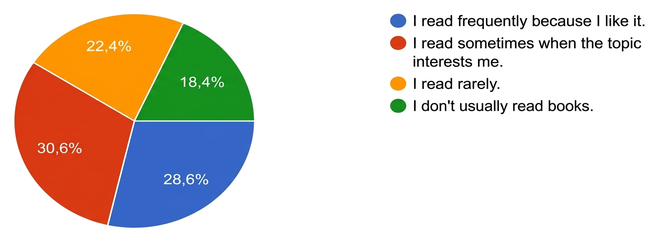
The first questionnaire, applied before the project began, sought to map students’ perception of reading literary classics. It was found that 30.6% of students read books outside of school “sometimes, when the subject interests them”, while 28.6% read “frequently, because they enjoy it”. A portion of 22.4% read “rarely” and 18.4% “do not usually read books”.
Figure 1. Reading frequency
Source: Original research data
Regarding the reading of books proposed by the school, 38.8% of students feel unmotivated by not identifying with the titles, and 32.7% are indifferent, reading out of obligation. Only 24.5% show curiosity, despite some insecurity with the work or language, and 4.1% are excited. The majority (44.9%) are more attracted to contemporary books (children’s/young adult, bestsellers, and series), with only 14.3% preferring classics. However, 94% of participants had already read a classic Brazilian work, which corroborates the institution’s tradition of working with these texts.
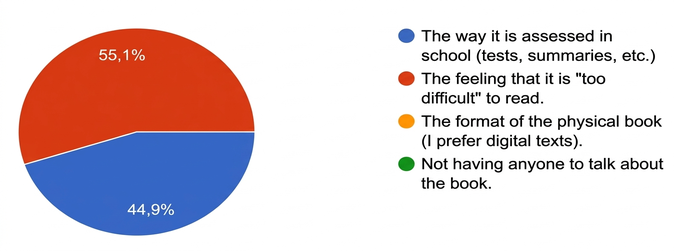
The perception of classics indicated that 46.9% of students consider them important, but difficult to understand. For 40.8%, the difficulty lies in the ancient language and vocabulary. Testimonies reinforced this perception, citing “the ancient language” and “the size of the work, along with a different vocabulary, causes a lack of interest” as barriers. The factors that most alienate students from reading classics are the feeling that it is “too difficult” a read (55.1%) and how it is assessed in school (44.9%).
Figure 2. Factors affecting the reading of classic works
Source: Original research data
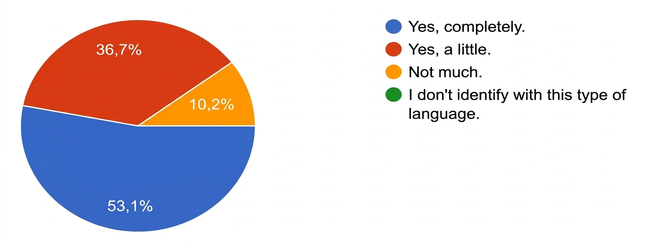
Regarding the connection with the digital world, 53.1% of students feel “completely more comfortable” in activities involving digital languages, such as videos, memes, and social media. Another 36.7% feel “a little” comfortable. Only 10.2% do not identify with this type of language.
Figure 3. Are you comfortable with activities involving digital language?
Source: Original research data
When asked if a classic reading worked with memes and digital media would motivate them, 59.2% answered “maybe, depending on how the activity was done”, and 18.4% stated that they “would certainly be more excited”. The majority (42.9%) consider reading classics important because they are part of culture and history, while 38.8% agree, but suggest that they could be presented in a more interesting way. Furthermore, 53.1% believe that literary reading can be fun if it is well-executed.
Regarding the creation of memes, 40.8% of students would feel curious and would like to try creating memes inspired by literary works, and 14.3% said they were excited. Final comments from students highlighted the importance of classics for culture and language, but also the need to improve the way of working, making reading less “exhaustive” and more connected to the “digital age”. This initial overview was crucial for planning the mediation of the reading of the work Senhora, seeking to connect the text to the students’ experiences and current context.
Understanding the group’s vision after the task
After the shared reading of the work and the group meme production, a second questionnaire was applied to assess students’ perception of the activity. The experience of transforming excerpts from the work Senhora into memes was widely positive: 67.3% of participants considered the activity fun and useful for better understanding the story, and 30.6% found it interesting, without major changes in comprehension. Only one student did not like it.
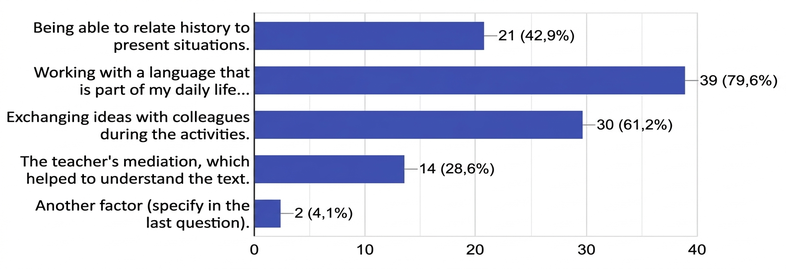
The production of memes contributed to the understanding of the characters and themes of the work for 49% of the students (“helped a little”) and for 40.8% (“definitely helped”). The main factors that contributed to learning were working with the language of memes (79.6%), exchanging ideas with colleagues (61.2%), and relating the story to present-day situations (42.9%).
Figure 4: Contributions to learning
Source: Original research data
During the creation of the memes, students felt enthusiasm, a desire to participate, and curiosity to better understand the book, although some faced difficulties in transforming the literary text into image and humor. The majority (55.1%) believe that activities like this can make reading classics more accessible, “perhaps, depending on the work and the class”, while 36.7% stated that the activity made reading “closer and more interesting”.
The work with memes influenced the understanding of the work Senhora, with 46.9% of students stating that it helped to “better perceive the plot and the characters’ behavior”, and 42.9% that it “made it easier to understand the social criticisms of the story”.
Figure 5. Influence of activity on the understanding of the work
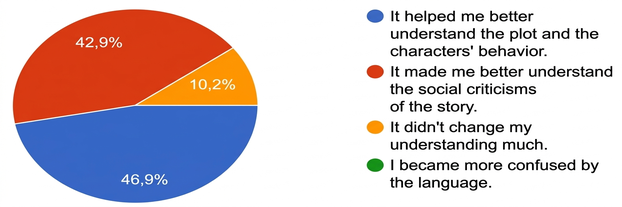
Source: Original research data
Additionally, 69.4% of students believe that other literary works could be approached in the same way. After the project, 51% of participants stated that they now better understand classics, even though they still find them difficult, and 18.4% feel closer to this type of reading. Regarding confidence in reading complex literary texts, 46.9% feel “a little more confident” and 26.5% feel they can better understand the works. The majority (42.9%) would participate with interest in new classic readings with similar activities, “depending on the work.”
Student comments highlighted that “memes help in interpreting the characters of the work,” which was an “excellent project idea,” and that reading in class “greatly helped in understanding.” Changes in student perceptions indicated that engagement was enhanced by the use of digital resources and memes, a textual genre close to their reality. The results suggest that the integration between literary reading and digital languages has the potential to increase engagement, textual comprehension, and a more active stance towards reading.
Analysis of productions: memes as evidence of meaning construction
The analysis of student productions, the memes, allowed us to observe the processes of meaning construction and the cognitive and interpretive operations in action. Thematic categories emerged from the corpus, initially identifying units such as difficulty of comprehension, identification with language, narrative synthesis, character interpretation, critical reading, recognition of irony, and relationship with reality. These units were grouped into two final categories: (1) production of literary meanings in digital culture and (2) significant learning mediated by multimodal practice.
The production of the meme represented in Figure 6 evidenced an initial perception of strangeness towards the literary work, especially regarding the language. The expression “Interesting, I don’t understand anything, but interesting” revealed an ambivalent relationship, with curiosity and openness, but also cognitive difficulty. This finding corroborates the data from the pre-intervention questionnaires on the complexity of classics. The choice to transform this experience into a meme demonstrated a metacognitive movement, indicating awareness of one’s own learning process.
Figure 6 – Meme representative of the initial difficulty of understanding
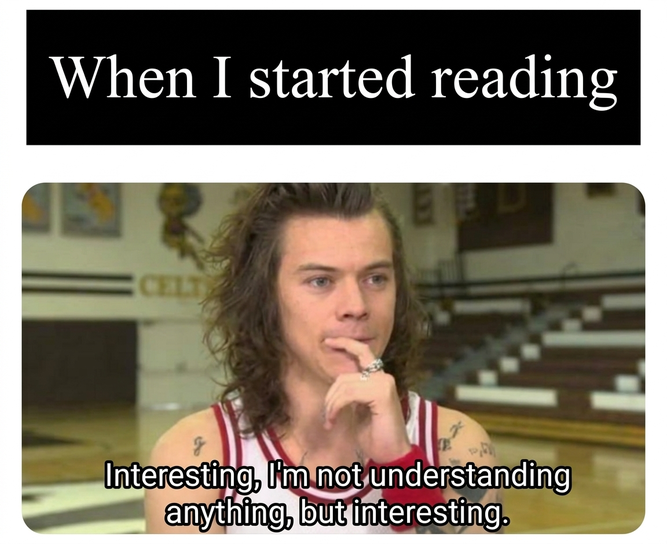
Source: Student production (2025)
Even in the face of difficulty, students recognized the value of the work, suggesting potential engagement. From the perspective of multiliteracies (Rojo, 2012), the production showed how students use digital language to express subjective reading experiences, articulating humor, image, and text. The meme functioned as a tool for expression and reflection, marking the first step towards engaging with the text, according to Cosson (2014).
The meme from Figure 7 already showed understanding of the plot, with students identifying a key event in the narrative (Aurélia’s inheritance) and its relevance. The production revealed a process of narrative synthesis, condensing a complex event into a simple and expressive representation. The choice of an euphoric reaction reinforced the importance of the event.
Figure 7 – Meme representative of plot comprehension
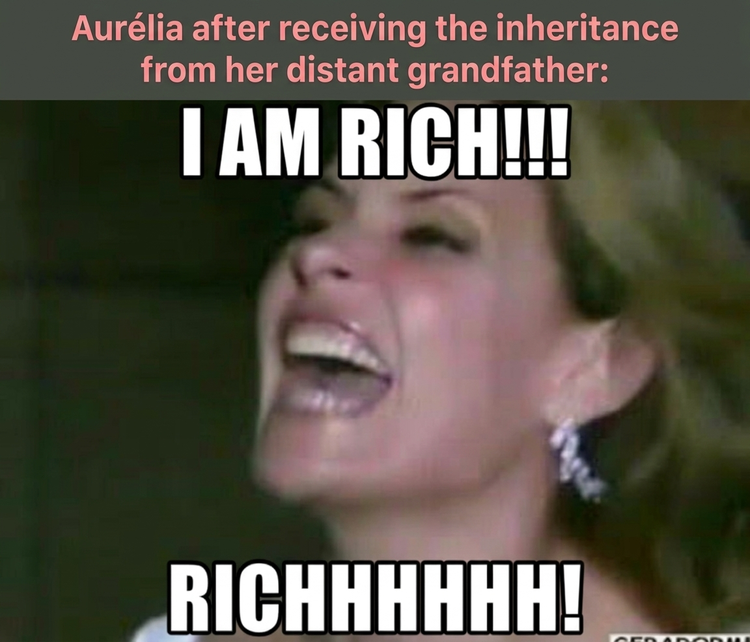
Source: Student production (2025)
Cultural appropriation, by reinterpreting a 19th-century text with a widely disseminated meme, indicated a transposition between languages and contexts, evidencing a re-signification of literary content. Within the scope of multiliteracies (Rojo, 2012), the production reinforced the appropriation of different languages (verbal, visual, and digital) to construct meaning. From the perspective of meaningful learning (Ausubel, 2003), students established connections between the work’s content and known repertoires, facilitating retention and comprehension. The exaggerated emotion functioned as an anchoring element, making the content more memorable, and the association between emotion and learning is fundamental in memory consolidation.
The memes in Figures 8 and 9 revealed interpretations about the characters’ motivations, demonstrating an understanding of the relationships between economic interests and affective choices, with the making of inferences. The construction of the meme in Figure 8, which attributes the speech “People like us don’t fall in love, we close deals” to Fernando Seixas, showed the ability to critically identify and interpret the commodification of affective relationships, performing a sophisticated interpretive synthesis.
Figure 8 – Meme about Fernando Seixas’s behavior
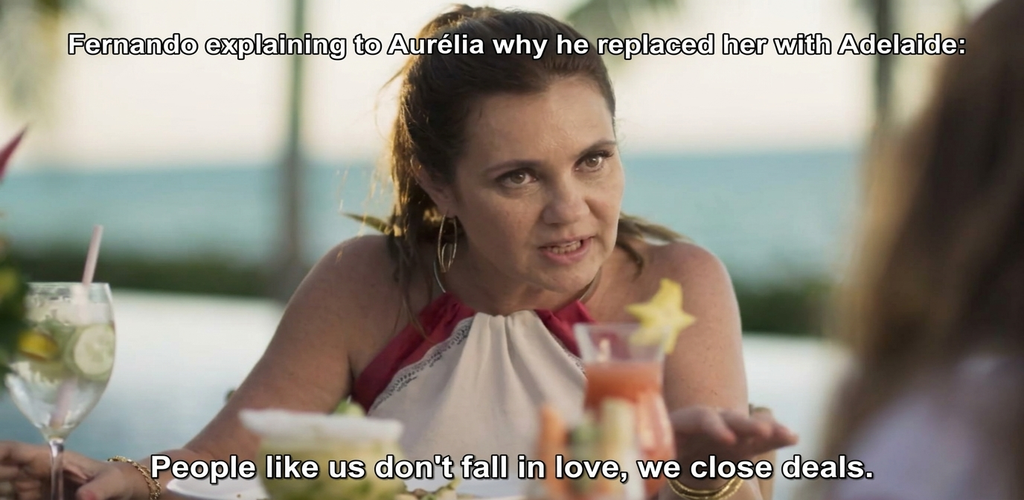
Source: Student production (2025)
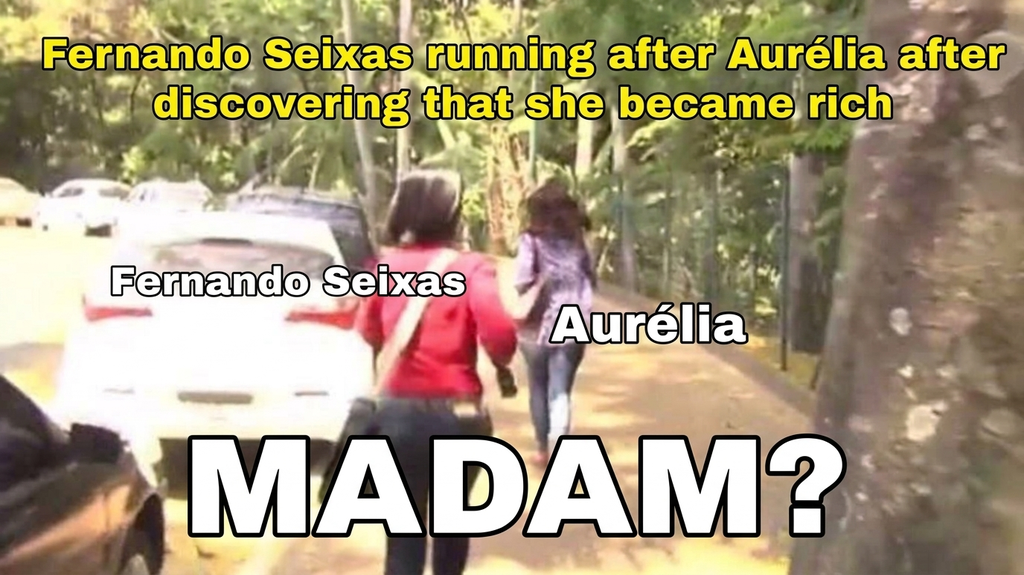
The mobilization of cognitive skills such as inference and abstraction was observed, translating the character’s behavior into contemporary language. The use of humor functioned as a re-signification strategy, connecting the 19th-century context to current social practices. In light of literary literacy (Cosson, 2014), the meme revealed an advance in the appropriation of the work, with students interpreting it critically. The production of Figure 9 indicated the perception of the transformation dynamics of the character Fernando Seixas, who begins to value the relationship with Aurélia when it becomes economically advantageous.
Figure 9 – Meme about the character’s choices
Source: Student production (2025)
This construction revealed a reading that goes beyond isolated events, establishing relationships between different moments of the work and understanding the evolution of the characters. The play with the term “Senhora” demonstrated linguistic sensitivity and symbolic interpretation, articulating the title with the idea of social status and power. The meme also highlighted a process of multimodal retextualization, mobilizing contemporary cultural references (Rojo, 2012).
The analysis of the meme in Figure 10 evidenced the ability to understand sophisticated interpersonal relationships, especially the psychological and social dimension of the relationship between Aurélia and Fernando. By representing the contrast between the couple’s public and private behavior, the students demonstrated the ability to interpret underlying intentions, emotions, and conflicts. This production indicated a more elaborate level of understanding, involving the perception of distinct social roles according to context.
Figure 10 – Meme about interpersonal relationships and social behavior

Source: Student production (2025)
The structure of the meme, based on opposition, revealed an ability to organize thought, synthesizing a complex idea through a simple visual resource. The choice of exaggerated images enhanced the humor and reinforced the interpretative contrast. At more advanced levels, critical positioning was observed, as in the meme in Figure 11, which attributed a value judgment to the character’s actions. By classifying Aurélia’s behavior as “hypocrisy,” the students made a moral judgment, perceiving inconsistencies.
Figure 11 – Meme with value judgment about character

Source: Student production (2025)
This type of reading revealed an advanced level of comprehension, analyzing internal contradictions and assigning meaning to complex behaviors. The direct and contemporary language used to express this evaluation showed a process of critical re-signification. In light of the theory of meaningful learning (Ausubel, 2003), students mobilized personal values and references to interpret the work. From the perspective of the neuroscience of learning, the elaboration of judgments and the activation of emotional responses are associated with complex cognitive processes, which favor the consolidation of learning and critical thinking.
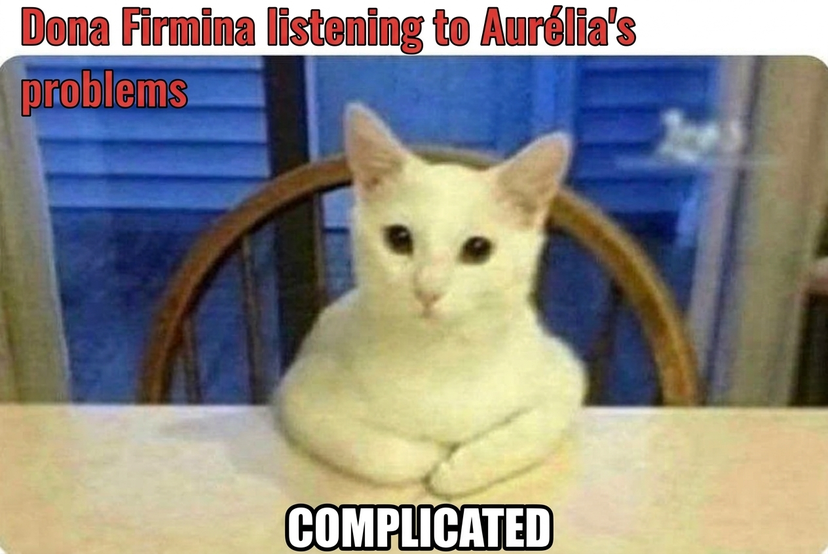
Another relevant aspect was the broadening of the interpretative focus, observed in the meme in Figure 12, which recognized the function of secondary characters. The production revealed that the students recognized Dona Firmina’s functional role as a listener and support for Aurélia’s issues. According to Cosson (2014), literary literacy involves understanding the function of different narrative elements, including secondary characters. The meme suggested an understanding of the protagonist’s conflicts, synthesized in the word “complicated”, and a generalization process, translating a specific dynamic into an everyday situation.
Figure 12 – Meme about a secondary character
Source: Student production (2025)
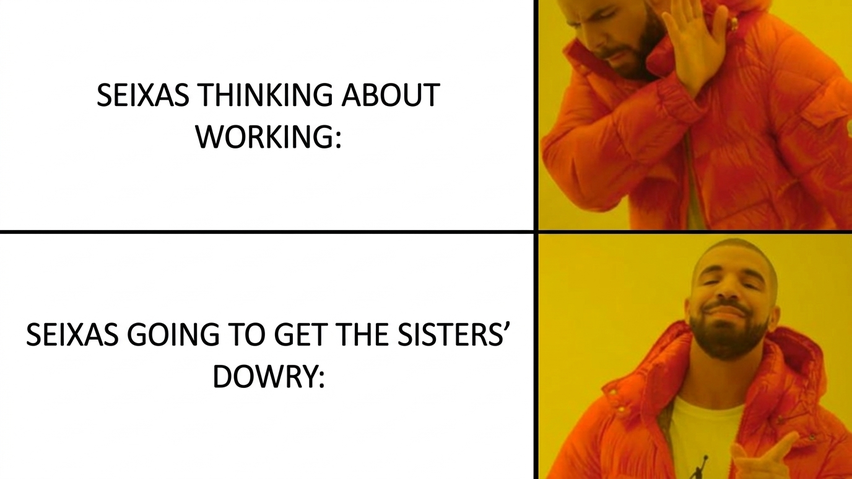
From a cognitive point of view, this was an operation of synthesis and pattern identification. Another analysis highlighted the ability to identify critical dimensions of the text, as in the meme of Figure 13. It is perceived that the students understood the social logic present in the narrative, recognizing ideological aspects. By contrasting “working” with “getting the dowry,” the student synthesized Seixas’s utilitarian logic, marked by the pursuit of personal benefit with minimal effort.
Figure 13 – Meme about economic interest and social relations
Source: Student production (2025)
This representation revealed a deep level of interpretation and understanding of the social criticism present in the work, exposing the valorization of capital over merit. One of the most significant results was the articulation between literary text and personal experience, characterizing meaningful learning (Ausubel, 2003), as in the production of Figure 14. In it, students understood the relationship between money and marriage and reinterpreted it in light of their reality, establishing a comparison between the character’s situation and their daily experience.
Figure 14 – Meme relating work and daily life

Source: Student production (2025)
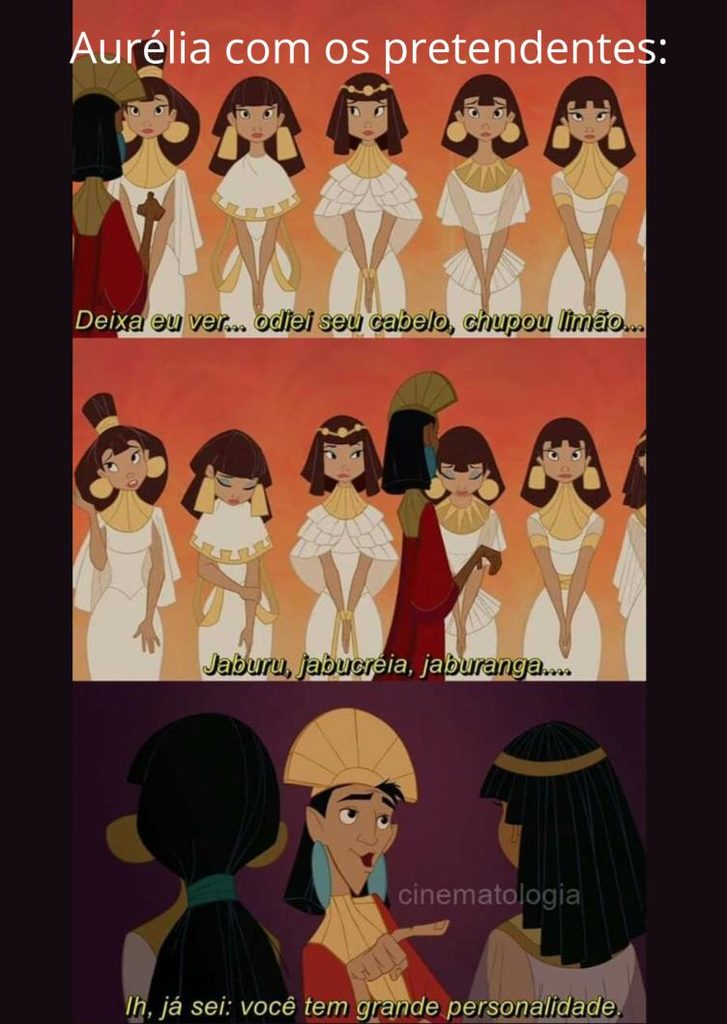
Humor served as a mediation strategy, allowing students to express this reflection in a light and accessible way. An advanced level of reading was observed, involving interpretation, comparison, and positioning regarding the literary content. At more elaborate levels, comprehension of resources such as irony was perceived, as in the meme in Figure 15, where students recognized power relations and narrative inversions, demonstrating critical reading. According to Cosson (2014), literary literacy implies the ability to understand the different roles of characters and their relationships. The recognition of irony and behavioral nuances is associated with more elaborate cognitive processes.
Figure 15 – Meme with irony
Source: Student production (2025)
Finally, some productions indicated the understanding of more sophisticated narrative structures, as in the meme in Figure 16, where students identified the information asymmetry between characters. By portraying Aurélia as someone who “pretends not to know,” the students recognized the character’s intentionality and her strategic acting, revealing a high level of interpretation that mobilizes inference and subtext analysis (Cosson, 2014).
Figure 16 – Meme about dramatic irony

Source: Student production (2025)
The use of the visual metaphor of the disguised wolf evidenced a process of symbolic abstraction, mobilizing prior knowledge to interpret the narrative (Ausubel, 2003). The students not only understood the plot but also identified complex narrative mechanisms, such as the construction of tension through the concealment of information. The analysis of these productions revealed different levels of understanding and engagement with the reading, from initial difficulty to more elaborate levels of interpretation, criticism, and re-signification. This movement allowed for the reorganization of initial categories into two final categories: production of literary meanings in digital culture, which refers to the reinterpretation of the work through memes (Rojo, 2012), and meaningful learning mediated by multimodal practice, evidenced by the articulation between school content and students’ repertoire (Ausubel, 2003).
In summary, the study showed that the use of memes as a pedagogical strategy contributed to the construction of meaning in literary reading, acting as a mediator between the student and the text. The insertion of this practice favored initial engagement with the work, reducing language and comprehension barriers, and students progressively moved to more complex levels of reading, expressed in the interpretation of characters, identification of implicit relationships, and elaboration of inferences. The activity promoted the attribution of meaning to narrative actions and conflicts, the construction of critical positions, and the articulation between the literary text and the students’ sociocultural repertoire, resulting in more meaningful reading. Meme production proved to be an effective resource for synthesizing and expressing interpretations, indicating that the integration between literature and digital culture expands mediation possibilities in teaching and favors the formation of more active, critical, and autonomous readers.
4. Conclusion
This study investigated how meme production can favor the reading and comprehension of classic works in Elementary School II, addressing the challenge of the distance between literary language and students’ repertoire. It was found that the use of memes as a pedagogical strategy contributed significantly to the construction of meaning in reading the work Senhora, by José de Alencar. A reduction in students’ initial resistance and a notable increase in engagement with the literary text were observed. The findings indicated a progressive advance in narrative comprehension, evidenced by students’ ability to interpret facts, analyze characters, identify implicit relationships, and develop critical positions. The activity also promoted the articulation between the work’s content and students’ sociocultural repertoire, resulting in a more meaningful and contextualized reading.
The main contribution of this work lies in demonstrating that the integration between literature and digital culture enhances pedagogical mediation, offering an effective resource for the synthesis and expression of complex interpretations. This approach not only made reading classics more accessible and interesting but also qualified the training of more active, critical, and interpretatively autonomous readers. Although the study focused on a specific work, the results suggest that the methodology can be replicated with other literary works, expanding the possibilities for engagement and textual comprehension in different educational contexts. It is therefore recommended to explore future research that investigates the application of this strategy in other literary genres and age groups, in order to consolidate its potential as a tool for literary literacy and multiliteracies.
Bibliographic References
ANTUNES, Irandé. Aula de português: encontro & interação. São Paulo: Parábola, 2003.
AUSUBEL, David P. Aquisição e retenção de conhecimentos: uma perspectiva cognitiva. Lisboa: Plátano, 2003.
Bardin, 2011 [Referência completa não encontrada no documento original]
BRASIL. Base Nacional Comum Curricular. Brasília: MEC, 2018.
COSSON, Rildo. Letramento literário: teoria e prática. São Paulo: Contexto, 2014.
DEHAENE, Stanislas. Os neurônios da leitura. Porto Alegre: Penso, 2012.
GIL, Antonio Carlos. Métodos e técnicas de pesquisa social. 7. ed. São Paulo: Atlas, 2019.
KLEIMAN, Ângela. Letramento e formação do professor. Campinas: Mercado de Letras, 2008.
MARCONI, Marina de Andrade; LAKATOS, Eva Maria. Técnicas de pesquisa: planejamento e execução de pesquisas, amostragens e técnicas de pesquisa, elaboração, análise e interpretação de dados. 9. ed. São Paulo: Atlas, 2021.
Moraes e Galiazzi, 2011 [Referência completa não encontrada no documento original]
MORAES, Maria Cristina. Neurociência e aprendizagem. Porto Alegre: Artmed, 2020.
ROJO, Roxane. Multiletramentos na escola. São Paulo: Parábola Editorial, 2012.
SANTAELLA, Lucia. Leitura de imagens. São Paulo: Loyola, 2013.
THIOLLENT, Michel. Metodologia da pesquisa-ação. 18. ed. São Paulo: Cortez, 2011.
Article originating from a Final Course Work on Neuroscience and Learning in Education
To learn more about the course, click here and access the MBX Academy platform