
Neuroscience And Learning In Education
September 16, 2026
Inclusive Assessment Practices for Students with ASD in Basic Education: A Knowledge Study
Marina de Freitas Fortes; Adriessa Santos
DOI: 10.22167/2675-6528-202602277
Article derived from a Final Course Work (TCC), with content based on the student’s original work and adapted to the editorial format of the Revista E&S with the support of the ResumeAI tool, an artificial intelligence solution developed by the Pecege Institute for textual synthesis and organization.
Abstract
Educational assessment is a fundamental pillar for overcoming gaps and promoting learning, recognized by national and international guidelines, being crucial for students with Autism Spectrum Disorder (ASD). This study aimed to map the national scientific production on inclusive assessment practices for students with ASD in Basic Education, aiming to support the elaboration of Individualized Educational Plans. A quali-quantitative, exploratory research was conducted through a systematic literature review. The search focused on theses and dissertations published in the last five years (from 2025 onwards) in the Brazilian Digital Library of Theses and Dissertations (BDTD), using descriptors such as “autism spectrum disorder” and “educational assessment”, “continuous assessment” or “learning assessment”. The results indicated that scientific production did not keep pace with the increase in enrollment of students with ASD, and no correlation was observed between the volume of enrollments and academic production by region. Gaps were identified in research on High School and curricular components beyond Portuguese Language and Mathematics. The analyzed research emphasized the importance of considering social and emotional aspects, in addition to cognitive ones, in the assessment process. The study provided indications for future investigations, aiming to improve responses to the needs of students with ASD in assessments.
Keywords: Educational assessment; Basic education; Assessment strategies; Inclusion; Autism spectrum disorder.
1. Introduction
Educational assessment is a fundamental pillar for overcoming learning gaps, being recognized by important national and international guidelines. Initiatives such as the National Pact for Learning Recovery, from the Ministry of Education (MEC, 2024), and the RAPID Framework (Framework for Learning Recovery and Acceleration), proposed by Unesco, Unicef, and the World Bank (Sanchéz, 2023), emphasize the centrality of assessment. In this context, assessment is understood in its diagnostic function, aiming to identify gaps and support pedagogical interventions, and not merely as a classification tool (Luckesi, 2011).
In Brazil, the right to education is guaranteed by the Federal Constitution of 1988 and by the Law of Directives and Bases of National Education (LDB), Law nº 9.394/1996, which establishes the continuous and cumulative verification of school performance, with a predominance of qualitative aspects (Brazil, 1996). For Special Education students, the LDB provides specific curricula, methods, techniques, resources, and organizations. Additionally, the Brazilian Inclusion Law (Law 13.146/2015) and the LDB support the development of the Individualized Educational Plan (IEP), an essential tool for ensuring equity and promoting the development and learning of students with Autism Spectrum Disorder (ASD) and other disabilities, considering their individual needs.
Despite the legal framework, the implementation of inclusive assessment practices for students with ASD in Basic Education faces significant challenges. Data from the School Census 2024 (INEP, 2024) reveal a significant increase in the number of enrollments of students with ASD, from 636,202 in 2023 to 1,918,877 in 2024, representing a 44% growth. This contingent of students with ASD corresponds to four percent of the total enrollments in Brazilian education and ninety-one percent of enrollments in Special Education.
However, there is no clear regulation in Brazil indicating how these students should be assessed, and the adaptations present in systems like Saeb do not primarily aim at the inclusion of students with ASD. The absence of clear guidelines for the development of IEPs results in a heterogeneous construction, with disparities in the quality and effectiveness of the plans. This regulatory gap makes it difficult to accurately identify educational deficits, which can lead to imprecise diagnoses, grade repetition, and school dropout, hindering the democratization of education (Luckesi, 2011).
National academic production on the topic also presents notable gaps. A disproportion is observed between the increase in enrollment of students with ASD and the scientific production that addresses their assessment practices. There is a lack of studies focused on High School, a crucial stage of the school trajectory where dropout and failure rates for students with Special Education are concerning, and where age-grade distortion reaches 34.5% for students with disabilities (INEP, 2024). Furthermore, most research focuses on Portuguese Language and Mathematics, neglecting other curricular components provided for by the National Common Curricular Base (Brazil, 2018).
Considering the importance of assessment for the recomposition of learning and the democratization of education, and the need to develop practices that promote self-perception of ability and high expectations for all students (Brookhart, 2017; OECD, 2016), this study is justified by the urgency to fill these knowledge gaps. This study aims to identify national scientific publications that support a continuous assessment process for students with Autism Spectrum Disorder, analyzing these productions to identify trends, gaps, and implications for assessment practices and the construction of Individualized Educational Plans.
2. Material and Methods
This research had an exploratory, quali-quantitative nature, and was carried out through bibliographic research and systematic literature review in academic databases. Bibliographic research was chosen because it allows a broad analysis of the national landscape of scientific production (Gil, 2002), seeking to identify patterns, trends, and gaps in inclusive assessment practices for students with Autism Spectrum Disorder (ASD) in Basic Education.
The bibliographic survey used the Brazilian Digital Library of Theses and Dissertations (BDTD), maintained by the Brazilian Institute of Information in Science and Technology (IBICT), due to its comprehensiveness and reliability in integrating Brazilian master’s and doctoral research. Other repositories, such as SciELO and the CAPES Periodicals Portal, were excluded to avoid overlapping sources, prioritizing more robust research documents (theses and dissertations) and avoiding duplication.
To prioritize updated research, the temporal scope defined was the last 5 years, starting from 2025. The descriptors used in the search were: “autism spectrum disorder” and “educational assessment”, “autism spectrum disorder” and “continuous assessment” or “autism spectrum disorder” and “learning assessment”.
The initial search resulted in 94 documents for the combination “Autism spectrum disorder” and “Educational assessment”, 87 for “Autism spectrum disorder” and “Continuous assessment” and 8 for “Autism spectrum disorder” and “Learning assessment”. 43 studies produced before 2020 were eliminated and, subsequently, the overlaps, leaving 114 productions.
During the filtering process, reading the abstracts of the selected theses and dissertations allowed the identification of the central subjects of each research, described by tags such as “Evaluation”, “Teacher Training”, “Inclusive Public Policies”, and “IEPs”. Research whose tags were “Evaluation”, “Teacher Training”, “Inclusive Public Policies”, “IEPs”, and “Others” were considered relevant for the second filtering stage, and those that exclusively addressed aspects of the health area or issues associated with the disorder’s diagnosis were excluded, eliminating 79 studies. A second reading, focused on the introduction and specific aspects of the remaining 35 theses and dissertations, eliminated another 20 documents, 8 of which were due to unavailability of files for consultation. The final corpus for analysis was composed of 15 works.
The corpus analysis sought to identify trends and map them, performing data cross-referencing such as research type and period, number of students with ASD enrolled in Basic Education and in the same region, type of adaptation strategy adopted, scope of application, and strategy effectiveness.
The methodological procedures for corpus collection are synthesized in Table 1.
Table 1. Methodological procedures for corpus survey
| Step | Movement | Procedure |
|---|---|---|
| Stage I | Survey of works published in BDTD in the last 5 years | Search for descriptors; reading of title and keywords |
| Stage II | Pre-analysis of the corpus, to verify relevance in relation to the reading hypothesis | Reading of dissertation and thesis abstracts |
| Stage III | Second stage of corpus pre-analysis, more in-depth, to disambiguate issues regarding relevance to the reading hypothesis | Reading of the introduction and specific chapters of theses and dissertations |
| Stage IV | Analysis of selected dissertations and theses; data tabulation; search for trends | Full corpus reading and trend identification, mapped in graphs |
| Step V | Detailed analysis and results | Full corpus reading, conclusion and article writing |
Source: Original research data
The project’s limitation to a single database and a five-year time frame constituted a methodological limitation, which led to a reduced number of studies analyzed.
3. Results and Discussion
The initial stages of searching and filtering theses and dissertations in the Brazilian Digital Library of Theses and Dissertations (BDTD) indicated that 30% of the searches were potentially relevant to school evaluation, but only 6% addressed it as a primary theme. This finding contradicts the expectation of a broad discussion on evaluation, given its national and international relevance for overcoming educational gaps.
Among the eliminated productions, a prevalence of studies focused on classroom practices or specific teaching (23%), health (8%), and diagnostic aspects of the disorder (7%) was observed. Less recurrent themes included Higher Education, school management, family relationships, educational platforms, and socio-emotional aspects. The second filtering stage revealed that, of the 27 works addressing teacher training, public policies, Individualized Educational Plans (IEPs), and inconclusive topics, only nine satisfactorily dealt with school assessment.
The search for the term “evaluation”, excluding its medical sense, showed that only 21% of the works referred to school evaluation. This suggests a mismatch between academic production and the importance attributed to evaluation by public policies and the educational market. The lesser attention to the theme can be explained by the combination of the concept of evaluation with the focus on students with Autism Spectrum Disorder (ASD), indicating a lack of specific guidelines for the evaluation of this audience. The limitation of the research base to the BDTD, although justified for this study, may also have influenced the scope of the results.
The final corpus analyzed was composed of 15 works. Data tabulation revealed a prevalence of master’s productions (80%) compared to doctoral productions (20%). The three doctoral theses were defended in 2022, 2023, and 2025, while the dissertations were distributed in 2020 (1), 2021 (1), 2023 (4), 2024 (4), and 2025 (2).
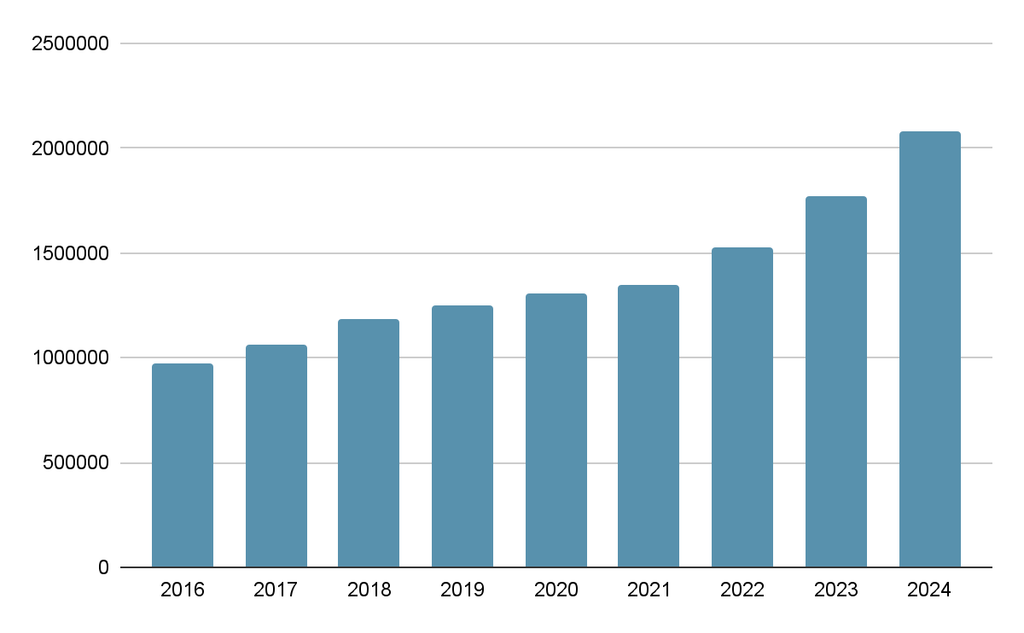
When analyzing the association between scientific production in Higher Education and the number of enrollments of students with ASD in Basic Education, it was observed that the increase in the number of enrollments of Special Education students, surveyed from 2016 to 2024, was not proportionally reflected in academic production. Between 2020 and 2021, the increase in enrollments was 3.21%, the lowest percentage. However, between 2021 and 2022, there was a significant increase of 13.09%, the highest to date. The drop in dissertation production in 2025, despite the continuous growth in enrollments from 2022 onwards, weakens the hypothesis of a direct association, suggesting that the research producing public may not be the same teaching public impacted by the admission of these students.
Table 2 presents the organization of the surveys by year, title, type, author, and institution, detailing the analyzed corpus.
Table 2. Organization of research by year, title, type, author, and institution
| Year | Title | Type | Authors | Institutions |
|---|---|---|---|---|
| 2023 | Pedagogical assessment roadmap for students with Autism Spectrum Disorder | Dissertation | Silva, Michele Joia da | Federal Fluminense University (UFF) |
| 2024 | The feedback from the evaluation in the process of inclusion, teaching, and learning of mathematics for students with autism spectrum disorder | Dissertation | Cruz, Francerly Cardoso da | University of Brasília (UnB) |
| 2025 | Continuing education program for the attendance of students with Autism Spectrum Disorder in Physical Education classes | Dissertation | Giovanella, Adriana Hister | State University of the West of Paraná (UNIOESTE) |
| 2022 | Students with Autism Spectrum Disorder in the context of the state education network of Paraná | Thesis | Santos, Shirley Aparecida dos | Federal University of Paraná (UFPR) |
| 2020 | Autism Spectrum Disorder: Role of the Pedagogical Support Teacher in Elementary Education | Dissertation | Prause, Vanessa Fernandez | State University of the West of Paraná (UNIOESTE) |
| 2024 | Importance of continuing education and inclusive education: a theoretical-practical approach to the educational process in Monteiro/PB | Dissertation | Bezerra, Elijane da Rocha | State University of Paraíba (UEPB) |
| 2023 | Assessment of learning and school inclusion of students with autism spectrum disorder (ASD): perceptions, pedagogical practice, and barriers encountered by Science teachers. | Dissertation | Bregue, Sthefani Borges | Federal University of Pelotas (UFPEL) |
| 2025 | Public policies and inclusive education in Fortaleza: an evaluation of teacher training and pedagogical practices adopted with autistic children | Dissertation | Girão, Suelen Aguiar | Federal University of Ceará (UFC) |
| 2023 | Students with Autism Spectrum Disorder: pedagogical and methodological procedures | Dissertation | Castro, Felipe Carvalho | Univates University Center (UNIVATES) |
| 2025 | Analysis of individualized development plans for students with autism spectrum disorder | Thesis | Mello, Graziele Perpétua Fernandes | São Paulo State University (UNESP) |
| 2023 | Individualized Educational Plan and technology: contributions in educational practice for the inclusion of students with autism | Thesis | Costa, Daniel da Silva | Federal University of Pelotas (UFPEL) |
| 2023 | Socio-Academic Assessment Protocol for School Support of Autistic Students in the Classroom: evaluating behavioral, cognitive-verbal, and adaptive aspects | Dissertation | Torres, Amanda da Silva Pereira | Federal Fluminense University (UFF) |
| 2024 | Specialized educational support: pedagogical assessment in students with intellectual disability | Dissertation | Botelho, Thays de Fatima | São Paulo State University (UNESP) |
| 2024 | Assessment of learning in the context of post-remote teaching: welcoming practices for ASD in the inclusive classroom | Dissertation | Ladeira, Thacio Azevedo | São Paulo State University (UNESP) |
| 2021 | Description of the school learning of children with autism spectrum disorder in the areas of mathematics, reading, and writing | Dissertation | Thomazini, Hélida Lucia Paulini | São Paulo State University (UNESP) |
Source: Original research data
Figure 1 illustrates the evolution of enrollments in special education in basic education in Brazil between 2020 and 2024, showing constant growth.
Figure 1. Enrollment evolution by educational network – special education – basic education – Brazil – 2020 – 2024.
Source: School Census. Available at: https://app.powerbi.com/view?r=eyJrljoiN2ViNDBjNDEtMTM0OC00ZmFhLWIyZWYtZjI1YjU0NzQzMTJhliwidCI6IjI2ZjczODk3LWM4YWMtNGIxZS05NzhmLWVhNGMwNzc0MzRiZiJ9. Accessed on: January, 2026.
In geographical terms, the concentration of Special Education enrollments, according to data from the 2024 Census, is higher in the states of the North Region. However, none of these states are among those with the highest concentration of scientific production, which reinforces the hypothesis of a dissociation between the volume of enrollments and academic research.
Table 3 details the distribution of enrollments in Basic Education by state, including the percentage of students in Special Education.
Table 3. Distribution of enrollments in Basic Education
| State | Number of enrollments | Enrollments in Special Education | Percentage of Special Education students |
|---|---|---|---|
| Rondônia | 248.340 | 20.097 | 8,09% |
| Acre | 2.498.963 | 149.823 | 6,00% |
| Amazonas | 869.379 | 51.131 | 5,88% |
| Roraima | 2.227.679 | 129.543 | 5,82% |
| Pará | 213.712 | 12.373 | 5,79% |
| Amapá | 2.132.934 | 123.367 | 5,78% |
| Tocantins | 3.416.549 | 181.734 | 5,32% |
| Maranhão | 949.125 | 47.969 | 5,05% |
| Piauí | 383.849 | 19.021 | 4,96% |
| Ceará | 1.550.149 | 75.501 | 4,87% |
| Rio Grande do Norte | 829.549 | 40.378 | 4,87% |
| Paraíba | 385.307 | 18.747 | 4,87% |
| Pernambuco | 1.768.874 | 81.941 | 4,63% |
| Alagoas | 783.190 | 36.142 | 4,61% |
| Sergipe | 4.294.157 | 194.852 | 4,54% |
| Bahia | 863.732 | 38.415 | 4,45% |
| Minas Gerais | 679.596 | 29.410 | 4,33% |
| Espírito Santo | 2.121.954 | 89.007 | 4,19% |
| Rio de Janeiro | 526.786 | 22.092 | 4,19% |
| São Paulo | 898.482 | 35.507 | 3,95% |
| Paraná | 2.206.871 | 86.737 | 3,93% |
| Santa Catarina | 629.593 | 24.697 | 3,92% |
| Rio Grande do Sul | 3.421.235 | 130.875 | 3,83% |
| Mato Grosso do Sul | 1.850.984 | 70.620 | 3,82% |
| Mato Grosso | 185.657 | 6.756 | 3,64% |
| Goiás | 9.998.443 | 324.906 | 3,25% |
| Federal District | 1.153.833 | 35.184 | 3,05% |
Source: Statistical synopsis of Basic Education, 2024.
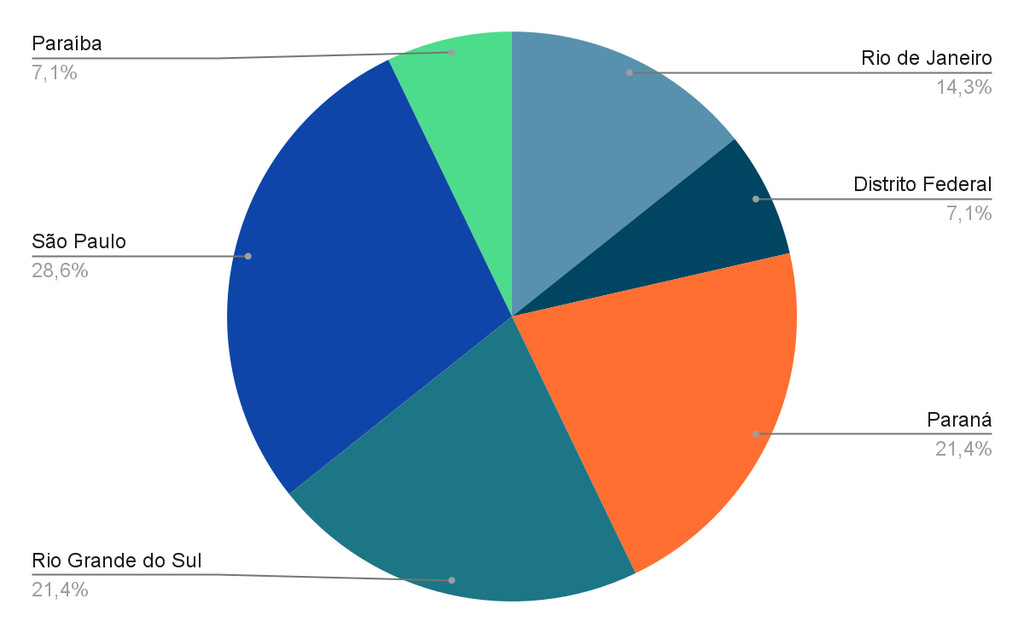
Figure 2 shows the state distribution of the scientific production surveyed, with São Paulo, Paraná, and Rio Grande do Sul presenting the largest concentrations of studies.
Figure 2. State distribution of the scientific production surveyed
Source: Original research data
A congruence was observed between the concentration of scientific production in São Paulo, Rio Grande do Sul, and Paraná and the states’ general innovation ranking (CNI, 2025), where these states occupy the top positions. The absence of Rio de Janeiro, second in the ranking, may be attributed to the unavailability of consultation of materials from a specific federal university.
The themes addressed in the analyzed productions converge on the perspective that evaluation is a fundamental pillar in the teaching-learning process, aligning with the concept of diagnostic evaluation (Luckesi, 2011). However, the application excerpts and the proposed adaptation strategies vary.
Regarding the age group, most studies (six) addressed the entire Elementary School, while three focused on Early Childhood Education and Early Years, one only on Early Years, and two on Later Years. Three studies did not specify an age group. A disadvantage of High School was noted, despite it being a stage with distinct characteristics. The 2024 Census indicates that the number of Special Education students in High School is lower (262,234) compared to Elementary School (1,285,775) and Early Childhood Education (375,383).
Neglect of High School can worsen grade repetition and school dropout rates. In the 2024 Census, the failure rate for Special Education students in High School was 4.6%, and the dropout rate was 2.5%, totaling over 7% of students with impacts on their academic trajectory. Grade repetition is directly linked to the assessment scenario, often influenced by low academic performance and lack of support. Furthermore, the age-grade distortion rate for Special Education students in High School is 34.5%, indicating that they are attending the stage two or more years behind, which can affect self-perception. The National Policy for Inclusive Special Education (Decree No. 12.686) emphasizes the need for reasonable accommodations and the reduction of age-grade distortion.
Regarding the curricular component, only five studies focused on specific areas: Physical Education (1), Sciences (1), Mathematics (3), and Portuguese Language (2). The predominance in Portuguese Language and Mathematics reflects the centrality of these components in practical life and in national policies, such as the National Commitment to Literacy for Children and the National Commitment to All Mathematics, in addition to assessments like Saeb, which historically prioritize these areas.
The thematic approaches of the research were divided into two categories: 1. Proposition of specific evaluation strategies (four works) and 2. Evaluation from a theoretical and generalized perspective (eleven works). The studies in the first category include “Pedagogical evaluation roadmap for schoolchildren with Autism Spectrum Disorder”, “The feedback of evaluation in the process of inclusion, teaching and learning of mathematics for students with autism spectrum disorder”, “Socio-Academic Evaluation Protocol for School Support of Autistic Students in the Classroom: evaluating behavioral, cognitive-verbal and adaptive aspects” and “Description of the school learning of children with autism spectrum disorder in the areas of mathematics, reading and writing”. The other works, including a study conducted in Monteiro, addressed the inclusion of students with ASD more broadly, touching upon evaluation to highlight the need for flexibilization and adaptations.
The analysis of “Analysis of Individualized Development Plans for Students with Autism Spectrum Disorder”, belonging to the second group, revealed that, although the students’ difficulties were reported in the plans, not all of them promoted the elaboration of specific objectives for these difficulties. The objectives were often broad, making measurement difficult, and there was no temporal dimension of evaluation foreseen. These findings highlight the lack of clear guidelines for the elaboration of IEPs, which can compromise their effectiveness and the use of evaluation as a strategy for planning teaching and learning pathways.
Among the studies that propose specific evaluation strategies, the “Pedagogical Assessment Roadmap for Schoolchildren with Autism Spectrum Disorder” suggests a leveling roadmap for pedagogical screening, aiming at the adaptation of curricula and materials. This roadmap, based on Applied Behavior Analysis (ABA) practices, is organized into four leveling stages (motor aspects, object assimilation, writing, and literacy), with tasks scored from 0 to 3. ABA is recognized for its benefits in non-biological therapies for ASD, such as DTT, EIBI, VBI, and PRT, focusing on the reduction of maladaptive behaviors and the reinforcement of desirable skills (Medavarapu, 2019).
In “The evaluation feedback in the process of inclusion, teaching and learning of mathematics for students with autism spectrum disorder”, the author advocates for feedback as an essential tool for valuing the student’s prior knowledge and stimulating self-perception. Adequate feedback should address cognitive and emotional factors, promoting self-esteem and motivation. The “Socio-Academic Assessment Protocol for School Support of Autistic Students in the Classroom: evaluating behavioral, cognitive-verbal, and adaptive aspects” proposes educational and behavioral interventions, with a protocol divided into 13 dimensions (Behavior, Area of Interest, Comprehension, Collaboration, Communication, Self-care Activities, Functional Activities, Oral Language, Logical Mathematical Reasoning, Motor Skills, Written Language, Social and Adaptive Skills, Sensory Characteristics) and 105 items, scored according to the impairment. Its application aims to outline goals for the Individualized Educational Plan (IEP).
The research “Description of the school learning of children with autism spectrum disorder in the areas of mathematics, reading, and writing” highlighted the importance of extending standard time for test application, resulting in more reliable data when considering moments of attention, dispersion, and alternation with playful proposals. This research reinforces the need for evaluation for intervention and warns about the negative impacts of inadequate evaluation on the development of limiting beliefs, emphasizing that each student with ASD must perceive themselves as capable of learning.
The discussion on effective feedback (Brookhart, 2017) highlights its importance for understanding errors and building new knowledge, and it should be clear, detailed, and address cognitive and motivational aspects. External and internal feedback shape students’ learning and beliefs (Butler and Winne, 1995, apud Brookhart, 2017). A culture of high expectations, where the development potential of each student is believed in, is crucial, as low expectations can lead to a “self-fulfilling prophecy” and poorer performance (OECD, 2016).
Regarding the effectiveness of the proposals, three studies presented results. The proposals were implemented in small groups, limiting the sampling. For Silva, the pedagogical evaluation script encountered no resistance and was valued by the teaching staff. In Cruz, teachers engaged in feedback, but with a more motivational than cognitive focus. Torres indicated that 100% of the teachers recognized the validity of the evaluation protocol, although 90% reported difficulties in its use and 50% attributed this difficulty to the scoring method. All research highlighted the need for teacher training for the implementation of the strategies, aligning with the competencies of the BNC-Formação (MEC, 2019) which emphasize students’ knowledge and their learning.
In summary, the study mapped national production on inclusive assessment practices for students with ASD in Basic Education. It was observed that the increase in enrollment of students with ASD was not accompanied by proportional growth in scientific production, especially in High School. There is a tendency to focus on Portuguese Language and Mathematics, suggesting gaps in other curricular areas. Although few studies propose specific strategies, there is a consensus on the importance of assessments that consider cognitive, social, and emotional aspects, avoiding the formation of limiting beliefs. The analyzed research, despite its limited samples, indicates the need for replication of procedures and continuous investment in teacher training to improve assessment practices and ensure the effective inclusion of students with ASD.
4. Conclusion
This study aimed to map national scientific production on inclusive assessment practices for students with Autism Spectrum Disorder (ASD) in Basic Education, in order to support the development of Individualized Educational Plans. It was found that the volume of scientific production did not keep pace with the expressive growth in enrollments of students with ASD in the last five years, and no correlation was observed between the number of enrollments and academic research by region. Significant research gaps were identified, especially regarding High School and curricular components beyond Portuguese Language and Mathematics. The findings indicated that, although few studies proposed specific assessment strategies, there is a consensus on the need to consider social and emotional aspects, in addition to cognitive ones, in the assessment process, aiming to avoid the formation of limiting beliefs and promote self-perception of ability. The main contribution lies in the identification of trends and gaps that can guide the development of clearer guidelines for the construction of effective IEPs.
The methodological limitation of this study lay in the restriction of the research base to the Brazilian Digital Library of Theses and Dissertations (BDTD) and the temporal scope of the last five years, which resulted in a reduced analyzed corpus. This delimitation may have influenced the scope of the results. The studies that presented proposals for evaluation strategies did so with limited samples, suggesting the need to replicate these procedures in diverse contexts to increase confidence in their effectiveness. It is suggested that future studies explore scientific production in other databases and expand the temporal scope, in addition to investigating the identified gaps in High School and other curricular components, and deepening teacher training as a pillar for the implementation of inclusive evaluation practices and improvement of Individualized Education Plans (IEPs).
Bibliographic References
BRASIL. Instituto Nacional de Estudos e Pesquisas Educacionais Anísio Teixeira (Inep). Censo Escolar da Educação Básica 2024. Brasília, DF: Inep, 2025. Disponível em: https://www.gov.br/inep/pt-br/areas-de-atuacao/pesquisas-estatisticas-e-indicadores/censo-escolar/resultados. Acesso em: outubro, 2025.
BRASIL. Lei nº 9.394, de 20 de dezembro de 1996. Estabelece as diretrizes e bases da educação nacional. Brasília: Presidência da República, Casa Civil, Subchefia para Assuntos Jurídicos,. Disponível em: https://www2.senado.leg.br/bdsf/bitstream/handle/id/529732/lei_de_diretrizes_e_bases_1ed.pdf. Acesso em: setembro, 2025.
BRASIL. Ministério da Educação (MEC). Guia para Implementação da Recomposição das Aprendizagens. Brasília, DF: MEC, 2024. Disponível em: https://www.gov.br/mec/pt-br/recomposicao-aprendizagens/guia-recomposicao-aprendizagens.pdf. Acesso em: setembro, 2025.
BRASIL. Ministério da Educação, Conselho Nacional de Educação, Conselho pleno. RESOLUÇÃO CNE/CP N° 2, DE 20 DE DEZEMBRO DE 2019. Brasília: Presidência da República Federativa do Brasil. Disponível em: https://portal.mec.gov.br/docman/dezembro-2019-pdf/135951-rcp002-19/file. Acesso em: março, 2026.
BRASIL. Ministério da Educação. Base Nacional Comum Curricular. Brasília: MEC, 2018.Disponível em: https://basenacionalcomum.mec.gov.br/. Acesso em: março, 2026.
BROOKHART, S. M. How to Give Effective Feedback to Your Students. Alexandria: ASCD, 2017.
Butler, 1995 [Referência completa não encontrada no documento original]
Confederação Nacional da Indústria. Índice de inovação dos estados 25 / Confederação Nacional da Indústria, Federação das Indústrias do Estado do Ceará, Observatório da Indústria Ceará. – Fortaleza : CNI, 2025. Disponível em: https://www.observatorio.ind.br/wp-content/uploads/2022/02/Indice-de-Inovacao-dos-Estados-2025.pdf. Acesso em: dezembro, 2025.
GIL, A. C. Como elaborar projetos de pesquisa. – 4. ed. – São Paulo: Atlas, 2002.
INSTITUTO NACIONAL DE ESTUDOS E PESQUISAS EDUCACIONAIS ANÍSIO TEIXEIRA. Sinopse estatística da Educação Básica 2024. Brasília: Inep, 2025. Disponível em: https://www.gov.br/inep/pt-br/acesso-a-informacao/dados-abertos/sinopses-estatisticas/educacao-basica. Acesso em: janeiro, 2026
LUCKESI, C. C. Avaliação da aprendizagem escolar: estudos e proposições. São Paulo: Cortez, 2011.
MEDAVARAPU, S.; MARELLA, I.I.; SANGEM, A.; KAIRAM, R. Where is the Evidence? A Narrative Literature Review of the Treatment Modalities for Autism Spectrum Disorders. 2019 16;11(1):e3901. Disponível em: https://pmc.ncbi.nlm.nih.gov/articles/PMC6424545/. Acesso em: abril, 2026.
OECD (2016), Low-Performing Students: Why They Fall Behind and How To Help Them Succeed, PISA, OECD Publishing, Paris. Disponível em: https://doi.org/10.1787/9789264250246-en. Acesso em: março, 2026
SÁNCHEZ, A. et al. Learning Recovery to Acceleration: A Global Update on Country Efforts to Improve Learning and Reduce Inequalities (English). Washington, D.C.: World Bank Group, 2023. Disponível em: https://documents.worldbank.org/en/publication/documents-reports/documentdetail/099071223174514721/%20p179960038bed500a08dfc0489b6fa2254a. Acesso em: setembro, 2025.
Article originating from a Final Course Work on Neuroscience and Learning in Education
To learn more about the course, click here and access the MBX Academy platform