
Tax Management
Planning
June 01, 2023
Tax planning in telecommunications and informatics: a comparative analysis between the presumed profit regime and the national simple system
DOI: 10.22167/2675-6528-20230011
E&S 2023,4: e20230011
Ariadine Bernardinelli Silva; Milena Moscardini Nabelice Guasti Lima
Tax planning is the most significant and lawful method applicable to reduce the amount of taxation, besides being less costly for companies. This work addresses the importance of tax planning, presenting preventive methods and involving the choice between legal alternatives that help reduce costs and improve economic performance, achieving the expected results, which aim to reduce or eliminate the tax burden paid by the taxpayer.
The implementation of this study has three purposes: to avoid the occurrence of the tax event; to reduce the amount of the tax, its rate, or reduce the tax base; and to delay the payment of the tax, postponing its payment without penalty. Compliance with taxation, better classification, and adequacy of federal and state tax incidence and the tax base, in addition to the application of laws governing the municipality and state according to the company’s headquarters location, should reflect positively on organizational results.
Nowadays, the construction market is a segment that remained strong, facing the worst phase of the Covid-19 pandemic. According to the Brazilian Chamber of the Construction Industry (Cbic), in 2020 sales of new residential units grew by 9.8% in Brazil[1].
During the pandemic, construction companies that work on renovations and expansions for the pharmaceutical industries experienced an increase in revenue. Pharmaceutical industries stood out in revenue growth in 2020; their sales were boosted by the increase in vaccinated people and the reduction in Covid-19 cases, which led to strong growth in the pharmaceutical sector. In this scenario, the increased demand for renovations and expansions favors the revenue growth of construction and installation companies in the area of cabling and electrical installations.
Within this scenario, a company stands out in research. A model in the segment of structured cabling installations, electrical installations, and material sales, it is headquartered in Osasco (SP) and saw an increase in revenue due to the negotiation of contracts related to the expansion of pharmaceutical industries and e-commerce companies. For the purpose of this work, an entrepreneur is considered to be one who professionally exercises an organized economic activity for the production or circulation of goods, according to the terms of article 966 of the Civil Code[2].
Tax planning runs the risk of generating pecuniary or fiscal sanctions, such as the seizure of goods and vehicles transporting goods, the closure of establishments, among others — situations that can make the business and the legal representative of the company unviable. Criminal practices, according to the Law on Crimes against the Tax, Economic and Consumer Relations Order (Law No. 8.137/90)[3], are subject to imprisonment, ranging from two to five years, or detention, which can cover a period of six months to two years.
In Brazil, the tax burden is high and complex; legislators historically seek to eliminate all loopholes used by taxpayers to generate tax reduction. Awareness among entrepreneurs for the adoption of planning can benefit the venture, optimizing the application of available resources.
According to Padoveze et al.[4], there is a significant difference between “tax management” and “tax planning”: while planning starts from strategic studies and aims to reduce the tax burden, tax management involves the routine and systematic monitoring of the company’s taxes, a process in which issues that will guide tax planning often arise.
To carry out tax planning, it is necessary to perform a tax review, which requires a thorough study of the company’s accounting documentation. The operational tool to be used is fiscal bookkeeping, which must be understandable, reliable, and consistent. During the analysis, spreadsheets, organizational charts, and flowcharts are developed at all stages of the operational process of the financial flow.
For good tax management, robust and integrated information systems are essential, especially for accounting for inventory and payroll, considering a small business, that is, a microenterprise (ME). A preliminary study of the tax legislation that most favors the company, the contracts negotiated by the company, and the economic situation should be carried out, in addition to verifying applicable tax benefits at the federal, state, and municipal levels. Finally, with all this information, it is possible to establish actions and goals.
The reduction of the tax burden produces a financial result and is reflected in direct and indirect costs, which, in turn, affect the final price of the contracted services. Legal and accounting knowledge will be necessary for tax planning to be applicable.
The objective of the research is also to apply the most suitable tax system for the structured cabling and electrical installations services company, through calculations and comparisons. For this, it is necessary to carry out better tax management and financial savings. In this way, the company will become more competitive and gain better market visibility. The research was conducted with a company that acts as an installation service provider, located in the city of Osasco (SP).
The methodology employed will be simulation, in order to seek the most advantageous tax framework model for the company’s operations, starting from a real environment (empirical data) and comparing two tax systems. The data collection instrument is documentary research, through the billing history of the last 12 months, encompassing electronic invoices for services rendered and sale of applied materials.
The target of the studies are calculations and assessments of the taxes levied on the invoices issued and analysis of the tax systems originating from the provision of services and sale of electrical and structured cabling materials. The methodology consists of the methods and procedures applied to obtain answers and address questions. The methodology applied to the research is carried out in the stages described below.
Theoretical research is structured by the selection and adoption of works that will build various concepts, such as tribute, tax accounting, and tax systems. These are important for a better understanding of tax planning and its impact on finances.
As an approach to the research problem, qualitative research was used, which is important for having a subjective view of the data obtained. Beuren[5] states that this approach allows for a perspective on causes and effects, enabling the creation of ideas and hypotheses about narrative data. The present study uses qualitative research because it provides the creation of hypotheses and analyses on the tax system adopted by the company, allowing for reflection on the impact caused by taxes.
Still according to Beuren[5] the quantitative approach is characterized by the use of statistical instruments, both in data collection and treatment. Complementing the other methodological procedures, quantitative research aims to provide more concrete data. This approach was used in the study due to the need to have concrete data to support the comparisons between the values obtained in the different tax systems to be applied to the company.
With the objective of deepening the analyses, the case study methodology was used, which, according to Yin[6], presents sufficient evidence to gain the reader’s confidence that the researcher knows the subject they are dealing with. The case study made it possible to confront the studied theme using its real-world application.
The data were collected from the Billing Statement provided by the company’s management. Completed on December 31, 2021, this data is reserved for management and external users, such as the Tax Authorities and banks. The variables that impacted the calculation of taxes under the system of the two tax regimes — Presumed Profit and Simples Nacional — are considered legal criteria, such as the different calculation bases and applicable rates, among other particularities that vary according to the company’s business segment, which reflects in its options and/or obligations (Table 1).
Table 1. Revenue Demonstration of the studied company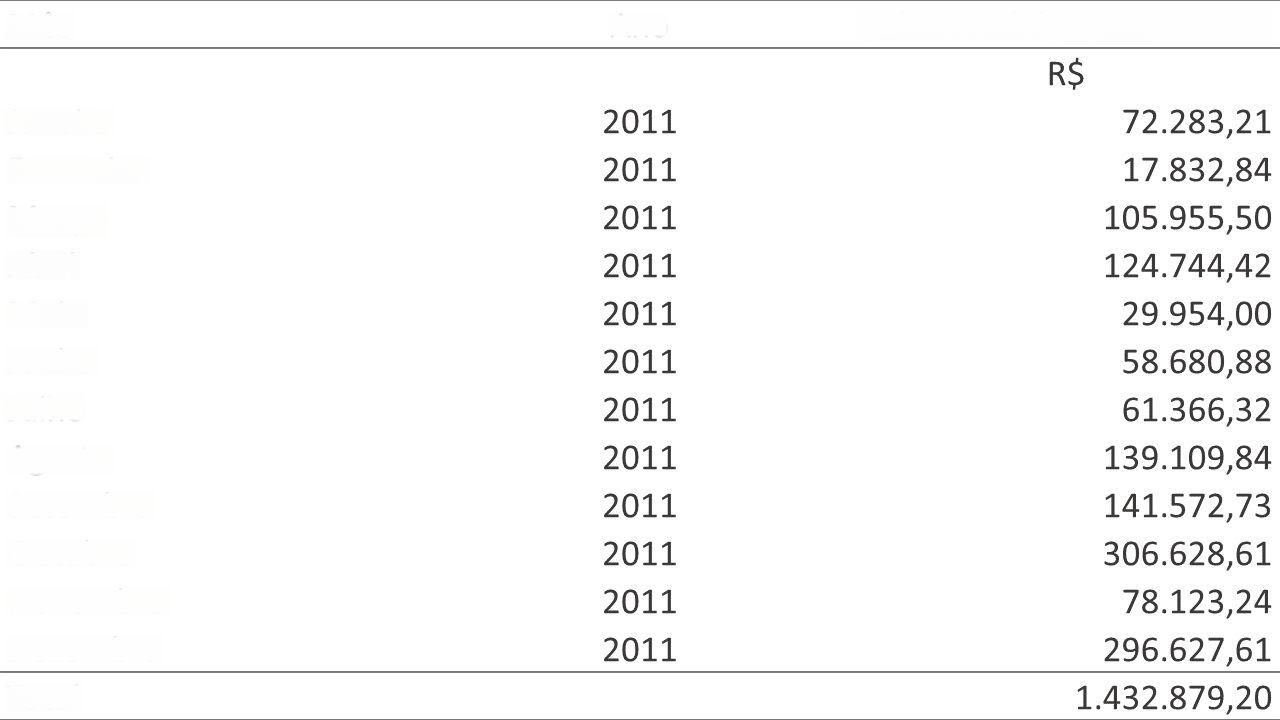 Source: Prepared by the authors.
The invoicing data were based on the issuance of service provision and material sales invoices, data that were tabulated. The calculations were parameterized by the legal foundations of national and municipal legislation, according to services rendered and materials delivered. Comparisons were made between the company’s current situation, with the adoption of taxation under Presumed Profit, and the simulation as a taxpayer opting for Simples Nacional (Table 2).
Table 2. Billing breakdown – Invoice Revenue Issued by the studied company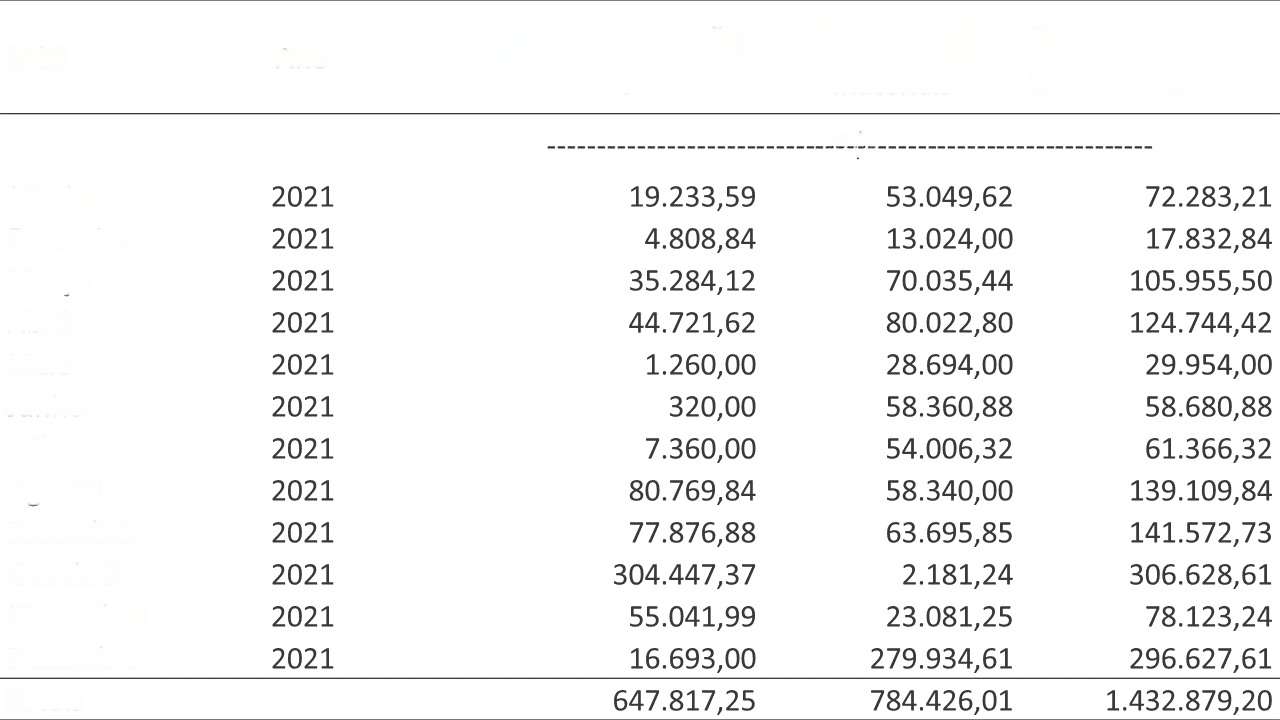 Source: Prepared by the authors.
The invoicing result, based on the issuance of service provision invoices, was R$647,817.25. The result from data obtained from the issuance of material sales invoices was R$784,426.01. This data is important for the monthly tax calculation in Presumed Profit and Simples Nacional (Table 3).
Table 3. Tax statements of the studied company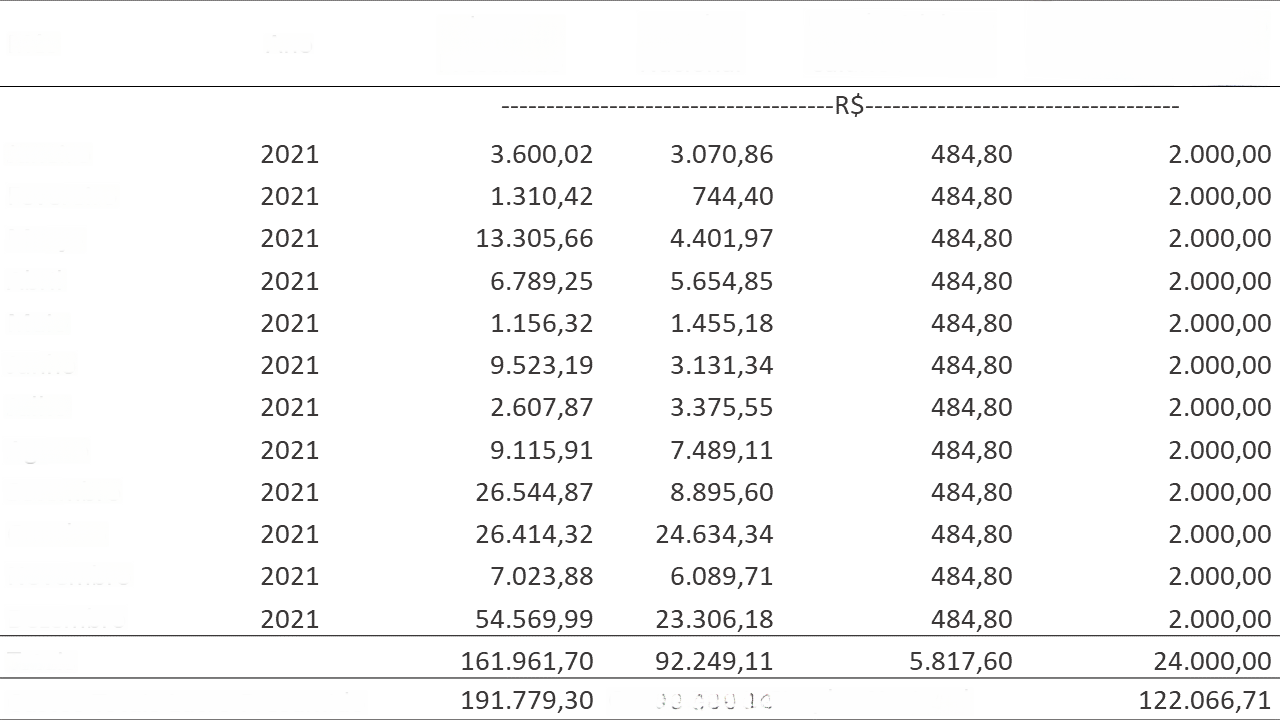 Source: Prepared by the authors.
Note: INSS: National Institute of Social Security
Analyzing the data obtained under the Presumed Profit regime, the taxes Program for Social Integration (PIS), Contribution for Social Security Financing (COFINS), Social Contribution on Net Profit (CSLL), Corporate Income Tax (IRPJ), and Service Tax (ISS) total R$161,961.70. However, under the Simples Nacional, which, among others, also covers these taxes, the tax burden would be R$92,249.11. Given this data, the Simples Nacional taxation would result in significant savings of R$69,712.59, representing 4.86% of the annual revenue.
In the Presumed Profit regime, the Tax on Circulation of Goods and Services (ICMS) is calculated monthly, supported by the principle of non-cumulativeness, meaning that in the operation of selling goods, the portion already charged on a previous operation is deducted from the total due, offsetting the ICMS paid on inputs.
In the Presumed Profit and Simples Nacional tax regimes, expenses for accounting fees were considered, for the purpose of obtaining monthly advisory services in hiring employees governed by the Consolidation of Labor Laws (CLT) and in the submission of monthly and ancillary obligations, such as bookkeeping, issuance of payment slips, delivery of financial statements and other declarations. The projection of the amount payable to the INSS (National Social Security Institute) for two partners was also considered, based on the minimum wage (Table 4).
Table 4. Presumed Profit – Tax demonstration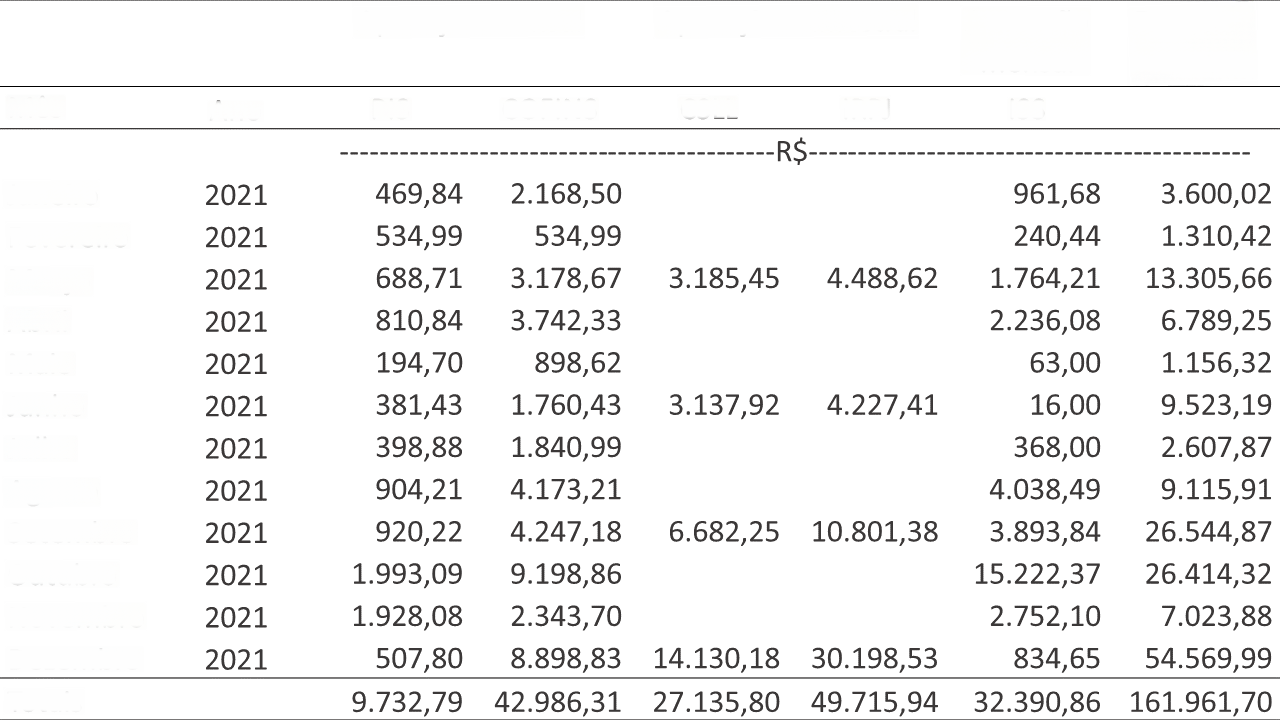 Source: Prepared by the authors.
Note: PIS: Social Integration Program; COFINS: Social Security Financing Contribution; CSLL: Social Contribution on Net Income; IRPJ: Corporate Income Tax; and ISS: Service Tax
Analyzing the obtained data, under the Presumed Profit regime, the sum of PIS taxes totals R$9,732.79, while COFINS taxes totaled R$42,986.31 with monthly assessments. The CSLL totaled R$27,135.80, while the IRPJ summed R$49,715.94 with quarterly assessments. The monthly ISS collected totals R$32,390.86, referring to the provision of services according to activity code 7.02, defined by the National Classification of Economic Activities (CNAE)[7].
When issuing service invoices, there is a 11% withholding for INSS on the invoiced amount. The company benefits from payroll tax exemption (Table 5).
Table 5. Rates and Sharing of Simples Nacional – Commerce – Annex I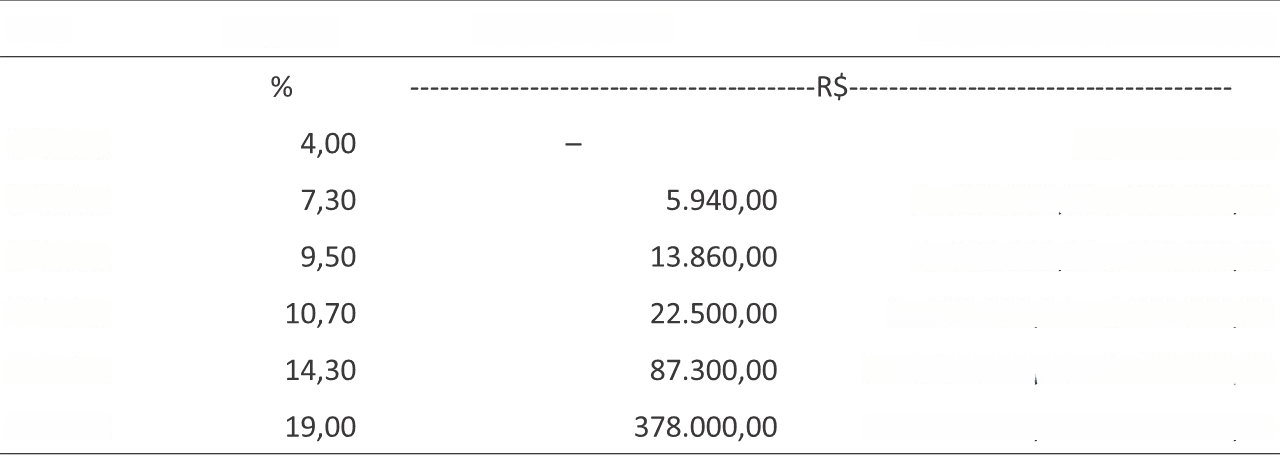 Source: Federal Revenue Regulations – Annex I of Complementary Law No. 123, of Dec. 14, 2006 – (Effective: Aug. 1, 2018)[8].
The Simples Nacional is a tax system that encompasses, within its tax scope, the unified collection of the following taxes: IRPJ, CSLL, PIS-PASEP, COFINS, Employer Social Security Contribution (CPP), and ICMS. For the calculation of taxes under this system, the accumulated gross monthly revenue from the 12 months prior to the calculation period was required (Table 6).
Table 6. Simples Nacional – Tax Statement – Commerce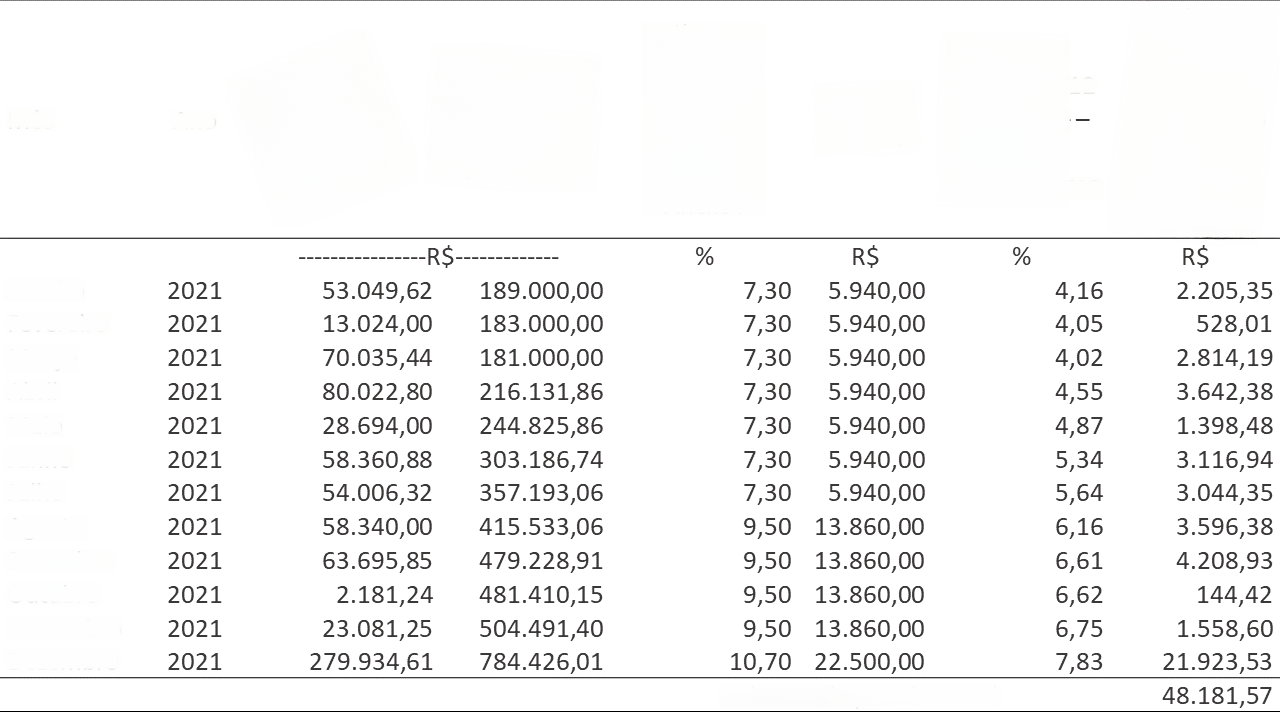 Source: Prepared by the authors.
Note: NF: Nota Fiscal; RBT12: Accumulated Gross Income; DAS: Simples Collection Document
Analyzing the data obtained under the Simples Nacional tax system in the Tax statement according to the Commerce table, the percentage value was deduced to be R$48,181.57. An increase in the percentage related to the rates was observed, both in the Simples Nacional Table – Annex I, and in the effective rate table, which reflected the increase in the company’s total sales over the last 12 months.
Brazil’s tax system is complex; various classifications and rates have been created over time for companies operating in services or commerce, considering the nature and complexity of the business. The monthly rates due are determined by applying the effective rates, calculated from the nominal rates in the tables of Annexes I to V of Complementary Law No. 123, of December 14, 2006[8], calculated on the gross revenue earned in the month (Table 7).
Table 7. Rates and Sharing of Simples Nacional – Revenues arising from the provision of services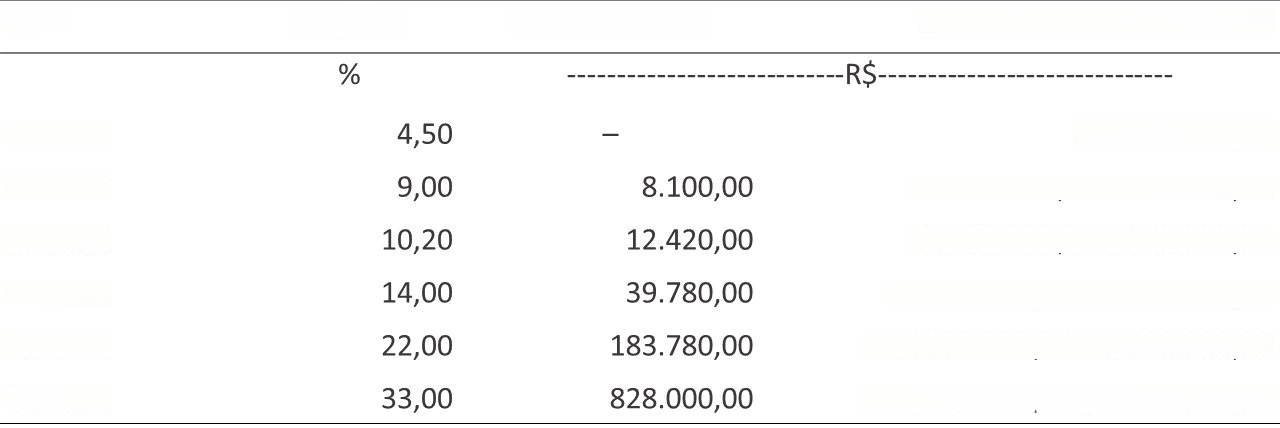 Source: Federal Revenue Regulations – Annex IV of Complementary Law No. 123, of Dec. 14, 2006[8].
Since 2018, service provision activities have been taxed under Annex IV; this table included the Employer’s Social Security Contribution in the Simples Nacional, a tax that is collected according to legislation for other taxpayers or responsible parties, through Complementary Law (LC) No. 123/06, art. 18, § 5º[8] and Resolution of the Simples Nacional Management Committee (CGSN) No. 117/2014[9].
In the CPP collected by companies of the Simples Nacional, amounts referring to third parties (such as the National Industry Apprenticeship Service (SENAI), National Commercial Apprenticeship Service (SESC), Transport Social Service (SEST), National Transport Apprenticeship Service (SENAT) etc.) are not included, whose payment is exempt from other contributions instituted by the Union (art. 13, § 3º)[8](Table 8).
Table 8. Simples Nacional – Tax Statement – Services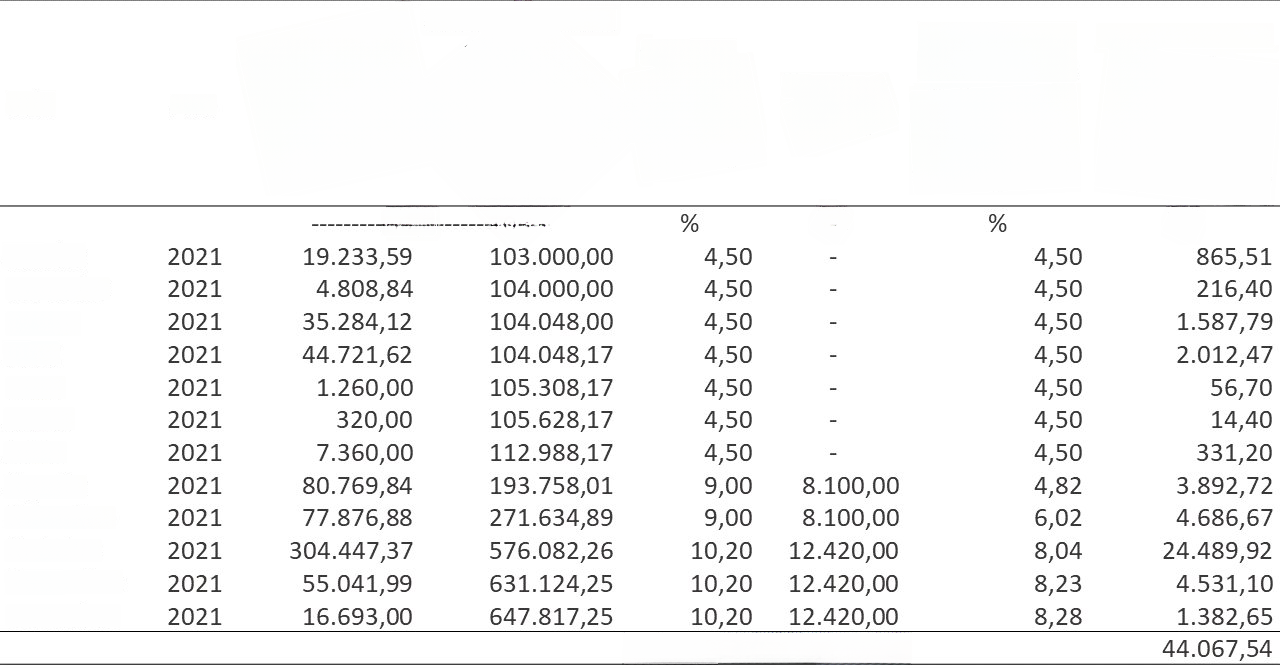 Source: Prepared by the authors.
Note: NF: Nota Fiscal; RBT12: Accumulated Gross Income; DAS: Simples Document for Collection
Analyzing the data obtained under the Simples Nacional regime in the Tax Statement, according to the services table and deducting the percentage value, the total amount of R$44,067.54 was calculated. It is therefore possible to infer that the adoption of a regular and planned work methodology — within legal limits, obeying the principal and accessory obligations to which it was subjected — increases company profits and avoids administrative and judicial problems in various areas.
When analyzing the classification by Risk Level of the business, the concepts of tax avoidance, ineffective tax avoidance, and tax evasion are obtained. Tax avoidance, addressed as a synonym for tax planning, refers to the set of lawful acts practiced by the liable party that aim to reduce or exclude the tax obligation, either by the non-occurrence of the taxable event or by its occurrence in smaller quantitative aspects[10].
In tax evasion, in turn, there is a simulation of a legal transaction, whose purpose is to dissimulate (hide) the occurrence of the taxable event. It is a stratagem characterized primarily, which doctrine calls abuse of form. It follows the atypical legal form, strictly lawful, with the objective of artificially escaping taxation[10]. Tax evasion is considered a criminal practice; it occurs concomitantly with or after the taxable event. It aims to exit the legal-tax relationship through fraud of tax law[11].
In financial terms, the conclusion is that the best business constitution model would be the Simples Nacional calculation regime, when compared to the Presumed Profit calculation regime, obtaining significant savings of R$69,712.59, which represents 4.86% of the annual revenue. In terms of tax management, data collection and systematic calculations are necessary to reach a real conclusion about which model is more economical. The Simples Nacional regime proved to be more suitable for the case studied; however, it is necessary to pay taxes regularly so that the company is not disqualified from the regime. The complexity of the Brazilian tax system causes concern about “what the auditor will interpret as lawful planning”, the risk of which must be considered.
Furthermore, the company needs a systematic analysis appropriate to the tax management system, carrying out periodic tax planning that analyzes the applicable tax burden and business risks, with constant study of tax legislation and commitments regarding the partner’s legal responsibility.
References
[1] Câmara Brasileira da Indústria da Construção (CBIC). Sob alta nos preços de insumos e desabastecimento, lançamentos de imóveis caem 17,8% em um ano no Brasil. Brasília (DF); 2021. Disponível em: <https://cbic.org.br/industriaimobiliaria/2021/02/22/sob-alta-nos-precos-de-insumos-e-desabastecimento-lancamentos-de-imoveis-caem-178-em-um-ano-no-brasil-3/>.
[2] Brasil. Lei 10.406, de 10 de janeiro de 2002. Institui o Código Civil. Brasília, DF; 2002.
[3] Brasil. Lei 8.137/90, de 27 de dezembro de 1990. Define crimes contra a ordem tributária, econômica e contra as relações de consumo, e dá outras providências. Brasília, DF; 1990.
[4] Padoveze C.L.; Bertassi A.L.; Cillo A.R.; Cillo G.; Nazareth L.C.G. Contabilidade e gestão tributária: Teoria, prática e ensino. São Paulo (SP): Cengage Learning. 2017.
[5] Beuren I.M. Como elaborar trabalhos monográficos em contabilidade: teoria e prática. 3ed. São Paulo (SP): Atlas. 2006.
[6] Yin, R.K. Estudo de caso: planejamento e métodos. 2ed. Porto Alegre (RS): Bookman; 2001.
[7] Instituto Brasileiro de Geografia e Estatística (IBGE). Classificação Nacional de Atividades Econômicas; 2006. Disponível em: <https://concla.ibge.gov.br/classificacoes/por-tema/atividades-economicas/classificacao-nacional-de-atividades-economicas.html>.
[8] Brasil. Lei Complementar 123, de 14 de dezembro de 2006. Institui o Estatuto Nacional da Microempresa e da Empresa de Pequeno Porte; altera dispositivos das Leis no 8.212 e 8.213, ambas de 24 de julho de 1991, da Consolidação das Leis do Trabalho – CLT, aprovada pelo Decreto-Lei no 5.452, de 1o de maio de 1943, da Lei no 10.189, de 14 de fevereiro de 2001, da Lei Complementar no 63, de 11 de janeiro de 1990; e revoga as Leis no 9.317, de 5 de dezembro de 1996, e 9.841, de 5 de outubro de 1999. Brasília, DF; 2006.
[9] Brasil. Resolução CGSN nº 117, de 02 de dezembro de 2014. Altera as Resoluções CGSN nº 3, de 28 de maio de 2007, que dispõe sobre a composição da Secretaria-Executiva do Comitê Gestor do Simples Nacional – CGSN/SE, e nº 94, de 29 de novembro de 2011, que dispõe sobre o Simples Nacional e dá outras providências. Brasília, DF; 2014.
[10] Crepaldi S. Planejamento tributário: teoria e prática. 3ed. São Paulo (SP): Saraiva. 2019.
[11] Arruda N.P. Planejamento tributário: uma visão teórica. Revista De Estudos Interdisciplinares Do Vale Do Araguaia (REIVA). 2021; 1(4). Disponível em: <http://reiva.emnuvens.com.br/reiva/article/view/155>.
Como citar
Silva A.B.; Lima M.M.N.G. Planejamento tributário em teleinformática: comparativo entre o lucro presumido e o simples nacional. Revista E&S. 2023; 4: e20230011.
Sobre os autores
Ariadine Bernardinelli Silva, Bacharela em Ciências Contábeis, Especialista em Gestão Tributária, Osasco, SP, Brasil.
Milena Moscardini Nabelice Guasti Lima, Professora Orientadora, Mestra em Direito, Franca, SP, Brasil.
Link para download: https://cms.revistaes.com.br/wp-content/uploads/2023/06/23011.pdf