
Compliance And Esg
September 09, 2026
The Impact of Purchasing Department Employees’ Perception on the Effectiveness of Compliance and ESG Policies
Eder Corado Ribeiro; Gabriela Trindade Pinheiro
DOI: 10.22167/2675-6528-202602201
Article derived from a Final Course Work (TCC), with content based on the student’s original work and adapted to the editorial format of the Revista E&S with the support of the ResumeAI tool, an artificial intelligence solution developed by the Pecege Institute for textual synthesis and organization.
Abstract
The study analyzed the integrity culture in the procurement sector, starting from the premise that the effectiveness of corporate guidelines depends on employee adherence. The objective was to evaluate how the perception of supply professionals about Compliance and ESG policies influenced the effectiveness of control mechanisms in an infrastructure organization. The methodology consisted of a mixed-methods case study, involving documentary analysis and the application of structured questionnaires (Likert scale) with 25 professionals. The results showed that, despite high attitudinal engagement and support from senior management, there was a mismatch between theoretical knowledge and operational technical capacity. It was found that middle management acted as a critical barrier, evidencing that gaps in direct managerial support compromised ethical standardization, especially in the presence of outsourced employees. The findings indicated that the identified engagement is valuable human capital, but insufficient without the refinement of practical skills and two-way communication channels. It was concluded that the consolidation of governance and sustainability required strengthening middle management and transitioning from conceptual training to experiences applied to daily negotiations, making employee perception the main determinant for the effectiveness of the rules.
Keywords: Organizational culture; Business ethics; Risk management; Leadership; Procurement.
1. Introduction
The contemporary organizational landscape is marked by the integration of economic performance, socio-environmental responsibility, and ethical governance (Galindo et al., 2023). In this context, Compliance and ESG (Environmental, Social and Governance) have consolidated as strategic pillars to ensure legal conformity and sustainability. While the former focuses on adherence to laws and regulations to prevent sanctions (Strobel et al., 2022), the latter integrates environmental, social, and governance factors into organizational decisions, promoting balance between economic performance and socio-environmental responsibility (Harraca, 2022). Uniting these concepts, governance acts as the system that aligns corporate interests with those of society, ensuring transparency and accountability (IBGC, 2017).
The effectiveness of formal policies, however, is not guaranteed solely by their existence. The success of these guidelines depends significantly on how employees understand and apply them in their daily work (Almeida and Venturini, 2021). In this context, the procurement area stands out as a critical point, especially in a basic sanitation infrastructure company. This sector, characterized by being an essential service, high regulation, and intense socio-environmental impacts, elevates the risks to reputation, compliance, and the value chain. Thus, the supply professional transcends the role of a cost negotiator to become an active agent of integrity, allowing organizations to anticipate crises and meet the demands of an increasingly regulated market. This paradigm shift requires companies to act with a transversal purpose, generating value for investors and stakeholders (Galindo et al., 2023), making ESG and Compliance essential competitive differentiators for business viability and long-term operational legal certainty.
Despite the institutional relevance, a central problem lies in how the perception of employees in the purchasing area influences the effectiveness of these guidelines. Failures in internal communication and in disseminating a culture of integrity often compromise adherence to institutional norms (Madruga, 2022). Furthermore, the absence of continuous training and recognition can reduce engagement with the proposed practices (Taylor, 2015). Without proper cultural alignment, there is a risk of a significant disconnect between theoretical policies and the operational reality of the sector.
Although the literature on governance and risks is vast, the influence of subjectivity and the engagement of purchasing professionals is still little explored academically. Authors like Righetti et al. (2014) highlight the strategic importance of the sector, but without delving into the role of human behavior. This study seeks to fill this gap, investigating how factors such as perception and motivation impact the practical application of Compliance and ESG in a basic sanitation infrastructure company, contributing to the strengthening of the theoretical basis on organizational culture. In this context, the objective of this study is to assess the perception and understanding of employees in the corporate purchasing sector of a basic sanitation infrastructure company regarding Compliance and ESG policies, analyzing how this perception influences the effectiveness of such practices in the organizational context.
2. Material and Methods
This study was characterized as applied and descriptive research, with a mixed approach (quantitative and qualitative), and a single case study design. The investigation analyzed the perception of employees in the corporate purchasing area regarding the effectiveness of Compliance and ESG policies in a large Brazilian company in the basic sanitation infrastructure sector, covering water supply and sewage disposal, headquartered in São Paulo, SP. The organization was selected for operating in a highly regulated environment, requiring rigorous standards of compliance, sustainability, and socio-environmental responsibility.
The target population consisted of the corporate purchasing department, comprising 28 employees. The final sample included 25 respondents, representing a participation rate of 89.2%.
Data collection occurred through a structured form, applied via the digital platform Google Forms, composed of closed-ended questions and an open section for qualitative comments, according to the instrument presented in Appendix I of this work. The digital format allowed for response standardization and ensured participant anonymity, mitigating social desirability bias and providing a safe environment for the expression of perceptions. The refinement of the instrument was supported by Artificial Intelligence (AI) in the initial formulation of the statements, with processing of specific sectoral information of the case, under the supervision and final validation of the author.
The questionnaire was structured into five analytical dimensions: Conceptual Knowledge (Q2-Q6), Capacity and Communication (Q7-Q10), Practical Application in Daily Life (Q11-Q14), Cultural and Organizational Perception (Q15-Q17), and Personal Engagement and Attitude (Q18-Q20). The Likert scale adopted five points (“Strongly Disagree”=1 to “Strongly Agree”=5), adapted from Rocha, Pinto, and Pinheiro (2011).
The data analysis was conducted in an integrated manner: quantitative data were subjected to descriptive statistics, with calculation of absolute frequencies, percentages, means, and standard deviations, while the qualitative content of the open-ended question was analyzed according to Bardin (2011), identifying recurring patterns and perceptions.
Strict ethical criteria guided the research. An electronic Free and Informed Consent Term (FICT) was applied before the questionnaire, ensuring voluntary participation. The company’s name was omitted; however, the sectoral description is presented for contextualization and comparison purposes. The data were treated in an aggregated manner, preventing individual identification. Submission to the Research Ethics Committee (REC) was waived, according to the outcome of the Ethical Guidance Form validated by the supervisor and institutional norms, as it did not involve the collection of sensitive data.
3. Results and Discussion
Respondent Profile and Study Contextualization
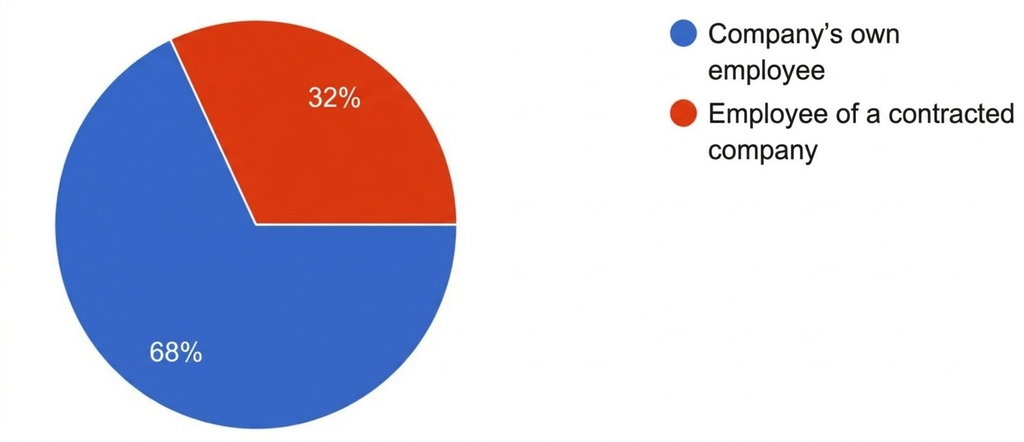
The research covered 25 purchasing professionals, representing 89.2% of the department. The team composition was hybrid, with 68% of own employees (CLT) and 32% of outsourced employees, as illustrated in Figure 1.
Figure 1. CLT Employees x Outsourced Employees
Source: Original research results
This reliance on external labor can challenge ethical standardization, as evidenced by the greater overall dispersion observed in operational dimensions. Madruga (2022) emphasizes that engagement and cultural adequacy are crucial for all collaborators to absorb organizational values, regardless of their legal status. Chiavenato (2008) reinforces that this heterogeneity accentuates human variability in complex systems, potentially creating gaps in the dissemination of integrity guidelines.
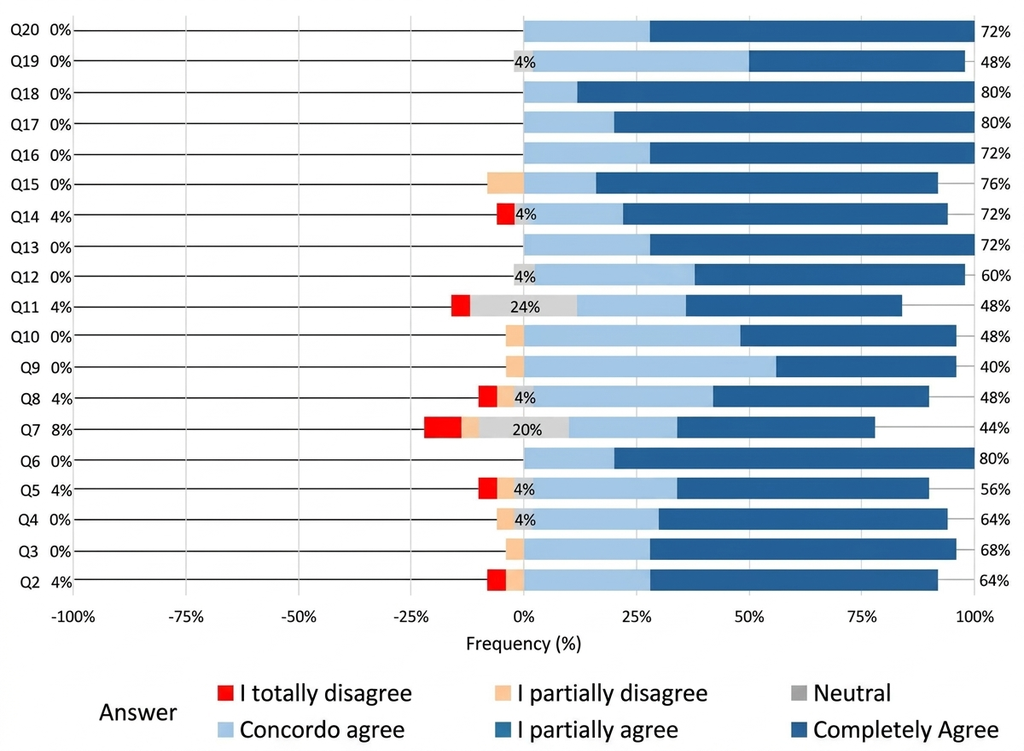
Figure 2 presents an overview of the perceptions collected on Compliance and ESG. The data indicated a predominant trend of agreement, but also revealed points of neutrality and disagreement that require investigation, especially in critical infrastructure processes, where the integrity culture may not be homogeneous. Righetti et al. (2022) highlight that organizational sustainability cannot be achieved if outsourcing partners do not share the same principles, increasing the risk of value chain contamination.
Figure 2. Frequency distribution of perceptions about Compliance and ESG (Q2 to Q20)
Source: Original research results
The observed neutrality indices, especially in dimensions such as communication, may indicate the difficulty in extending the “Tone at the Top” from senior management to employees beyond those under formal employment contracts (CLT). In basic sanitation companies, the effectiveness of Compliance and ESG is tested by the ability to overcome contractual barriers and guide operational decisions in procurement, identifying where organizational culture converges towards integrity and where operational pressures generate potential breaking points.
Dimension 1 – Conceptual knowledge
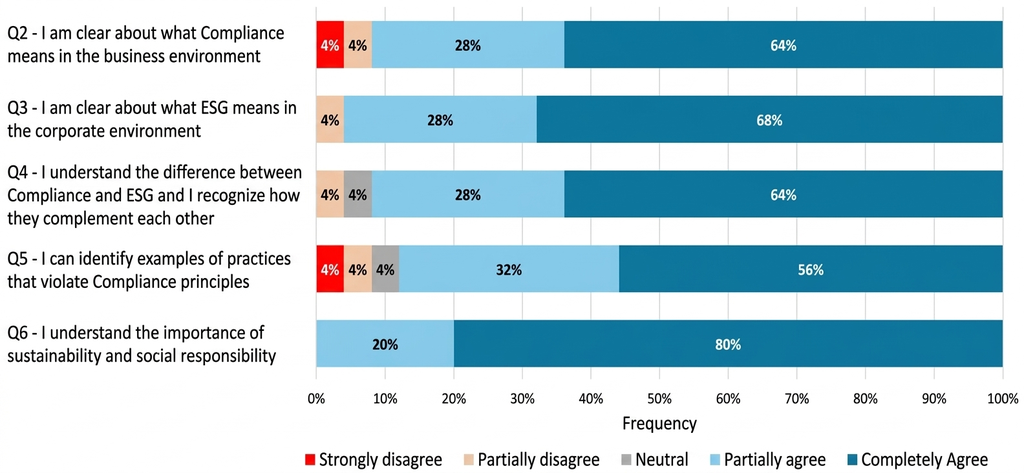
The collaborators’ perception revealed conceptual maturity regarding Compliance, although integration with the ESG agenda still demands operational deepening. Table 1 and Figure 3 detail the results for this dimension.
Table 1. Conceptual knowledge (Q2 to Q6)
| Variable | Fully Agree (%) | Average | Standard Deviation |
|---|---|---|---|
| Q2. Clarity on Compliance | 64% | 4,44 | 1,00 |
| Q3. Clarity on ESG | 68% | 4,60 | 0,71 |
| Q4. Difference and Complementarity | 64% | 4,52 | 0,87 |
| Q5. Identification of violations | 56% | 4,32 | 1,15 |
| Q6. Importance of sustainability | 80% | 4,80 | 0,41 |
Source: Original research results
Figure 3. Conceptual knowledge graph
Source: Original research results
It was found that 64% of respondents had full clarity on the meaning of Compliance (Q2) and 64% understood the complementarity between Compliance and ESG (Q4). The perception of the importance of sustainability in purchasing processes (Q6) was the variable with the highest consensus, with a mean of 4.80 and a standard deviation of 0.41. However, the technical capacity to identify practical violations (Q5) presented the lowest mean (4.32) and the highest standard deviation (1.15).
This result suggests that knowledge is predominantly theoretical, with greater dispersion in perception when trying to detect operational deviations, which represents a critical vulnerability for internal controls (Almeida and Venturini, 2021). The initial understanding of Compliance reflects the consolidated institutional structure, but the 36% portion of the sample without full clarity or in neutrality regarding the terms raises a red flag about prior diligence.
In the purchasing sector, the lack of full command of concepts by a portion of the team compromises the effectiveness of preventive barriers, with the absence of a homogeneous integrity culture and poorly disseminated ethical values being primary vectors of reputational damage and legal sanctions (Almeida and Venturini, 2021). Regarding ESG, 68% of respondents indicated that sustainability has become an expected behavior, aligning with Madruga’s (2022) vision of organizational culture. However, Micheloni et al. (2022) warn that cultural changes are not instantaneous, requiring continuous monitoring to prevent socio-environmental practices from becoming mere facade discourse.
Dimension 2 – Engagement and personal attitude
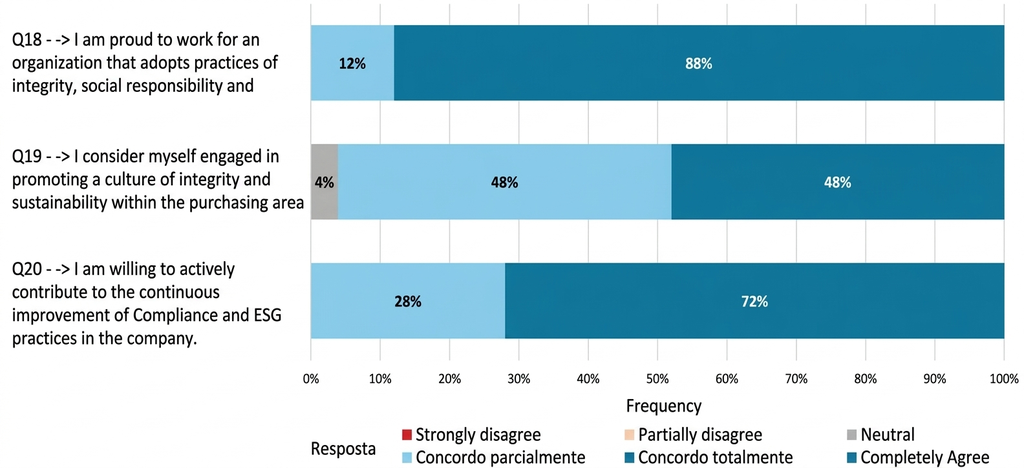
Attitudinal engagement was the most robust indicator, demonstrating strong alignment of collaborators with organizational values. According to Table 2 and Figure 4, 88% of respondents expressed pride in belonging to an institution with integrity practices (Q18), and 72% declared willingness to actively contribute to the improvement of Compliance and ESG guidelines (Q20).
Table 2. Personal engagement and attitude (Q18 to Q20)
| Variable | Fully Agree (%) | Average | Standard Deviation |
|---|---|---|---|
| Q18. Organizational pride | 88% | 4,88 | 0,33 |
| Q19. Engagement in the promotion of culture | 48% | 4,44 | 0,58 |
| Q20. Willingness to contribute | 72% | 4,72 | 0,46 |
Source: Original research results
Figure 4. Personal engagement and attitude graph
Source: Original research results
However, a reduction was observed in the perception of direct protagonism, with only 48% of collaborators considering themselves fully engaged in promoting culture in the daily activities of the purchasing department (Q19). This contrast indicates a difference between symbolic adherence and practical protagonism, where identification with institutional values does not fully translate into concrete capacity to act as an active agent of ethical culture. This finding aligns with the low index of safety in identifying violations (Q5), suggesting that the desire to contribute is not always accompanied by the necessary technical security.
In a basic sanitation infrastructure company, this gap has important implications, as the sector operates under pressures of efficiency, cost-effectiveness, compliance, and socio-environmental responsibility. Institutional pride is a valuable asset, but insufficient without autonomy, procedural clarity, and managerial support. The dilemma of transforming latent motivation into operational behavior, as pointed out by Harvard Business Essentials (2003), is evident. Madruga (2022) highlights that engagement loses strength when the organization does not offer the “how” beyond the “why,” requiring tools and security for action. This implies the need for mentoring programs, internal multipliers, and real-case simulations to convert subjective willingness into objective action, strengthening the culture of applied integrity.
Dimension 3 – Capacity Building and Communication
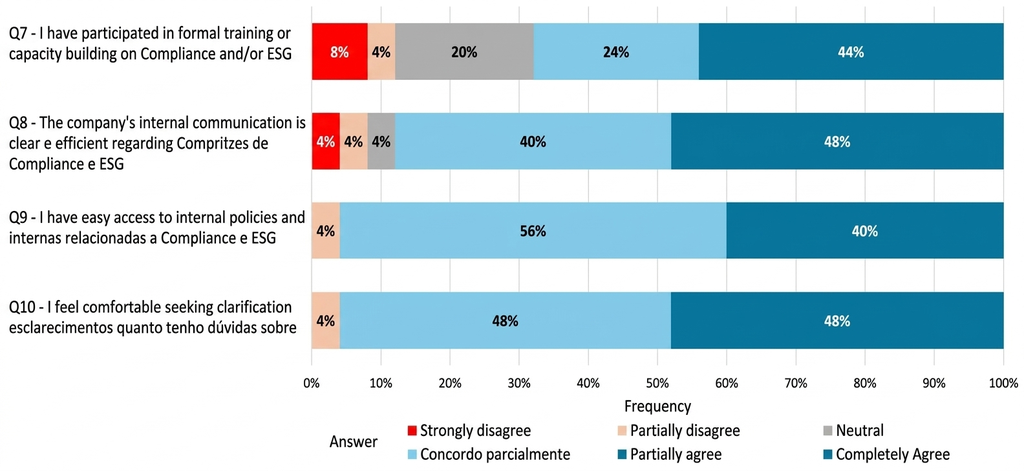
This dimension revealed well-evaluated institutional support, but persistent fragilities in internal communication and practical training. Table 3 and Figure 5 show the details.
Table 3. Training and communication (Q7 to Q10)
| Variable | Fully Agree (%) | Average | Standard Deviation |
|---|---|---|---|
| Q7. Participation in training | 44% | 3,92 | 1,26 |
| Q8. Clarity of internal communication | 48% | 4,24 | 1,01 |
| Q9. Access to policies and norms | 40% | 4,32 | 0,69 |
| Q10. Safety to seek doubts | 48% | 4,40 | 0,71 |
Source: Original research results
Figure 5. Capacity and communication chart
Source: Original research results
Participation in training (Q7) obtained the lowest average (3.92) and the highest dispersion (SD 1.26), indicating heterogeneity in formative experiences. The clarity of internal communication (Q8) also showed significant dispersion (average 4.24; SD 1.01). Although there is access to policies and norms (Q9, average 4.32; SD 0.69), practical absorption does not occur uniformly. The variable Q7 (44% total agreement) reflects the self-development model of supply chain management, but the absence of standardized cycles may be a limitation.
The effective capillary action of regulatory resources is a central point, as training gaps in sanitation companies can generate relevant operational risks. In contrast, the perception of support from senior management was positive, with 72% of respondents believing in the board’s commitment to Compliance and ESG policies. Micheloni et al. (2022) highlight that “Tone at the Top” is central to a successful integrity program, being vital for institutional legitimacy in an essential service sector.
However, critical barriers arose at the tactical level. Only 52% of professionals considered internal communication about ESG clear and frequent, and 56% felt sufficient support from direct managers for the practical application of policies. This discrepancy between board support (72%) and immediate leadership support (56%) indicates fragmentation in organizational culture. Madruga (2022) emphasizes that direct leadership is the main driver of the employee experience, and its failure as a facilitator of ethical practice weakens the strategic message at the operational level. For the purchasing department, this is decisive, as deadline or cost pressures can lead to the relaxation of criteria, with systemic effects in an activity sensitive to social scrutiny. The practical implications suggest the need to strengthen middle management with training focused on ethical decision-making and two-way communication.
Dimension 4 – Practical application in everyday life
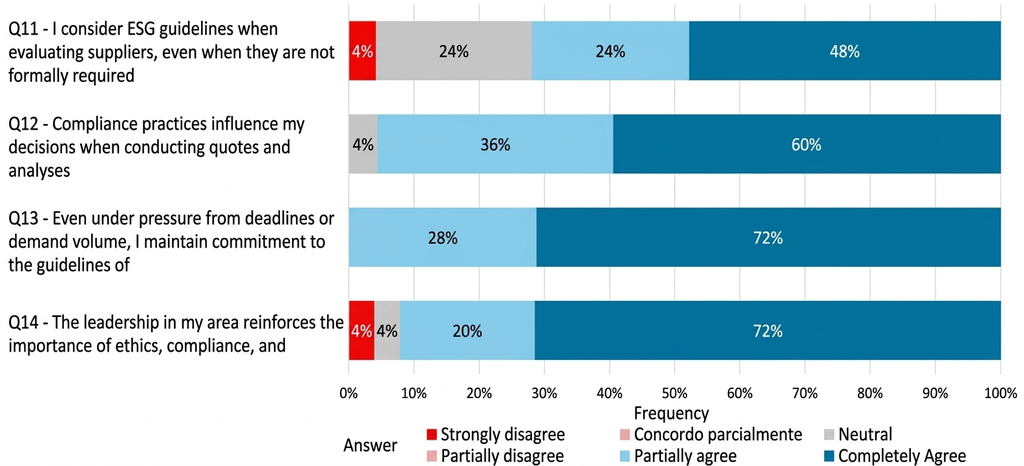
The results of this dimension indicated that the effectiveness of Compliance and ESG policies depends on psychological safety and concrete support for employees to act in accordance with the guidelines, not just on the existence of manuals. Table 4 and Figure 6 present the data.
Table 4. Practical application in everyday life (Q11 to Q14)
| Variable | Fully Agree (%) | Average | Standard Deviation |
|---|---|---|---|
| Q11. Application of traceability and equality | 48% | 4,12 | 1,05 |
| Q12. Consideration of ESG in supplier evaluation | 60% | 4,56 | 0,58 |
| Q13. Influence of Compliance on decisions | 72% | 4,72 | 0,46 |
| Q14. Commitment even under deadline pressure | 72% | 4,56 | 0,92 |
Source: Original research results
Figure 6. Graph of practical application in everyday shopping
Source: Original research results
The application of traceability and impartiality (Q11) was the variable with the lowest mean (4.12) and highest standard deviation (1.05). In contrast, the influence of Compliance on decisions (Q13) and commitment even under deadline pressure (Q14) registered high means (4.72 and 4.56, respectively), with 72% total agreement for Q13. This data reveals that the value-based adherence to integrity is high, but its concrete execution is not uniform across all processes.
In a basic sanitation infrastructure company, traceability, equity, and consideration of ESG criteria are central components of governance, and any fluctuation in practical application can affect internal efficiency and public legitimacy. The disparity between institutional support and operational security suggests vulnerabilities in critical processes (Almeida and Venturini, 2021), where the oscillation in leadership support makes the execution of technical tasks more heterogeneous.
Organizational culture, according to Madruga (2022) and Chiavenato (2008), acts as a system that shapes behaviors. If operational efficiency and cost reduction are valued more than ESG integrity, the tendency is for practice to deviate from the norm. The practical implications point to the need to transform institutional support into real operational support, consolidating mechanisms that give the employee security to question decisions and signal deviations without fear, ensuring that ethical behavior is sustained even under pressure.
Dimension 5 – Cultural perception and leadership
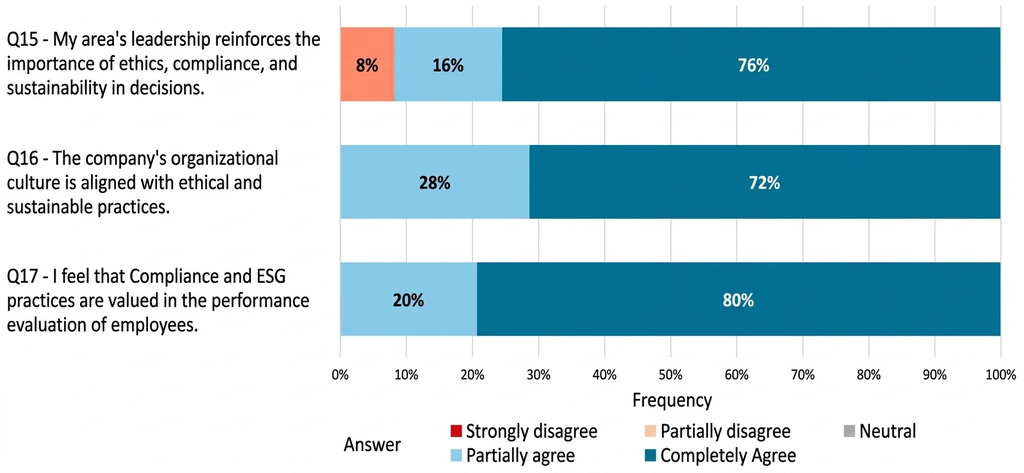
This dimension examined respondents’ perception of organizational culture and the role of leadership in reinforcing Compliance and ESG practices. The results, presented in Table 5 and Figure 7, indicated a consistent pattern of valuing ethics and sustainability.
Table 5. Cultural perception and leadership (Q15 to Q17)
| Variable | Fully Agree (%) | Average | Standard Deviation |
|---|---|---|---|
| Q15. Leadership reinforces ethics and sustainability | 76% | 4,60 | 0,87 |
| Q16. Culture aligned with ethical practices | 72% | 4,72 | 0,46 |
| Q17. Compliance and ESG valued in performance | 80% | 4,80 | 0,41 |
Source: Original research results
Figure 7. Graph of practical application in everyday shopping
Source: Original research results
A total agreement of 76% was observed for the statement that leadership reinforces ethics and sustainability (Q15), 72% for a culture aligned with ethical practices (Q16), and 80% for the valuation of Compliance and ESG in performance (Q17). The high averages and low standard deviations indicate a predominantly favorable perception. However, the highest standard deviation in Q15 (0.87) suggests that leadership’s actions are not perceived entirely uniformly, which aligns with the findings of Dimension 3 regarding the fragility of immediate management support.
In a basic sanitation infrastructure company, middle management is crucial for translating organizational values into daily decisions regarding purchasing, hiring, and supplier relationships. Madruga (2022) reinforces that if the immediate manager does not act as a facilitator of ethical practices, the message from senior management loses operational traction. Symbolic recognition of ethical culture, therefore, does not guarantee its daily materialization. Conceptual clarity on Compliance and ESG, observed in Dimension 1, facilitates practice, as employees who understand the systemic purpose of the norms tend to act with greater rigor in evaluating the supply chain, reinforcing the need for integration between culture, leadership, and applied training.
Limitations and Contributions of the Study
Methodological limitations included the sample of 25 respondents, which, although representing 89.2% of the purchasing department, restricts the generalization of findings. Social desirability bias is also relevant in high-compliance environments. Furthermore, the aggregated data analysis, without statistical cross-tabulations between permanent and outsourced employees, prevented the identification of specific differences between the groups. It was not possible to correlate the perception of effectiveness with objective data on actual sanctions applied.
The study’s main contribution lies in demonstrating that, in the procurement sector of a basic sanitation infrastructure company, the effectiveness of Compliance and ESG policies depends less on the existence of tools and more on the ability to convert formal guidelines into practices sustained by leadership, communication, and training. Employees’ perception acts as a thermometer of organizational ethical health.
Governance Framework Proposal in Purchasing
Based on the results presented, an applied framework named “Integrity Cascade in Purchasing” was structured, according to Table 6. The model derives from the gaps identified between conceptual knowledge and practical application, fragmentation of tactical leadership, fragility of training, and the need for homogeneous integration between different employment relationships.
Table 6. “Integrity Cascade in Purchasing” Framework
| Pillar | Pillar name | Evidence in the data | Central objective | Main proposed actions |
|---|---|---|---|---|
| 1 | Strategic alignment | Q13 (72%) and Q17 (80%): high recognition, but deviation in Q15 (0.87) | Reinforce priority of integrity and ESG in senior management | Insert Compliance/ESG goals into the strategy; periodic board communications prioritizing ethics |
| 2 | Tactical leadership as an ambassador | Gap 72% (board) x 56% (immediate manager) — Dimension 3 | Make immediate management the main vector of ethical culture | Specific training for managers; link compliance indicators to performance reviews and bonuses. |
| 3 | Experiential operational training | Q7: lowest average (3.92) and highest deviation (1.26) — Dimension 3 | Reduce the gap between theory and practice in the day-to-day of purchasing | Simulations of real cases; creation of a repository of typical cases and conduct guidelines. |
| 4 | Bidirectional and secure communication | Q8: deviation 1.01; 52% consider communication clear — Dimension 3 | Stimulate doubts and reports without fear of retaliation | Listening meetings; Q&A forums; public commitment to welcome and record learnings |
| 5 | Isonomic integration of outsourced workers | 32% outsourced; Q11 lower average of Dimension 4 (4.12; deviation 1.05) third parties | Homogenize ethical culture between CLT and third parties | Inclusion of third parties in training and communications; adherence and monitoring contractual clauses. |
Source: Elaborated by the author
This framework gains relevance in a basic sanitation infrastructure company, as it articulates integrity, contractual efficiency, socio-environmental responsibility, and continuity of essential service. The five proposed pillars — strategic alignment, tactical leadership as an ambassador, experiential operational training, bidirectional and secure communication, and isonomic integration of third parties — synthesize the main findings and organize actions to convert favorable perception into concrete effectiveness of Compliance and ESG policies. The framework represents an applied synthesis of the research results.
In summary, employee perception acts as a decisive filter for the effectiveness of Compliance and ESG policies in the purchasing sector. The consolidation of integrity depends not only on formal rules, but on the ability to transform guidelines into practices sustained by middle leadership, effective communication, applied training, and cultural integration. Effectiveness is directly associated with how employees understand, experience, and operationalize ethical values in the daily supply chain relationships.
4. Conclusion
This study sought to evaluate the perception and understanding of employees in the corporate purchasing sector of a basic sanitation infrastructure company regarding Compliance and ESG policies, analyzing how this perception influences the effectiveness of such practices in the organizational context. It was found that, although professionals demonstrated high conceptual knowledge about Compliance and ESG, and strong attitudinal engagement with organizational values, a significant disconnect was observed between theoretical knowledge and the operational technical capacity to identify and apply the guidelines. It was identified that middle leadership acted as a critical barrier, with gaps in direct managerial support that compromised ethical standardization, especially in the presence of outsourced employees. Adherence to integrity as a value was high, but its concrete execution was not uniform across all processes. The main contribution of this work lies in demonstrating that the effectiveness of Compliance and ESG policies in the purchasing sector of a basic sanitation infrastructure company depends less on the mere existence of tools and more on the ability to convert formal guidelines into practices sustained by engaged leadership, effective communication, and applied training, with employee perception acting as a thermometer of organizational ethical health.
Among the study’s limitations, the restricted sample of 25 respondents stood out. Although representative of the department, it limits the generalization of the findings. Furthermore, the aggregated data analysis, without statistical cross-tabulations between own employees and outsourced workers, prevented the identification of specific differences between the groups. It was not possible to correlate the perception of effectiveness with objective data on actual sanctions. In response to the identified gaps, the “Integrity Cascade in Procurement” framework was proposed. This applied model synthesizes the findings and organizes actions to convert favorable perception into concrete effectiveness of Compliance and ESG policies. It is suggested that future studies replicate this research in other organizations and sectors, incorporate inferential tests to compare different employment relationships, and explore the effects of implementing the proposed framework longitudinally, in order to deepen the understanding of integrity culture and its practical materialization.
Bibliographic References
Almeida, L. E. de; Venturini, S. G. (coord.). 2021. Due diligence e compliance nos negócios com terceiros. Thomson Reuters Brasil, São Paulo, SP, Brasil.
Bardin, L. 2011. Análise de conteúdo. Edições 70, São Paulo, SP, Brasil.
Cappelli, P. (org.). 2003. Contratando e mantendo as melhores pessoas. Trad. Nivaldo Montingelli. Record, Rio de Janeiro, RJ, Brasil. (Harvard Business Essentials).
Chiavenato, I. 2008. Recursos humanos: o capital humano das organizações. 8ed. Atlas, São Paulo, SP, Brasil.
Galindo, F.; Zenkner, M.; Kim, Y. J. 2023. Fundamentos do ESG: geração de valor para os negócios e para o mundo. Fórum, Belo Horizonte, MG, Brasil.
Harraca, P. 2022. O poder transformador do ESG: como alinhar lucro e propósito. Planeta do Brasil, São Paulo, SP, Brasil.
IBGC – Instituto Brasileiro de Governança Corporativa. 2017. Compliance à luz da governança corporativa. IBGC, São Paulo, SP, Brasil.
Madruga, R. 2022. Employee experience, gestão de pessoas e cultura organizacional: a trilogia para atrair, engajar e desenvolver talentos. Atlas, Barueri, SP, Brasil.
Micheloni, É.; Ladeia, G.; Mantoan, M. (org.). 2022. Monitoria de programa de compliance no Brasil. Mizuno, Leme, SP, Brasil.
Righetti, C. C. B. et al. 2014. Compras estratégicas: construa parcerias com fornecedores e gere valor para seus negócios. Saraiva, São Paulo, SP, Brasil.
Rocha, J. D.; Pinto, F. R.; Pinheiro, L. V. de S. 2011. Clima organizacional: a percepção dos colaboradores de uma siderúrgica multinacional brasileira. Id on Line Revista de Psicologia, v. 5, n. 15, p. 48-56.
Strobel, A. C. R. et al. 2022. Compliance: fundamentos e reflexões para integridade nas empresas. 2ed. Lumen Juris, Rio de Janeiro, RJ, Brasil.
Taylor, C. 2015. Walking the talk: building a culture for success. Cornerstone, London, United Kingdom.
Article originating from the Final Course Work of the Specialization in Compliance and ESG from MBA USP/Esalq
To learn more about the course, click here and access the MBX Academy platform