
Quality Management
December 16, 2025
Impacts of quality management on process optimization in cement distributors
Author: Heloisa dos Santos Capoeira
DOI: 10.22167/2675-6528-2025040
E&S 2025, 6: e2025040
The cement industry, as well as other industrial segments, faces significant challenges related to the optimization of production processes, quality control, and sustainability. In addition to the expectations of end customers, companies must balance operational efficiency with compliance with strict environmental and safety regulatory standards[1].
In this context, quality management becomes an essential foundation to ensure that each stage of production and distribution meets these requirements, in addition to protecting product integrity.
According to da Silva Chicon et al.[2], the success of these initiatives lies in the company’s ability to transform management plans into practical and executable actions, which directly impacts the consistency and quality of the cement delivered.
The relationship between the company and cement distributors represents a strategic aspect that cannot be underestimated. Distributors, as intermediaries in the supply chain, are responsible for ensuring that cement reaches the end customer without compromising its quality or technical properties[3].
If a cement company’s internal processes have flaws — whether in production control, storage, or logistics — distributors face difficulties that can compromise their reputation and cause market disruptions.
In this sense, Deming’s continuous approach[4], through the PDCA cycle (Plan, Do, Check, Act) is a continuous improvement methodology composed of the steps of planning, executing, checking, and acting, used to systematically solve problems and improve processes, is essential to promote rapid adjustments in processes and mitigate eventual problems along the distribution chain.
Another relevant aspect refers to the sustainability of operations in the cement industry. The growing pressure for sustainable business practices has driven companies to invest in technologies that reduce carbon emissions and other environmental impacts associated with cement production[1].
In this context, distributors also play an important role, as they are responsible for meeting the growing market demands for more sustainable products. To remain competitive, cement companies need to ensure that their internal processes not only meet quality standards but also align with sustainability practices, so as to ensure that distributors receive products that can be marketed as environmentally responsible.
Furthermore, cement distributors are strategic stakeholders who can significantly influence the company’s operational decisions, as indicated by Moraes[3]. A relationship of trust and cooperation between the company and distributors can generate mutual benefits, such as greater predictability in orders, a lower rate of returns due to quality issues, and greater collaboration in identifying improvement opportunities along the supply chain. This synergy favors an environment conducive to innovation and adaptation to market changes, which strengthens the entire value chain of the sector.
The strategic use of performance indicators is fundamental to ensuring distributor satisfaction and operational efficiency in the cement industry, as it allows monitoring product quality, logistical efficiency, and stakeholder satisfaction[3,5].
The integration of these indicators with quality management practices enables proactive action, capable of anticipating problems, adjusting operations, and promoting continuous improvements. This approach reinforces the importance of the study to optimize processes, meet distributor demands, and strengthen the company’s competitiveness.
In this context, the case study of a cement manufacturer was conducted with the objective of analyzing how the continuous improvement of internal processes impacts stakeholders, focusing on distributors as the main interested parties. For this, the quality management approach and performance indicators[3,5] were adopted, based on the collection of quantitative and qualitative data from internal operations, interviews with employees and distributors, as well as the analysis of occupational health and safety (OHS) records and the company’s logistics reports.
The improvements in OHS were planned to meet the needs of distributors and ensure a safer work environment, while the quality management of processes aimed to meet expectations related to product consistency and reliability[1]. The study allowed for the identification of significant challenges, such as the lack of predictability in deliveries and the increase in logistics costs, in addition to proposing corrective actions that improve operational efficiency, safety, and stakeholder satisfaction.
Table 1. Research project deliverables
| Phase | Deliverables / Activities |
| Initiation | Definition of the research project objective Identification of stakeholders (cement distributors) Approval of the scope and alignment with the committee Survey of distributor needs |
| Planning | Definition of the research methodology Selection of performance indicators Definition of the project schedule Development of the questionnaire for data collection |
| Execution | Data collection Analysis of the company’s internal processes Analysis of stakeholder perceptions on implemented improvements Review of internal documents and reports |
| Analysis and results | Qualitative analysis of the collected data Comparison of data before and after improvements Evaluation of the impact of improvements on distributors Identification of the benefits obtained from process changes |
| Conclusions and recommendations | Development of conclusions on impacts Proposals for improvements in process optimization Proposition of new indicators Consolidation of results |
| Closing | Final presentation for the board Review and adjustments based on feedback Submission of the work and delivery of the final version |
This case study analyzes a company in the cement sector focusing on occupational health and safety, which, upon identifying challenges faced by distributors in commercial meetings, developed initiatives aimed at improving logistics, freight control, and customer service. The integrated action plan involved areas such as commercial management, logistics, pricing, and OHS, with the intention of aligning internal processes with the needs of distributors and strengthening trust between the parties.
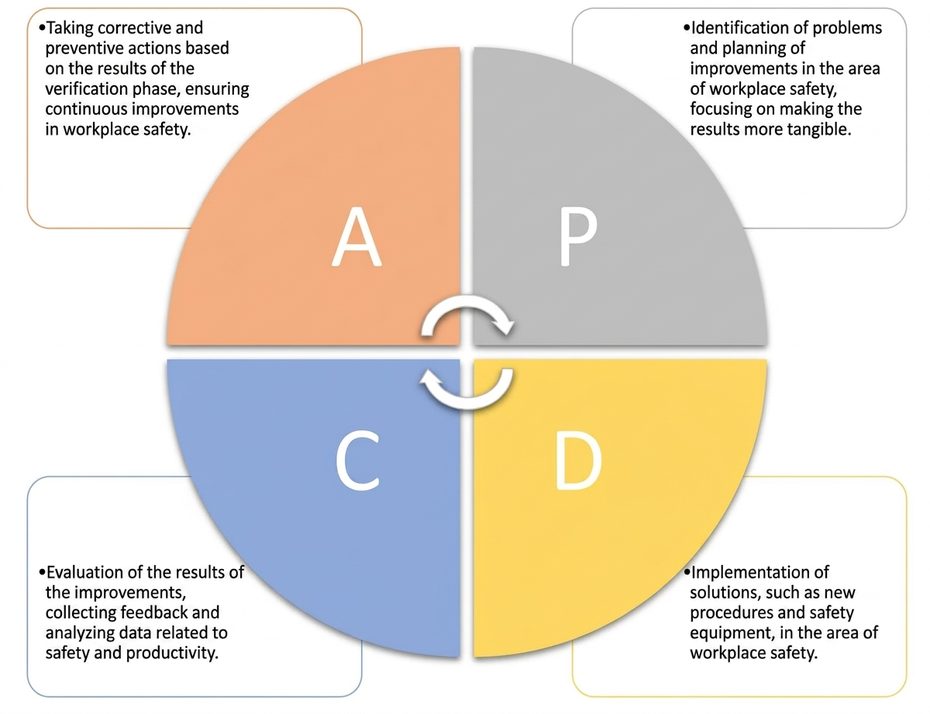
Among the initiatives, OSH actions stood out, conducted based on the PDCA cycle, which made it possible to identify critical problems, test solutions, and implement continuous improvements. These measures ensured regulatory compliance, a safer and more sustainable work environment, as well as greater operational efficiency and predictability in cement distribution.
Source: Original research data.
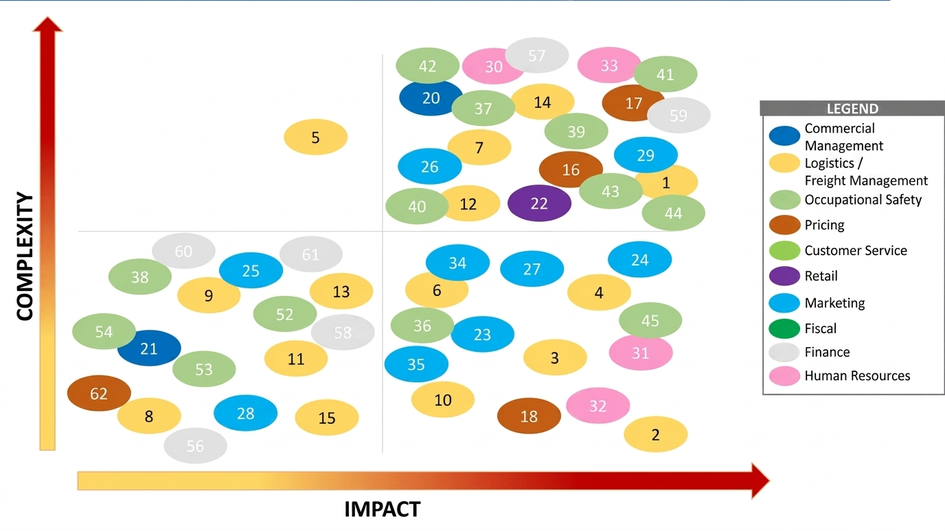
By incorporating the PDCA cycle into OHS processes, the company managed to identify and solve problems in a structured manner, which ensured sustainable and continuous improvements. To support this implementation, the Eisenhower Matrix (Figure 2) was used, which allowed prioritizing action plans according to effort and impact, by classifying activities into important and urgent, important and not urgent, not important but urgent, and not important and not urgent, thus optimizing the management of improvement initiatives.
Source: Original research data.
The changes in the processes presented direct effects on these audiences, which reinforced the importance of effective communication and relationship management.
The results were organized into a Project Breakdown Structure (PBS), which provided clarity of responsibilities, definition of priorities, efficient resource allocation, and progress monitoring, ensuring attention to critical areas and the achievement of objectives, as illustrated in Figure 2.
Table 2. WBS based on quality management according to the PMBOK¹ principles
| Phase | Deliverables / Activities |
| Project start | Definition of the scope of the case study Selection of the company and identification of critical areas |
| Planning | Theoretical survey on quality management in projects based on PMI² and ISO³ Identification of stakeholder requirements (cement distributors) Definition of project objectives and goals |
| Execution | Data collection from company professionals Holding business meetings to identify distributor needs Creation of action plans for process improvements |
| Control | Implementation of the PDCA cycle for analysis and execution of action plans Continuous monitoring of improvements and making necessary adjustments |
| Closing | Final assessment of the impacts of the proposed improvements Documentation of results and lessons learned Preparation of the final report and presentation of results |
| Interconnected areas of improvement | Commercial Management Logistics and fleet management Occupational health and safety Product Pricing Customer service Retail and marketing Fiscal and financial management Human resources |
| Impacts on stakeholders | Analysis of the impacts arising from the use of the obtained results Evaluation of the study by managers and identification of improvements in internal processes Implementation of practical actions to mitigate negative impacts |
Note: ¹PMBOK (Project Management Body of Knowledge) is a guide that brings together the main international practices to guide efficient project management.
²PMI (Project Management Institute) is the international institution responsible for developing standards and certifications in project management.
³ISO (International Organization for Standardization) is the organization that establishes international standards for standardization and quality in various sectors.
For this study, a company from the industrial sector of cement production and commercialization was selected, whose market performance is highlighted by a wide range of products aimed at works of different sizes. The information was obtained through a professional with direct contact with the company and its stakeholders, which made it possible to understand the main challenges faced.
From business meetings, critical issues were identified that directly impacted customers, suppliers, and distributors, which resulted in the development of action plans aimed at improving internal processes with external effects.
The plans were developed in an integrated manner, with the involvement of areas such as logistics, freight management, pricing, customer service, as well as occupational health and safety. They were prioritized using the Eisenhower matrix, which highlighted the initiatives with the greatest impact. In 2023, these actions began to be implemented with continuous monitoring of their effects on stakeholders.
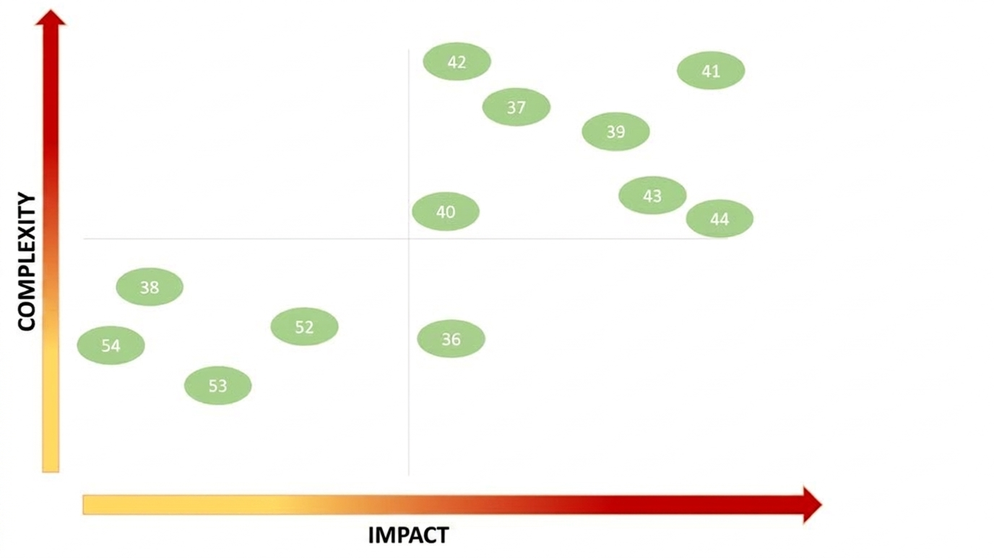
To ensure effectiveness and monitoring, the PDCA cycle was adopted, which allowed structuring the continuous improvement process. In accordance with the PMBOK[6] guidelines, quality planning was carried out, with identification of requirements, definition of standards, and surveys of stakeholder dissatisfaction points, the results of which were synthesized and organized into prioritized action plans, as shown in Figure 3.
Source: Original research results.
Note: *The plans were divided by responsible area; but, for demonstration purposes of the results of this work, the focus was only on the occupational health and safety area.
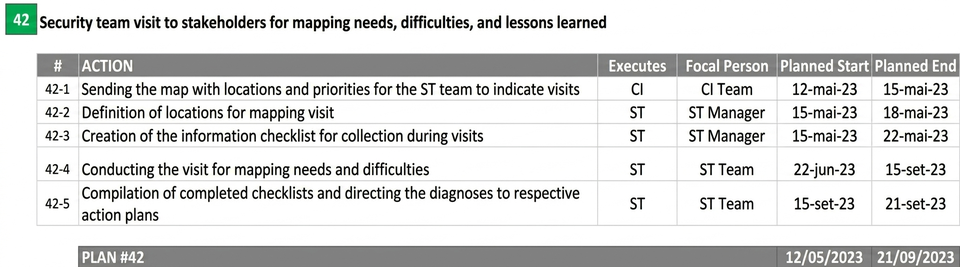
After prioritizing the themes, the ideas were synthesized and consolidated into an Excel spreadsheet, used to document the number of plans raised in meetings involving all responsible areas. To serve as a case in this study, the plans from the occupational safety area were selected to demonstrate the results, as shown in Figure 4.
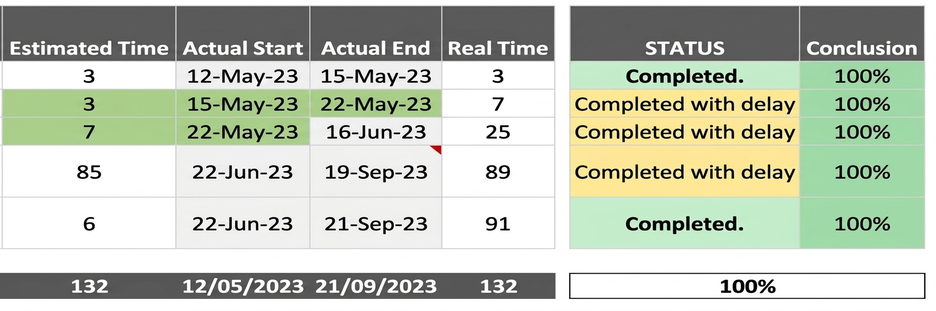
In the Excel file, the requirements considered to initiate process improvements were identified, with the description of the actions for each plan. Information was also included about the executing area, the responsible person, the planned start and end dates, the estimated time (in days), the actual start and end dates (referring to execution), the actual time (in days), the weight of each action, the status, and the completion percentage.
To identify the progress of each plan, five status categories were defined: planned, not started, in progress, completed, and completed with delay, as exemplified in Figure 4.
Source: Original research results.
To continue with quality management, according to the process steps described in the PMBOK, after prioritizing the action plans, meetings were held with the relevant areas to provide a detailed briefing on the themes considered most urgent and important to be addressed, according to the Eisenhower Matrix evaluation.
In the selected case of the occupational safety area, the 14 identified action plans play a fundamental role in improving workers’ safety and health conditions, in addition to contributing to operational efficiency. The importance of each plan is presented below:
- Plan 36 – Mapping visits to distributors: enables the identification and correction of potential safety risks at distributor facilities, which ensures a safe working environment.
- Plan 37 – Awareness campaign on the importance of using Personal Protective Equipment (PPE): promotes a safety culture, as it ensures that employees are aware of the importance of PPE and use it correctly, which reduces the occurrence of accidents and injuries.
- Plan 38 – Online training on safety at work and in distribution: trains employees in safety-related aspects, which enhances their ability to identify and respond to potential risks.
- Plan 39 – Assessment of internal and external risks to the units and review of the mandatory PPE list: identifies areas for improvement in safety and ensures that available PPE is adequate for the specific risks of each unit.
- Plan 40 – Shared purchase of PPEs, with mapping of needs and frequencies of each item for a joint budget: reduces costs and guarantees adequate supply of PPEs to all employees.
- Plan 41 – Possibility of shared equipment purchase: allows investments in more effective safety equipment, which benefits multiple units.
- Plan 42 – Registration of employees in the transport and security system: facilitates the management of transport and security, in addition to ensuring that all employees are covered by security protocols.
- Plan 43 – Evaluation and recommendation of demarcations in distributors to improve movement flow and implement the 5S program (Seiri, Seiton, Seiso, Seiketsu and Shitsuke) which represent five Japanese principles of organization and workplace management – improves organization and safety in the workplace, which reduces the risk of accidents.
- Plan 44 – Evaluation of the possibility of shared purchase: enables cost reduction in the acquisition of safety equipment.
- Plan 52 – Implementation of the 5S program in operations: improves organization and cleanliness in the workplace, which contributes to the safety and efficiency of operations.
- Plan 53 – Integration into distributions: promotes communication and collaboration between different areas, so that security practices are shared and adopted by all.
- Plan 54 – Implementation of specific training for distributors: ensures that distributors know and follow the company’s safety practices, which reduces risks throughout the distribution chain.
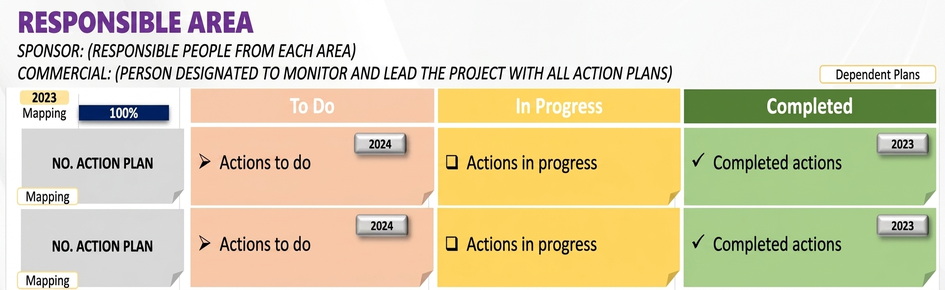
To monitor and manage the quality of process improvements, bi-weekly meetings were held with the areas, with records of progress on respective topics through minutes, representative percentages of action evolution, as shown in the Excel tracking file (Figure 4). Kanban is a visual method to control workflow, organizing tasks by stages to improve pace and efficiency, and was one of the organizational methods used to present plans and report minutes to the areas at the end of each alignment meeting, as exemplified in Figure 5.
Source: Original research results.
As actions progressed, the manager assigned to the commercial area updated the project tracking and requested additional information when necessary, while each area had a defined responsible person in the quality planning phase. These responsible persons, together with the manager, monitored improvements, shared information, and conducted alignments to ensure the project’s evolution.
In the year 2023, in the area of occupational safety, important actions were carried out:
- Mapping visits: visits were carried out to map the safety conditions at the distributors’ facilities, identify potential risks, and propose corrective measures.
- Security awareness campaign: a campaign was carried out to inform employees about the importance of workplace safety, with an emphasis on the correct use of PPE and good safety practices.
- Online training: through the Portal Escudo platform, training on work safety was offered. Employees received information about the specific courses they should take.
- Risk assessment in distributors: a detailed assessment of internal and external risks was carried out at the distributors’ units, with the objective of identifying and mitigating possible sources of danger.
- Registration of employees in logistics and security: there was a review of employee registration in the logistics and security systems, so that all were correctly registered and covered by security protocols.
- Demarcations to improve safety: evaluations were carried out and recommendations were made for the demarcations in the distribution centers, with the aim of improving movement flow and applying the principles of the 5S program.
- Shared purchasing: the possibility of joint acquisition of equipment and safety materials was evaluated, with the aim of increasing efficiency and economy for all distributors involved.
- Implementation of the 5S program: the implementation of the 5S program has been initiated in operations, with the purpose of improving organization, cleanliness, and safety in the workplaces.
After each action, feedback was collected from distributors to promote continuous improvement and identify factors with the greatest impact. Following the PMBOK guidelines, direct contact was established with external stakeholders to monitor quality and evaluate the performance of actions, which provided relevant insights for adjustments to the action plans.
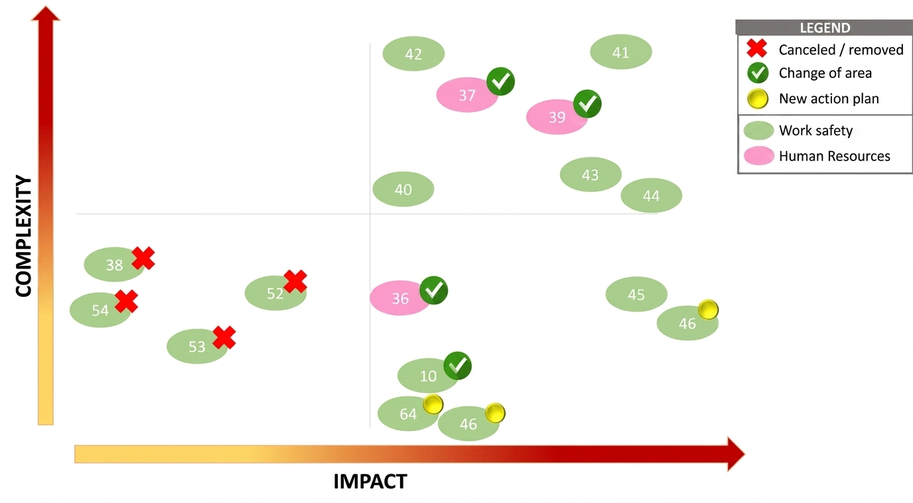
Based on these alignments and analyses, some plans were modified, unified, or replaced, in addition to the emergence of new themes, which made the process more practical and effective. These changes also resulted in updates to the Eisenhower Matrix on effort and impact, as shown in Figure 6.
Source: Original research results.
During the monitoring and control phase, it was observed that some plans were assigned to inadequate areas, which required reallocation according to the competencies and responsibilities of each sector. Other plans were eliminated due to lack of relevance or because they were already covered by ongoing actions, and new plans were developed to fill identified gaps. These changes made the process more practical and effective, provided better resource utilization, and greater strategic alignment[3,6].
The areas of greatest impact were commercial operations, health and safety at work, quality control, and logistics. In commercial operations, the optimization of processes and systems reduced errors, accelerated service, and increased customer satisfaction[5,7]. In H&S, the update of procedures and training decreased accidents, increased safety and productivity[1]. In quality control, more rigorous audits and processes reduced defects and costs, which strengthened the company’s reputation[2,4]. In logistics, improvements in tracking and routes increased efficiency, reduced delivery times and costs. These improvements brought benefits to both the company and the distributors[3,8].
The integration of these areas generated a virtuous cycle of improvements, in which OHS practices, quality control, and logistics complemented each other, with greater operational efficiency, reinforcement of stakeholder confidence, and consolidation of the company’s competitiveness in the cement sector. The study used the PMBOK as a basis and employed the Eisenhower matrix for action prioritization, the WBS for task detailing, and the PDCA cycle to ensure effectiveness and continuous improvement, always with broad stakeholder participation.
The objective of this case study was to evaluate the impacts of improvements on the stakeholders of a cement manufacturer, based on the PMBOK principles, and it considered both internal parties (employees, managers, and operational teams) and external ones (customers, suppliers, and distributors). The results indicated a significant positive impact: 77.8% of the interviewed professionals classified quality management as “very important”, which demonstrates gains in efficiency, quality, customer satisfaction, and cost reduction.
As limitations, the study had a restricted sample and focused on short-term results. For future research, it is recommended to expand the sample, include other sectors, conduct long-term follow-up, and explore complementary methodologies, such as Lean and Six Sigma, in order to strengthen the analysis and sustainability of improvements.
REFERENCES
[1] Garlet, E.; Ostapiuk, M. J. 2021. O gerenciamento da qualidade por meio de ferramentas corporativas. Revista sobre Excelência em Gestão e Qualidade, 3(1): 1–13. Disponível em: http://www.fismaead.edu.br/seer/index.php/jemq/article/view/31
[2] Silva Chicon, J. A.; de Souza Oliveira, V.; Mozzaquatro, P. M. 2019. Gerenciamento da qualidade do projeto. Disponível em: https://home.unicruz.edu.br/seminario/anais/anais-
[3] Moraes, R.B.D. 2019. O gerenciamento da rotina como metodologia no auxílio do acompanhamento de indicadores operacionais: estudo de caso de uma empresa do setor cimenteiro. Disponível em: http://www.repositorio.saolucas.edu.br:8080/xmlui/bitstream/handle/123456789/3815/Raphael%20Bezerra%20de%20Moraes%20-%20O%20gerenciamento%20da%20rotina%20como%20metodologia%20no%20aux%C3%ADlio%20do%20acompanhamento%20de%20indicadores%20operacionais%20estudo%20de%20caso%20de%20uma%20empresa%20do%20setor%20cimenteiro.pdf?sequence=1&isAllowed=y
[4] António, N.S.; Teixeira, A.; Rosa, Á. 2007. Gestão da qualidade: de Deming ao modelo de excelência da EFQM. Lisboa, Portugal: Edições Sílabo. Disponível em: https://static.fnac-static.com/multimedia/PT/pdf/9789726188544.pdf
[5] Vianna, W.B. 2010. Alinhamento estratégico e indicadores de desempenho: um estudo para a integração de processos de gestão da qualidade. Revista Produção Online, 10(1). Disponível em: https://producaoonline.emnuvens.com.br/rpo/article/view/211
[6] Project Management Institute (PMI). 2017. Guia PMBOK. 6ed. Newtown Square, PA: Project Management Institute.
[7] Avelino, E.F.; Correia, M.A.S. 2019. MAMP: um modelo para condução de mapeamento, análise e melhoria de processos de negócio: uma abordagem BPM inspirada no DMAIC. Disponível em: http://www.xiwticifes.ufba.br/modulos/submissao/Upload-353/86121.pdf
[8] Malagutti, F. 2011. Análise da relação de maturidade e gerenciamento da qualidade em projetos (Tese de Doutorado). Universidade Estadual de Campinas, Unicamp, Campinas, SP.
COMO CITAR
Capoeira, H.S. Impactos da gestão da qualidade na otimização de processos em distribuidores de cimento. Revista E&S. 2025; 6: e2025040.