
Quality Management
School Management
Iso21001
Educational Organizations
April 22, 2024
ISO 21001: school managers’ understanding of quality management systems in educational organizations
DOI: 10.22167/2675-6528-20240006
E&S 2024, 5: e20240006
Érika Dayane Rodrigues Moreira; Maria Cecília Perantoni Fuchs Ferraz
Quality management has evolved and changed over the last hundred years and, during this period, has gone through distinct and important phases. In the mid-1920s, statistician Walter Shewhart created two important concepts related to quality: statistical process control (SPC) and the plan, do, check, act (PDCA) cycle. These concepts expanded what was known as quality until then, focusing not only on the finished product but also on the processes that comprised the development of these products[1].
In the late 1940s, shortly after World War II, the American Edward Deming became a leading figure in the quality movement in his country and also in Japan, by disseminating statistical methods and managerial techniques[1,2]. The growing volume of international trade in the post-war period brought the fear that the variety of national standards would become an obstacle to international trade. Because of this, the International Organization for Standardization (ISO) was created[2].
ISO launched the first edition of the ISO 9001 standard in 1987, based on the British standard BS 5750. The standard was applied to organizations focused on projects or research and development[3]. In 1994, the standard underwent its first revision; the new edition brought minor nomenclature changes and emphasized quality assurance through preventive actions.
The third edition of the standard was released in the year 2000 and, among the changes presented, the requirements and responsibilities for top management and a structure with a process approach based on the PDCA cycle[4] stand out. Eight years later, the ISO 9001:2008 version emerged, the fourth version of the standard, bringing only minor nomenclature changes and adjustments to facilitate understanding. Finally, in 2015, the most current version, ISO 9001:2015, was born, presenting significant changes in its structure. This revision highlights improved compatibility with other management system standards and the explicit responsibility of leadership for the quality management system[3].
In May 2018, ISO published a new standard, which was translated and published in Brazil as NBR ISO 21001:2020, specifically designed for the application of a quality management system in educational organizations, adopting for this purpose a specific vocabulary of education[5]. This standard, aligned with ISO 9001, specifies the requirements for a management system for educational organizations (ESMS) and aims to create consistent processes, meet the needs and increase the satisfaction of students, parents, staff, and other beneficiaries[6].
The ISO 21001 standard replaced NBR ISO 15419, which provided guidelines for the application of ISO 9001 in educational organizations[7]. The objective of school management is to promote effective and meaningful student learning, and it is about this objective that quality must be guaranteed[8].
Quality management can be used by organizations as a competitive strategy for market conquest[4]. Furthermore, the adoption of ISO 21001 helps educational organizations deliver higher quality services by encouraging investment in the improvement of their processes[5].
Cassol et al.[8] argue that a quality management system in educational organizations aims to ensure that planning, leadership, organization, and control are conducted in a way that assures the assertiveness and continuous improvement of their performance, especially regarding the quality of education offered to their students. In this sense, for the implementation of a management system to lead to such teaching quality, it is necessary to pay attention to the studies by Xavier[9], who cites that achieving this goal requires proactivity, planning, training, responsibility, involvement, and commitment from the entire school.
Given the presented context, this work aimed to identify the degree of understanding of school managers regarding quality management and the ISO series certification standards in educational organizations.
For the development of this study, an exploratory research was conducted, whose data were collected through opinion polls with managers of Brazilian public and private schools. The exploratory research aims to provide an overview of a given fact, involving, among others, bibliographic and documentary research[10]. The opinion poll, specifically, is used to qualitatively and quantitatively evaluate the acceptance or rejection of respondents on a given subject[11]. In this research, the qualitative approach was used, characterized as a non-statistical study that seeks to collect and analyze data that are not measurable, such as behaviors and perceptions of a given group of individuals in relation to a given subject[12].
The data collection for this research was carried out through a questionnaire based on the Likert scale, an indirect methodology widely used in opinion polls[11]. The great advantage of the Likert scale is the ease with which the surveyed individual can express their perception and degree of agreement with the topic addressed[10].
With 18 questions, the questionnaire was divided into five sections: “participant profile”; “you, manager”; “daily quality management”; “about the degree of importance regarding quality management actions”; and “about the ISO series standards for quality management”. These questions were elaborated based on the content of the ISO 9001[13] and ISO 21001[7] standards, as well as the guidelines for writing questions and response alternatives for questionnaires defined by Weber and Pérsigo[9].
The questionnaire was applied digitally, through the Google Forms platform, and distributed on the social networks WhatsApp, Facebook, and Instagram, asking respondents to forward it to other school managers so that they could also participate in the research. In this sampling method, called snowball sampling[10], the initial respondents were used to contact other people to join the sample and so on, until the proposed goal was reached. The questionnaire remained available to participants from March 14 to April 13, 2023, reaching 46 respondents.
After the questionnaire was applied, the obtained data were consolidated using the Excel tool and, from this, graphs were constructed that could better represent the results obtained. Thus, the objective was to understand the opinion and perception of the respondents on the issues in question.
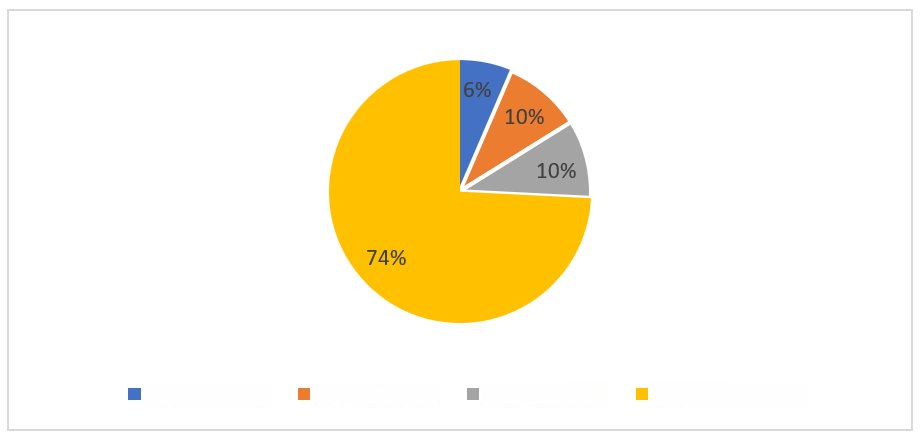
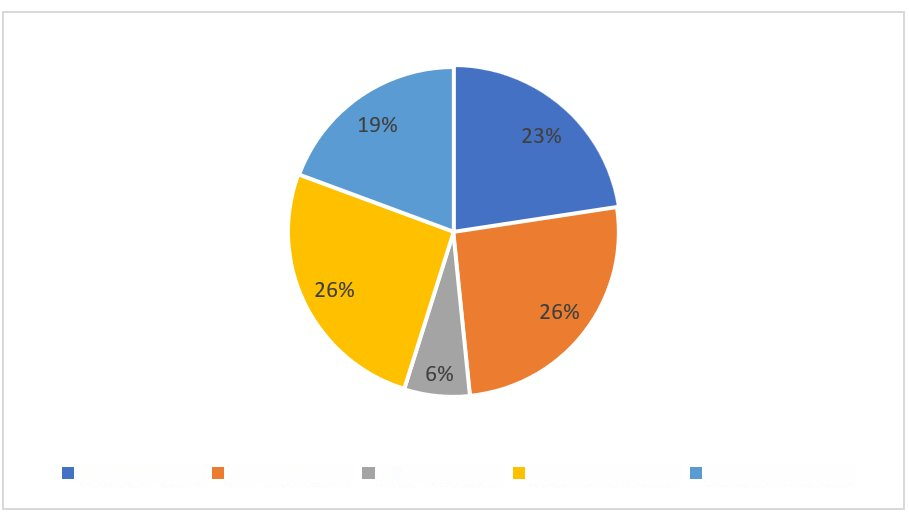
By applying the questionnaire, it was possible to draw a profile of the 46 research participants, using the information gathered in the first section of questions to which the respondents were submitted as a reference. It was found that 58% of them worked in public educational institutions, 74% had more than ten years of experience in the education field (Figure 1), and 32% had worked as school managers for at least seven years (Figure 2).
Source: Original research results.
Source: Original research results.
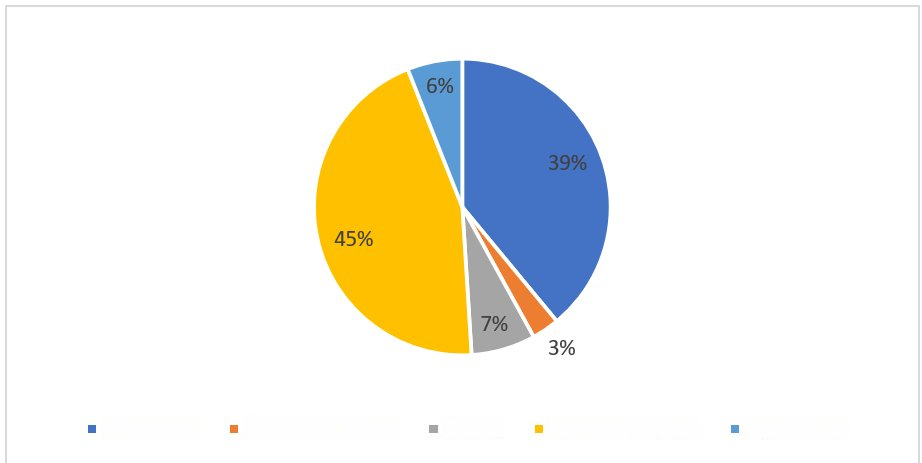
According to the ISO 9001 standard[13], quality management is a set of actions and strategies that organizations adopt systematically, with the objective of continuously improving their products and processes. In this context, in the second section of the questionnaire, which sought to observe managers’ perception of management processes, participants were asked about the frequency with which they perceived the improvement of management processes in the school.
For 45% of managers, such processes underwent continuous improvement only occasionally; 42% said that in the schools where they worked, they perceived school management processes being continuously improved frequently. Finally, 13% stated they had never perceived or had rarely perceived such improvement, as shown in Figure 3.
Source: Original research results.
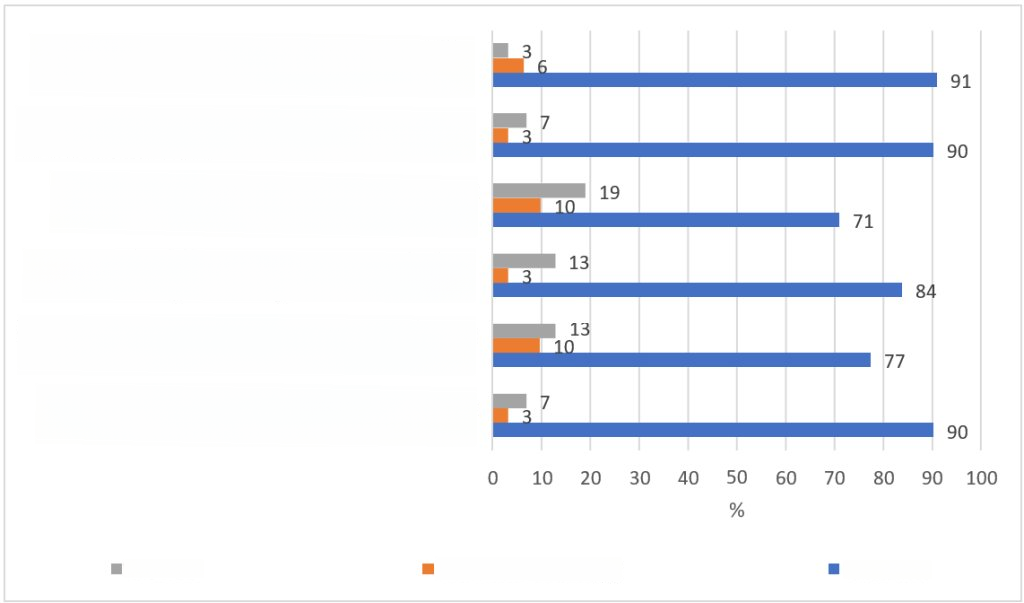
The third section addressed quality management in the daily lives of school managers. In this block, respondents encountered statements, extracted from excerpts of the ISO 21001 standard[7], and had to demonstrate their degree of agreement or disagreement with them. Figure 4 represents the questions containing the statements about quality management in the school environment.
Source: Original research results.
According to annex B.1.3 of the ISO 21001 standard, the adoption of a management system for educational organizations (ESMS) brings some important benefits: increased value for students and other beneficiaries; increased ability to respond to stakeholder requirements; increased satisfaction of students and other beneficiaries; improved organizational reputation; improved student motivation and engagement; improved acquisition and development of skills; increased access to education for students with different learning styles, with different needs and from different backgrounds; and improved student personal development, initiative and creativity[7]. In this regard, when managers were asked if a quality management system brought benefits to professionals in the field, 91% of respondents agreed with this statement (Figure 4), which ratifies the standard’s proposition that the adoption of such a system has the potential to bring important benefits.
In the second question of this section, 90% of respondents agreed with the statement that the main objective of a school organization should be to meet the current and future needs of its students (Figure 4). This demonstrates an alignment with Annex B of the ISO 21001 standard[7], which deals with the focus on students and other beneficiaries. This annex, contemplated by requirement 4.2, understands that students are stakeholders of the school organization and that, as such, their current and future needs must be met.
For 70% of the respondents to the third question shown in Figure 4, a school achieves success when it is able to meet the requirements of each student, which corroborates sub-item 1.2 of annex B of ISO 21001[7]. Regarding the success of educational organizations, still in its annex B, the standard defines that successful organizations work to ensure that their students reach their full potential. In the fourth question of this section of the questionnaire, 84% of respondents agreed with this statement (Figure 4).
Observing question 5 of the questionnaire (Figure 4), 77% of the managers participating in the research responded that their schools adopted improvement opportunities and implemented actions to meet established objectives and increase the satisfaction of their students and staff. Sub-item 10.3 of the ISO 21001 standard states that actions aimed at student and staff satisfaction are strategic and directly and positively impact the business.
Quality management can be used by organizations as a lever for their competitive strategy of market conquest[4]. For 90% of the survey respondents, it is clear that the adoption of a quality management system in educational organizations can be a strategic decision (Figure 4).
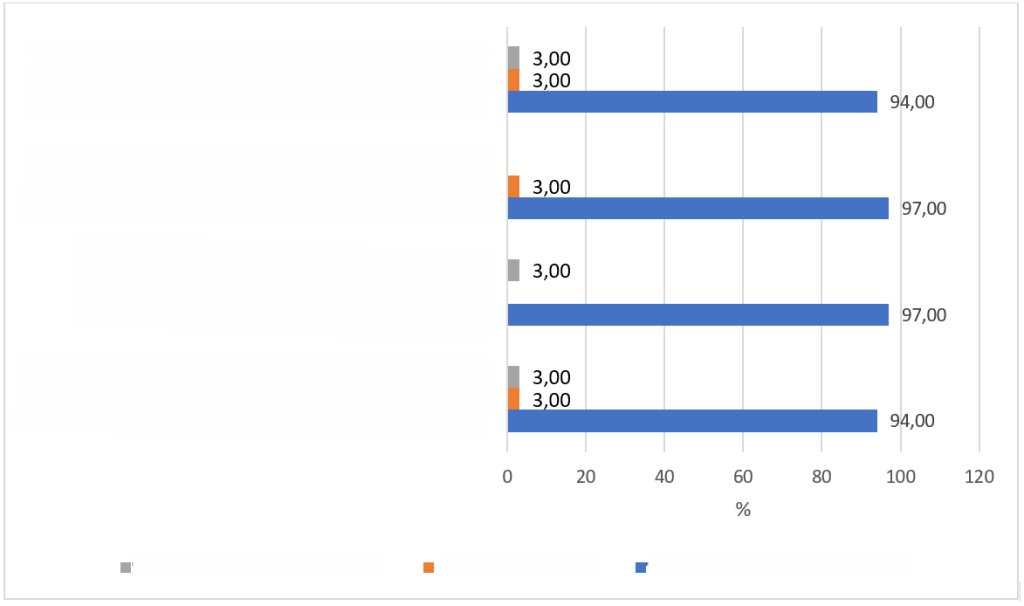
In the fourth section of the questionnaire, four statements were made about the importance of quality management actions, and respondents should report their degree of agreement or disagreement with each of them (Figure 5).
Source: Original research results.
The first statement — “it is important that the school takes actions to support and ensure the continuous development of the skills relevant to the role of each school worker” — had 94% agreement. This result demonstrates that the majority of respondents are in line with sub-item 7.2 of the ISO 21001 standard[7], which deals with the subject.
When asked about the importance of the school holding periodic meetings at planned intervals to discuss its management objectives and identify improvement opportunities, 97% agreed with the statement (Figure 5). These periodic meetings are determined by sub-item 9.2 of the ISO 21001 standard[7], similar to internal audits that provide information about the school organization’s management system.
In the ISO 9001[13] and ISO 21001[7] standards, sub-item 5.2.1 deals with the development of an organizational policy that provides both a framework for setting objectives and a framework for achieving these objectives. For 97% of respondents (Figure 5), the establishment and achievement of these objectives are important actions to be taken by the school organization.
Still on the previously mentioned objectives, ISO 9001[13] and ISO 21001[7] determine, in item 6.2, that the organization shall establish objectives that are measurable, continuously monitored and communicated, considered by 94% of respondents as important (Figure 5).
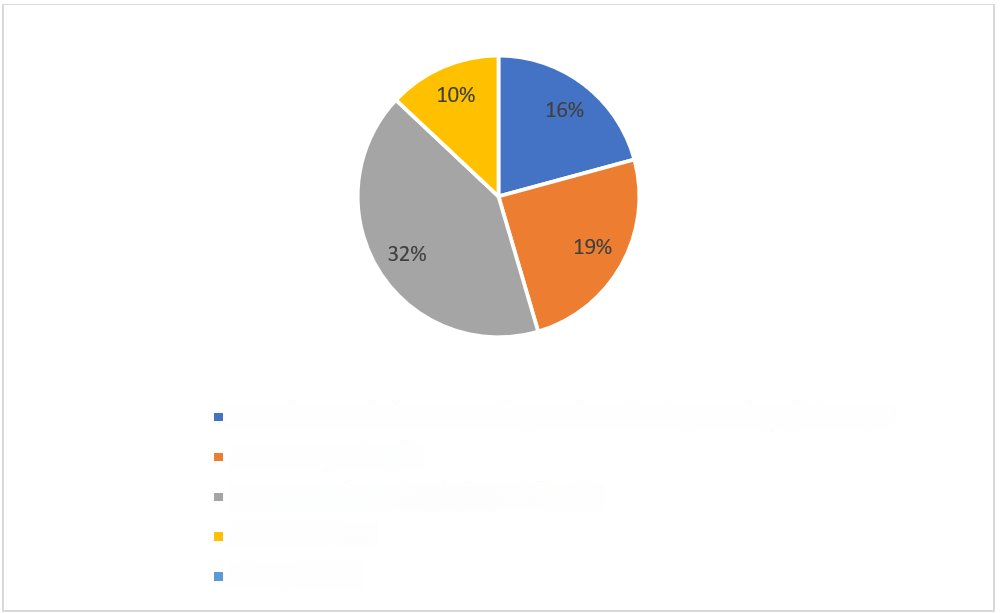
In the fifth and final section of the questionnaire, respondents were asked about the ISO series standards for quality management. When asked about the point in their training when they first encountered ISO series standards related to quality management, 26% stated they had contact outside the academic environment; 10% in free courses; and 16% while working in the job market. Another 23% had no knowledge of management standards (Figure 6).
Source: Original research results.
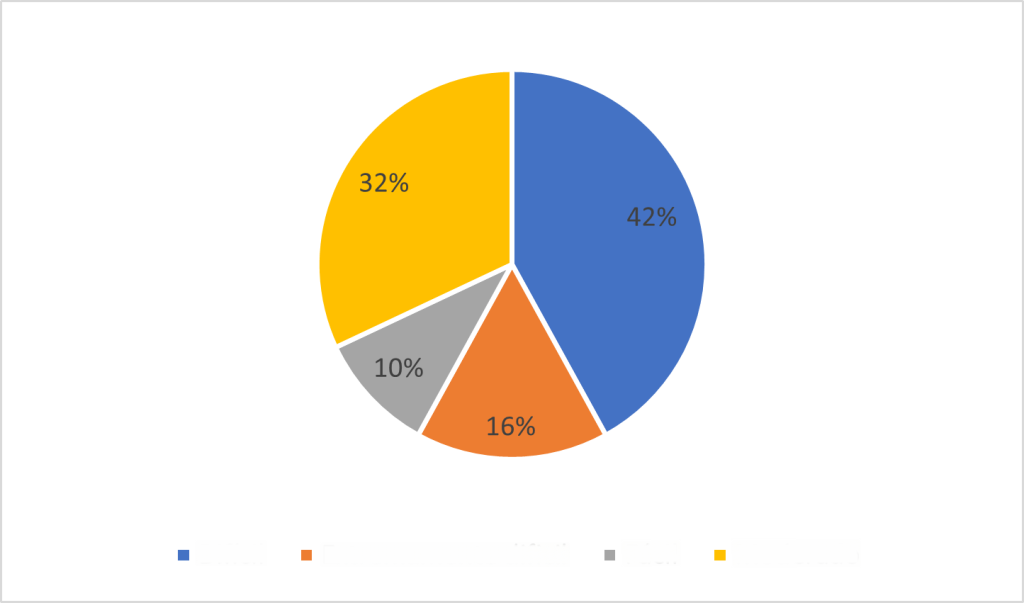
Regarding school managers’ perception of the degree of difficulty in adhering to an ISO series standard in an educational institution, 58% declared it to be difficult or extremely difficult (Figure 7).
Source: Original research results.
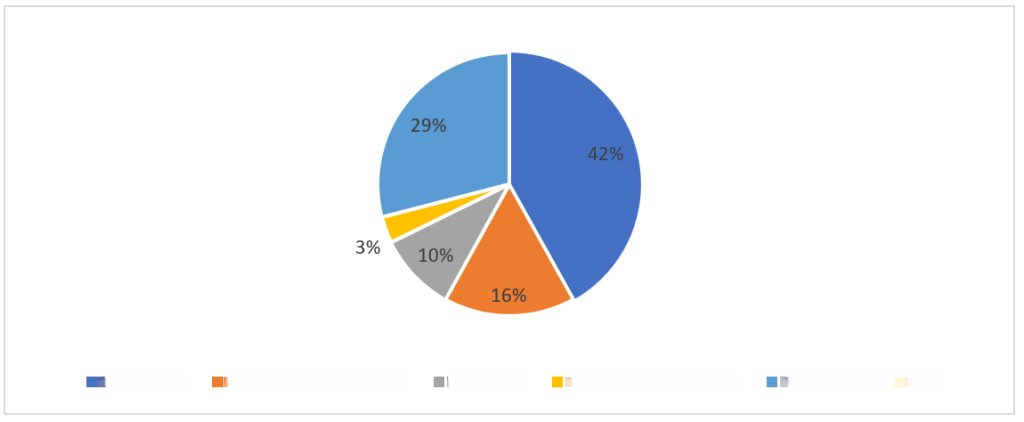
Among the school managers surveyed, 58% said they believed that a change in vocabulary in the ISO series standards would facilitate their understanding and implementation in educational institutions (Figure 8).
Source: Original research results.
Launched in 1987 with the objective of creating a standardization standard in companies, the ISO 9001 standard has historically been applied in the industrial segment. Because of this, school organizations encountered difficulties in implementing it, as the standard uses vocabulary aligned with industrial activities.
In 2018, a new standard, ISO 21001, was created, specifically designed to implement a quality management system in educational organizations. The new regulation underwent a two-year translation and review process and was subsequently published in Brazil as NBR ISO 21001:2020. This standard is aligned with ISO 9001 but uses terms more suited to the nature of the business, facilitating its application in the educational segment. The text also includes specific guidelines for school activities, such as additional requirements for early childhood education and considerations on health and safety for educational organizations. The objective of ISO 21001 is to meet the needs and increase the satisfaction of students, parents, staff, and other beneficiaries of the educational organization.
This research aimed to identify school managers’ perception of management systems for educational organizations. After applying the questionnaire, it was possible to observe that 23% of respondents had never learned about management standards at any point in their careers; another 58% stated they found it difficult to adhere to ISO rules. In contrast, 91% of participants declared that they perceive that quality management actions in the school context bring benefits to the manager’s daily routine.
Despite this, 58% stated they believed that the change in vocabulary would facilitate the knowledge and implementation of these norms by school organizations, as simplifying the language would bring greater ease of understanding. In this sense, the creation of NBR ISO 21001 in 2020 should be highlighted, with the objective of being more specialized to the education segment and, for this, bringing a specific vocabulary for this segment.
This work does not have statistical representation, therefore, it is not possible to discard the existence of some type of bias in the interpretation of the data. Conducting research with a broader sample could add value to the study.
References
[1] Longo R.M.J. Texto para discussão nº 397 — Gestão da Qualidade: evolução histórica, conceitos básicos e aplicação na educação. Brasília (DF): IPEA; 1996. Disponível em: http://repositorio.ipea.gov.br/handle/11058/1722. Acesso em: 14 set. 2022.
[2] Possarle R. Leitura e interpretação da NBR ISO 9001:2015. São Paulo (SP): Senai-SP Editora; 2017.
[3] Chaves S.; Campello M. A qualidade e a evolução das normas série ISO 9000. In: XIII Simpósio de Excelência em Gestão e Tecnologia (SEGeT). 2016 out./nov. 31-1; Penedo, RJ, Brasil. Penedo: Associação Educacional Dom Bosco; 2016. Disponível em: https://www.aedb.br/seget/arquivos/artigos16/27224305.pdf. Acesso em: 20 out. 2022.
[4] Carpinetti L.C.R.; Gerolamo M.C. Gestão da qualidade ISO 9001:2015: requisitos e integração com a ISO 14001:2015. São Paulo (SP): Atlas; 2022.
[5] Passarelli V.; Costa Neto P.L.O. Avaliar a motivação das escolas particulares para terem um sistema de gestão de acordo com a norma ABNT NBR ISO 21001. Research, Society and Development. 2022; 11(9): 1-13. DOI: 10.33448/rsd-v11i9.31882.
[6] Souza M.K.; Santos L.P.S.; Melo R.M. Diretrizes de implementação para Sistemas de Gestão da Qualidade em instituições de ensino sob o enfoque da Educação Inclusiva. Revista Educação Especial. 2021; 34: 1-19. DOI: 10.5902/1984686X65753.
[7] Associação Brasileira de Normas Técnicas (ABNT NBR ISO, 21001). Organizações educacionais — Sistemas de gestão para organizações educacionais — Requisitos com orientações para uso. Rio de Janeiro (RJ): ABNT; 2020.
[8] Raszl S.M.; Cassol A.P.; Slveira I.H.; Siemeintcoski M.E.; Arruda S.R.; Silva S.B. Gestão da qualidade na educação. Revista E-TECH: Tecnologias Para Competitividade Industrial. 2012; Ed. Especial — Educação: 15-33. DOI: 10.18624/e-tech.v0i0.294.
[9] Xavier A.C.R. Texto para discussão nº 408 — A gestão da qualidade e a excelência dos serviços educacionais: custos e benefícios de sua implantação. Brasília (DF): IPEA; 1996, Brasil. Disponível em: http://repositorio.ipea.gov.br/bitstream/11058/1792/1/td_0408.pdf. Acesso em: 15 set. 2022.
[10] Gil A.C. Métodos e técnicas de pesquisa social. 7ed. São Paulo (SP): Atlas; 2021.
[11] Leite F.T. Metodologia científica: métodos e técnicas de pesquisa: monografias, dissertações, teses e livros. São Paulo (SP): Ideias & Letras; 2008.
[12] Weber A.F.; Pérsigo P.M. Pesquisa de opinião pública: princípios e exercícios. Santa Maria (RS): Facos-UFMS; 2017.
[13] Associação Brasileira de Normas Técnicas (ABNT). NBR ISO 9001:2015: Sistemas de gestão da qualidade — Requisitos. Rio de Janeiro (RJ): ABNT; 2015.
Como citar
Moreira E.D.R.; Ferraz M.C.P.F. ISO 21001: a compreensão de gestores escolares sobre sistemas de gestão da qualidade em organizações educacionais. Revista E&S. 2024; 5: e20240006.
Sobre os autores
Érika Dayane Rodrigues Moreira, Especialista em gestão escolar. Rua Tabor, 491, 83B – Ipiranga – CEP: 04202-020 – São Paulo/SP, Brasil.
Maria Cecília Perantoni Fuchs Ferraz, Profissional Associado – Instituto de Pesquisa e Educação Continuada em Economia e Gestão de Empresas – Pecege – Rua Cezira Giovanoni Moretti, 580 – Santa Rosa – CEP: 13414-157 – Piracicaba/SP, Brasil.