
Sales
October 19, 2026
Beliefs, Behaviors, and Performance in Sales: Evidence in Key Account Management in Brazilian Food Retail
Rafael de Santis; Mathäus Marcelo Freitag Dallagnol
DOI: 10.22167/2675-6528-202601326
Article prepared by the ResumeAI tool, an artificial intelligence solution developed by the Pecege Institute focused on synthesis and writing.
Abstract
This study analyzed the relationship between individual beliefs, key account management behaviors, and business results in the context of strategic sales in Brazilian food retail, a sector marked by high pressure for results and relational complexity. The objective was to investigate how individual beliefs influenced account management behaviors and, consequently, business results, in light of the CCE (Belief → Behavior → Delivery) model, as well as to verify if sales experience moderated the relationship between beliefs and behaviors. To this end, an applied research with a quantitative approach was conducted through a field survey with 85 professionals working in strategic sales. The data were analyzed using descriptive statistics, correlation, and linear regressions. The results showed that more consistent individual beliefs favored the adoption of critical account management behaviors, especially account planning, stakeholder mapping, and internal coordination. These behaviors, in turn, were associated with better commercial deliveries, expressed in greater achievement of goals, customer satisfaction, and account profitability. Additionally, it was found that sales experience strengthened the relationship between beliefs and behaviors. It was concluded that strategic sales performance results from the articulation between individual predispositions, consistent execution, and professional maturity, offering an integrated understanding of the mechanisms that sustain commercial performance in complex environments.
Keywords: Self-efficacy; Professional maturity; Moderation; Business results; Strategic sales.
1. Introduction
The sales activity has been profoundly transformed in recent decades, driven by changes in consumer behavior, technological advancements, and the growing complexity of organizational decision-making processes (Ingram et al., 2020). In highly competitive markets, such as that of fast-moving consumer goods in Brazilian food retail, this dynamic intensifies the pressure for results and makes building sustainable relationships with key accounts more challenging. Commercial performance, in this context, transcends transactional negotiation, requiring value generation, internal coordination, and a deep strategic understanding of the client. Key Account Management (KAM) emerges as a fundamental pillar for navigating relational complexity and the demands of an ever-evolving market.
Commercial performance arises not only from technical skills but from the interaction between individual, behavioral, and organizational factors (Churchill et al., 1985). In the field of organizational psychology, beliefs are subjective convictions that influence the interpretation of situations and the orientation of actions (Bandura, 1997). In sales, self-efficacy, the belief in the ability to successfully perform tasks, is associated with superior performance (Krishnan, Netemeyer, Boles, 2002; Edwards et al., 2022). Other crucial beliefs include learning orientation, vital for adaptation in dynamic environments (Sujan, Weitz, Kumar, 1994; Vandewalle et al., 1999), customer orientation, a pillar for value generation (Agnihotri et al., 2017; Homburg, Müller, Klarmann, 2011), and the belief in continuous effort and persistence in the face of obstacles (Brown, Peterson, 1994; Gist, Schwoerer, Rosen, 1989).
The transposition of these beliefs into concrete actions occurs through specific behaviors, especially relevant in Key Account Management. Key account management requires structured and proactive behaviors, such as detailed account planning, stakeholder mapping, and effective internal coordination to meet customer demands (Homburg, Workman, Jensen, 2002; Workman, Homburg, Jensen, 2003). Anticipating customer needs and continuously aligning company and customer objectives are also crucial for solidifying the relationship and promoting sustainable value generation. These behaviors function as mechanisms through which cognitive predispositions are converted into tangible commercial deliverables.
The relationship between individual beliefs and management behaviors, however, is not manifested homogeneously. Contextual and individual factors can moderate this transition (Fishbein, Ajzen, 2010). Sales experience time emerges as a crucial element, as professional maturity can strengthen the ability to convert favorable beliefs into consistent and effective account management practices (Vieira, Monteiro, Higuchi, 2022; Edwards et al., 2022; Koay et al., 2023). More experienced professionals develop a broader repertoire, greater situational awareness, and resilience, applying their convictions in a more strategic and adapted way to the complexities of the sales environment.
Despite the relevance of these factors, the literature still presents a fragmented treatment of the articulation between individual beliefs, key account management behaviors, and commercial results in a single analytical model. The consideration of the moderating role of professional experience in this dynamic is also little explored, especially in the context of Brazilian food retail, a sector of high complexity and pressure for results. This gap limits an integrated understanding of the mechanisms that sustain strategic sales performance. Thus, the present study is justified by the need to expand knowledge about how individual predispositions translate into actions and results, considering professional maturity as a qualifying element of this transition. Therefore, the objective of this study is to analyze how individual beliefs influence key account management behaviors and, consequently, commercial results, in light of the CCE model (Belief → Behavior → Delivery), as well as to verify whether sales experience moderates the relationship between beliefs and behaviors.
2. Material and Methods
This research was characterized as a study of an applied nature, with a descriptive-exploratory design and a quantitative approach. The methodology employed was based on a field survey, which allowed for the collection of primary data directly from professionals. This design was considered adequate to investigate the relationships between cognitive and behavioral factors and commercial results, according to the objective proposed by the study.
The study was conducted in the context of Brazilian food retail, a fast-moving consumer goods (FMCG) sector, recognized for its high competitiveness and relational complexity. The unit of analysis consisted of professionals in the commercial area working in sales and strategic account management, located in Brazil. Although the TCC does not specify an exact collection period, the research was carried out before 2026, the year the work was presented.
The target population of the study was composed of professionals from the commercial area involved in sales and strategic account management. The sample was defined by convenience, due to access to respondents for the application of the research instrument. Initially, 89 responses were obtained, of which two were excluded for not meeting the ethical criteria of the Free and Informed Consent Term (TCLE). Additionally, one response was removed during the data cleaning process due to the absence of valid information, resulting in a final sample of 85 valid respondents.
For analytical purposes, the CCE (Belief → Behavior → Delivery) model was operationalized. Individual beliefs were defined as the antecedent variable, critical account management behaviors as the mediating variable, and business outcomes as the dependent variable. Additionally, sales experience time was incorporated as a moderating variable, seeking to verify how the intensity of the association between beliefs and behaviors varied according to professional experience, as illustrated in Figure 1.
Figure 1. Analytical model of the study

Source: Elaborated by the author.
Data collection was carried out using a structured questionnaire, administered in an online environment. The instrument was developed in blocks, aligned with the study’s analytical model. The first block addressed individual beliefs, including self-efficacy (Bandura, 1997), learning orientation (Sujan, Weitz, Kumar, 1994; Vandewalle et al., 1999), customer orientation (Sujan, Weitz, Kumar, 1994), and belief in effort and persistence (Brown, Peterson, 1994). The items were measured using a five-point Likert scale, ranging from 1 (Strongly disagree) to 5 (Strongly agree).
The second block of the questionnaire focused on key account management behaviors, covering dimensions such as account planning, stakeholder mapping, internal resource coordination, anticipation of client needs, and alignment between company and client objectives. These variables were developed based on studies on Key Account Management (Homburg, Workman, Jensen, 2002; Workman, Homburg, Jensen, 2003). The frequency of these behaviors was assessed on a five-point Likert scale, from 1 (Never) to 5 (Always).
The third block of the instrument collected data on commercial results, considering goal achievement, customer satisfaction, sustainable account growth, and perceived profitability (Churchill et al., 1985; Ingram et al., 2020). Respondents’ perception of their performance was assessed on a five-point Likert scale, from 1 (Strongly disagree) to 5 (Strongly agree). The fourth block gathered sample characterization variables, such as age, gender, sales experience duration, and education level, with sales experience duration used as a moderating variable in the analytical model. The complete structure of the instrument is synthesized in Table 1.
Table 1. Data collection instrument structure
|
Block |
Analyzed dimension |
Description of variables |
Theoretical basis |
|
Block 1 |
Individual beliefs |
Self-efficacy, learning orientation, customer orientation, and belief in effort and persistence |
Bandura (1997); Sujan, Weitz and Kumar (1994); Brown and Peterson (1994); Vandewalle et al. (1999) |
|
Block 2 |
Account management behaviors |
Account planning, stakeholder mapping, internal resource coordination, client needs anticipation, and alignment between company and client objectives |
Homburg, Workman, and Jensen (2002); Workman, Homburg, and Jensen (2003) |
|
Block 3 |
Commercial results |
Goal achievement, customer satisfaction, sustainable account growth, and perceived profitability |
Churchill et al. (1985); Ingram et al. (2020) |
|
Block 4 |
Sample characterization |
Age, gender, sales experience duration, key account tenure, company sector, main operating region, company size, current position, and education level |
Prepared by the author |
Source: Elaborated by the author based on the literature
The data treatment was carried out in sequential steps, after validating the analytical base with the 85 respondents. Initially, descriptive analyses were conducted to characterize the sample and examine the general behavior of the variables, using means and dispersion measures. Subsequently, a linear correlation analysis was performed, employing Pearson’s coefficient, to assess the intensity and direction of the associations between the model’s constructs. The statistical procedures adopted are detailed in Table 2.
Table 2. Synthesis of the statistical procedures adopted
|
Step |
Statistical technique |
Purpose |
Observed indicators |
|
Step 1 |
Descriptive statistics |
Characterize the sample and examine the general behavior of the variables |
Means and dispersion measures of the variables |
|
Step 2 |
Pearson Correlation |
Evaluate the intensity and direction of the associations between the model constructs |
Pearson correlation coefficient (r), with analysis of the strength and direction of associations |
|
Step 3 |
Simple linear regression |
Test direct relationships between beliefs, behaviors, and outcomes |
Standardized coefficients (β), p-value with a significance level of 5% (p<0.05), and model explanatory power (R²) |
|
Step 4 |
Multiple linear regression |
Verify the mediating effect of behaviors on the relationship between beliefs and outcomes |
Reduction of the direct effect, standardized coefficients (β), p-value with a significance level of 5% (p<0.05), and explanatory power of the model (R²) |
|
Step 5 |
Regression with interaction term |
Test the moderating effect of sales experience on the relationship between beliefs and behaviors |
Interaction term coefficient (ẞ), p-value with 5% significance level (p < 0.05), and model explanatory power variation (R²) |
Source: Elaborated by the author
Subsequently, simple and multiple linear regression models were estimated to empirically test the relationships between beliefs, behaviors, and outcomes. Mediation was inferred by comparing the models, observing the reduction in the direct effect of beliefs on outcomes after including behaviors as an explanatory variable. For moderation analysis, an interaction term between individual beliefs and sales experience time was incorporated, verifying if the relationship between beliefs and behaviors varied according to professional experience. A significance level of 5% (p < 0.05) was adopted for the interpretation of the models.
The research was conducted in strict accordance with the ethical principles applicable to studies involving human beings. Free and informed consent was ensured from participants through the Free and Informed Consent Form (TCLE), guaranteeing the confidentiality and anonymity of the collected information. The study was carried out with respondents located in Brazil, without the identification of specific organizations, preserving the privacy and integrity of the participants.
Despite the methodological rigor, the study presents some limitations that should be considered in the interpretation of the findings. The use of non-probabilistic convenience sampling restricts the generalization of the results to other populations. Furthermore, the cross-sectional design of the research prevents the assertion of full causality between the variables, although the results are consistent with the proposed analytical structure. The use of self-reported measures may also introduce perceptual biases, especially in constructs related to performance and self-perception of behavior.
3. Results and Discussion
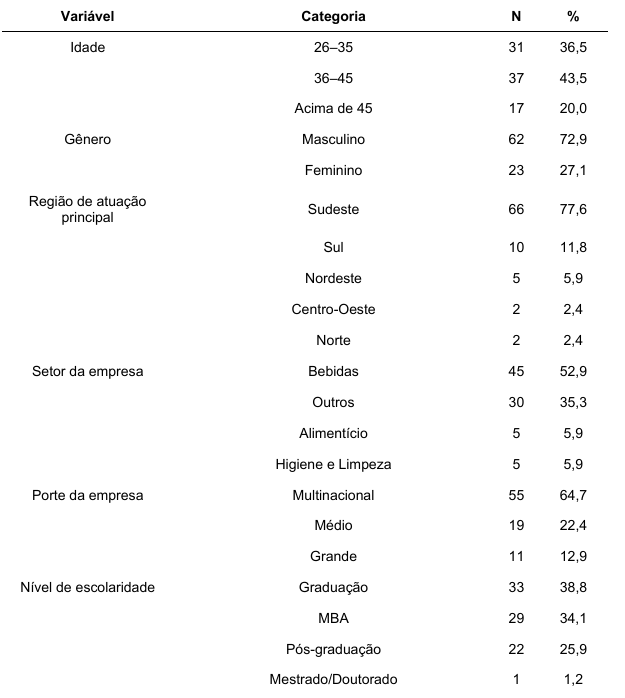
The analyzed sample consisted of 85 valid respondents, according to the criteria established in the methodological section. The sociodemographic characterization revealed a predominance of male participants, representing 72.9% of the sample, which may reflect the historical and cultural composition of the strategic sales sector, where the male presence has traditionally been more pronounced. This observation is relevant, as studies on gender and sales performance indicate that, although there are no inherent differences in ability, career dynamics and self-efficacy perceptions may vary between men and women in corporate environments (Brown & Peterson, 1994). The higher concentration of male respondents suggests that inferences about beliefs, behaviors, and outcomes may be more aligned with the experiences and perspectives of this demographic group, demanding caution in generalizing to populations with a more balanced gender distribution.
Regarding the age group, the sample was predominantly concentrated between 36 and 45 years old (43.5%) and 26 to 35 years old (36.5%), indicating that the participants are professionals with some maturity and experience in the job market. This age distribution is particularly relevant for a study on Key Account Management (KAM), as strategic account management often requires a level of experience and development of interpersonal and strategic skills that are honed throughout a career (Homburg, Workman & Jensen, 2002). Professionals in these age groups tend to have a more consolidated repertoire of commercial experiences and a greater ability to deal with the relational complexity inherent in food retail. The presence of a smaller group of respondents over 45 years old (20.0%) also contributes to the diversity of perspectives, allowing for observation of how long-term experience can influence the articulation between beliefs and behaviors.
The geographical distribution of respondents showed a strong concentration in the Southeast region (77.6%), followed by the South (11.8%). This concentration is expected, given that the Brazilian Southeast is the country’s main economic and commercial hub, housing the headquarters of many fast-moving consumer goods (FMCG) companies and the largest food retail chains. The predominance of respondents from this region lends relevance to the findings for the Brazilian food retail context, but also limits generalization to other regions of the country, which may present distinct market dynamics and cultural characteristics. The representativeness of the Southeast reinforces the applicability of the discoveries to a highly competitive and complex market, where key account management is crucial for commercial success.
Regarding the company’s sector, the beverage segment stood out, with 52.9% of respondents, followed by “Others” (35.3%), food (5.9%), and hygiene and cleaning (5.9%). The strong presence of the beverage sector, a sub-segment of FMCG, is consistent with the study’s focus on food retail and fast-moving consumer goods. This sector is known for its high competitiveness, the need for managing large volumes, and the complexity of negotiations with retail chains, making key account management a strategic differentiator. The diversity, albeit smaller, of other FMCG segments, such as food and hygiene and cleaning, allows for a broader view of KAM practices within the consumer goods universe.
Regarding organizational size, respondents linked to multinational companies (64.7%) prevailed, followed by medium-sized (22.4%) and large companies (12.9%). The predominance of multinationals is an indication that the professionals in the sample work in organizations with more sophisticated sales structures and more formalized account management processes. Multinational companies frequently invest more in training, skills development, and KAM tools, which can influence how beliefs translate into behaviors and results. This characteristic of the sample reinforces the relevance of the findings for the context of strategic sales in large corporations, where complexity and pressure for results are high.
In terms of schooling, the sample presented a high educational level, with a greater presence of professionals with a bachelor’s degree (38.8%), MBA (34.1%), and postgraduate studies (25.9%). Only a small portion held a master’s/doctorate (1.2%). This elevated educational profile suggests that the respondents are qualified professionals, with academic training that can influence their capacity for analysis, adaptation, and adoption of more structured management practices. High schooling is a factor that can strengthen the relationship between favorable beliefs and account management behaviors, as more educated professionals may find it easier to assimilate and apply theoretical and strategic knowledge in their daily practice.
Table 3. Sociodemographic profile of the sample
Source: Original research data
In the professional profile, the distribution of sales experience time was heterogeneous, with a predominance of the 11 to 20 years (31.8%) and 6 to 10 years (29.4%) ranges. Summary measures indicated an average of 14.4 years of sales experience and a median of 13 years. This high average sales experience is a crucial point, as the variable “sales experience time” was incorporated as a moderator in the analytical model. The presence of professionals with different levels of experience, but with a consolidated average, allows us to investigate how professional maturity qualifies the relationship between beliefs and behaviors. Accumulated sales experience is a factor that, according to the literature, contributes to the development of a repertoire of skills, resilience, and adaptability, essential elements for performance in strategic sales (Edwards et al., 2022; Koay et al., 2023).
Regarding the tenure in key accounts, a higher concentration was observed in the 3 to 5-year range (35.3%), followed by 6 to 10 years (25.9%). The average was 6.7 years and the median was 5 years. This metric is equally important, as it reflects the respondents’ specialization in Key Account Management. Specific experience in KAM, although less than total sales experience, is still substantial and indicates that professionals are familiar with the complexities and demands of this type of management. Key account management requires a set of specific skills, such as strategic planning, stakeholder mapping, and internal coordination, which are enhanced with practice and experience in complex scenarios (Homburg, Workman & Jensen, 2002). The sample, therefore, is composed of professionals with a consolidated trajectory and relevant experience in strategic sales, which reinforces the analytical consistency of the study and the validity of the findings for the investigated context.
Despite the robustness of the sample profile, it is essential to acknowledge the limitations arising from the use of non-probabilistic convenience sampling. This approach, although practical for data collection in specific contexts, restricts the generalization of results to other populations of sales professionals. The sample, although qualified, is not representative of all strategic sales professionals in Brazil or in other markets. This restriction must be considered in the interpretation of the findings, indicating that the conclusions are more applicable to the profile of respondents who participated in the study. Future research could seek probabilistic or more diverse samples to broaden generalization.
The descriptive analysis of the constructs allowed for an examination of the general behavior of the central variables of the proposed model, offering an initial view of professionals’ perceptions and practices. As presented in Table 4, the individual beliefs construct showed the highest mean among the three analytical blocks (M = 4.44; SD = 0.57; n = 85). This result indicates a favorable perception among respondents regarding their own sales performance capabilities, willingness to learn, customer orientation, and belief in effort and persistence. This high mean is consistent with the literature that highlights self-efficacy as a critical factor for motivation and sales performance (Bandura, 1997; Edwards et al., 2022). Professionals with positive beliefs about their abilities and the importance of effort tend to be more proactive and resilient in the face of commercial environment challenges.
The business results construct also showed a high average (M = 4.26; SD = 0.56; n = 85), suggesting that respondents perceive good performance in terms of goal achievement, customer satisfaction, sustainable account growth, and profitability. This positive perception of results is an indication that professionals feel successful in their activities, which may be related to both their favorable beliefs and the behaviors they adopt. Customer satisfaction and sustainable growth are important metrics in strategic sales, reflecting the ability to build long-term relationships and generate value for the company (Ingram et al., 2020).
Account management behaviors registered a slightly lower, but still high average (M = 4.20; SD = 0.58; n = 85). This suggests that practices such as account planning, stakeholder mapping, internal resource coordination, anticipation of client needs, and objective alignment are frequently performed by respondents. The difference between the average of beliefs and that of behaviors, although small, is significant. It indicates that, although individual beliefs are very strong, the conversion of these beliefs into concrete management actions may not be entirely homogeneous. This reinforces the idea that the execution of account management behaviors, even if perceived as frequent, may be influenced by factors beyond beliefs, such as organizational context, available support, and account complexity (Homburg, Workman & Jensen, 2002).
Table 4. Descriptive statistics of the model constructs
|
Construct |
Number of items |
n valid |
Average |
Standard deviation |
Minimum |
Maximum |
|
Individual beliefs |
16 |
85 |
4,44 |
0,57 |
1,06 |
5,00 |
|
Account management behaviors |
8 |
85 |
4,20 |
0,58 |
2,63 |
5,00 |
|
Commercial results |
6 |
85 |
4,26 |
0,56 |
3,00 |
5,00 |
Source: Original research data
The comparison between the means of the constructs reveals important nuances for understanding the CCE model. Individual beliefs, with the highest mean, act as cognitive predispositions that drive action. However, the fact that behaviors and outcomes show slightly lower means suggests that the translation of these beliefs into practices and, consequently, into commercial deliverables, is not automatic or linear. This is consistent with the literature arguing that self-efficacy, while fundamental, needs to be complemented by concrete strategies and actions to manifest in performance (Bandura, 1997). In other words, having a strong belief in the ability to perform a task is a prerequisite, but the effective execution of the task requires a set of structured behaviors adapted to the context.
From a practical point of view, these descriptive findings already offer valuable insights. Organizations seeking to optimize performance in strategic sales must not only foster positive beliefs in their professionals but also invest in the development and standardization of critical account management behaviors. The gap observed between beliefs and behaviors, even if small, indicates that training and development programs should go beyond motivation and strengthening self-efficacy, also focusing on enabling the consistent execution of KAM practices. This includes improving skills in planning, stakeholder mapping, internal coordination, and anticipating client needs, ensuring that cognitive predispositions translate into effective and measurable actions.
Correlation analysis allowed for the examination of the intensity and direction of associations between the central constructs of the proposed model. All observed correlations were positive, indicating initial coherence with the logic of the CCE model (Belief → Behavior → Delivery). A moderate correlation was found between individual beliefs and account management behaviors (r = 0.50). This result suggests that higher levels of favorable beliefs, such as self-efficacy and learning orientation, tend to be associated with a higher frequency of structured account management practices. This association is robust and aligns with Bandura’s (1997) self-efficacy theory, which posits that belief in one’s ability to perform tasks directly influences the adoption of relevant behaviors. Professionals who believe in their competence and the effectiveness of their effort are more likely to invest time and energy in planning, mapping, and coordination, crucial elements for success in KAM.
The correlation between individual beliefs and commercial outcomes showed a smaller magnitude (r = 0.43) compared to other associations. This finding is particularly instructive, as it suggests that the influence of beliefs on commercial performance may not be predominantly direct, but rather mediated by other factors. Although positive beliefs are important for performance, their translation into tangible outcomes seems to depend on the intermediation of concrete actions. This perspective is consistent with theoretical approaches indicating that cognitive variables often influence outcomes through action (Fishbein & Ajzen, 2010). In sales, this means that self-confidence and customer orientation are fundamental, but they need to be channeled through specific behaviors to generate impact on results.
The highest association between constructs was observed between account management behaviors and commercial results (r = 0.55). This result reinforces the centrality of commercial execution in performance generation. Structured KAM behaviors, such as detailed account planning, stakeholder mapping, and internal resource coordination, are strongly associated with better commercial results, including goal achievement, customer satisfaction, and profitability. This finding is consistent with the Key Account Management literature, which emphasizes the importance of systematic practices for success in strategic accounts (Homburg, Workman & Jensen, 2002; Workman, Homburg & Jensen, 2003). The consistent execution of these practices is the direct link that transforms cognitive predispositions into value delivery to the customer and, consequently, into superior commercial performance.
The results of the correlation analysis, therefore, indicate that account management behaviors occupy a central position in the articulation between individual beliefs and commercial performance. Although beliefs are an important antecedent, strategic sales performance tends to materialize more directly through the consistent execution of account management practices. This understanding is vital for sales management, as it suggests that an exclusive focus on attitudes or motivation may not be sufficient to drive performance. Continuous investment in the development of behavioral skills and the creation of an environment that favors the application of these practices are necessary.
Although relevant, correlations alone do not allow inferring causal direction nor fully testing the analytical structure proposed in the study. For this reason, the next step involved estimating regression models to more precisely examine the direct, mediating, and moderating effects among beliefs, behaviors, and outcomes. Linear regression analysis allowed for testing the proposed relationships in the CCE model, offering a deeper understanding of the dynamics between the constructs.
In order to more precisely examine the relationships proposed in the CCE model, linear regression models were estimated to test the direct effects between individual beliefs, account management behaviors, and business outcomes, as well as the combined effect of beliefs and behaviors on business performance. As presented in Table 5, the first model indicated that individual beliefs exerted a positive and statistically significant effect on account management behaviors (β = 0.50; p < 0.001; R² = 0.245). This finding is fundamental, as it shows that more consistent beliefs, such as self-efficacy, learning orientation, and belief in effort, tend to be associated with a higher frequency of structured management practices. This corroborates the literature that points to beliefs as primary motivators of action, suggesting that professionals with a positive and proactive mindset are more likely to engage in high-performance behaviors (Bandura, 1997; Sujan, Weitz & Kumar, 1994). The model’s explanatory power (R² = 0.245) indicates that approximately 24.5% of the variance in account management behaviors can be attributed to individual beliefs, a substantial value for a model in social sciences.
The second model showed that account management behaviors also exerted a positive and significant effect on business results (β = 0.55; p < 0.001; R² = 0.302). This result reinforces the relevance of commercial execution for the observed performance, indicating that the consistent adoption of KAM practices, such as account planning and stakeholder mapping, is a robust predictor of better results. The explanatory capacity of 30.2% of the variance in business results by account management behaviors underlines the importance of concrete action in value generation. This finding is widely supported by sales literature, which consistently associates strategic behaviors with superior performance (Homburg, Workman & Jensen, 2002; Ingram et al., 2020).
The third model indicated that individual beliefs, when analyzed in isolation, also positively and significantly influenced commercial results (β = 0.40; p < 0.001; R² = 0.158). Although with less explanatory power than the model that included behaviors, this result confirms that cognitive predispositions have their own relevance in determining performance. Favorable beliefs can influence results not only indirectly, but also through direct mechanisms, such as persistence and resilience in the face of adversity, which can lead to better outcomes even without a complete formalization of management behaviors.
Table 5. Results of the regression models
|
Model |
Tested relationship |
N |
beta |
p-value |
R² |
|
Model 1 |
Beliefs → Behaviors |
85 |
0,50 |
<0,001 |
0,245 |
|
Model 2 |
Behaviors → Outcomes |
85 |
0,55 |
<0,001 |
0,302 |
|
Model 3 |
Beliefs → Outcomes |
85 |
0,40 |
<0,001 |
0,158 |
|
Model 4a |
Beliefs → Outcomes (combined model) |
85 |
0,17 |
0,116 |
0,323 |
|
Model 4b |
Behaviors → Outcomes (combined model) |
85 |
0,47 |
<0,001 |
0,323 |
|
Model 5 |
Beliefs x Experience Interaction → Behaviors |
85 |
0,36 |
0,004 |
0,344 |
Source: Original research data
The comparison between the models allows for a deeper understanding of the dynamics between the constructs, especially regarding the mediation effect. In the combined model (Model 4a and 4b), in which individual beliefs and account management behaviors were simultaneously included as explanatory variables for business outcomes, a substantial reduction in the coefficient associated with beliefs was observed (β = 0.17; p = 0.116). Notably, the effect of beliefs on outcomes ceased to be statistically significant in this combined model. In contrast, account management behaviors remained with a positive and statistically significant effect (β = 0.47; p < 0.001). The explanatory power of the combined model (R² = 0.323) also increased compared to previous models.
This pattern is a strong indicator of the presence of partial mediation, suggesting that the influence of beliefs on outcomes does not occur in a predominantly direct way, but is, to a large extent, channeled by account management behaviors. In analytical terms, this means that behaviors function as a crucial intervening mechanism in the conversion of cognitive predispositions into concrete commercial deliveries. This finding is consistent with Fishbein and Ajzen’s (2010) theory of planned behavior, which postulates that attitudes (and, by extension, beliefs) influence behavior, which in turn leads to outcomes. In the sales context, this implies that, although self-efficacy and learning orientation are essential, they only fully translate into superior performance when professionals effectively adopt and execute Key Account Management practices.
From a managerial perspective, the discovery of partial mediation is of great value. It suggests that organizations should not limit themselves to programs that only aim to strengthen salespeople’s beliefs, but should invest in the training and reinforcement of account management behaviors. For example, a salesperson with high self-efficacy may believe they can achieve their goals, but without structured account planning or effective stakeholder mapping, this belief may not translate into results. Therefore, the development of sales teams should focus on translating beliefs into concrete actions, through practical training, management tools, and continuous monitoring. This ensures that motivation and self-confidence are directed towards practices that demonstrably generate value.
In addition to the direct and mediating effects examined, the moderating effect of sales experience time on the relationship between individual beliefs and account management behaviors was investigated. As presented in Table 5, Model 5, which incorporated the interaction term between beliefs and experience, indicated a positive and statistically significant effect of this interaction on account management behaviors (β = 0.36; p = 0.004; R² = 0.344). This result demonstrates that the relationship between individual beliefs and behaviors does not occur uniformly among respondents, but varies according to accumulated professional experience in sales.
From an analytical point of view, the significance of the interaction term indicates that the effect of beliefs on account management behaviors intensifies as sales experience time increases. In substantive terms, this means that beliefs favorable to commercial performance tend to convert more consistently into structured management practices among more experienced professionals. It is therefore not just a matter of recognizing that positive beliefs matter for commercial action, but of understanding that their translation into behavior depends on the conditions under which the professional operates and the repertoire they have accumulated throughout their career. Professionals with more sales experience have developed a broader repertoire of strategies, tactics, and adaptation skills, which allows them to operationalize their beliefs more effectively in account management behaviors.
This result adds an important layer of sophistication to the reading of the CCE model. If, on the one hand, previous analyses had already indicated that account management behaviors function as a central mechanism in the conversion of beliefs into results, on the other hand, the moderation shows that the very transition between belief and behavior is conditioned. In other words, the relationship between cognitive predisposition and action does not manifest with the same intensity in all individuals. In the context of this study, sales experience proved to be a relevant condition for explaining this variation, suggesting that more experienced professionals have a more developed technical repertoire, commercial experience, and situational reading ability to transform favorable beliefs into concrete management behaviors.
This finding is supported by studies that associate self-efficacy, adaptation, and performance with more consolidated professional trajectories (Edwards et al., 2022; Koay et al., 2023; Vieira, Monteiro & Higuchi, 2022). Professional maturity is not just a demographic variable, but an explanatory element that qualifies the transition between beliefs and behavior in strategic sales environments. Experienced professionals, having faced a variety of situations and challenges, have developed a greater capacity for discernment and for applying their beliefs in a contextualized manner. They are better able to identify the best KAM practices for each situation and execute them with greater precision and effectiveness.
From a managerial perspective, the outcome of moderation has relevant implications for the training and development of sales professionals. It suggests that strengthening favorable beliefs, such as self-confidence, learning orientation, and perceived ability, can produce distinct behavioral effects among professionals with different experience levels. Thus, commercial development initiatives should not be limited to motivational or attitudinal aspects, but also consider the individual’s professional maturity stage. In practical terms, this implies recognizing that the consolidation of critical account management behaviors depends not only on strengthening individual beliefs but also on commercial experience, progressive exposure to complex negotiations, repertoire expansion, and organizational support compatible with the seniority level.
The relevance of experience is particularly accentuated in Key Account Management contexts, where commercial performance demands much more than punctual negotiation skills. Strategic account management involves internal coordination, articulation with multiple stakeholders, structured planning, political reading of the client, and long-term relationship support. In these environments, experience tends to broaden the professional’s capacity to transform favorable perceptions about themselves into effective management practices. Thus, the result of the moderation reinforces that commercial execution, although dependent on cognitive predispositions, is also strongly influenced by professional maturity that allows operationalizing these predispositions in contexts of greater complexity. Discipline in execution, in high-pressure environments for results such as food retail, emerges not only from demands or technical mastery, but from the synergistic combination of belief, repertoire, and practice.
Additionally, the increase in the model’s explanatory power to 34.4% after the inclusion of the interaction term reinforces the analytical relevance of the tested moderation. This increment suggests that the explanation of account management behaviors becomes more robust when considering that the effect of beliefs varies according to professional experience. Instead of treating experience merely as an accessory or control variable, the results indicate that it plays a substantive role in understanding the dynamics between beliefs and behaviors. This point strengthens the study’s contribution by demonstrating that understanding performance in strategic sales requires not only the analysis of cognitive and behavioral factors but also the conditions under which these factors articulate. In summary, the moderation analysis not only complements previous results but deepens the understanding of the investigated model itself. By demonstrating that sales experience intensifies the relationship between individual beliefs and account management behaviors, the study suggests that commercial performance should be interpreted as a relational and conditioned phenomenon, in which individual predispositions, management practices, and professional maturity combine dynamically. It is precisely this more integrated reading that allows us to move from the simple identification of associations to a more consistent understanding of the mechanisms that sustain performance in strategic sales contexts.
In an integrated manner, the study results indicate that strategic sales performance is best understood as a relational process in which individual beliefs influence account management behaviors, and these, in turn, impact commercial results. This interpretation arises not only from the theoretical coherence of the CCE model but also from the empirical findings observed throughout the analyses. In the descriptive stage, it was found that the three constructs presented high means on a five-point scale, with individual beliefs standing out (M = 4.44), followed by commercial results (M = 4.26) and account management behaviors (M = 4.20). Although all constructs showed favorable evaluations, the differences between their means and the observed variability already suggested that positive cognitive predispositions do not automatically translate, in a homogeneous manner, into management practices and commercial performance.
This reading was reinforced by the correlation analysis. The associations between the constructs were positive, but with distinct magnitudes. The relationship between beliefs and behaviors showed a moderate correlation (r = 0.50), the association between beliefs and outcomes was lower (r = 0.43), and the highest correlation was observed between behaviors and outcomes (r = 0.55). This pattern is particularly relevant, as it suggests that account management behaviors occupy a position closer to the materialization of performance than the construct of beliefs, even though the latter remain relevant as an antecedent factor. In theoretical terms, this reinforces a less linear view of commercial performance: beliefs are important, but their effect is strengthened when converted into structured action.
Regression models deepened this understanding. Initially, it was found that individual beliefs exerted a positive and significant effect on account management behaviors (β = 0.50; p < 0.001), confirming that more consistent cognitive predispositions tend to favor structured management practices. Next, behaviors showed a positive and significant effect on business results (β = 0.55; p < 0.001), highlighting the centrality of commercial execution in performance generation. Beliefs, when analyzed in isolation in relation to results, also showed a positive and significant effect (β = 0.40; p < 0.001), indicating that they have their own relevance. However, when beliefs and behaviors simultaneously composed the explanatory model of the results, the coefficient associated with beliefs was substantially reduced (β = 0.17; p = 0.116), while behaviors remained significant (β = 0.47; p < 0.001). This finding more robustly supports the interpretation of partial mediation: beliefs do not cease to be important, but their contribution to commercial performance largely occurs through the behaviors that professionals actually adopt.
This result has relevant theoretical implications. Firstly, it reinforces the analytical utility of the CCE model by demonstrating that strategic sales performance should not be understood solely by the presence of favorable beliefs nor solely by the technical mastery of commercial tools. Performance emerges from the articulation between cognitive predispositions and execution. Secondly, the study contributes to sales literature by integrating, in the same model, cognitive, behavioral, and contextual conditioning factors in an applied Key Account Management context. Instead of treating beliefs, behavior, and performance as isolated dimensions, the findings suggest a chained dynamic, in which behavior acts as a mechanism for transforming belief into delivery.
The moderation analysis further broadened this reading. The positive and significant effect of the interaction term between individual beliefs and sales experience time on account management behaviors (β = 0.36; p = 0.004) indicates that the relationship between beliefs and behavior does not occur homogeneously among respondents. In substantive terms, this means that favorable beliefs tend to convert more consistently into structured management practices as professional sales experience increases. This finding is important because it avoids a simplified interpretation of the CCE model. It is not enough to state that beliefs generate behaviors; it is necessary to recognize that this transition depends on conditions that amplify or restrict the practical expression of these predispositions. In the case of this study, sales experience proved to be one of these conditions.
From this, the discussion gains depth by revealing that professional maturity acts as a qualifying element for execution. More experienced professionals seem to possess sufficient repertoire to transform self-confidence, learning orientation, and conviction of capability into more consistent account management practices. Thus, experience acts not only as a characterization variable but as a central interpretive condition for understanding why similar beliefs can produce distinct behavioral patterns. This point is particularly relevant in strategic sales, where commercial performance involves complex negotiation, internal coordination, client political reading, and long-term relationship support.
From a managerial perspective, the results suggest that the development of commercial performance should not focus exclusively on technical training or short-term goals. The findings indicate that organizations oriented towards improving performance in strategic accounts need to act on three complementary fronts: strengthening consistent individual beliefs, structuring critical execution behaviors, and progressively developing professional experience. In other words, it is not enough to train confident professionals; it is necessary to ensure that this confidence is channeled into concrete routines of management, planning, stakeholder engagement, and internal coordination. Similarly, it is not enough to demand execution without considering the professional’s maturity stage, as experience has proven to be a relevant condition for converting beliefs into behavior.
This point also has important implications for people management in sales. The results suggest that commercial development programs can be more effective when they combine strengthening self-efficacy and learning with practical exposure, mentoring, and gradual expansion of complexity in managed accounts. In contexts such as food retail and other environments with high pressure for results, execution discipline tends to represent a competitive differential, but this discipline does not seem to emerge solely from pressure or technical mastery: it depends on the combination of belief, repertoire, and practice.
From a critical point of view, however, the results should be interpreted with caution. The use of non-probabilistic convenience sampling limits the possibility of generalizing the findings to other populations. Furthermore, the cross-sectional design of the research does not allow for full causality to be asserted between the variables, even though the results are consistent with the proposed analytical structure. The use of self-reported measures, which can introduce perceptual biases, especially in constructs related to performance and self-perception of behavior, should also be considered. Nevertheless, these limitations do not invalidate the results obtained; rather, they delimit their interpretive scope and indicate the need for further investigation in future studies, with larger samples, longitudinal designs, and, if possible, a combination of perceptual measures and objective performance indicators.
Despite these restrictions, the set of findings presents internal coherence and sufficient empirical support to affirm that the proposed model contributes to the understanding of strategic sales performance. The main contribution of the study lies in demonstrating that commercial performance, in the context of key account management, cannot be adequately explained by isolated factors. It depends on the articulation between individual beliefs, behaviors effectively adopted, and conditions that qualify this relationship, such as sales experience. It is precisely this integrated reading that confers greater theoretical density and applied relevance to the CCE model in the investigated context.
4. Conclusion
It is concluded that the objective was achieved, by analyzing how individual beliefs influence key account management behaviors and, consequently, business results, in light of the CCE model, and verifying the moderation of sales experience time. The results confirmed that consistent individual beliefs, such as self-efficacy and learning orientation, favor the adoption of structured account management behaviors, which, in turn, directly impact business results. Additionally, sales experience proved to be a crucial factor, intensifying the conversion of favorable beliefs into more consistent management practices. This integrated reading demonstrates that strategic sales performance is a relational phenomenon, where cognitive predispositions, concrete actions, and professional maturity articulate dynamically to generate value.
However, the study presents important limitations. The use of non-probabilistic convenience sampling restricts the generalization of findings to other populations of sales professionals. The cross-sectional nature of the research prevents the inference of full causality between variables, and the use of self-reported measures may introduce perceptual biases. For future studies, it is recommended to adopt broader and more diverse samples, longitudinal designs to explore causal relationships with greater robustness, and the combination of perceptual measures with objective performance indicators. It is also suggested to deepen the analysis in other organizational and sectoral contexts, expanding the applicability of the results.
Bibliographic References
Agnihotri, R.; Dingus, R.; Hu, M. Y.; Krush, M. T. 2017. Social media: influencing customer satisfaction in B2B sales. Industrial Marketing Management 64: 4-12.
Bandura, A. 1997. Self-efficacy: The exercise of control. Freeman, New York, NY, USA.
Brown, S. P.; Peterson, R. A. 1994. Antecedents and consequences of salesperson job satisfaction: meta-analysis and assessment of causal effects. Journal of Marketing Research 31(1): 63-77.
Churchill, G. A.; Ford, N. M.; Hartley, S. W.; Walker, O. C. 1985. The determinants of salesperson performance: a meta-analysis. Journal of Marketing Research 22(2): 103-118.
Edwards, J.; Peterson, R.; Zablonsky, D.; Harris, E. 2022. Salesperson self-efficacy, motivation, and performance outcomes: a multilevel examination. Journal of Business & Industrial Marketing 37(13): 84-98.
Fishbein, M.; Ajzen, I. 2010. Predicting and changing behavior: The reasoned action approach. Psychology Press, New York, NY, USA.
Gist, M. E.; Schwoerer, C.; Rosen, B. 1989. Effects of alternative training methods on self-efficacy and performance in computer software training. Journal of Applied Psychology 74(6): 884-891.
Homburg, C.; Müller, M.; Klarmann, M. 2011. When should the customer really be king? On the optimum level of salesperson customer orientation in sales encounters. Journal of Marketing 75(2): 55-74.
Homburg, C.; Workman, J. P.; Jensen, O. 2002. A configurational perspective on key account management. Journal of Marketing 66(2): 38-60.
Ingram, T. N.; LaForge, R. W.; Avila, R. A.; Schwepker, C. H.; Williams, M. R. 2020. Sales management: Analysis and decision making. 9ed. Routledge, New York, NY, USA.
Koay, H. S.; Mokhtar, S. S. M.; Adam, M. Z. A. 2023. The mediating role of self-efficacy in the relationship between salesperson personal factors and sales performance. International Journal of Academic Research in Business and Social Sciences 13(1): 1-21.
Krishnan, Netemeyer, Boles, 2002 [Referência completa não encontrada no documento original]
Sujan, H.; Weitz, B. A.; Kumar, N. 1994. Learning orientation, working smart, and effective selling. Journal of Marketing 58(3): 39-52.
Vandewalle, D.; Brown, S. P.; Cron, W. L.; Slaven, G. 1999. Orientation toward learning and performance: consequences for salespeople. Journal of Applied Psychology 84(2): 249-259.
Vieira, V. A.; Monteiro, P. R. R.; Higuchi, A. K. 2022. The role of self-efficacy on adaptive selling and performance: evidence from emerging markets. Journal of Business & Industrial Marketing 37(5): 1100-1113.
Workman, J. P.; Homburg, C.; Jensen, O. 2003. Key account management: influence of role stress on relationship effectiveness. Journal of the Academy of Marketing Science 31(1): 3-21.
Article originating from the Final Course Work of the Specialization in Sales Management of the MBA USP/Esalq
To learn more about the course, click here and access the MBX Academy platform