
Business Management
June 23, 2023
Delivery application for the sale of healthy products produced by family farmers
DOI: 10.22167/2675-6528-20230021
E&S 2023,4: e20230021
Taffarel Pereira dos Santos
The conduct of Brazilian agribusiness remained firm in the face of the Coronavirus (Covid-19) health crisis. Given the data presented by the sector, in addition to the promising performance, some production records were achieved during the year 2020. The Gross Domestic Product (GDP) of agribusiness, calculated by the Center for Advanced Studies in Applied Economics (CEPEA) in partnership with the Confederation of Agriculture and Livestock of Brazil (CNA), moved 24.31% in the year 2020, reaching the considerable share of 26.6% of the national GDP[1].
Rosa Neto[2], based on the 2017 Agricultural Census, developed a registry with a set of 65 agricultural products, including sugarcane, fruit species, vegetables, and grains. In this set of 65 items, the involvement of family farming was only 5.7%. When sugarcane, wheat, soybeans, and corn—crops considered industrial, planted in large and medium areas—were excluded from this set, the participation of family farming reached 30% of the total produced in tons. The involvement of family farming is of great importance and is very present in horticultural products and some fruit species. An example is the case of grapes used in the production of wine and juice (79.3%) and strawberries, which have a 81.2% share in production.
The increase in the consumption of fruits and vegetables worldwide is observed. One of the justifications is the awareness regarding the benefits of a healthy diet[3]. There are also environmental concerns that motivate the growth in consumption[4]. It is also known that eating habits undergo transformations and are associated with a healthy life[5].
Both in Brazil and in the rest of the world, family farming constitutes the majority of rural enterprises, regardless of the country’s development level[6]. Although family farming is essential for the production of fruits and vegetables sold to wholesale networks — including supermarkets — it is necessary to meet minimum standards established by the Secretariat of Agricultural Defense, such as normative instruction nº 9, of May 21, 2019[7].
With 78.3% of Brazilians having internet access, Brazil holds the fifth position in the ranking of countries by online population. Furthermore, the country is third in the world for daily internet usage[8][9]. Smartphone applications are already part of people’s daily lives and are indispensable for carrying out various activities. It is these new applicabilities that this work intends to explore. Sant’ana[10] comments that, to maintain a competitive service and company in relation to the market, or even to keep their businesses attractive to consumers, the quality of service becomes the differentiator, driven by globalization and the ease of acquiring products.
To understand market competitiveness, it is essential to define the best strategies. It is necessary to understand the scenario in which one intends to operate, which actors are involved and how they influence the success of the business. Thus, it is possible to define the best marketing strategies[11]. There are several ways to perform environmental analysis and strategic planning; one of them is through Porter’s five forces[12].
The analysis of the business environment aims to identify opportunities, threats, strengths, and weaknesses, both internally and externally. These elements can interfere with the company’s performance, the execution of its mission, and its ability to achieve proposed goals[13]. The main purpose of the assessment is to examine the internal and external environments in which the company operates, describing, both quantitatively and qualitatively, future, real, or presumed conditions about the business. For this, various different perspectives can be used for the analysis, such as: social, market, regional, political, economic, among others. It is worth noting that it is not an unfounded prediction of the future, but an identification of factors that can influence the business, directly or indirectly, in the long term. In this way, the company can draw up plans aligned with the verified contexts[13].
Given this scenario, it was considered to unite, in a single application, producers of vegetables, legumes, pulses, and freshly harvested products originating from the rural area of the Araçatuba region, through an online shopping mall (“marketplace”), providing sales intermediation between producers and final consumers and contributing to a nutritious, healthy diet in modern life. The work also observed the contribution of subsistence and permanence of producer families in the countryside, minimizing rural exodus. Therefore, the objective was to conduct a case study that described the market for a future application.
The research methodology applied was qualitative research. According to Flick[14], qualitative research is not based on a unified theoretical and methodological concept. According to Gil[15], in turn, the purpose of qualitative research is, through a non-mathematical method of analysis, to discover concepts and relationships between information and organize them into an explanatory scheme. It is, therefore, a modality of research of a basically interpretive nature, in which scientists study situations within their natural contexts, trying to understand or interpret the meanings that people attribute to them. With it, specific characteristics of the producer were identified, enabling an analysis of spatial distribution according to their color or race, as well as the crossing of this variable with others, such as sex, schooling level, land tenure structure, association, etc.
The qualitative approach, during the research execution, does not present a rigid structure, therefore it allows creativity and ingenuity to lead researchers to suggest works that investigate new evidence[16]. According to Gil[17], due to the insertion of new information formats, these researches started to include other types of sources, such as those found on the internet.
Data provided by the census of the Brazilian Institute of Geography and Statistics (IBGE) were evaluated, which point to a promising and large national market to be explored as an online platform user. Another method of information collection employed was documentary research. The main sources of documentary research were the IBGE rural census. The inclusion of document study in the research is due to it being a significant source of information for other types of qualitative studies, requiring special attention.
The work also used the analysis of national scientific articles. The collection of articles occurred in the Scielo and Google Scholar databases, using the keywords “startup”, “subsistence”, “organic” as a search method. Due to the scarcity of Brazilian studies developed on the topic during the period of the pandemic, it was decided not to establish exclusion criteria.
Data from the Araçatuba region, a municipality located in the northwest of the state of São Paulo, concerning its economic disparities, such as wage mass concentration, municipalities’ participation in GDP, as well as Family Farming Establishments, were sought to be contemplated, exploring their potentialities and opportunities. Thus, the competitiveness of these establishments was evaluated through Porter’s five forces.
The five forces structure proposes to evaluate competition in any sector by analyzing the sector structure. The five forces analysis is the first step in reflecting on strategy, on how to change the forces in your favor, and on where a unique positioning can be established[18].
For any organization, formulating a strategy is the starting point for decision-making. According to Magretta[18], such a strategy clarifies how an organization, in the face of competition, will achieve superior performance, through the definition of parameters that measure its performance. The scheme presented in Figure 1 shows the cited forces, detailed in the sequence.
Figure 1. Industry structure: the five forces
Source: Magretta[18].
The threat of new entrants is subject to existing entry barriers and how competitors respond to that entry, states Bento[19]. High barriers allow for an environment in which competition is friendly; low barriers, in turn, create a highly competitive market. According to Bento[19], there are six barriers to entry: switching costs; capital requirements; economies of scale; access to distribution channels; and cost disadvantages independent.
The bargaining power of buyers is the consumer’s bargaining strength. It concerns the dependency relationship that organizations have with the customer. According to Bento[19], consumers can negotiate a lower price, other conditions, and, furthermore, they can play competitors against each other. The consumer’s bargaining power depends on the quantity of product they acquire, as the more they buy, the greater their bargaining power becomes.
Suppliers also have relevant bargaining power, as they are actors with expressive strength. They can threaten to raise prices or reduce the quality of the goods or services provided, thus exercising negotiation power. The weakest link in the negotiation tends to win this battle, that is, the one who has less to lose from the termination of the supply relationship[19].
Substitute products represent a threat that directly affects companies that do not produce these products[19]. They reduce the returns of a given sector since, in general, companies introduce them to the market knowing the profit they will obtain through them. Thus, the profits offered by substitute products are directly linked to price-performance, threatening the returns of companies that do not produce them.
Competition, another of the five forces, refers to companies that, instead of disputing the conquest of positions, opt for the formation of agreements in which they agree to coexist. The rivalry between ventures shows the dispute for tactical positions involving price, advertising, and products, with the objective of increasing “market share” in a given market[20].
The contribution of Porter’s five forces is the broadening of the concept of competition. This forces companies to look beyond their direct competitors when developing their strategies. The strategic environmental analysis of the organic agricultural product marketing application (Figure 2) will be presented next.
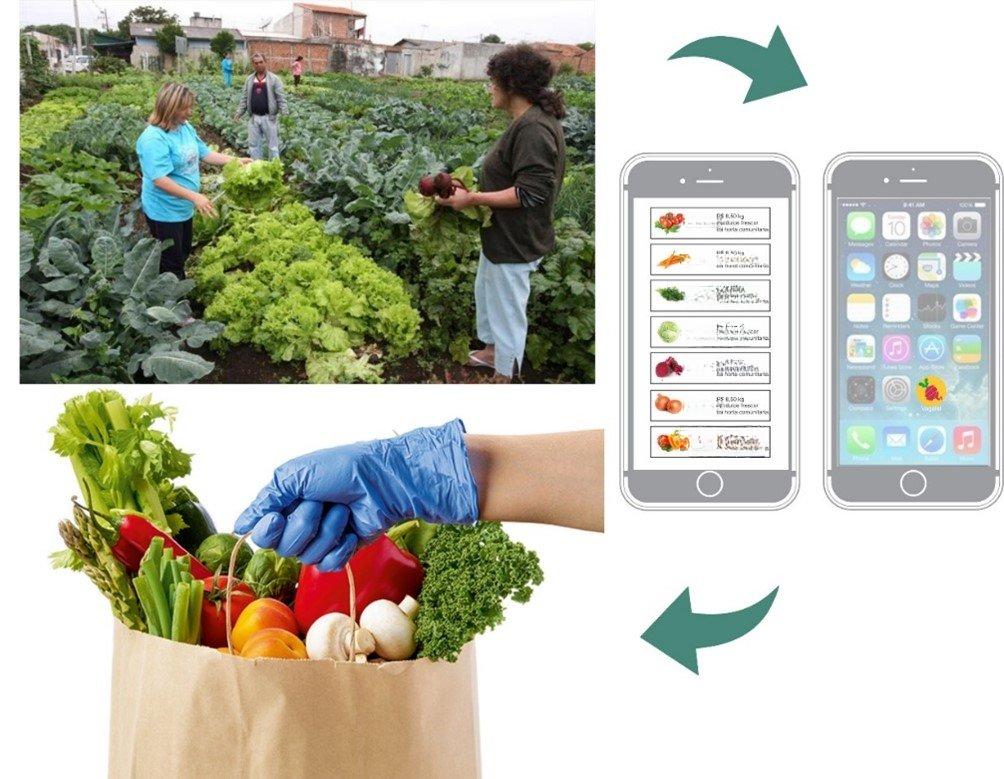
Figure 2. View of the organic agricultural product marketing application
Source: Prepared by the author.
The threat of new entrants should consider the growth of the market segment, according to research by the National Confederation of Retailers (CNDL)[21]. E-commerce, food delivery, and supermarkets are the categories that grew the most during the pandemic. During 2019, food “delivery” represented 30.40% of online sales; after the worsening of the pandemic, it jumped to 54.80% in 2021[21].
The sector’s profitability is significant; online sales reached R$35.2 billion in the first quarter of 2021, according to the National Confederation of Retailers[21]. This represents a growth of 72.2% compared to the same period in 2019. The initial investment to develop the application can vary greatly depending on the complexity, states Sebrae[22]. As this is a case study, this amount will not be addressed in this work, leaving it for future studies. There is a possibility of development through co-participation with higher education institutions[23]. It is necessary, however, to pay attention to municipal legislation compliance by producers before they are registered in the application[18]. It is known that the number of applications installed on smartphones increases every year; between 2018 and 2019, there was a 50% increase in installations and a 250% increase in visits to “apps”[24]. The market is not yet saturated; on the contrary, it is in full ascent. However, competing brands, in addition to already being consolidated and with a well-defined logistics network, have the capacity to provide new services[18].
Analyzing the bargaining power of buyers, it was noted that the business has a great dependence on suppliers, who are, in this case, the rural producers, since the main function of the application will be the intermediation between those who produce and those who consume[18]. It was also perceived that it is not possible to acquire or maintain any type of inventory due to the perishability of the products.
The bargaining power of suppliers is low, sales are fragmented and made directly to the final consumer[18]. Substitute products appeared mainly with the Hort-e application, which proved to be a potential competitor. It aims to bring fruit and vegetable farmers and restaurants closer together. Its focus is to combat food waste, as well as contribute to the modernization of the countryside during the coronavirus crisis.
As competitors, the existence of nine “delivery” applications was found. Among them, the Hort-e application deserves more attention. Currently, the “app” focuses on doing business, creating a bridge between small farmers and restaurants. According to Magretta[18], the migration of the target audience must be taken into consideration.
This work mapped, through a case study, the opportunities and feasibility, through market analyses, for the implementation of a “delivery” application for the sale of vegetables by family farmers. The application would have the characteristics of an online shopping mall (“marketplace”), where the rural producer could sell their products and interact with the consumer.
The mapping carried out through the surveys indicated a satisfactory performance of Brazilian agribusiness amidst the health crisis caused by Covid-19. Furthermore, the participation of family farming reached 30% of what was produced in the analyzed period, demonstrating considerable importance in most horticultural products — with this index reaching 81.2% in some fruit species. Another phenomenon observed was the increase in fruit and vegetable consumption in Brazil, caused by greater awareness regarding the benefits of a healthy diet and concern about illness during the pandemic period. Finally, as future studies, financial viability analysis is suggested.
References
[1] Centro de Estudos Avançados em Economia Aplicada (CEPEA). PIB do agronegócio alcança participação de 26,6% no PIB brasileiro em 2020. Piracicaba (SP), Cepea; 2021. Disponível em: https://cepea.esalq.usp.br/upload/kceditor/files/sut.pib_dez_2020.9mar2021.pdf.
[2] Rosa Neto C.; Correa Silva F.A.; Araújo, L.V. Qual é a participação da agricultura familiar na produção de alimentos no Brasil e em Rondônia? Empresa Brasileira de Pesquisa Agropecuária (Embrapa); 2020. Disponível em: https://www.embrapa.br/busca-de-noticias/-/noticia/55609579/artigo—qual-e-a-participacao-da-agricultura-familiar-na-producao-de-alimentos-no-brasil-e-em-rondonia.
[3] Bernal A.B.B.; Teixeira C.S. Avaliação de compulsão alimentar periódica em universitários. Revista Científica Unilago. 2019; 1(1).
[4] Ciochetto C.R.; Orlandi S.P.; Vieira M.F.A. Consumo de frutas e vegetais em escolares da rede pública no Sul do Brasil. Archivos Latinoamericanos de Nutrición. 2012; 62(2).
[5] Recine E.; Radaelli, P. Alimentação saudável. Ministério da Saúde; 2002. Disponível em: https://bvsms.saude.gov.br/bvs/publicacoes/alimentacao_saudavel.pdf.
[6] Graeub B.E; Chappell M.J.; Wittman H.; Ledermann S.; Kerr R.B.; Gemmill-Herren, B. The State of Family Farms in the Word. World Development. 2016; 87: 1-15. doi: 10.1016/j.worlddev.2015.05.012
[7] Brasil. Instrução normativa 9, de 21 de maio de 2019. Brasília, DF; 2019. Disponível em: https://www.in.gov.br/en/web/dou/-/instrucao-normativa-n-9-de-21-de-maio-de-2019-136230254.
[8] Valente J. Brasil é o 3º país em que pessoas passam mais tempo em aplicativos. 2020. Disponível em: https://agenciabrasil.ebc.com.br/geral/noticia/2020-01/brasil-e-o-3o-pais-em-que-pessoas-passam-mais-tempo-em-aplicativos.
[9] Barbosa A. Brasil já é o 5º país com mais usuários de internet no mundo. 2022. Disponível em: https://forbes.com.br/forbes-tech/2022/10/brasil-ja-e-o-5o-pais-com-mais-usuarios-de-internet-no-mundo/
[10] Sant’ana V.A. E-COMMERCE: Fatores que influenciam a Satisfação em compras on-line na percepção dos graduandos de administração da UFSC [Trabalho de conclusão de curso]. Florianópolis (SC); Universidade Federal de Santa Catarina; 2015. Disponível em: https://repositorio.ufsc.br/bitstream/handle/123456789/166750/TC%20-%20Vanessa%20Sant%C2%B4ana.pdf?sequence=1&isAllowed=y.
[11] Lima, V. 2017. Análise de mercado. Livro Marketing empresarial, livro do aluno, p40, 34.
[12] Porter M.E. Estratégia competitiva : técnicas para análise de indústrias e da concorrência. 2ed. Rio de Janeiro (RJ): Elsevier; 2014.
[13] Brasil, P.H.M. Análise do ambiente externo e interno de uma empresa de confecções do município de Caruaru-PE [Trabalho de Conclusão de Curso]. Caruaru (PE); Universidade Federal de Pernambuco; 2014. Disponível em: https://repositorio.ufpe.br/bitstream/123456789/35455/1/BRASIL%2C%20Paulo%20Henrique%20Meneses.pdf. Acesso em: 01 maio 2022.
[14] Flick, U. Introdução à pesquisa qualitativa. 3ed. Porto Alegre (RS): ArtMed; 2009. E-book.
[15] Gil, A.C. Como fazer pesquisa qualitativa. São Paulo (SP): Atlas; 2021. E-book.
[16] Godoy, A.S. Pesquisa qualitativa: tipos fundamentais. Revista de Administração de Empresas. 1995; 35(3): 20-29.
[17] Gil, A.C. Como elaborar projetos de pesquisa. 7ed. Barueri (SP): Atlas; 2022. E-book.
[18] Magretta, J. Entendendo Michael Porter: o guia essencial da competição e estratégia. Szlak C. (Tradução). Rio de Janeiro (RJ): Alta Books; 2019.
[19] Bento, L.R.P. Avaliação estratégica, econômica e de serviços de um restaurante à la carte [Trabalho de Conclusão de Curso]. São Paulo (SP); Universidade de São Paulo; 2014. Disponível em: https://repositorio.usp.br/directbitstream/c403e9e8-f101-4644-8c6b-79636838e279/LuizRicardoPereiraBento%20TCCPRO14.pdf.
[20] Alvarenga D. Comércio eletrônico: comida por delivery e supermercados são categorias que mais crescem na pandemia. 2021. Disponível em: https://g1.globo.com/economia/noticia/2021/05/26/comercio-eletronico-comida-por-delivery-e-supermercados-sao-categorias-que-mais-crescem-na-pandemia.ghtml.
[21] Confederação Nacional de Dirigentes Lojistas
[22] Serviço Brasileiro de Apoio às Micro e Pequenas Empresas (Sebrae). Conheça 5 ferramentas que permitem criar seu aplicativo do zero. 2023. Disponível em: https://sebrae.com.br/sites/PortalSebrae/artigos/conheca-5-ferramentas-que-permitem-criar-seu-aplicativo-do-zero,5177efe90acf7810VgnVCM1000001b00320aRCRD.
[23] Monteiro C. Laboratório de desenvolvimento de aplicativos é inaugurado na Poli. 2016. Disponível em: http://www.jornaldocampus.usp.br/index.php/2016/05/laboratorio-de-desenvolvimento-de-aplicativos-e-inaugurado-na-poli/.
[24] Digital House. O crescimento do mercado de aplicativos no Brasil. 2020. Disponível em: https://www.digitalhouse.com/br/blog/crescimento-do-mercado-de-aplicativos-brasil.
Como citar
Santos T.P. Aplicativo de delivery para venda de produtos saudáveis produzidos por agricultores familiares. Revista E&S. 2023; 4: e20230021.
Sobre os autores
Taffarel Pereira dos Santos, Bacharel em Administração, Especialista em Gestão de Negócios, Birigui, SP, Brasil.
Link para download: https://cms.revistaes.com.br/wp-content/uploads/2023/06/23021.pdf