
Business Management
Tax Management
January 25, 2023
Corporate and tax reorganization in an automation and monitoring services 4.0 company
DOI: 10.22167/2675-6528-20230004
E&S 2023,4: e20230004
Elker Willians Arruda Campos Savi e Raissa Alvares de Matos Miranda
The world has undergone three major industrial revolutions: the first between 1760 and 1840, with the advent of the steam engine and, consequently, the replacement of human labor; the second between 1870 and 1914, with the emergence of the organized, systematized, and mass production line; and the third, in turn, starting in 1950, also known as the digital age, inaugurating the current computerization process. According to Schawb[1], we are currently living in the fourth revolution, the technological one, in which companies do not survive without a technological structure, connected to highly complex networks, large data storage and processing structures, with the human brain assuming, in many areas, a supporting role, while artificial intelligence takes the leading role in key business processes.
It is a fact that this new discussion will perpetuate, so that, to remain efficient and competitive, companies need to adapt, seeking specialized “players” that provide and maintain the new technologies in operation with constancy and security. On the other hand, however, there are companies that acquire this new technological concept, in which depreciation and technological evolution follow exponential patterns.
Previously, the technological park exchange (composed of equipment and systems – hardware and software – ) occurred at the end of a decade; currently, however, we speak of a three-year useful life for computer equipment, a period during which the manufacturer continues to produce parts and components, in addition to extending the warranty. Taking into account the equation of investment cost, technological project approval time, implementation time, technological evolution, and discontinuity, it is understood that the technology consumer market tends to consume technology as a service and not as a fixed asset.
Technology solution providers have a large portfolio of products and services, not limited to the sale or rental of equipment, due to the need for adaptation of the contractor’s facilities, implementation of infrastructure for subsequent installation and operational continuity. Therefore, the creation of new companies, with the separation of activities and adequate framing of the tax assessment regime, is of utmost importance for both operational performance and tax economy.
On the other hand, the acquirer of new technologies must analyze whether the investment will follow the “Capital Expenditure” (CAPEX) modality, which constitutes investment in capital goods, that is, it will immobilize equipment, absorbing the accelerated risk of evolution and discontinuity, considering the time for approval, implementation, operation, maintenance, depreciation, and technological evolution. The acquirer may also opt to adopt the recent view that technology is a commodity, where the priority is to maintain operations and not own the equipment, an investment called “Operational Expenditure” (OPEX), that is, technology as a service constitutes a growing trend, due to cost flexibility, tax savings, adaptation to market changes, and technological evolution.
Thus, the objective of this work was to demonstrate that, due to the product portfolio of companies offering technological solutions, the creation of new companies with the separation of products, services, and leasing can bring operational advantages and tax savings. It also sought to demonstrate the tax and operational advantages and disadvantages from the perspective of the company acquiring the technologies, through CAPEX purchase or acquisition of technology as a service, OPEX.
The work was developed through bibliographic and documentary research, by analyzing the accounting records of a technology company, framed in the Presumed Profit tax system, and analyzing the national business market and its trends, linked to the professional experience acquired over years of operation in the business market. According to Gil[2], bibliographic research must be elaborated and based on published materials, maintaining the relationship with the researched topic and the target audience to be reached. Regarding documentary research, Gil[2] elucidates that it can be formed by any object that corresponds to some fact or event.
To meet the proposed objective, the following steps were carried out:
- Identification of taxes levied on products and services;
- Identification of the appropriate tax system;
- Business organization through the creation of new companies, allocating convergent products and services among themselves, improving operational efficiency by reducing tax costs, through the framing within the tax system that presents better tax economy;
- Demonstration of tax costs after the creation of new companies;
- Demonstration of the advantages in acquiring technology as a service.
Thus, the work began with the analysis of the numbers and the product portfolio of a company with national operations, which offers Information Technology (IT) Infrastructure with customized solutions, through the sale of products or product as a service with embedded assets, management by “Service Level Agreement” (SLA) and business-related indicators, that is, it offers solutions through the resale of products – CAPEX – or the offering of technology as a service – OPEX.
Considering the dynamics of business operations in compliance with national legislation, the incidence of six taxes was identified: Programa de Integração Social (PIS), Contribuição para o Financiamento da Seguridade Social (COFINS), Imposto de Renda Pessoa Jurídica (IRPJ), Contribuição Social sobre o Lucro Líquido (CSLL), Imposto sobre Serviços (ISS), and Imposto Sobre Circulação de Mercadoria e Serviços (ICMS).
In the Presumed Profit accounting regime, provided for in art. 8 of Law 9.718/1998[3], the PIS and CONFIS rate is 3.0%. In the Real Profit accounting regime, provided for in art. 2 of Law 10.637/2002[4], the rate is 7.6% for PIS and CONFINS. In this case, there is the possibility of PIS being credited from certain acquired products and services, with monthly revenue as the taxable event, meaning the income earned by the legal entity; and the possibility of COFINS being credited from some input operations, with the monthly income earned as the taxable event for these taxes.
The Corporate Tax/ Income Tax On Legal Person has a rate of 15% (art. 225 of Decree 9.580/2018 – IR Regulation – RIR)[5] and an additional rate of 10%, where the taxable event is the acquisition of economic or legal availability of income or earnings of any nature, according to the National Tax Code, provided for by art. 43 of Law 5.172/1966[6]. The CSLL is regulated by art. 2 of Law 7.689/1988[7], with a rate of 9%. The ISS, in turn, is governed by art. 156, III, of the Federal Constitution[8] and by Complementary Law 116/2003[9], with a rate defined by the municipality, varying between 2% and 5%, depending on the municipality. And, finally, the Sales and Services Tax is supported by art. 52 of Decree 45.490/2000[10], with a rate of 18% for the state of São Paulo, and may be subject to change depending on the product and also on the state.
At the time of the study, the company under analysis was in the Presumed Profit tax system, with operations involving sales, service provision, and leasing of complete IT infrastructure, which converge with each other, forming an ecosystem, without a commercial starting point.
The sale of technology can start with the sale of technical consulting and simply end, or it can maintain the commercial cycle through the sale of products, as well as their installation, configuration, and subsequent technical assistance. However, the dynamic can begin with any of the products presented in the commercial and operational cycle (Figure 1).
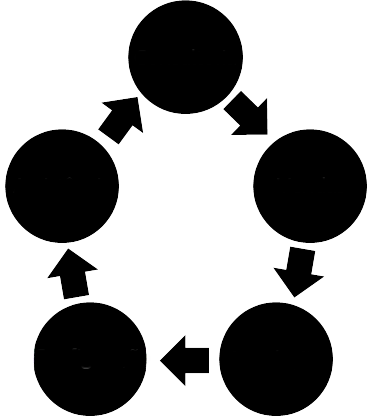
Figure 1. Operational and sales cycle of the studied company
Source: Prepared by the author
From a macro perspective, the products, services, and leases offered by the company are classified in its product portfolio as follows: IT, “Datacenter”, Human Resources, Energy, Outsourcing, Communication, and Security. Revenues, in turn, are presented on the balance sheet with the nomenclatures Sales of Goods, Services Rendered, Equipment Leasing, Rentals, and Leases.
To understand the need to study the best tax structure for the researched company, it is necessary to examine its financial statements. Table 1 reproduces the presentation of the company’s revenue accounts, according to the Statement of Income (DRE) for 2021.
Table 1. Statement of revenues and expenses of the studied company, based on the Income Statement (of the Year) of 2021
| Parameters | Values |
| BRL | |
| Operating Revenue | 24.639.139,92 |
| Sales of Goods | 1.891.266,54 |
| Services Rendered | 6.696.242,21 |
| Equipment Rental | 7.969.573,00 |
| Rents and Leases | 8.082.058,17 |
| Cost of Goods Sold/Purchases | 1.360.010,27 |
| Administrative Expenses | 15.247.736,12 |
| Salaries | 1.047.227,00 |
| Energy/Rent/Freight | 446.617,49 |
| Depreciation | 1.263.763,50 |
| Other expenses | 12.490.128,14 |
Source: Elaborated by the author
Table 2, below, shows the simplified simulation of the company’s taxation, based on the P&L data for the fiscal year 2021 (Table 1), both under Presumed Profit, the company’s current tax system, and Actual profit, a simulation for decision-making.
Table 2. Simplified simulation of the company’s taxation in fiscal year 2021
| Taxes | Presumed Profit | Actual profit | ||
| Tax rate | Value | Tax rate | Value | |
| % | BRL | % | BRL | |
| Social Integration Program (PIS) | 0,65 | 160.154,37 | 1,65 | 355.884,41 |
| Contribution to the Financing of Social Security (COFINS) | 3,00 | 739.174,14 | 7,60 | 1.639.224,71 |
| Corporate Income Tax (IRPJ) | 15,00 | 1.848.529,66 | 15,00 | 1.271.190,87 |
| Social Contribution on Net Income (CSLL) | 9,00 | 675.564,26 | 9,00 | 460.914,07 |
| Service Tax (ISS) | 2,00 | 454.957,41 | – | 454.957,41 |
| Tax on Circulation of Goods and Services (ICMS) | 18,00 | 95.626,24 | – | 95.626,24 |
| National Institute of Social Insurance (INSS) Patronal | 20,00 | 209.445,25 | 20,00 | 209.445,25 |
| INSS Third Parties | 5,80 | 60.739,16 | 5,80 | 60.739,16 |
| INSS RAT | 1,00 | 10.472,24 | – | 10.472,24 |
| Length-of-Service Guarantee Fund (FGTS) | 8,00 | 83.778,33 | 8,00 | 83.778,33 |
| Total Taxes | 4.338.441,06 | 4.642.232,70 | ||
Source: Elaborated by the author
The tax system currently used by the company, Presumed Profit, generates tax savings compared to the Actual profit calculation regime. However, considering that only 7.68% of its revenue comes from sales, the creation of new companies with the separation of products, services, and rentals can bring operational advantages, in addition to tax savings. In this sense, the creation of two new companies will be simulated, so that the company studied will be a business “Holding”, and the two new ones will be, respectively, an infrastructure and services company (Company 1) and “outsourcing” with a service layer (Company 2), given that the contribution and profit margins are distinct. Thus, the creation of the company under the Actual profit tax calculation method, with the incorporation of products with lower contribution and profit margins, may present better performance and tax savings, leaving products with better contribution margins and profitability in the company with Presumed Profit tax calculation, based on the division shown in Figure 2.

Figure 2. New business composition after study application
Source: Elaborated by the author
Following the new business structure, in the separation of operations, revenues and expenses will be obtained, as shown in Table 3.
Table 3. Separation of operations, their revenues and expenses by company, product and service contribution margin and profitability
| Parameters | Company 1 | Company 2 |
| _____________BRL_____________ | ||
| Operating Revenue | 8.587.508,75 | 16.051.631,18 |
| Sales of Goods | 1.891.266,54 | – |
| Services Rendered | 6.696.242,21 | 0,00 |
| Equipment Rental | – | 7.969.573,00 |
| Rents and Leases | – | 8.082.058,17 |
| Cost of Goods Sold/Purchases | 1.360.010,27 | – |
| Administrative Expenses | 8.426.305,32 | 6.821.430,80 |
| Salaries | 733.058,94 | 314.168,06 |
| Energy/Rent/Freight | 246.514,45 | 200.103,04 |
| Depreciation | 189.014,83 | 1.074.748,67 |
| Other expenses | 7.257.717,11 | 5.232.411,03 |
Source: Elaborated by the author
According to Crepaldi[11], a holding company is a company created with the sole purpose of controlling other agents. In this regard, the division of operations distributed across two operational companies (Company 1 and Company 2) controlled by a business holding company will be presented, following operational criteria and synergy between the products and services in its portfolio.
That said, Company 1 focuses on the activities of construction and adaptation of the necessary infrastructure for subsequent leasing of technology products, along with a service layer (“Outsourcing”), offered by Company 2.
The English term “outsourcing” means terceirização and is used, specifically, when private or governmental organizations transfer their supporting activity (not directly related to the business objective) for better utilization of their main activity, “Core Business”. In this discussion, the leasing of products with a layer of services, for maintenance, operation, and monitoring of the client’s core activities, is represented by the business denomination “outsourcing”.
In this sense, the adequacy of the infrastructure (Company 1) for carrying out “outsourcing” showed little profitability and constant disbursements, with possible tax viability through the change of the tax system to “Lucro Real”. On the other hand, the “outsourcing” operation itself presented superior profitability, given the excellent profitability generated by the service layer over time, with tax viability under the “Lucro Presumido” regime (Table 4).
Company 2, whose main business (“Core Business”) involves outsourcing with a service layer, presents a high profit margin, evidencing that, with its activities framed under the Presumed Profit tax regime, it will have tax savings compared to the Actual profit tax regime (Table 5).
Table 6 shows the consolidation of values paid as taxes in Company 1, with the main business (“Core Business”) focused on infrastructure and presenting a low profit margin, and in Company 2, with the main business (“Core Business”) focused on the “outsourcing” activity with a service layer, presenting a high profit margin.
Table 4. Study of Company 1’s Taxation under the Presumed Profit and Actual Profit tax systems
| Taxes | Presumed Profit | Actual profit | ||
| Tax rate | Value | Tax rate | Value | |
| % | BRL | BRL | % | |
| Social Integration Program [PIS] | 0,65 | 55.818,63 | 1,65 | 112.067,68 |
| Contribution to the Financing of Social Security (COFINS) | 3,00 | 257.625,10 | 7,60 | 516.189,73 |
| Corporate Income Tax (IRPJ) | 15,00 | 564.399,24 | 15,00 | -346.757,79 |
| Social Contribution on Net Income (CSLL) | 9,00 | 213.277,57 | 9,00 | -208.054,75 |
| Tax on Industrialized Products | 10,00 | – | 10,00 | – |
| Service Tax (ISS) | 2,00 | 133.924,71 | – | 133.924,71 |
| Tax on Circulation of Goods and Services (ICMS) | 18,00 | 95.626,24 | – | 95.626,24 |
| Simples Nacional | – | – | – | – |
| National Institute of Social Insurance (INSS) | 20,00 | 146.611,79 | 20,00 | 146.611,79 |
| INSS Third Parties | 5,80 | 42.517,49 | 5,80 | 42.517,49 |
| INSS RAT | 1,00 | 7.330,42 | – | 7.330,42 |
| Length-of-Service Guarantee Fund (FGTS) | 8,00 | 58.644,87 | 8,00 | 58.644,87 |
| Length-of-Service Guarantee Fund (FGTS) | 1.575.776,05 | 558.100,38 | ||
Source: Elaborated by the author
Table 5. Study of Company 2’s Taxation under the Presumed Profit and Actual Profit tax systems
| Taxes | Presumed Profit | Actual profit | ||
| Tax rate | Value | Tax rate | Value | |
| % | BRL | % | BRL | |
| Social Integration Program (PIS) | 0,65 | 104.335,74 | 1,65 | 243.816,73 |
| Contribution to the Financing of Social Security (COFINS) | 3,00 | 481.549,05 | 7,60 | 1.123.035,36 |
| Corporate Income Tax (IRPJ) | 15,00 | 1.275.004,94 | 15,00 | 1.849.120,91 |
| Social Contribution on Net Income (CSLL) | 9,00 | 462.287,07 | 9,00 | 668.969,82 |
| Tax on Industrialized Products | 10,00 | – | 10,00 | – |
| Service Tax (ISS) | 2,00 | 321.032,70 | 321.032,70 | |
| Tax on Circulation of Goods and Services (ICMS) | 18,00 | – | – | – |
| Simples Nacional | ||||
| National Institute of Social Insurance (INSS) Patronal | 20,00 | 62.833,46 | 20,00 | 62.833,46 |
| INSS Third Parties | 5,80 | 18.221,67 | 5,80 | 18.221,67 |
| INSS RAT | 1,00 | 3.141,83 | – | 3.141,83 |
| Length-of-Service Guarantee Fund (FGTS) | 8,00 | 25.133,46 | 8,00 | 25.133,46 |
| Total Taxes | 2.753.539,92 | 4.315.304,94 | ||
Source: Elaborated by the author
Table 6. Optimal tax calculation regime for Companies 1 and 2
| Taxes | Company 1 | Company 2 | Total (1+2) | |||
| Actual profit | Presumed Profit | |||||
| Tax rate | Value | Tax rate | Value | |||
| % | BRL | % | BRL | BRL | ||
| Social Integration Program (PIS) | 1,65 | 112.067,88 | 0,65 | 104.335,74 | 216.403,42 | |
| Contribution for the Financing of Social Security (COFINS) | 7,60 | 516.189,73 | 3,00 | 481.549,05 | 997.738,78 | |
| Corporate Income Tax (IRPJ) | 15,00 | -346.757,79 | 15,00 | 1.275.004,94 | 929.247,15 | |
| Social Contribution on Net Income | 9,00 | -208.054,75 | 9,00 | 462.287,07 | 254.232,32 | |
| Tax on Industrialized Products | 10,00 | – | 10,00 | – | – | |
| Tax on Services (ISS) | – | 133.924,71 | 2,00 | 844.316,00 | 454.957,41 | |
| Tax on Circulation of Goods and Services (ICMS) | – | 95.626,24 | 18,00 | – | 95.626,24 | |
| Simples Nacional | – | |||||
| National Institute of Social Insurance (INSS) | 20,00 | 146.611,79 | 20,00 | 62.833,46 | 209.445,25 | |
| (INSS) Employer Contribution | ||||||
| INSS Third Parties | 5,80 | 42.517,49 | 5,80 | 18.221,67 | 60.739,15 | |
| INSS RAT | 7.330,42 | 1,00 | 3.141,83 | 10.472,24 | ||
| Length-of-Service Guarantee Fund (FGTS) | 8,00 | 58.644,87 | 8,00 | 25.133,46 | 83.778,33 | |
| Total Taxes | 558.100,38 | 2.753.539,92 | 3.311.640,30 | |||
Source: Elaborated by the author
The comparison and consolidation of taxes paid by Companies 1 and 2, presented in Table 6, show that the separation of the activities of the studied company, which paid R$ 4,338,441.06 to the tax authorities, as taxes under the Presumed Profit tax system, into two companies – Company 1 with the Actual profit tax system and a disbursement of R$ 558,100.38 in taxes; Company 2 with the Presumed Profit tax system and a tax disbursement of R$ 2,753,539.92 – will provide the conglomerate with an annual tax saving of R$ 1,026,800.76.
Following the market trend of consuming technology as a service, in the outsourcing and OPEX concept, or acquiring technology in the concept of capitalization on assets, CAPEX, the technology consumer must understand the tax costs involved in the operation, as presented in Table 1.
Table 1 demonstrates the advantages and disadvantages in technology acquisition under CAPEX and OPEX modalities, with the acquirer solely responsible for analyzing the best regime to be contracted, considering the particularities that may involve the operation, such as investment availability, costs involved, company cash flow, and business strategy, which makes a generalized analysis by sector or economic segment impossible.
Table 1. Comparison of technology procurement in Capital Expenditure (CAPEX) and Operational Expenditure (OPEX) modalities
| Type of operation | Capital Expenditures | Operating Expenses |
| Acronym | CAPEX | OPEX |
| Launch | Capital expenditures. | Operating expenses. |
| Examples | Purchase of movable and real estate assets. | Hiring of mobile and real estate asset as a service. |
| Financial disbursement | At the time of purchase. | Monthly or annually, depending on the case. |
| Tax discount | From the depreciation of fixed assets. | Operating costs can be deducted from the tax amount. |
| Advantages | Are understood as investments, increase in cash flow from assets, long-term return, greater predictability. | Deduction in the current year’s taxation, ease of approval of expenses, greater flexibilization of costs, without the need for decapitalization, adaptation to market changes. |
| Disadvantages | Depreciation of acquired assets, difficulty in approving expenses, high short term costs. | Are understood as expenses and not as investments, possibilities of high long-term cost , greater inconsistency. |
Source: Elaborated by the author
The audited results show that the company under analysis should pay attention not only to the best tax system for its tax calculation, but also to the understanding of the tax costs involved in its operations, the dynamics and synergy between the products and services offered to the market, in addition to its corporate structure, considering that maintaining its operations within a single company results in unnecessary tax costs, as well as operational inefficiency. On the other hand, the acquisition of technology as a service in the outsourcing concept – “Operational Expenditure” (OPEX) – or technology as an asset immobilization concept – “Capital Expenditure” (CAPEX) – leads the client/consumer, before making a decision, to a thorough study of their operation, as well as their willingness to take risks and make investments, the costs involved, the companies’ cash flow, and the business strategy.
References
[1] Schwab K. A Quarta Revolução Industrial. 1ed. São Paulo: Edipro; 2018.
[2] Gil A.C. Como elaborar projetos de pesquisa. 6ed. São Paulo: Atlas; 2018..
[3] Brasil. Presidência da República. Lei nº 9.718, de 27 de novembro de 1998. Altera a Legislação Tributária Federal. Brasília, DF; 1998.
[4] Brasil. Presidência da República. Lei nº 10.637, de 30 de dezembro de 2002. Dispõe sobre a não-cumulatividade na cobrança da contribuição para os Programas de Integração Social (PIS) e de Formação do Patrimônio do Servidor Público (Pasep), nos casos que especifica; sobre o pagamento e o parcelamento de débitos tributários federais, a compensação de créditos fiscais, a declaração de inaptidão de inscrição de pessoas jurídicas, a legislação aduaneira, e dá outras providências. Brasília, DF; 2002.
[5] Brasil. Presidência da República. Decreto nº 9.580, de 22 de novembro de 2018. Regulamenta a tributação, a fiscalização, a arrecadação e a administração do imposto sobre a Renda e Proventos de Qualquer Natureza. Diário Oficial da União. 2018 nov. 23.
[6] Brasil. Presidência da República. Lei nº 5.172, de 25 de outubro de 1966. Dispõe sobre o Sistema Tributário Nacional e institui normas gerais de direito tributário aplicáveis à União, Estados e Municípios. Brasília, DF; 1966.
[7] Brasil. Presidência da República. Lei nº 7.689, de 15 de dezembro de 1988. Institui contribuição social sobre o lucro das pessoas jurídicas e dá outras providências. Brasília, DF; 1988.
[8] Brasil. Presidência da República. Constituição da República Federativa do Brasil. Brasília: Senado Federal; 1988.
[9] Brasil. Presidência da República. Lei Complementar nº 116, de 31 de julho de 2003.
Dispõe sobre o Imposto Sobre Serviços de Qualquer Natureza, de competência dos Municípios e do Distrito Federal, e dá outras providências. Brasília, DF; 2003.
[10] São Paulo. Assembleia Legislativa do estado de São Paulo. Decreto 45.490, de 30 de novembro de 2000. Aprova o Regulamento do Imposto sobre Operações Relativas à Circulação de Mercadorias e sobre Prestações de Serviços de Transporte Interestadual e Intermunicipal e Comunicação – RICMS. Diário Oficial. 2000 dez. 01.
[11] Crepaldi S. Planejamento Tributário. 3ed. São Paulo: Saraiva Educação; 2019.
Como citar
Savi E.W.A.C.; Miranda R.A.M. Reorganização societária e tributária em empresa de automação e monitoramento de serviços 4.0. Revista E&S. 2023; 4: e20230004.
Sobre os autores
Elker Willians Arruda Campos Savi, Administrador, Especialista em Gestão Tributária, São Paulo, SP, Brasil
Raissa Alvares de Matos Miranda, Doutora em Administração de Organizações, Professora de Ensino Superior, Ribeirao Preto, SP, Brasil.
Link para download: https://cms.revistaes.com.br/wp-content/uploads/2023/01/ES_23005.pdf