
Esg
April 07, 2025
Application of the ABNT PR 2030 standard in the diagnosis of ESG requirements on a rural property
DOI: 10.22167/2675-6528-2024055
E&S 2025, 6: e2024055
Rodrigo Fernando dos Santos Salazar e Matheus Luís Docema
The integration of ESG (environmental, social, and governance) practices in agribusiness has become essential to promote sustainability and competitiveness. In Brazil, the ABNT PR 2030 standard offers guidelines aligned with the UN’s Sustainable Development Goals, allowing for the diagnosis and structuring of these practices in different sectors[1,2].
This work investigated how the adoption of ESG criteria can leverage sustainability in challenging scenarios. In this regard, the objective of this study was to apply the ABNT PR 2030 standard to a family rural property, undergoing succession, to diagnose ESG practices and evaluate their impacts to improve management, assess risks, and ensure business continuity. For this purpose, an exploratory case study was conducted using data from the property located in a municipality in the interior of Rio Grande do Sul. The 60-hectare area was dedicated to a combination of agricultural and livestock activities with the processing of dairy derivatives and yerba mate.
The data were collected from accounting records and crop yields of soybeans, corn, and wheat in the years 2021/22 and 2023/24. The ABNT PR 2030 standard was applied to evaluate 42 criteria distributed across three axes: environmental (E), social (S), and governance (G) (ABNT, 2022). Additionally, the methodology of Matsunaga et al.[3] was used to calculate production costs, including effective operational costs (COE), total costs (COT), and total production costs (CT). The methodology adopts the concept of global production cost, including fixed and variable costs. It uses the IEA operational cost, considering disbursed expenses, depreciation, and family labor, while other factors are absorbed by the “residue”, facilitating productive decisions in inflationary scenarios[3].
ESG Diagnosis: environmental axisAdvances in the environmental axis included the implementation of composting systems and biodigesters for waste management, in addition to improvements in soil conservation and energy efficiency with the installation of photovoltaic panels. The compliance percentages in the environmental axis between the predecessor’s and successor’s management, which had an average attendance of the axis’s themes, were 43.5% and 68.7%, respectively (Figure 1).
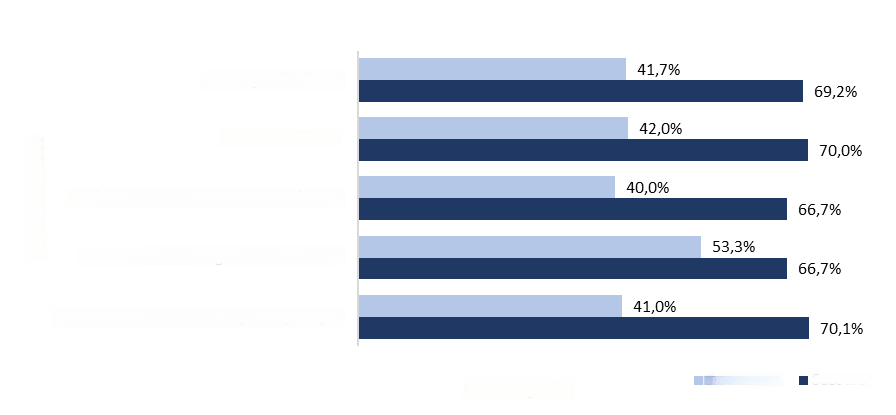
Source: Original research results.
Crop rotation practices and the adoption of seeds adapted to regional climatic conditions have demonstrated positive impacts on productivity. Table 1 summarizes the implemented and planned actions in the environmental axis, which include the list of implemented and planned actions based on ESG environmental criteria between the two administrations.
Tabela 1. Relação de ações implementadas e ações planejadas com base nos critérios ambientais ESG pelo atual gestor da propriedade (sucessor)
| ESG Criteria (Environmental) | Actions implemented on the rural property | Short and medium-term planned actions |
| 1. Mitigation in greenhouse gas emissions | 1.1) No-Till System (NTS); 1.2) Biological Nitrogen Fixation (BNF); 1.3) Crop rotation; 1.4) Manure spreader for sheep and poultry waste; 1.5) Composting piles for solid biomass; 1.6) Technical feasibility study and implementation of the Integrated Livestock and Forest System (ILFS). | 1.a) Installation of a biodigester for livestock production waste (poultry and sheep); 1.b) Spring recovery; 1.c) Creation of legal reserves associated with springs and native seedlings (Atlantic Forest biome). |
| 2. Adaptation to climate change | 2.1) Use of genetically improved seeds and hybrid seeds of corn, canola, soybeans, and wheat; | 2.a) Use of greenhouses for the production of horticultural products (planting under controlled conditions); 2.b) Participation in the Rio Grande do Sul State Program for Payment for Environmental Services (PSA). |
| 3. Energy efficiency | 3.1) Installation of 48 photovoltaic panels with a capacity to generate 14 kW day⁻¹; 3.2) Approval for the expansion of the photovoltaic plant to install up to 150 solar panels. | 3.a) Technical feasibility study for the installation of biodigester systems; 3.b) Participate in an association to sell energy credits in the free energy market; 3.c) Meet requirements to participate in the PSA. |
| 4. Water use | 4.1) Reservoir with 500 m2 of water surface and average capacity of 750 m3; 4.2) Reservoir with 1.4 ha of water surface and average capacity of 25,200 m3; 4.3) Adaptation of 3 artesian wells for the administrative headquarters and functional houses; 4.4) Soil and subsoil mapping of the property with detection of eight spring points. | 4.a) Spring restoration and legal reserve; 4.b) Meet requirements to participate in the PSA; 4.c) Increase water reservation capacity; 4.d) Technical and economic feasibility study for the installation of a small hydroelectric power plant (SHPP) 4.e) Technical and economic feasibility study to implement irrigation systems. |
| 5. Conservation and sustainable use of biodiversity | 5.1) Provisioning services (food and water); 5.2) Regulating services (apiaries with native bee species from the region); 5.3) Use of inoculants for beans and soybeans; 5.4) Cultural services: preservation of colonial (Polish) characteristics of the administrative headquarters; 5.5) Cultural services: planting of citrus and pecan fruit tree seedlings; 5.6) Update of the Rural Environmental Registry (CAR) with georeferencing. | 5.a) Technical and economic feasibility study for the use of bioinputs (on-farm) adapted to the local microbiota; 5.b) Recovery of springs and legal reserve; 5.c) Meet requirements to participate in PSA; 5.d) Investment in afforestation and landscaping of the administrative area; 5.e) Certification via the Land Management System (SIGEF/INCRA). |
| 6- Sustainable land use | 6.1) SPD for canola, corn, soybean, and wheat crops; 6.2) Biological Nitrogen Fixation (BNF); 6.3) Precision Agriculture (PA) for rational fertilizer use; 6.4) PA for pest management and pesticide use; 6.5) PA for planning and recording crop rotation by plot; 6.6) Economic and technical feasibility study for the implementation of an Integrated Livestock and Forest System (ILFS) – (Yerba mate and cut sheep farming); 6.7) CAR update with georeferencing. | 6.a) Soil profile recovery (organic matter + increased straw mulch + cover crops); 6.b) Technically and economically enable the use of bioinputs (nutrition + cover); 6.c) Technical and economic feasibility study for the use of bioinputs (on-farm) adapted to local microbiota; 6.d) Recovery of springs and legal reserves; 6.e) Certification via Land Management System (SIGEF/INCRA). |
| 7. Circular economy | 7.1) Reuse of horticultural products unsuitable for human consumption for animal feed; 7.2) Vermicomposting; 7.3) Use of agricultural waste and crop residues for soil cover; 7.4) Disposal of metallic solid waste (MSW) and electronic equipment waste (WEEE) for sale as scrap; 7.5) Reuse of construction and demolition waste (CDW) from local carpentry shops to obtain wood chips and shavings for use as bedding (animal welfare) in sheep farming. | 7.a) Meet requirements to participate in the PSA; 7.b) Invest in biodigester pits for agricultural waste and biomass. |
| 8. Waste management | 8.1) Deposit of WEEE and WEEE for sale as scrap; 8.2) Reverse logistics with the Agricultural Cooperative for the return of pesticide packaging, herbicides, batteries, and veterinary medicines; 8.3) Septic tanks in functional houses and the administrative headquarters for the anaerobic treatment of organic waste; 8.4) Yard for solid waste treatment by Vermicomposting; 8.5) Reuse of C&DW from local carpentry shops to obtain chips and shavings for use as bedding (animal welfare) in sheep farming. | 8.a) Meet requirements to participate in the PSA; 8.b) Invest in biodigester pits for semi-solid agricultural waste and biomass in the agricultural condominium involving the headquarters; 8.c) Generate revenue from co-products (solid organic fertilizers + liquid organic fertilizers and biogas); 8.d) Add value to agricultural waste and livestock waste; 8.e) Investment in temporary storage for the disposal of used PPE and controlled solid waste (agrochemical packaging + veterinary medicines); 8.f) Update the Solid Waste Management Plan (PGRS); 8.g) Investment in storage for controlled products. |
| 9. Noise pollution prevention | 9.1) Technical feasibility study and implementation of SIPF with yerba mate and beef cattle farming; 9.2) Culture services: planting of “cambona” yerba mate and “pecan” nut trees. | 9.a) Meet requirements to participate in the PSA; 9.b) Investment in afforestation and landscaping in the administrative part of the headquarters; 9.c) Investment in a mini weather station; 9.d) Revenue from yerba mate. |
| 10. Air Quality | 10.1) Proper disposal of solid waste; 10.2) Temporary storage for solid waste. | 10.a) Investment in temporary storage for disposal of used PPE and controlled solid waste (agro-chemical and veterinary medicine packaging); 10.b) Investment in storage for controlled products; 10.c) Comply with requirements to participate in the PSA; 10.d) Investment in afforestation and landscaping in the administrative part of the headquarters; 10.e) Investment in a meteorological station. |
| 11. Management of contaminated areas | 11.1) Employee training for handling chemical, physical, and biological risk agents; 11.2) Use and archiving of safety data sheets (SDS) for chemical products; 11.3) PPE and EPCs available in the agricultural condominium surroundings; 11.4) Permanent training of producers and employees in Regulatory Standards (NR-23 and NR-31); 11.5) No-till planting system (NTP); 11.6) Biological nitrogen fixation (BNF); 11.7) Crop rotation. | 11.a) Implement Environmental Management System (EMS); 11.b) Implement the management system based on PDCA (ISO 14.000); 11.c) Meet requirements to participate in the PSA; 11.d) Update the PGRS; 11.e) Certification via the Land Management System (SIGEF/INCRA). |
ESG Diagnosis: social axis
Advances in the social axis were driven by investments in training and improved working conditions. Greater engagement with the local community was observed, with initiatives such as donations to cultural projects. The compliance percentages in the social axis between the predecessor’s and successor’s management, which had an average attendance of the axis’s themes, were 46.1% and 65.8%, respectively (Figure 2).
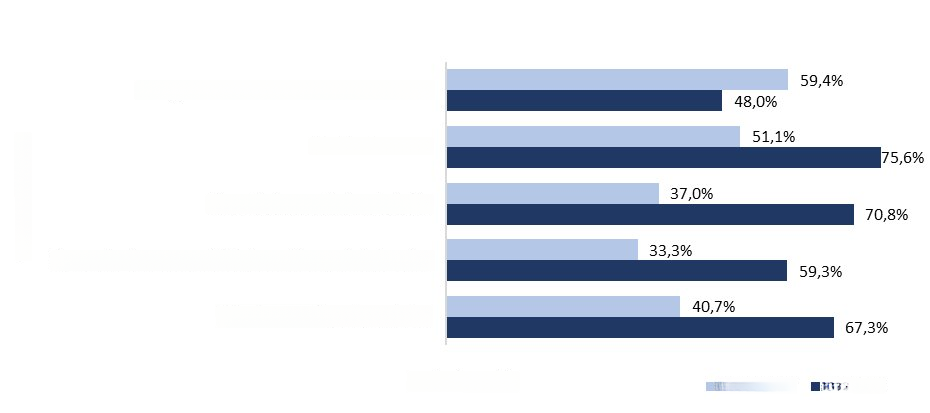
Source: Original survey results.
The planned actions included the promotion of internships and apprenticeship programs. Next, in Table 2, the implemented actions and planned actions based on ESG social criteria by managers are presented.
Tabela 2. Relação de ações implementadas e ações planejadas com base nos critérios sociais ESG pelo atual gestor da propriedade (sucessor)
| ESG Criteria (Social) | Actions implemented on the rural property | Short and medium-term planned actions |
| 1. Private Social Investment (PSI) | 1.1) in implemented actions | 1.a) Financial support for the maintenance of the community chapel |
| 2. Stakeholder dialogue and engagement | 2.1) No actions implemented | 2.a) Donate to actions of the Polish culture group Braspol from Áurea/RS |
| 3. Social impact | 3.1) Secondment of employees to assist rural residents in situations of social vulnerability; 3.2) Provision of equipment and implements to assist rural residents in situations of social vulnerability | 3.b) Assist in the implementation of sanitary practices (water use and sewage disposal) |
| 4. Respect for human rights | 4.1) Maintenance of respect for freedom of expression, worship, and existing free manifestation | 4.a) Formalize guiding activities and workshops with formal registration |
| 5. Combating forced or compulsory labor | 5.1) Do not hire candidates who do not meet the minimum legal requirements in force 5.2) Accounting and occupational safety and health consulting | 5.b) Enable the activity of technical and academic internships 5.c) Establish guidelines that enable the participation of young apprentices on the property |
| 6. Combating child labor | 6.1) Do not hire candidates who do not meet the minimum legal requirements in force 6.2) Accounting and occupational safety and health consulting | 6.a) Enable the activity of technical and academic internships 6.b) Establish guidelines that enable the participation of young apprentices on the property |
| 7. Diversity Policies and Practices | 7.1) Base hiring on competencies, regardless of social issues | 7.a) Formalize guiding activities and workshops with formal registration |
| 8. Culture and promotion of inclusion | 8.1) We give preference to acquiring goods and services offered locally | 8.a) Continuing education for community members interested in working on rural properties |
| 9. Professional development | 9.1) In-company course offerings in company in partnership with SENAR-RS, Rural Union and Embrapa | 9.a) Promote workshops and lectures with diverse themes |
| 10. Occupational health and safety | 10.1) Continuous training and retraining offered | 10.a) Promote workshops and lectures with diversified themes |
| 11. Freedom of association | 11.1) The free association of the functional framework is permitted | 11.a) Cherish employees’ free will to exercise the right of free association |
| 12. Compensation and Benefits Policy | 12.1) Compensation according to average activity value and seniority 12.2) Internal recycling and training program | 12.a) Formalize profit-sharing program |
| 13. Relationship with consumers and clients | 13.1) Use of app to receive feedback on horticultural products and fertilizers sold | 13.a) Seek environmental (ISO) and origin (Produto Gaúcho) certifications |
| 14. Supplier relationships | 14.1) Formal and registered communication with grain cooperative and veterinary medicine distributor in the region | 14.a) Analyze the compliance with environmental and labor regulations in a more practical way |
ESG Diagnosis: governance axis
The succession brought governance challenges, especially in the separation between personal capital and business cash flow. The successor implemented mechanisms to improve transparency, such as internal audits and clear partnership agreements. The compliance percentages on the environmental axis between the predecessor’s and successor’s management, which had the average attendance to the axis’s themes, were 52.3% and 51.7%, respectively (Figure 3).

Source: Original survey results.
Although maturity showed a slight decrease at the beginning of the succession, recent measures aimed to advance towards a more robust management model.
Profitability and economic sustainability
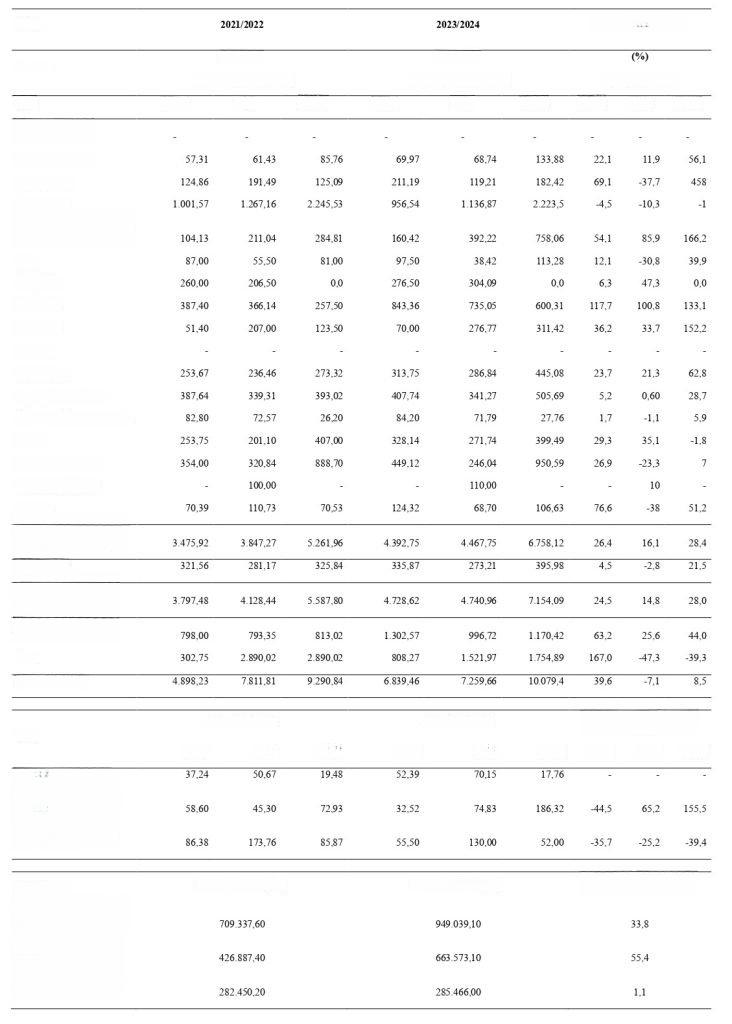
Despite climatic challenges and variations in commodity prices, ESG-focused management contributed to an increase in profitability. Table 3 presents production costs and the evolution of productivity between the 2021/22 and 2023/24 harvests.
Tabela 3. Custos de produção e rentabilidade da propriedade ao longo do período em que se aplicou os requisitos ESG na gestão administrativa da propriedade
Maturity level of management
The diagnosis indicated that the predecessor operated at an “Unintegrated” level, with 46.6% compliance. Under the new management, the maturity level advanced to “Managed”, with 62.9%, as can be observed in Figure 4.
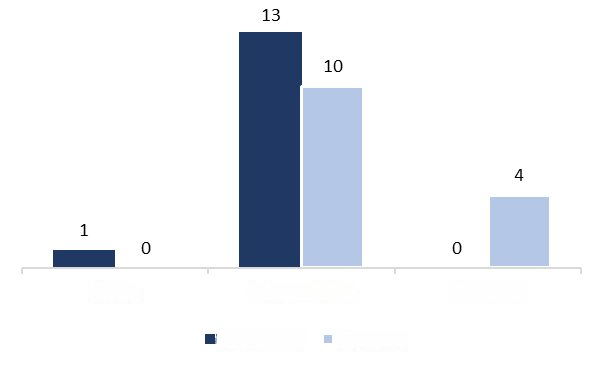
Source: Original research results.
Reaching the “Strategic” level requires greater integration between ESG practices and strategic planning, as well as systematic disclosure of results. Additionally, to continue advancing in the management of the assessed property, the following actions are recommended: implementation of sustainability reports based on international standards (GRI or SASB); promotion of training that integrates collaborators and local communities into the ESG agenda; investments in technologies for mitigating environmental impacts and improving operational efficiency; and, finally, adoption of best practice certifications that promote visibility and recognition in the sector.
The application of the ABNT PR 2030 standard[4] proved to be an effective tool for integrating ESG practices into rural management, promoting economic sustainability and advancement in the degree of maturity. The results highlight the importance of continuous diagnostics and leadership involvement in promoting change.
References
[1] Joshi, P.; Chakraborty, A.; Sandhu, H.S. 2023. Measuring ESG impacts: A new framework for agribusiness. Conference: 36th Annual Australian and New Zealand Academy of Management (ANZAM). Wellington, New Zealand.
[2] Dathe, T.; Helmold, M.; Dathe, R.; Dathe, I. 2024. ESG in Risk Management. In: Implementing Environmental, Social and Governance (ESG) Principles for Sustainable Businesses. Springer International Publishing. DOI: 10.1007/978-3-031-52734-0_10.
[3] Matsunaga, M.; Bemelmans, P.F.; Toledo, P.E.N.; Dulley, R.D.; Okawa, H.; Pedroso, I.A. 1976. Metodologia de custo de produção utilizada pelo IEA. Agricultura em São Paulo. Disponível em: http://www.iea.sp.gov.br/out/verTexto.php?codTexto=11566. Acesso em: 10 fev. 2025.
[4] Brazilian Association of Technical Standards [ABNT]. 2022. ABNT PR 2030: Environmental, Social and Governance (ESG) – Concepts, guidelines and evaluation and direction model for organizations.
How to cite
Salazar R.F.S.; Docema M.L. Application of ABNT PR 2030 in the diagnosis of rural ESG requirements. E&S Journal. 2025; 6: e20240055.
About the authors
 Rodrigo Fernando dos Santos Salazar. Doctor in Chemistry. Salazar Engineering, Management and Technical Expertise Ltd. Rodovia ERS47, Km 25, 1300, Seção Castilho, Zona Rural, 99835-000, Áurea, Rio Grande do Sul, BrazilMatheus Luís Docema. Doctor in Plant Science. Supervising professor. Rua Cezira Giovanoni Moretti, 580, Santa Rosa, 13414-157, Piracicaba, São Paulo, Brazil