
Tax Management
Bidding
Micro And Small Enterprises
Planning
...
February 21, 2024
Tax planning for microenterprises included in the Simples Nacional participating in bidding processes
DOI: 10.22167/2675-6528-20230071
E&S 2024, 5: e20230071
Rosimeiry Cordeiro da Cruz; Eliza Remédio Alecrim
Brazilian micro and small enterprises (MSEs) represent about 27% of the country’s GDP according to the Brazilian Micro and Small Business Support Service (Sebrae)[1], which is why they are considered fundamental to the economy. In January 2021, these companies generated almost double the number of jobs from the previous year, with an estimated 195.6 thousand formal positions[2]. However, despite being favored in terms of taxation, they still engage in practices that act as obstacles to economic growth — even leading to the closure of activities.
Among the most common cases, non-payment of taxes for long periods deserves special mention[3]. An erroneous behavior of the manager of these organizations is perceived, who, almost as a habitual practice, fails to pay taxes, prioritizing them over the payment of other financial costs. Another recurring practice is related to the non-compliance with accessory obligations and the various attempts to circumvent legal transfers. Not infrequently, it is observed that the taxpayer who opts for the adoption of the Simples Nacional regime tends not to worry about complying with accessory obligations and, in some cases, is unaware of the negative impact resulting from this omission.
In both cases, the adopted stance has no positive reach; on the contrary, the attempt at tax evasion not only highlights the manager’s lack of management but also brings the company closer to the risk of fiscal assessment by public administration, with high chances of being subject to extremely onerous fines. Despite paying differentiated taxes compared to large companies, the high tax burden continues to be an obstacle to the development of SMEs, which, even with certain benefits, still face serious difficulties when it comes to complying with taxes and the obligations arising from them[4].
Starting from these premises, the implementation of a management process focused on tax issues becomes crucial, which will assist the company in decision-making. The objective is to find legally supported opportunities that would allow for the reduction of the tax burden, through an analytical approach applied to organizations opting for the Simples Nacional. In parallel, considering that SMEs frequently tend to contract with the public sector through bidding processes, preventive planning is important. Contingency planning for risks, evaluated from the perspective of the governing legal order, is essential for the company to be able to develop its operational activities, as fiscal regularity in this case is an indispensable condition for qualification in public tenders.
The present study analyzed the feasibility of applying tax planning to micro and small enterprises enrolled in the Simples Nacional, as well as relevant issues to be considered by organizations that actively participate in public tenders with a view to tax savings and risk mitigation as part of a punctual management. To achieve the proposed objective, and aiming to give applicability to the theme, a case study was carried out in a microenterprise opted for the Simples Nacional located in the municipality of Várzea Paulista (SP). Operating in the timber sector, the studied company supplies furniture items to public administration bodies. Initially, the company’s data survey considered tax statements; entry and exit invoices; the period and the tax system; and the recipient of sales, whose data were evaluated together to ascertain the assertiveness of applying permissive tax reduction/benefit in the state of São Paulo.
The analysis of this scenario was subjected to a comparative study applied amidst legal, legislative, and fiscal research, as well as other bibliographic research, which — conducted from different viewpoints by renowned authors of academic works, books focused on the studied planning, articles, and periodicals — served to support the cross-referencing of information and determine the intended results. Additionally, it was also possible to compare the margin of transfer to public bodies, the result of which positively recommended not only the viability of the planning to be implemented but also the need for retroactive credit recovery for amounts paid in the last five years, a fact legally known as repetition of undue payment.
The risks that brought the organization closer to a tax assessment were also sought to be identified — which is not uncommon —, since preventive work, which aims at reducing the tax burden or acquiring tax benefits, is part of a specific planning, which also includes the mitigation of contributory non-conformities that tend to interfere with the performance of successful planning.
Tax planning is a legitimate instrument for reducing the tax burden without infringing tax law. This involves choosing factual or legal situations aimed at reducing or eliminating tax burdens, always within legal limits. Therefore, planning is not limited to large companies but is viable for any organization. An example is the company studied, which was improperly collecting the Tax on Operations related to the Circulation of Goods and Provision of Interstate and Intermunicipal Transport and Communication Services (ICMS) in São Paulo, even though it was exempt according to legislation. The company was unaware of this possibility and, therefore, was subjecting its entire gross monthly revenue to the incidence of ICMS, which consumed a significant portion of its income.
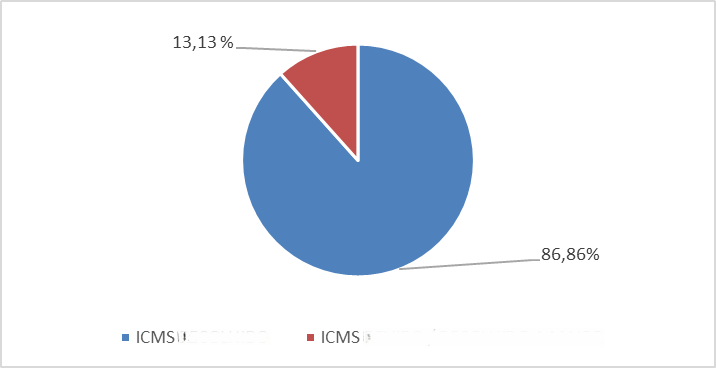
Illustratively, in Figure 1, below, it is possible to verify that in the year 2019 the amount transferred to the government of the state of São Paulo through the Simples Nacional declaration, as ICMS unduly collected, represented approximately 13% of the annual amount collected.
Figure 1. Representative value of the exemption from the collection of the Tax on Operations related to the Circulation of Goods and on Interstate and Intermunicipal Transport and Communication Services (ICMS) in the year 2019
Source: Original research results.
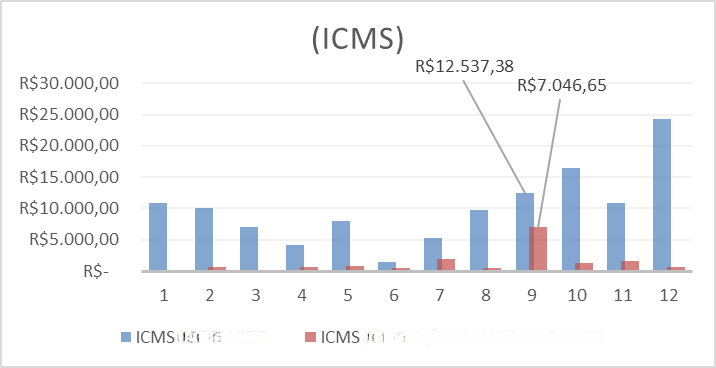
Specifically, furthermore, if such analysis considers the months in which the collection occurred, it will be possible to note that the amount subjected to taxation without the due application of the tax benefit certainly contributed to some type of organizational default in the period studied, because it is observed that, in the month of September 2019, the representative amount (illustrated below) corresponded to more than half of the amount collected as ICMS on the gross revenue earned in that same month.
Figure 2. Comparative graph of monthly revenue collected versus undue amount
Source: Original research results.
The result of this analysis, therefore, served to identify the effective and precise framing of the organization’s merchandise circulation operations within the exemption of the corresponding state tax, the acknowledgment of which enables the retroactive recovery of overpaid amounts and equally causes tax savings for the company in the future.
The research also identified the risks and limitations related to the tax planning process. According to legislation, the benefit of ICMS exemption only applies to companies that carry out sales operations and provision of services not subject to tax substitution (ST)[5]. Therefore, the studied company must carefully observe the entry of its goods to correctly obtain the exemption benefit, as it will not be able to benefit from it if the ICMS has been collected in advance in any operation.
A second note concerns the values consumed due to non-compliance with tax regulations, which are also relevant in the case study conducted. Although part of the doctrine understands that tax risk management is not part of the concept of tax planning because it does not have the typical preventive characteristics of this instrument, a study aimed at saving taxes and increasing profits would be of no use if, on the other hand, failures in tax risk management negatively affected the company’s profitability[6].
In this regard, Lukic[7] adds that, in tax planning, only two requirements are important for characterization: the chronological requirement and the criterion of lawfulness. This is why not every act that implies a reduction in the tax burden for the taxpayer can be considered tax planning stricto sensu.
That said, it follows that, in an in-depth analysis of the tax aspects that affected the good performance of the target organization of this planning, two factors served to demonstrate the need for the adoption of tax planning. It was possible to ascertain that, due to the postponement of taxes without any strategy, the organization had a high tax liability in 2021, the principal amount of which dated back to the beginning of 2013. For this reason, the company annually adhered to available installment plans and ended up failing to pay the amount, leaving outstanding installments which, also unpaid, were registered as active debt with percentages specific to the applicable legislation.
Furthermore, it was found that the total accumulated amount in 2021, with interest and fines added, and thus cumulatively with subsequent periods, resulted in a sum not supported by the organization, with the company’s liabilities exceeding R$ 1 million, largely due to the unplanned postponement of taxes. Additionally, the incorrect declaration of taxes (understated), besides causing the tax authorities to assess the due and undeclared tax base, definitively established after the reconciliation of divergent data, also incited the application of extremely onerous fines. In an audit conducted by the Federal Revenue Service, the tax authorities found discrepancies between the gross revenues calculated and the amounts declared in the Program Generator for the Collection Document of the National Simples — Declaratory (PGDAS-D), also in 2013, according to which, after a legal procedure that established the amount of the difference due, it imposed a fine on the undeclared amount, quantified at 75%.
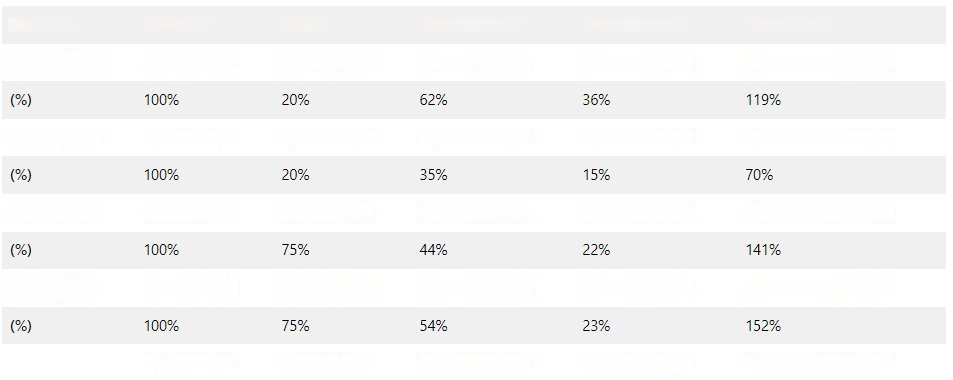
Two infraction notices were issued, a result of this practice commonly used by administrators, which together amounted to R$ 1,021,801.18, corresponding to the total value of registrations of letter C and D (Table 1). The documents inherent to this finding — such as notifications, infraction notices and fines, assessments, and active debt registrations — support the audited amount, and it should also be considered that the values related to registrations of letter A and B (Table 1) concern the erroneous postponement of the previously mentioned taxes, which, quantified and exemplified, elucidate the organization’s dire situation in the following table:
Table 1. Value of deferred taxes — notice of infraction (2013-2021)
Source: Original research results.
Dois fatores, portanto, foram responsáveis por determinar um resultado tributário verdadeiramente desastroso para a empresa, e embora existam situações no planejamento tributário que permitam o adiamento dos tributos para gerar fluxo de caixa ou investimentos, é importante usar essas estratégias com cuidado para evitar consequências indesejáveis. Do mesmo modo se dá para o cumprimento das demais obrigações tributárias. A omissão de informações, bem como a falta de escrituração, além de ser vista pelo fisco como uma prática ilícita do contribuinte, também poderia incitar a aplicação de uma penalidade mais rigorosa, como é caso da responsabilidade criminal pela omissão de receitas previdenciárias. O presente estudo, a partir desta análise, demonstrou que tal prática pontualmente serviu para desencadear a elevação do custo tributário em patamares incomuns. Os valores avolumados das dívidas tributárias, somados a todas as consequências — ora pelo inadimplemento (sujeição a encargos, juros e multas; não obtenção de CND), ora pelo descumprimento de suas obrigações — demonstram que essa alternativa impactou negativamente o resultado da empresa.
Therefore, risk management — and it should be emphasized, as part of an integral process of tax planning — primarily seeks to identify the variables and phenomena that can negatively influence the organization’s results so that, in a second moment, the mitigation of this risk contributes to the reduction or elimination of the tax burden. Thus, effective management should point out not only the benefits of tax planning but also the risks of non-compliance that can negatively affect the company’s profitability.
A third note is extremely necessary and considers exclusively the condition of operations carried out where the recipients are public authorities. Organizations like the one studied, framed within the Simples Nacional and acting predominantly with participation in public tenders, must adhere, among the legitimate options, to that which optimizes their costs, as part of tax planning[8]. Although not common, it is possible to adopt the cash basis, which allows the declaration of the monthly revenue effectively received for the calculation of amounts due. This is particularly useful for companies that have contracts with the government, as these contracts are generally paid in periods longer than 30 days. Adopting the cash basis helps to avoid default and save on fines, interest, and legal charges.
Last but not least, it is necessary to highlight the existence of other risks that bring companies closer to eventual fiscal illegality. The creation of a new company with the same corporate purpose to divide the gross annual revenue and maintain the classification in the Simples Nacional can be considered simulation of a legal act before the tax authorities and result in significant tax risk. It is important to adopt efficient tax planning, as well as manage risks to avoid tax non-compliance and ensure the survival of companies, especially microenterprises classified in the Simples Nacional.
Small businesses are, in their entirety, responsible for a considerable part of income generation in Brazil. In these times, however, the reasons pointed out as causes for impediment to development and progress or closure of micro and small enterprises are still associated with the tax burden. This study revealed that, although dealing with a smaller organization, an evaluation focused on tax issues with the identification of less burdensome alternatives emphasizes the utmost importance of seeking options that signal tax reduction and, consequently, provoke an increase in their profit margin, fostering profitability.
Furthermore, considering that it specifically deals with a company operating with public authorities through public tenders, the result of this deliberation contributed to the knowledge of previously unknown tax benefits and other viable positive points that also focus their efforts on minimizing tax burdens. Thus, the relevant considerations regarding compliance with obligations imposed by the tax authorities, as well as the avoidance of tax risks that transcend extremely onerous values, revealed that the combination of tax planning with risk management builds a robust set of specific actions towards the intended goal.
References
[1] Serviço Brasileiro de Apoio às Micro e Pequenas Empresas (Sebrae). Micro e pequenas empresas geram 27% do PIB do Brasil. 2021. Disponível em: https://www.sebrae.com.br/sites/PortalSebrae/ufs/mt/noticias/micro-e-pequenas-empresas-geram-27-do-pib-do-brasil,ad0fc70646467410VgnVCM2000003c74010aRCRD. Acesso em: 18 abr. 2021.
[2] Empresa Brasil de Comunicação (EBC). Micro e pequenas empresas geraram 75% dos empregos formais em janeiro. 2021. Disponível em: https://agenciabrasil.ebc.com.br/economia/noticia/2021-03/micro-e-pequenas-empresas-geraram-75-dos-empregos-formais-em-janeiro. Acesso em 30 set. 2021.
[3] Serviço Brasileiro de Apoio às Micro e Pequenas Empresas (Sebrae). Serviço de Apoio às Micro e Pequenas Empresas: 10 anos de monitoramento da sobrevivência e mortalidade de empresas. São Paulo (SP): Sebrae; 2008. Disponível em: https://www.sebrae.com.br/Sebrae/Portal%20Sebrae/UFs/SP/Pesquisas/10_anos_mortalidade_relatorio_completo.pdf. Acesso em: 01 maio 2021.
[4] Sampaio L.E.T.; Marques H.R. A importância do planejamento tributário nas micro e pequenas empresas. Revista Controle — Doutrina e Artigos. 2015; 13(1): 199-217.
[5] Brasil. Regulamento do ICMS: Livro VI, Anexo I – Isenções. Diário Oficial do Estado. São Paulo, 30 nov. 2000. Disponível em: https://legislacao.fazenda.sp.gov.br/Paginas/an1art055.aspx. Acesso em: 13 out. 2021.
[6] Miyoshi R.K. Riscos de conformidade tributária: um estudo de caso no estado de São Paulo [Dissertação]. Ribeirão Preto (SP): Faculdade de Economia, Administração e Contabilidade de Ribeirão Preto da USP; 2011. Disponível em: https://www.teses.usp.br/teses/disponiveis/96/96133/tde-18012012-103321/publico/RobertoKMiyoshi_Corrigida.pdf. Acesso em: 26 abr. 2021.
[7] Lukic M.R. Planejamento tributário. Fundação Getúlio Vargas. 2017. Disponível em: https://docplayer.com.br/49060729-Planejamento-tributarioautora-melina-rocha-lukic.html. Acesso em: 10 out. 2021.
[8] Andrade F.; Oliveira E. Imposto de renda das empresas. 13ed. Rio de Janeiro (RJ): Atlas; 2018. 752 p.
Como citar
Cruz R.C.; Alecrim E.R. Planejamento tributário voltado a microempresa enquadrada no Simples Nacional participante de licitações. Revista E&S. 2024; 5: e2023071.
Sobre os autores
Rosimeiry Cordeiro da Cruz, Advogada, especialista em Gestão Tributária – Rua Virgílio Martins de Oliveira, 20, 2º andar – Centro, CEP 13417-440 – Francisco Morato/SP, Brasil.
Eliza Remédio Alecrim, Mestre em Direito Tributário – Rua Alexandre Herculano, 120 – Vila Monteiro, CEP 13418-445 – Piracicaba/SP, Brasil.
Download link: PDF