
Aquaculture
Food Security
September 22, 2020
Myths and insinuations in Aquaculture: yes, we are safe
DOI: 10.22167/2675-6528-20200003
E&S 2020.1: e.20200003
José Eurico Possebon Cyrino, Juliana Antunes Galvão, Daniel Yokoyama Sonoda and Célia Maria Dória Frascá-Scorvo
Aquaculture stands out in the global fish scene; in 2018 alone, values close to 50% of global consumption were reported, evidencing that the activity surpassed production from fishing. Considering the current data on fish landings according to “The State of World Fisheries and Aquaculture” (SOFIA, 2020), out of more than 179 million tons of fish, 45% came from aquaculture, meeting projections made in 2013-2014 – an estimated increase in landings of 65% of global production by 2030 (Fontes et al., 2013; WBG, 2014).
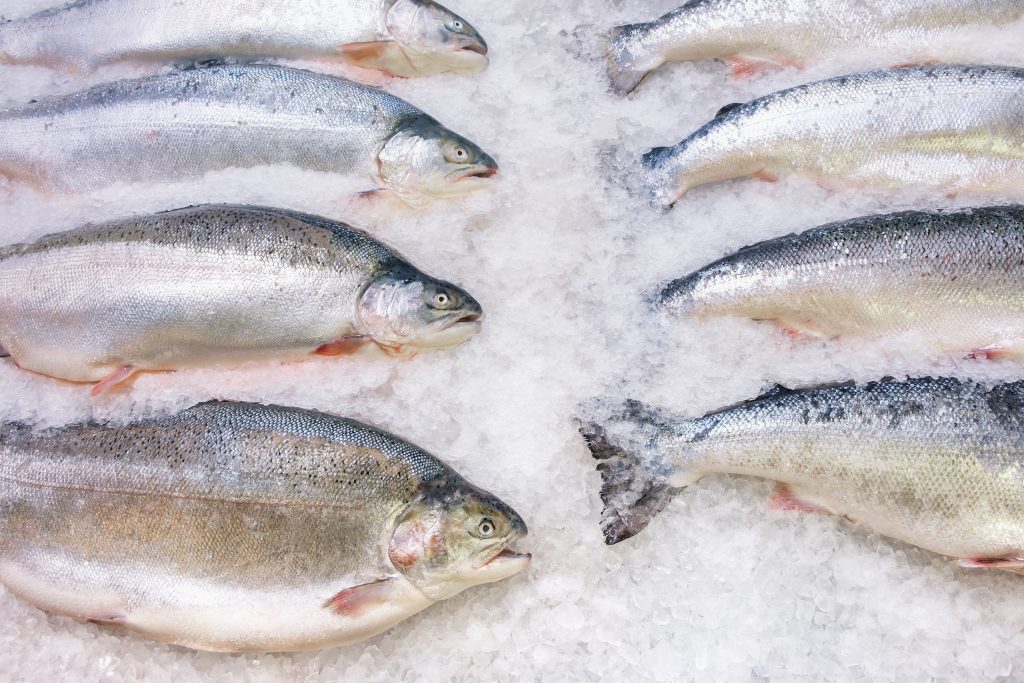
In economic terms, fish farming showed a growth of approximately 5% in 2019 (Seafood Brasil, 2019; Peixe BR, 2020), which is reflected in an estimated value related to fish landings of US$ 401 billion, with aquaculture production responsible for 62.3% of this value. Considering the consumption aspect, fish landings correspond to about 2% of all food production in the world, equivalent to an average of 11.5% of the total protein consumed globally, notably being the protein source with the highest digestibility (96%) compared to other sources, such as white meat (90%) and red meat (87%). Of the 179 million tons of fish landed, 87.2% was intended for human consumption, resulting in an estimate of 20.5 kg per capita; the remaining 12.8% had diverse destinations, notably for products such as fishmeal and fish oil.
The data based on studies and research by competent and specialized bodies are clear and affirm that the growth is promising and fits the projections, but even with so much evidence, the dissemination of distorted, shallow, and speculation-based information is not uncommon. This type of unsubstantiated and mistaken communication needs to be handled with care, as it enables the formation of equally mistaken opinions, hindering the clarification of aquaculture regarding its importance for food generation and, mainly, in a way that maintains food security.
Unfortunately, it is not difficult to find examples, serious cases like a recent column published in an important media outlet in the city of São Paulo, one of the most populous cities in the world, which stated, among other things, ipisis literis that “sushi salmon is as junk as sausage and filled cookies”, or even “… salmon is not caught in the sea. It is abundant because it comes from gigantic marine farms, most of them located in Chile. … This fish is not healthy… farmed salmon could be classified as an ultra-processed food – the same category as filled cookies and sausage”. The form of analysis or even the points that would lead to this thought were presented without any technical-scientific basis. Another equal (or worse) concern is the origin of this information: a “renowned” health professional who, given his position, is presumed to be at least minimally familiar with the basic principles of science and research, but who falls into the trap of superimposing his opinion on the scientific method.
In opposition to this type of placement and concerned with providing clear and impersonal information, allowing the consumer, through data, to develop their criticism, the Brazilian Society of Aquaculture and Aquatic Biology (AQUABIO), composed of several professionals in the teaching and research of aquaculture and aquatic biology, with a focus on confined fish production, brought together specialist professionals in the subject for the elaboration of this article.
This action sought to make clear to potential readers the reasons why aquaculture (raising aquatic organisms in a controlled environment) is considered fundamental both in food production and generation, in order to conserve the environment, and in social impact, generating jobs, income, and assisting in the reduction of poverty and hunger in various parts of the world, with emphasis on the current scenario of insecurity resulting from “Covid-19”, in addition to the potential economic aspects, already reported. When verifying the roles of aquaculture (economic, social, and environmental), would it be strange to liken it to a well-known current topic? Yes, we are dealing with a production system guided by the premises of sustainability.
So, let’s get to the facts: aquaculture and food security. Aquaculture aids in food generation for a world population of 7.79 billion people, with an estimate of 10 billion in the next 30 years. Abandoning this activity and returning to exclusive consumption only of fish from extractive fishing would be possible, but still not viable, if the world population were to regress to 5.2 billion inhabitants, that is, a reduction of 2.5 billion inhabitants from the planet, a level reached in 1990, the year in which the FAO noted the stagnation of landings of fish from extractive fishing. In Brazil alone, the reduction in population to meet the limits of fish from extractive fishing would be around 55 million inhabitants. There is no city in the country self-sufficient in fish. Even the “self-sufficient” cities, such as those located on the banks of fish-rich rivers potential for fishing, like the Northern region, local restaurants still need to consume fish from aquaculture production. Thus, to make the resumption of fish consumption solely from extractive fishing viable, a drastic reduction in the population would be necessary.
Highly processed products are practically all processed or canned products, meaning that classifying tilapia or salmon consumed in the country as this type of product is a serious conceptual error. Management process and industrial processing are different in idea and execution, whether for tilapia farming in Brazil, or the so-called Chilean salmon, and the well-known sausage production, which share the same concepts and management models, such as the Toyota system, 5-S, 6-Sigma, and others, but the production process is totally different (farming x industrialization – before the gate x after the gate), that is, the way of processing and obtaining the consumed product.
In Chile, salmon is produced very similarly to the development of wild salmon – in saltwater, coexisting in schools, fed with nutrient levels ideal for maximum growth – especially because different situations would prevent their survival in confinement. The diets used in salmon production are formulated and processed to meet their physiological needs, in a balanced way, seeking to approximate natural conditions, because, again, without these criteria, the animals would not survive in confinement (see NRC, 2011). Thus, the better the nutritional quality (precision in formulation and quality of ingredients) and the higher the degree of processing (extrusion), the greater the stability of the feed in the water and the digestibility of the feed, and consequently, the better the utilization by the fish and the higher the productivity (see Colt, 1991; Beveridge and Phillips, 1993).
One way to exemplify the attention given to the food formulation aspect is the fact that “formulators” know the animal thoroughly, i.e., fish are poikilothermic, meaning their body temperature depends on the environment they inhabit (mild temperature environments). Therefore, the inclusion of ingredients in a feed formulation needs to be adapted to the fish’s environment, meaning the feed’s composition (diet) should be close to the composition of the food found in the natural environment, otherwise the food and the animal would not get “in sync”, and this includes the use of polyunsaturated lipids, the omega(n)-3 fatty acids.
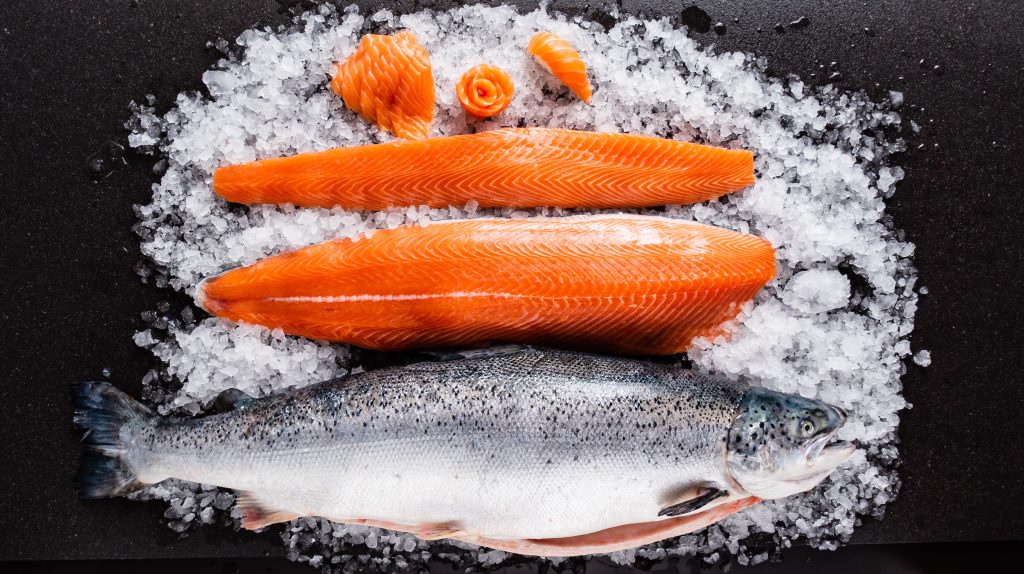
“Scientifically speaking”, a correct and logical comparison is made with similar products, for example, farmed salmon x wild salmon, or sausage x stuffed salmon. Therefore, comparisons between different, or rather, incomparable products result in erroneous, purely speculative claims. Another example is comparing an article that presents data and scientific basis with a column based on the personal opinion of an author who has visibly ignored scientific methodology.
The same considerations can be made for the use of “remedies” in fish farming diets. Medications used in aquaculture, as in other livestock activities, need to be researched, registered, authorized by current legislation, prescribed, and administered only by certified and responsible professionals (see Baldisserotto et al., 2017); deviations in conduct can lead to serious legal problems. The existence of contraventions is not denied here; unfortunately, there are “professionals” of bad character, but these are characterized as the exception and not the rule. It is only necessary to make it clear that every medication intended for use in aquaculture has undergone strict and careful research (examples we can highlight: Busatto et al., 2018; Paschoal et al., 2013; Zanon et al., 2012; Paschoal et al., 2011; Mouriño et al., 2017; Delphino et al. 2019), based on the standards required by regulatory bodies, since it is they who will evaluate the registration processes, quality, and reliability of the research, and may veto the registration if there is any indication of insecurity. It should be said that what applies to aquaculture also applies to other animal productions, as they are often subjected to the same shallow and unfounded judgments, such as the old absurdity of placing hormones in chicken meat.
It is necessary to remember that meat does not “sprout” on trays on supermarket shelves, milk does not flow from within the elaborate boxes with their friendly and cheerful images, eggs do not “pop” out of their cartons. Speculating and disseminating harmful information to the entire agricultural chain is nothing more than an offense to the work of countless rural producers who, in times of “Covid-19” or not, constantly work with the pride of bringing their products to Brazilians, and these products carrying the care, not of farmers, ranchers, veterinarians, and animal scientists, but of fathers, mothers, sons, and daughters who will equally consume these products, reassured by knowing that behind their production, there rises “a mountain” of techniques, knowledge, and inputs generated and tested by scientific research. Finally, a timely reflection: what is the possibility that so many researchers, universities, and institutions are as wrong as such “news” claim? Stay well, eat with peace of mind, and seek information; only then does life become a little more understandable and more enjoyable to live and discuss.
References
Associação Brasileira da Piscicultura [PeixeBR]. 2020. Anuário Brasileiro da Piscicultura PeixeBR 2020. Associação Brasileira da Piscicultura, São Paulo, SP, Brasil. Disponível em: https://www.peixebr.com.br/anuario-2020/pdf. Acesso em: 29 ago. 2020.
Beveridge, M.C.M., Phillips, M.J. 1993. Environmental impact of tropical inland aquaculture. Pages: 213-236 in R.S.V. Pullin, H. Rosenthal, and J.L. Maclean, editors. Environment and Aquaculture in Developing Countries. ICLARM Conference Proceedings 31. International Center for Living Aquatic Resources Management [ICLARM], Metro Manilla, Philippines.
Baldisserotto, B.; Gomes, L.C.; Heinzman, B.M.; Cunha, M.A. (Editores). 2017. Farmacologia Aplicada à Aquicultura. Editora UFSM, Santa Maria, RS, Brasil.
Barone, R.D.C; Guilguer, M. 2016. Importamos salmão do Chile com inteligência? Seafood Brasil, Disponível em: http://seafoodbrasil.com.br/artigo-importamos-salmao-chile-com-inteligencia Acesso em: 29 ago. 2020.
Busatto, Z.; França, W.G.; Cyrino, J.E.P.; Paschoal, J.A.R. 2018. Assessment of elimination profile of albendazole residues in fish. Food Additives & Contaminants: Part A 35(1): 77-85.
Colt, J. 1991. Aquacultural production systems. Journal of Animal Science 69: 4183-4192.
Delphino, M.K.V.C.; Barone, R.S.C.; Leal, C.A.G; Figueiredo, H.C.P.; Gardner, I.A.; Gonçalves, V.S.P. 2019. Economic appraisal of vaccination against Streptoccocus agalactiae in Nile tilapia farms in Brazil. Preventive Veterinary Medicine 162: 131-135.
Fontes, A.; Nikolik, G.; Rasmussen, R.; Ikeda, V. 2012. Feeding Nemo: Turning Brazils economic turmoil into seafood business opportunities. Rabobank Indusyry Note # 564. Food & Agribusiness Research and Advisory, Cooperative Rabobank U.A., Amsterdan, The Netherlands.
Food and Agriculture Organization of the United Nations [FAO]. 2020. The State of World Fisheries and Aquaculture 2018: Meeting the sustainable development goals. FAO Fisheries and Aquaculture Department. FAO, Rome, Italy.
Mouriño, J.L.P.; Martins, M.L; Silva, B.C.; Pereira, G.V.; Tancredo, K.R. 2017.. Cacinas para peixes. Pags.: 323-374 In: B. Baldisserotto, B.; Gomes, L.C.; Heinzman, B.M.; Cunha, M.A. (Editores). Farmacologia Aplicada à Aquicultura. Editora UFSM, Santa Maria, RS, Brasil.
National Research Council of the National Academy of Sciences of the United States [NRC]. 2011. Nutrient Requirements of Fish and Shrimp. National Academy Press, Washington, DC, USA.
Oetterer, M. 2002. Industrialização do Pescado Cultivado. Livraria e Editora Agropecuária, Guaíba, RS, Brasil.
Oetterer, M.; Galvão, J.A.; Savay-da-Silva, L.K. 2014. Tilápia: controle da qualidade, beneficiamento e industrialização. Tilápia minimamente processada. Págs.: 183-209 in J.A. Galvão, e M. Oetterer, editoras. Qualidade e Processamento do Pescado. Campus-Elsevier, Rio de Janeiro, RJ, Brasil.
Paschoal, J.A.R.; Bicudo, A.J.A.; Cyrino, J.E.P.; Reyes, F.G.R.; Rath, S. 2011. Depletion study and estimation of the withdrawal period for oxytetracycline in tilapia cultured in Brazil. Journal of Veterinary Pharmacology and Therapeutics 35: 90-96.
Paschoal, J.R.; Quesada, S.P.; Gonçalves, L.U.; Cyrino, J.E.P.; Reyes, F.G.R. 2013. Depletion study and estimation of the withdrawal period for enrofloxacinin pacu (Piaractus mesopotamicus). Journal of Veterinary Pharmacology and Therapeutics 36: 594-602.
Seafood Brasil. 2019. Anuário Seafood Brasil No. 5. Seafood Brasil Editora Ltda., São Paulo, SP, Brasil.
World Bank Group [WBG]. 2013. Fish to 2030: Prospects for fisheries and aquaculture. World Bank Report No. 83177-GLB. International Bank for Reconstruction and Development / International Development Association or The World Bank. Washington DC, USA.
Zanon, R.B.;Cerozi, B.S.; Silva, T.S.C.; Cyrino, J.E.P. 2012. Pharmacokinetic of levamisole in speckled surubim Pseudoplatystoma corruscans. Journal of Veterinary Pharmacology and Therapeutics 36: 298-301.
Como citar
Cyrino, J.E.P.; Galvão, J.A.; Sonoda; D.Y.; Frascá-Scorvo, C.M.D. 2020. Mitos e insinuações na Aquicultura: sim, estamos seguros. Estratégias e Soluções, 1: e.2020003.
Sobre os autores
José Eurico Possebon Cyrino, Ph.D. Professor Titular – Piscicultura; Departamento de Zootecnia, Escola Superior de Agricultura Luiz de Queiroz da Universidade de São Paulo, Piracicaba, SP
Juliana Antunes Galvão, D.Sc. Especialista, Coordenadora do Grupo de Estudos e Extensão em Inovação Tecnológica e Qualidade do Pescado (GETEP); Departamento de Agroindústria, Alimentos e Nutrição, Escola Superior de Agricultura Luiz de Queiroz da Universidade de São Paulo, Piracicaba, SP
Daniel Yokoyama Sonoda, D.Sc. Diretor, Instituto de Pesquisas e Educação Continuada em Economia e Gestão de Empresas (PECEGE), Piracicaba, SP
Célia Maria Dória Frascá-Scorvo, M.Sc. Pesquisadora Científica V, APTA Regional, Polo Leste Paulista, SAA-SP; Presidente da Sociedade Brasileira de Aquicultura e Biologia Aquática, Monte Alegre do Sul, SP
Editorado por: Edson Pereira da Mota
Link para Download: https://cms.revistaes.com.br/wp-content/uploads/2020/11/3.pdf