
Sales Management
Negotiation
Behavioral Profile
December 16, 2022
Correlation between negotiation style and behavioral profile in sales professionals
DOI: 10.22167/2675-6528-20220036
E&S 2022,3: e20220036
Bruno Bougleux Ribeiro e Paulo Mantelatto Pecorari
Although not fully aware of it, negotiation is present in most people’s routines. A great example showing that negotiation has been present since early on is when babies negotiate with their mothers to get food or for any other immediate demand. Even if the specific desire is unknown, crying is exchanged for breast milk, with both – mother and baby – reaching tranquility, a common denominator[1].
In the world of negotiation, there are different styles of negotiators. A general idea is that negotiators have a primary and at least one secondary style, with the analysis of the opponent’s style being a fundamental factor for planning the steps to be followed in the negotiation. A great tool to avoid or analyze and solve conflicts[1] is understanding these different negotiator styles, in order to comprehend their strengths and weaknesses, optimizing the understanding of the other party involved in the negotiation.
Knowledge about negotiation style, as well as its use by the individual, is of utmost importance, since recognizing the other’s style makes it possible to anticipate movements[2]. Thus, the space between success and failure can be defined by the negotiators’ ability[3], as negotiation skills are increasingly fundamental for a company’s competitive advantage, given the high market competition.
In the 1920s, psychologist William Moulton Marston[4] researched the normal behavioral profile of people, that is, he focused on everyday emotions, without considering mental disorders. His research was based on knowledge of biophysics and statistical instruments, resulting in the behavioral assessment method, the DISC Model, starting from the analysis of four behavioral configurations: Dominance, Influence, Steadiness, and Conscientiousness. This methodology, later extensively reported in the work “Emotions of Normal People”, measures the individual’s predilections by observing their action in a given situation, being of great utility for companies, especially in people management, whether in recruitment or in the reassignment of employees with a certain profile to specific roles or teams[5].
The variety of behaviors has caused unease since antiquity, which has demanded the direction of great effort towards research on the topic, resulting in a greater understanding of the association between the individual’s behavioral trait and the way they will act professionally.
This article was developed from research with sales professionals from various sectors, since, despite the widespread use of the DISC methodology by companies, the negotiation style of these professionals is little explored, as is a possible correlation between such a style and the methodology. Both the commercial area and human resources can benefit from this study if they require a certain negotiator style and/or specific behavioral profile for their market, corporate guideline, service method, or client type.
Marston[4] characterized the typical behaviors of human beings in various degrees, defining four quadrants among the behaviors, which are primary emotions. It is a series of emotions, defined as compliance, dominance, induction, and submission, in which the alliance or conflict relationships of the motor ego reach their peak, being able to maintain their direction or alter it to the opposite direction. The relationship between motor stimuli and primary emotions is summarized by the circle of emotions (Figure 1).
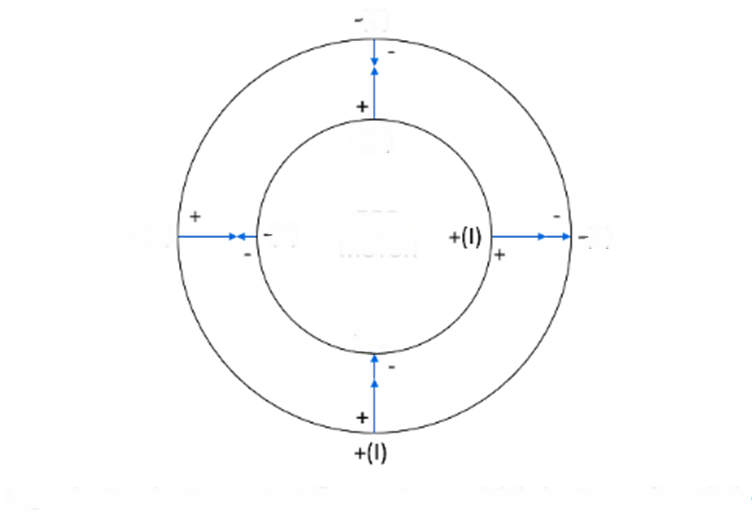
Figure 1. Circle of emotions
Source: Elaborated by the author based on Marston[4]
With this definition in mind, the DISC methodology was created from research aimed at understanding how the environment impacts individuals’ decisions. Behavioral profiles have their particularities and are defined as follows[4]:
- Dominance (D): characterized, mainly, by victory over an opponent with intensity lower than that of the motor ego, which predominates over its antagonist. It exerts control over the final direction of the organism. In short, dominance represents the most important emotional element, influencing the individual’s behavior from childhood to death. General characteristics of the dominant profile include: tends to be direct, assertive, and controlling; their motivation is inclined towards power; they seek to be the best and achieve results;
- Influence (I): characterized by the reinforcement of the motor ego, facilitating action through influence. The influential profile tends to trust others, be enthusiastic and confident, their motivation is to be seen as fun and popular, to be accepted and to have an emotional connection. However, they can be exaggerated and disorganized;
- Stability (S): characterized, mainly, by the decrease in the motor ego strength, balancing the opposite superior strength. As general characteristics, this profile does not know how to say no, can be inexpressive, avoids confrontation, and is detail-oriented; its motivation is to gain approval, avoid conflicts, and seek stability;
- Conformity (C): characterized by the strength that adapts to the strongest antagonistic forces, diminishing its own power to fit in. As general characteristics, it is dedicated, detail-oriented, reliable, and does not delegate; its motivation is inclined towards independence and privacy, information and procedures, mental challenges, having reason, as well as receiving recognition and approval.
The driving ego is reflected in the attitudes and behaviors of individuals, being mirrored and identifiable[4]. The test for profile identification is based on these psychological factors that aid in the assessment of the behavioral side, based on patterns that predominate in a given environment. In this way, various directed questions are asked, contrasting the characteristics of each profile, so that the respondent chooses the characteristic with which they most identify or that best represents their reality. Thus, it is possible to identify the dominant profile of each individual. This profile, in turn, translates into an in-depth analysis of the individual that serves various purposes.
As previously highlighted, each person has their own negotiation style, and their behavioral characteristics and skills are developed and emphasized during the execution of these negotiations[3]. With knowledge of one’s own style and that of the other negotiating party, the chance of success is certainly greater. Junqueira[3] makes some considerations about negotiation style: it is immutable, but it is possible to hide it, though not indefinitely; there is always a predominant style, even though all individuals have characteristics of all of them; it is fundamental that the individual emphasizes the strengths of their style and manages the weaknesses in a negotiation; not least importantly, one can recognize the negotiation style of the other party, in order to identify their strengths to prepare for and their weaknesses to exploit.
In Junqueira’s theory[3], four negotiation styles were identified: catalyst, supporter, controller, and analyzer, whose characteristics are presented below:
- Catalyst: is seen through entrepreneurship, enthusiasm, and persuasion. Idea-oriented, uses social skills to persuade and values self-recognition. On the other hand, can be superficial, exclusive, impulsive, and inconsistent. Furthermore, has difficulty believing in something, is immoderate, and undisciplined. To negotiate with a catalyst, it is advisable to explore agility, ease, exclusivity, innovation, and ambition, without needing many details. It is not advisable to emphasize their weaknesses, set unrealistic goals, and go into detail about the problem;
- Supporter: seen by the friendly tone, is understanding, a good listener, and helpful. Relationship-oriented, makes friends, seeks harmony, works for the group, and values the attention received, as well as being accepted by people. On the other hand, can be deceitful, avoids conflict, wastes time, is impressionable, and sometimes inefficient. To negotiate with a supporter, it is advisable to eliminate conflicts, increase interpersonal competence, provide assistance and support, seeking teamwork and collective well-being. It is not advisable to emphasize their weaknesses, such as their difficulty in saying no and their disorganization. Active listening should be focused on, as this profile has difficulty understanding;
- Controller: generally seen for decision-making power, efficiency, agility, and objectivity. Takes risks and is results-oriented. Trusts in efficiency with work delivered within the stipulated deadline, values results and goal achievement. On the other hand, is critical, impatient, insensitive, and authoritarian, needing to be more humble and listen more. To negotiate with a controller, it is advisable to explore the gain of time and money, the achievement of goals and results, as well as the fulfillment of the function, in a simple and rational way. It is not advisable to emphasize their weak points, such as: selfishness, dominance, the fact of not caring about people, and lack of teamwork skills;
- Analytical: seen through seriousness, organization, patience, balance, and care. Has credibility, is procedure-oriented, and values safety and guarantees. On the other hand, is indecisive, meticulous, stubborn, perfectionist, and procrastinator. To negotiate with an analytical person, it is advisable to explore data, as they seek to make safe decisions, alternatives for analysis, organization, and systematization, reducing risk and increasing safety. It is not advisable to emphasize their weak points, such as great attention to detail, stubbornness, and indecisiveness.
To identify the negotiation style, words related to the characteristics of the dominant behavior are used, whether it is condescending, informal, or formal, using a specific matrix to format the test result, finally presenting the participant’s negotiator style. The data collection instrument was an electronic questionnaire, composed of 65 closed questions (5 social questions, 20 from the negotiation style test, and 40 from the DISC behavioral profile test), applied in national companies from various sectors.
Of the 250 sales professionals invited to participate in the survey, 33.2% of them responded, representing 83 respondents. In the characterization of the individuals, specifically regarding behavioral profile, only one of the respondents presented an inconclusive result, demonstrating hybrid characteristics of the four profiles, which is extremely rare, and was therefore disregarded from the results. It is necessary to clarify, however, that in both negotiation style and behavioral profile, hybrid profiles with characteristics of up to two styles are possible. Thus, there is a possibility that the numbers and percentages may exceed the total number of respondents. Of the 85 behavioral profiles analyzed, it was identified that 55% are predominantly Dominant, while 22% represent the predominantly Influential profile, 16% belong to the Conscientious profile, and only 6% represent the Stable profile.
Considering that in the negotiation style presented by Junqueira[3] hybrid profiles are more common, the number of identified profiles was greater than the number of respondents, with a total of 106 profiles counted. The analytical style was identified as predominant, representing 66% of the styles; followed by the supportive style, which appeared in 22% of respondents; the controlling style was identified in 19%; the catalyst style in 13%; and, finally, the balanced style, the rarest, was identified in 5% of respondents. Just as in the behavioral profile, the excess number reflects the hybrid profiles.
When analyzing the correlation between behavioral styles and profiles, a significant relationship is perceived between the dominant profile and the analytical style, since the analytical style appears with the Dominant profile in 72% of respondents, while Dominance appears in the other negotiation styles with much lower percentages, namely: 19% in the Controller style, 15% in the Supporter style, 12% in the Catalyst style, and only 0.2% in the Balanced style. In Figure 2, the participation of each negotiation style by behavioral profile can be visualized.
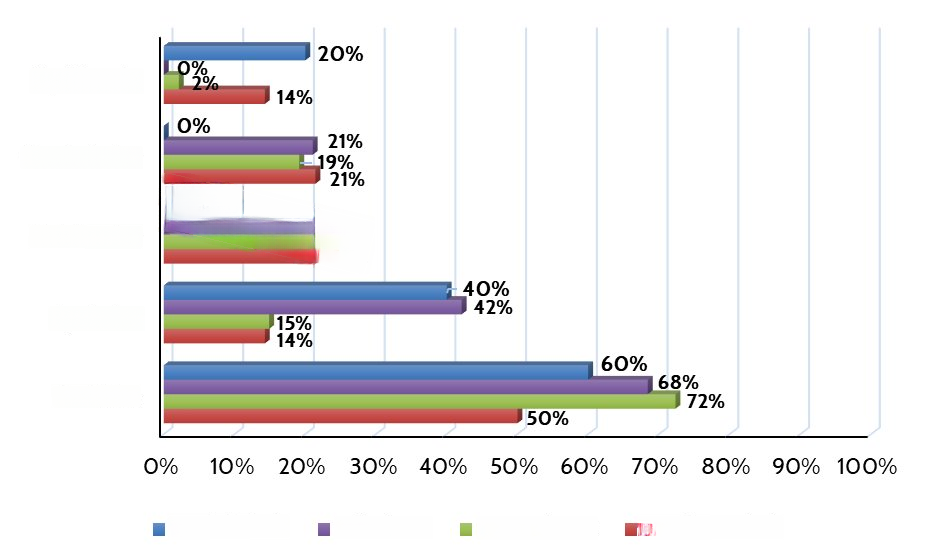
Figure 2. Participation of each negotiation style by behavioral profile
Source: Elaborated by the author
In addition to behavioral profile and negotiation style, we sought to better understand the respondents, in order to identify any relationship between the dominant profile and aspects such as age group, education level, market segment, type of business in which they operate, and/or type of seller. It was observed that the dominant profile overlaps in almost all the cited segmentations, with only three exceptions: in the age group, among participants over 56 years old, the Dominance and Influence profiles predominate, with 40% of respondents in each; in the technology sector, the Dominant profile shares the largest portion with the Influential profile, representing 40% each; professionals in the logistics sector, in turn, show a higher Influential profile, with 43%, followed by the Dominant, with 36%.
When analyzing, across the entire sample, only the combination between the Dominant profile and analytical negotiation style per individual, this combination represents 41.5%, among the twenty possible combinations.
This finding can strengthen the idea that acting in the commercial area requires control over the process, victory, and predominance over competitors, in order to maintain a high level of competitiveness, as described in the Dominance profile. Furthermore, it is important to have the flexibility of the analytical style, being a professional with great credibility, seriousness, and maximum organization.
Thus, it is concluded that the correlation between the dominant profile and the analytical negotiation style was identified in 41.5% of the respondents. Furthermore, the dominant profile was determined as the main profile in most of the segments foreseen and analyzed in this study, except, as previously pointed out, for professionals over 56 years of age, as well as the technology and logistics sectors, in which the predominant profile was Influence.
References
[1] Martinelli D.P.; Almeida A.P. Negociação: como transformar confronto em cooperação. 1ed. 1997. Atlas, São Paulo, SP, Brasil.
[2] Martinelli D.P.; Almeida A.P. Negociação e solução de conflitos: do impasse ao ganha-ganha através do melhor estilo. 2009. Atlas, São Paulo, SP, Brasil
[3] Junqueira L.A.C. Negociação: tecnologia e comportamento. 11ed. 1995. COP Editora, Rio de Janeiro, RJ, Brasil.
[4] Marston W.M. As emoções das pessoas normais. 2020. Editora Success For You, São Paulo, SP, Brasil.
[5] Bonnsterrer B.J; Ribas A. Manual Definitivo DISC. 2016. Editora Success For You, São Paulo, SP, Brasil.
Como citar
Ribeiro B.B.; Pecorari P.M. Correlação entre estilo de negociação e perfil comportamental em profissionais de vendas. Revista E&S. 2022; 3: e20220036.
Sobre os autores
Bruno Bougleux Ribeiro, Executivo Técnico-Comercial, Especialista em Gestão de Vendas, São Paulo, SP, Brasil.
Paulo Mantelatto Pecorari, Professor Doutor em Engenharia de Produção, Especialista em Gestão Empresarial, Piracicaba, SP, Brasil.
Link para download: https://cms.revistaes.com.br/wp-content/uploads/2022/12/ES_36.pdf